Consistent Results: 10 Proven Affiliate Marketing Strategies for Passive Income
Table of Contents
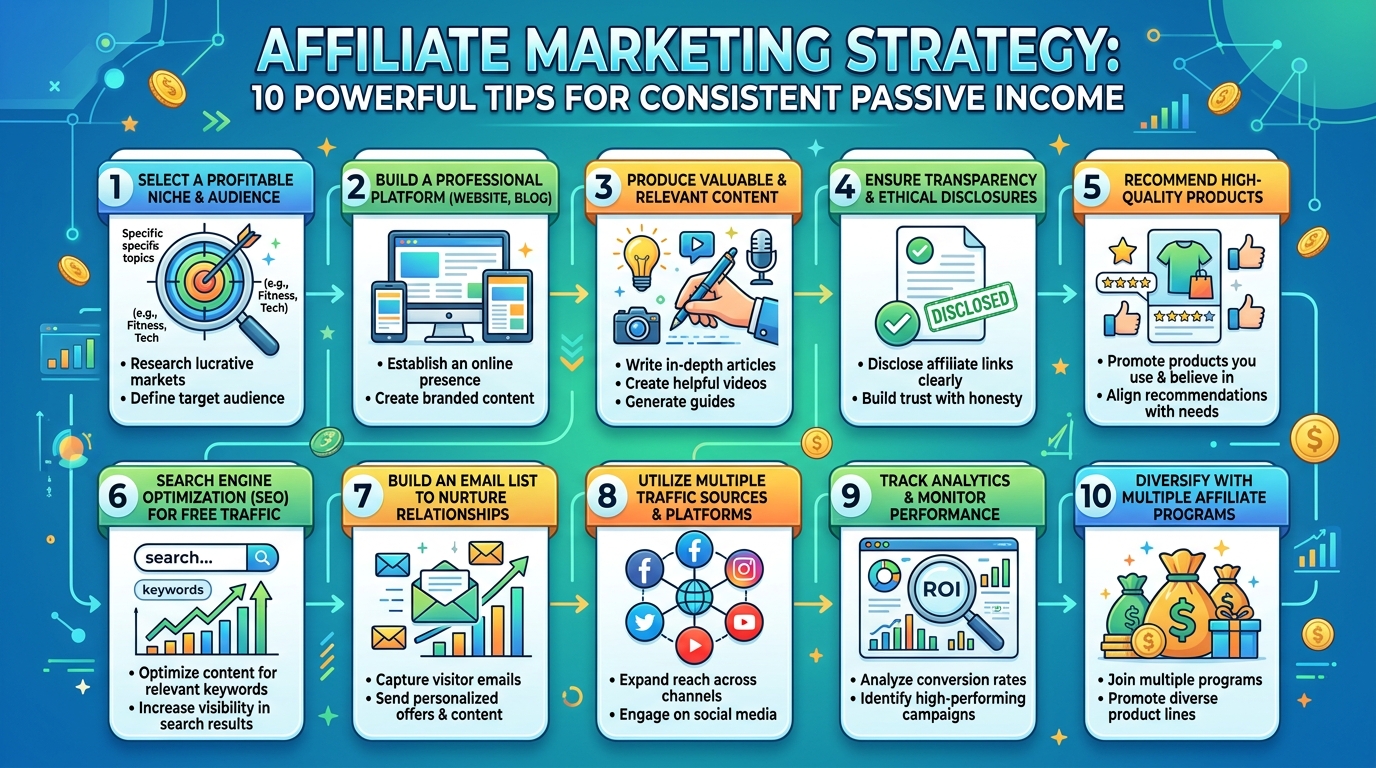
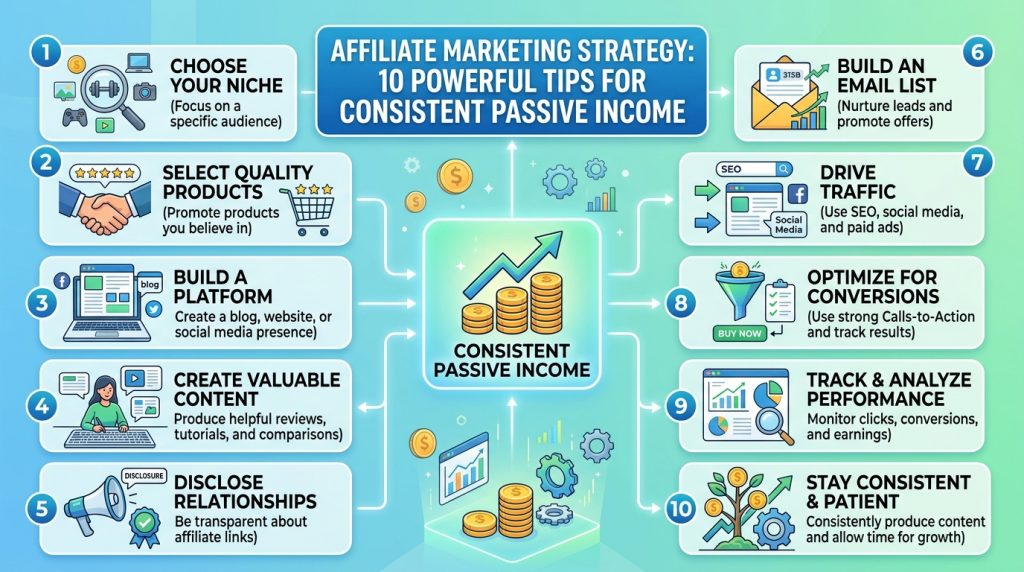
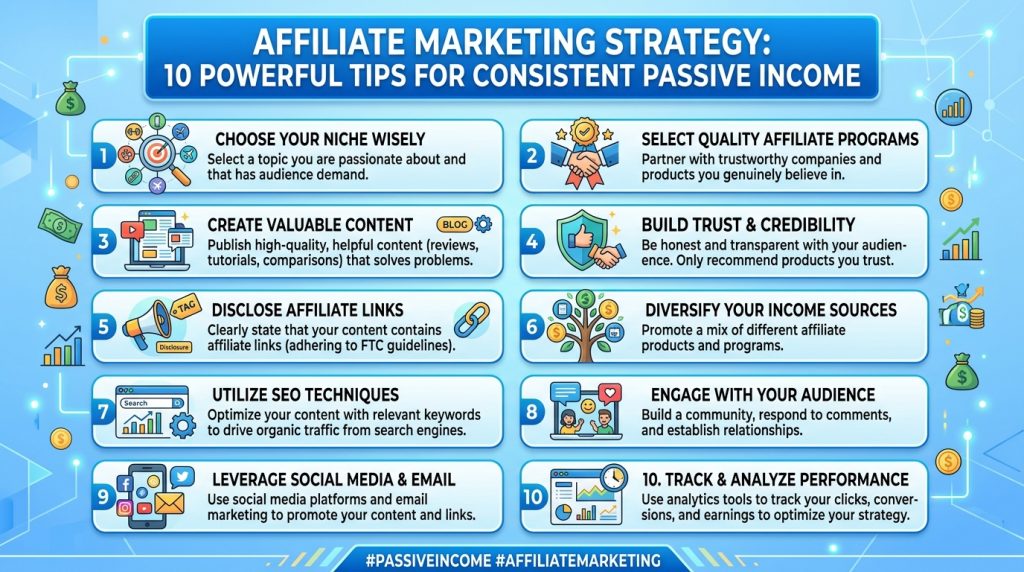
Affiliate marketing strategy, when executed thoughtfully and diligently, holds immense potential for generating consistent passive income. In an increasingly digital world, individuals and businesses are constantly seeking diversified revenue streams that offer flexibility and scalability. Affiliate marketing stands out as a powerful model where you, as an affiliate, earn a commission by promoting products or services of other companies. The beauty of this model lies in its ability to generate income even while you sleep, provided you’ve laid a robust foundation. This comprehensive guide will delve into the core components of building an effective affiliate marketing strategy, ensuring you are well-equipped to cultivate a sustainable source of passive income.
Understanding Affiliate Marketing and Its Potential
Affiliate marketing is essentially a performance-based marketing strategy where a business rewards one or more affiliates for each visitor or customer brought by the affiliate’s own marketing efforts. It’s a symbiotic relationship: the merchant gains sales and exposure, and the affiliate earns a commission. This model has evolved significantly, moving beyond simple banner ads to encompass sophisticated content marketing, search engine optimization (SEO), and social media engagement. At its heart, affiliate marketing involves recommending products or services you genuinely believe in to an audience that trusts your judgment. When your audience makes a purchase through your unique affiliate link, you receive a percentage of the sale.
The allure of affiliate marketing for passive income is undeniable. Unlike traditional businesses that often demand significant upfront capital, inventory management, and customer service, affiliate marketing typically requires minimal startup costs. You don’t need to create your own products, handle shipping, or manage returns. Your primary role is to connect potential customers with existing solutions, making it an attractive option for entrepreneurs, content creators, and anyone looking to diversify their income. However, the term “passive income” in affiliate marketing doesn’t imply a lack of effort. It requires substantial initial work in building a platform, creating valuable content, and establishing trust with your audience. Once established, the income stream can become more automated, freeing up your time for other pursuits. Understanding the mechanisms of this relationship is crucial for developing a strategy that yields consistent, long-term results. For a more detailed understanding of affiliate marketing, you can explore resources like Wikipedia’s article on Affiliate Marketing.
Niche Selection: The Foundation of Your Affiliate Empire
The first and arguably most critical step in building a successful affiliate marketing strategy is choosing the right niche. A niche is a focused segment of a larger market that caters to specific needs or interests. Selecting a well-defined niche allows you to target a specific audience, tailor your content effectively, and establish yourself as an authority. Without a clear niche, your efforts will be diluted, and you’ll struggle to resonate with any particular group. When selecting a niche, several factors should be carefully considered:
- Passion and Interest: While not strictly necessary, having a genuine interest or passion for your chosen niche can significantly boost your motivation and ability to create engaging, authentic content. It makes the research and content creation process more enjoyable and sustainable in the long run.
- Profitability: Research the profitability of potential niches. Are there products or services within this niche that have high demand and offer decent commission rates? Look for evergreen niches (e.g., health, wealth, relationships) that consistently have an audience, rather than fleeting trends.
- Competition: Analyze the level of competition. While some competition indicates a viable market, an overly saturated niche might be difficult to break into, especially for newcomers. Look for areas where you can offer a unique perspective or target a sub-niche (micro-niche) to stand out.
- Audience Engagement: Is there an active community around this niche? Are people asking questions, seeking advice, and engaging with content related to these topics? This indicates a receptive audience ready for valuable recommendations.
- Product Availability: Ensure there are enough quality affiliate programs and products available within your chosen niche. A lack of suitable offers will limit your earning potential.
Thorough market research, including keyword analysis and competitor analysis, is essential at this stage. Tools like Google Keyword Planner, Ahrefs, or SEMrush can help identify popular search terms, trending topics, and the competitive landscape. By meticulously defining your niche, you lay a solid groundwork for all subsequent steps in your affiliate marketing journey, ensuring your efforts are focused and impactful.
Building Your Platform: Website, Blog, or Social Media?
Once you’ve identified your niche, the next crucial step is to establish your platform – the digital space where you will connect with your audience and promote affiliate products. While various platforms exist, a robust, owned platform like a website or blog is often considered the most strategic choice for long-term, consistent passive income generation. This is because it provides you with maximum control, allows for extensive content creation, and serves as an anchor for all your other marketing efforts.
- Website/Blog: This is generally the most recommended platform. A dedicated website or blog allows you to publish long-form content, optimize for search engines, build email lists, and establish strong authority in your niche. You have full control over design, branding, and monetization strategies. For example, a blog focused on “eco-friendly living” could feature product reviews, guides, and comparisons of sustainable products.
- YouTube Channel: Video content is incredibly engaging and effective for product reviews, tutorials, and demonstrations. If your niche is visually driven (e.g., tech gadgets, beauty products, DIY projects), a YouTube channel can be a powerful affiliate platform. It also allows for direct interaction with viewers through comments.
- Social Media (Instagram, TikTok, Pinterest): These platforms are excellent for reaching specific demographics and can drive significant traffic. Instagram and TikTok are great for visual products and short, engaging content, while Pinterest excels for niches like home decor, fashion, and recipes. However, relying solely on social media means you are subject to their algorithms and policy changes, which can impact your reach and income.
- Email Marketing: While not a primary platform in itself, email marketing is an indispensable tool to complement your main platform. Building an email list allows you to directly communicate with your audience, deliver valuable content, and promote affiliate offers without relying on external algorithms.
For most aspiring affiliate marketers seeking consistent passive income, a self-hosted website or blog should be the cornerstone of their strategy. It provides the stability and flexibility needed to implement comprehensive SEO strategies, build brand trust, and create diverse content formats. Other platforms can then be leveraged to drive traffic back to your primary hub. For instance, a short-form video on TikTok could briefly introduce a product, with a call to action directing viewers to a detailed review on your blog. This multi-platform approach, anchored by your owned website, creates a resilient and expansive reach for your affiliate efforts.
Content Creation: Value is King for Affiliate Success
In the realm of affiliate marketing, content is not just king; it’s the entire kingdom. High-quality, valuable content is what attracts, engages, and converts your audience. Your content should aim to solve problems, answer questions, and provide genuinely helpful information related to your niche. This approach builds trust and positions you as an expert, making your affiliate recommendations more impactful.
Here are key types of content and considerations for creation:
- Product Reviews: Detailed, honest, and unbiased reviews are paramount. Highlight features, benefits, pros, cons, and personal experiences. Include photos or videos if possible.
- Comparison Articles: Help your audience make informed decisions by comparing similar products or services. For example, “Best [Product Category] for [Specific Need]” or “[Product A] vs. [Product B].”
- How-to Guides and Tutorials: Demonstrate how to use a product or solve a problem using a product. These are highly valuable and often rank well in search engines.
- Listicles: “Top 10 [Product Category]” or “5 Must-Have [Products]” are popular and easily digestible formats that can showcase multiple affiliate products.
- Informational Articles: Provide general information and insights related to your niche that doesn’t directly promote a product but establishes your authority and attracts an audience interested in the topic.
When creating content, always prioritize the user experience. Ensure your content is well-researched, accurate, easy to read, and visually appealing. Incorporate strong calls to action (CTAs) that guide your audience towards making a purchase through your affiliate links, but do so naturally and ethically. Remember, transparency is key; always disclose your affiliate relationships to maintain trust. Furthermore, optimizing your content for search engines (SEO) is crucial. This involves using relevant keywords, optimizing meta descriptions, ensuring good site structure, and creating a positive user experience. By consistently producing high-value content, you not only attract traffic but also cultivate a loyal audience that trusts your recommendations, leading to sustained affiliate commissions.
Choosing the Right Affiliate Programs and Products
Selecting the right affiliate programs and products is as critical as choosing your niche. The quality and relevance of the products you promote directly impact your credibility and earning potential. A strategic approach to product selection involves thorough research and alignment with your audience’s needs.
Here’s how to approach this crucial stage:
- Affiliate Networks: Start by exploring major affiliate networks. These platforms act as intermediaries between merchants and affiliates, offering a vast array of products across various niches. Popular networks include:
- Amazon Associates: Ideal for beginners due to its massive product catalog, making it easy to find relevant items for almost any niche.
- ShareASale, CJ Affiliate (formerly Commission Junction), Rakuten Advertising: These networks host thousands of programs from reputable brands across diverse industries.
- ClickBank, Digistore24: Often focused on digital products like e-books, courses, and software, which can offer higher commission rates.
- Direct Merchant Programs: Many companies run their own in-house affiliate programs. If you have a specific brand in mind that aligns perfectly with your niche, check their website for an “Affiliates” or “Partners” section. These programs can sometimes offer better commission rates or exclusive deals.
- Product Relevance: Only promote products that are genuinely relevant to your niche and audience. Promoting unrelated items will erode trust and reduce conversion rates.
- Product Quality and Reputation: Before recommending a product, try to experience it yourself or conduct extensive research on its quality, customer reviews, and the merchant’s reputation. Recommending poor-quality products can severely damage your credibility.
- Commission Rates and Cookie Duration: Evaluate the commission structure. Higher commission rates are generally better, but also consider the product price point. A 50% commission on a $20 product might be less profitable than a 10% commission on a $500 product. Cookie duration refers to how long an affiliate link tracks a user’s activity. A longer cookie duration (e.g., 60 or 90 days) gives you a better chance of earning a commission even if the customer doesn’t purchase immediately.
- High-Ticket vs. Low-Ticket: Consider a mix of both. Low-ticket items can lead to more frequent, smaller commissions, while high-ticket items, though less frequent, can result in significant payouts.
By carefully vetting affiliate programs and products, you ensure that your recommendations are valuable, trustworthy, and ultimately profitable. This selective approach forms a cornerstone of a sustainable affiliate marketing strategy.
Traffic Generation: Driving Engaged Audiences to Your Offers
Even the most compelling content and perfectly chosen affiliate products won’t generate income if no one sees them. Driving targeted traffic to your platform is paramount for affiliate marketing success. A multi-pronged approach often yields the best results, combining various strategies to reach a broad yet relevant audience. Here are some of the most effective methods for traffic generation:
| Traffic Generation Strategy | Description | Pros | Cons |
|---|---|---|---|
| Search Engine Optimization (SEO) | Optimizing your content and website to rank higher in search engine results for relevant keywords. | Cost-effective long-term, high-quality organic traffic, builds authority. | Takes time to see results, constant algorithm updates, competitive. |
| Paid Advertising (PPC) | Running campaigns on platforms like Google Ads, Facebook Ads, Instagram Ads to target specific demographics. | Instant traffic, highly scalable, precise targeting. | Can be expensive, requires continuous monitoring and optimization, risk of ad fatigue. |
| Social Media Marketing | Building a presence and engaging with your audience on platforms like Facebook, Instagram, Pinterest, TikTok, X (formerly Twitter). | Direct interaction with audience, brand building, good for visual products. | Time-consuming, lower conversion rates than SEO, algorithm dependency. |
| Email Marketing | Building an email list and sending newsletters, promotions, and valuable content directly to subscribers. | High ROI, direct communication, strong customer relationships. | Requires list building efforts, can be seen as spam if not done well, email provider costs. |
| Guest Posting & Collaborations | Writing articles for other relevant blogs or partnering with influencers to reach new audiences. | Exposure to new audiences, builds backlinks (for SEO), strengthens network. | Time-consuming to pitch and write, relies on external approval, results vary. |
For sustainable passive income, a strong emphasis on SEO is often recommended. Organic traffic from search engines tends to convert well because users are actively searching for solutions. This involves meticulous keyword research, creating high-quality, long-form content optimized for those keywords, and building high-quality backlinks. Paid advertising can provide immediate results and is excellent for testing offers or scaling quickly, but it requires a budget and careful management to ensure profitability. Social media and email marketing are powerful for building community and nurturing leads. By diversifying your traffic sources, you create a more resilient affiliate business, reducing reliance on any single platform or strategy. Remember, the goal is not just traffic, but targeted traffic – visitors who are genuinely interested in what you have to offer and are more likely to convert into customers.
Conversion Optimization: Turning Visitors into Buyers
Attracting traffic is only half the battle; the other half is converting that traffic into sales. Conversion optimization involves refining your platform and content to maximize the percentage of visitors who click your affiliate links and ultimately make a purchase. Even a slight increase in your conversion rate can significantly boost your passive income without needing to generate more traffic. This is a continuous process of testing, analyzing, and improving.
- Clear and Compelling Calls to Action (CTAs): Your CTAs should be prominent, easy to understand, and persuasive. Use action-oriented language like “Shop Now,” “Learn More,” “Get Your Discount,” or “Read Our Full Review.” Ensure your CTAs stand out visually and are placed strategically within your content.
- Build Trust and Credibility: People buy from those they trust. Showcase your expertise and authority by providing thorough, unbiased reviews. Include testimonials, user reviews, or trust badges if appropriate. Clearly disclose your affiliate relationship, as transparency builds confidence.
- User Experience (UX) Optimization: A smooth and intuitive user experience on your website is crucial. Ensure your site loads quickly, is mobile-responsive, and easy to navigate. Cluttered layouts, slow loading times, or broken links can deter potential buyers.
- High-Quality Content: As discussed, valuable content is the foundation. It should answer questions, address pain points, and gently guide the reader towards a solution (your recommended product). Use compelling language, storytelling, and persuasive arguments without being overly salesy.
- A/B Testing: Experiment with different headlines, CTA button colors, copy, and page layouts to see what resonates best with your audience. Tools like Google Optimize (or alternatives) can help you run these tests and make data-driven decisions.
- Address Objections: Anticipate common objections or questions your audience might have about a product and address them proactively within your content. This pre-empts doubts and provides clarity, moving the customer closer to a purchase decision.
By focusing on these conversion optimization techniques, you transform your platform from a simple content hub into an efficient sales machine. Every element, from your content’s opening hook to the final CTA, should be designed to facilitate the conversion process, leading to a more consistent and robust passive income stream.
Tracking, Analyzing, and Scaling Your Affiliate Business
The journey to consistent passive income through affiliate marketing is not a one-time setup; it’s an ongoing process of monitoring, refining, and growth. Tracking your performance, analyzing the data, and then strategically scaling your efforts are crucial for maximizing your returns and ensuring long-term success. Without proper tracking, you’re operating in the dark, unable to identify what’s working and what isn’t.
- Implement Robust Tracking:
- Affiliate Dashboards: All reputable affiliate programs and networks provide dashboards where you can monitor clicks, conversions, and commissions. Regularly review these reports.
- Google Analytics: Integrate Google Analytics with your website to understand traffic sources, user behavior, bounce rates, time on page, and conversion paths. This data helps you understand how visitors interact with your content before clicking an affiliate link.
- Custom Tracking: For advanced users, consider implementing custom tracking parameters (UTM codes) to get more granular data on specific links or campaigns.
- Analyze Key Metrics: Focus on metrics that directly impact your profitability:
- Click-Through Rate (CTR): The percentage of people who click your affiliate links. A low CTR might indicate unengaging content or poor CTA placement.
- Conversion Rate: The percentage of clicks that result in a sale. A low conversion rate could point to issues with the product offer, target audience, or the persuasiveness of your content.
- Earnings Per Click (EPC): This metric tells you how much you earn, on average, for every click your affiliate link receives. It’s a key indicator of program profitability.
- Return on Investment (ROI): If you’re running paid campaigns, track your ROI to ensure your advertising spend is profitable.
- Iterate and Optimize: Use the insights gained from your analysis to make data-driven decisions. If a particular piece of content isn’t converting well, experiment with different CTAs, improve product descriptions, or target different keywords. If an affiliate program has a low EPC, consider exploring alternatives. Continuous optimization is the secret to unlocking higher earnings.
- Scaling Your Affiliate Business: Once you’ve established a profitable strategy, it’s time to scale:
- Diversify Traffic Sources: Don’t rely on just one traffic channel. Expand into new SEO keywords, explore different paid ad platforms, or grow your social media presence.
- Expand Content: Create more content around your existing profitable products or explore related sub-niches.
- Test New Products/Programs: Continuously research and test new affiliate products and programs within your niche to identify additional revenue opportunities.
- Build an Email List: This is one of the most powerful scaling strategies, providing a direct channel to your audience for promoting new offers.
- Automate and Delegate: As your business grows, look for opportunities to automate repetitive tasks or delegate work (e.g., content creation, social media management) to freelancers.
Consistent tracking and analysis, coupled with a proactive scaling strategy, will transform your initial affiliate marketing efforts into a robust and increasingly passive income stream. The key is to treat it as a growing business that requires strategic oversight and continuous improvement.
Conclusion
Establishing an effective affiliate marketing strategy for consistent passive income is a journey that demands patience, persistence, and a strategic mindset. It begins with the fundamental step of identifying a profitable and engaging niche, followed by building a strong, owned platform that serves as your central hub. The creation of high-value, audience-centric content is paramount, as it builds trust and positions you as a credible source of information and recommendations. Carefully selecting affiliate programs and products that genuinely benefit your audience ensures the integrity and sustainability of your business. Furthermore, a multi-faceted approach to traffic generation, combined with continuous conversion optimization, will transform curious visitors into loyal customers. Finally, the iterative process of tracking performance, analyzing data, and strategically scaling your successful strategies is what ultimately sustains and grows your passive income over time. While the initial investment is primarily in time and effort, the rewards of a well-executed affiliate marketing strategy are substantial: the freedom and financial stability that come with a truly consistent passive income. By diligently following these steps and adapting to the dynamic digital landscape, anyone can build a thriving affiliate marketing enterprise.