10 Affiliate Amazon Program: A Comprehensive Guide to Earning Online
Table of Contents
The Affiliate Amazon Program, officially known as Amazon Associates, stands as one of the largest and most well-established affiliate marketing programs globally. Launched in 1996, it pioneered online affiliate marketing and continues to attract countless content creators, publishers, and bloggers looking to monetize their online presence. This program allows individuals and businesses to earn commissions by recommending products available on Amazon to their audience. By strategically placing “Special Links” on websites, blogs, or social media channels, affiliates can direct potential buyers to Amazon, earning a percentage of qualifying purchases made through those links.
What is the Affiliate Amazon Program?
The Amazon Associates Program is Amazon’s affiliate marketing initiative designed to empower online content creators to earn revenue by promoting Amazon products. In essence, it’s a partnership where Amazon pays you a commission for referring customers who make a purchase on their platform. The program provides associates with a suite of easy-to-use link-building tools, allowing them to create customized links that track sales originating from their recommendations.
This performance-based marketing model means affiliates receive an incentive—typically a percentage of the product’s price—for each sale generated. It’s a mutually beneficial arrangement: Amazon expands its reach and sales, while affiliates monetize their traffic without needing to manage inventory, shipping, or customer service. The program is accessible to a wide range of content creators, including bloggers, publishers, and those with qualifying websites or mobile apps. For social media influencers, Amazon also offers the Amazon Influencer Program, which provides a custom storefront for curated recommendations.
How Does the Amazon Affiliate Program Work?
The process of becoming an Amazon Associate and earning commissions is relatively straightforward. It involves several key steps:
- Sign Up: Prospective affiliates apply to the Amazon Associates program through their website. The application requires details about your digital presence, such as your website, blog, or social media channels, and how you plan to promote products. Amazon reviews these applications, looking for quality content and adherence to their standards.
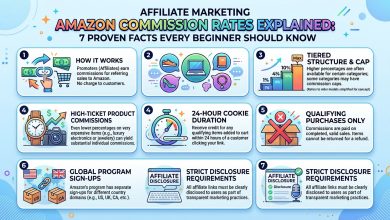
- Get Approved (Provisional): Initially, you receive provisional approval. To achieve full approval, you typically need to generate at least three qualifying sales within 180 days of joining the program and ensure your site complies with Amazon’s policies.
- Create Special Links: Once approved, you gain access to Associates Central, the affiliate dashboard. Here, you can generate unique tracking links (Special Links) for millions of products across various categories on Amazon. These links embed your Associate ID, allowing Amazon to attribute sales to your account.
- Promote Products: Share these Special Links with your audience through your content. This could be in blog posts, product reviews, comparison articles, social media updates, or even emails (provided they are solicited and compliant with Amazon’s terms).
- Earn Commissions: When a visitor clicks your affiliate link and makes a qualifying purchase on Amazon within a specific timeframe (the “cookie window,” typically 24 hours), you earn a commission on that sale. If the customer adds an item to their cart within 24 hours and completes the purchase within 89 days, the commission is still attributed to you. The commission rates vary depending on the product category. Amazon handles all transactions, shipping, and customer service.
- Receive Payments: Amazon sends payments approximately 60 days after the end of the month in which commissions were earned. Affiliates need to reach a minimum earning threshold ($10 for direct deposit or Amazon gift card, $100 for check) to receive payouts.
Benefits of Becoming an Amazon Associate
Joining the Amazon Associates Program offers numerous advantages for individuals and businesses looking to generate income online:
- Vast Product Selection: Amazon boasts millions of products across virtually every category imaginable, from electronics and books to fashion and home goods. This extensive catalog allows affiliates to find products relevant to almost any niche, making it easier to cater to their audience’s interests and needs.
- Trusted Brand Recognition: Amazon is a globally recognized and highly trusted brand. Consumers are generally comfortable purchasing from Amazon, which can significantly increase conversion rates for affiliates. This inherent trust reduces the skepticism that might be associated with lesser-known merchants.
- Ease of Use: The program is designed to be straightforward, even for beginners in affiliate marketing. Amazon provides user-friendly tools for creating links, tracking sales, and monitoring performance through the Associates Central dashboard.
- Passive Income Potential: Once your content with affiliate links is published and generating traffic, it can continue to earn commissions over time, creating a source of passive income. This “set it and forget it” aspect, once the initial work is done, is a significant draw for many affiliates.
- No Inventory or Customer Service: Affiliates don’t have to worry about managing product inventory, handling shipping logistics, or providing customer support. Amazon takes care of all these operational aspects, allowing affiliates to focus solely on content creation and promotion.
- Additional Sales on Referred Traffic: A unique benefit of Amazon’s program is that if a customer clicks your link and then purchases other items on Amazon within the cookie window, you often earn a commission on those additional items as well, not just the specific product you linked to.
Choosing Your Niche and Products
The foundation of a successful Amazon affiliate strategy lies in selecting the right niche and products. This decision significantly influences your ability to attract a targeted audience and generate meaningful commissions.
- Align with Passion and Expertise: While market demand is crucial, choosing a niche you are genuinely passionate about or have expertise in can prevent burnout and allow you to create authentic, high-quality content. Your genuine interest will resonate with your audience and build trust.
- Research Market Demand and Competition: Use tools like Google Trends and keyword planners to identify niches with growing or consistent demand and manageable competition. Avoid oversaturated markets where it’s challenging to stand out. Looking at Amazon’s best-seller lists can also provide insights into popular products and categories.
- Consider Commission Potential: Amazon’s commission rates vary widely by product category, from as high as 10-20% for Luxury Beauty, Amazon Games, or Amazon Explore, to as low as 1% for groceries or physical video games. While high-commission categories are attractive, balancing this with product demand and personal interest is key.
- Variety of Products within the Niche: A niche with a diverse range of products allows for more content opportunities and caters to a wider audience within that specific segment. This also enables you to promote a mix of high-ticket and everyday items.
- Evergreen vs. Trendy: Consider whether your chosen niche is driven by long-term trends or short-lived fads. Evergreen niches offer more consistent earning potential, whereas highly trendy niches require constant research and adaptation.
Strategies for Effective Content Creation
High-quality, engaging content is the engine that drives traffic and conversions for Amazon Associates. Your content should provide value to your audience, helping them make informed purchasing decisions.
- Focus on Buyer-Focused Content: Create content that answers specific search questions and addresses your audience’s problems or needs. This could include in-depth product reviews, comparison guides, “how-to” tutorials, gift guides, or lists of “best” products for a particular purpose.
- Provide Genuine and Honest Reviews: Authenticity builds trust, which is paramount in affiliate marketing. Only promote products you genuinely believe in and be honest about both their strengths and limitations. Your audience can easily discern insincere recommendations.
- Optimize for Search Engines (SEO): Even without internal linking in this specific context, optimizing your content for relevant keywords will help potential customers find your recommendations through organic search. This involves using keywords naturally throughout your content, in headings, and meta descriptions.
- Utilize Various Content Formats: Diversify your content to include text, images, and potentially video reviews. Videos can be particularly effective, as Amazon itself values video content.
- Maintain Content Quality and Depth: Amazon reviews sites for quality and unique content, not just lists of affiliate links. Substantial, well-researched, and original content is essential for approval and long-term success.
| Product Category | Typical Commission Rate (Approx. %) | Potential for Earnings (Based on general trends) |
|---|---|---|
| Luxury Beauty, Amazon Explore | 10% | High (often higher price points) |
| Digital Music, Handmade, Digital Videos | 5% | Medium |
| Physical Books, Kitchen, Automotive | 4.5% | Medium |
| Amazon Devices, Apparel, Shoes, Jewelry, Watches | 4% | Medium to High (depending on volume/price) |
| Toys, Home, Furniture, Pet Products, Outdoors | 3% | Medium |
| PC Components, DVD & Blu-Ray | 2.5% | Low to Medium |
| Televisions, Digital Video Games | 2% | Low (often high-ticket but low rate) |
| Amazon Fresh, Grocery, Health & Personal Care | 1% | Very Low (requires high volume) |
| Gift Cards, Wireless Service Plans | 0% | None |
| Amazon Games | 20% | Very High (new strategic push) |
Maximizing Your Earnings: Tips and Best Practices

While the Amazon Associates program offers a clear path to monetization, strategic implementation of best practices can significantly boost your earnings.
- Focus on High-Ticket or High-Conversion Items: Strategically promote products that offer more generous commission structures or have a high likelihood of conversion. This doesn’t necessarily mean only expensive items; a high-conversion, frequently purchased lower-priced item can also be profitable.
- Optimize for International Traffic: If your audience is global, consider using tools that automatically localize Amazon links to direct visitors to their respective local Amazon store (e.g., Amazon.co.uk for UK visitors). This can prevent lost commissions from international bounces.
- Leverage Seasonal and Trending Products: Pay attention to seasonal trends, holidays, and popular product launches. Creating timely content around these events can drive significant traffic and sales.
- Build an Email List: Email marketing remains a powerful tool. By building an email list, you can directly communicate with your audience, share recommendations, and drive traffic to your affiliate content, provided your email communications are compliant with Amazon’s rules.
- Monitor Performance and Optimize: Regularly check your Associates Central dashboard for reports on clicks, conversions, and earnings. Analyze what content and products perform best and use these insights to refine your strategy. A/B testing different product listings or calls to action can also improve conversion rates.
- Diversify Beyond Amazon (Strategically): While this article focuses on Amazon, understanding the broader affiliate marketing landscape can be beneficial. Some categories might offer higher commission rates on other platforms. However, the strength of Amazon lies in its vast product range and customer trust. According to Wikipedia, affiliate marketing is a widespread practice where affiliates receive a commission for visits, sign-ups, or sales they generate for a merchant, highlighting its performance-based nature read more about affiliate marketing on Wikipedia.
- Prioritize Audience Trust: Always prioritize providing value and genuine recommendations over simply chasing high commissions. An audience that trusts your advice is more likely to click your links and make purchases repeatedly.
Common Mistakes to Avoid
New and even experienced Amazon Associates can fall into common traps that hinder their success or even lead to account suspension. Avoiding these pitfalls is crucial for long-term profitability.
- Not Disclosing Affiliate Relationship: It is a mandatory requirement to clearly and prominently state on your site that you are an Amazon Associate and earn from qualifying purchases. This disclosure should be easy to see and placed near affiliate links or on pages where products are promoted.
- Ignoring Amazon’s Operating Agreement: The Amazon Associates Program has strict terms of service and operating policies. Failure to read and adhere to these guidelines can result in account closure and withheld earnings. Policies are updated periodically, so regular review is advised.
- Placing Affiliate Links in Prohibited Locations: Amazon strictly prohibits placing Special Links in certain places, such as emails (unless solicited and compliant), PDFs, eBooks, or offline materials. Links should primarily be on public-facing websites or social media.
- Mentioning Product Prices or Availability: Amazon’s prices and product availability can change frequently. Therefore, you are generally not permitted to mention specific prices or “in stock” statuses directly in your content to avoid misleading customers.
- Using Customer Reviews or Star Ratings Directly: Copying customer reviews or Amazon’s star ratings and displaying them on your site is typically against the rules. You should create your own unique content and assessments.
- Buying Products Through Your Own Links: Purchasing items through your own affiliate links is a direct violation of Amazon’s terms and can lead to account termination.
- Not Generating Sales within the Initial Period: New affiliates are usually required to make at least three qualifying sales within 180 days of joining to get full approval and avoid account deactivation.
- Prioritizing Commissions Over Audience Trust: Chasing high-commission products without genuinely believing in them can erode audience trust, leading to lower conversion rates in the long run.
- Lacking Focus and Giving Up Easily: Affiliate marketing requires time and consistent effort. Many beginners give up too soon, failing to realize that building a successful affiliate business takes sustained work.
Navigating Amazon’s Policies and Guidelines

Adhering to Amazon’s comprehensive set of policies and guidelines is not merely a recommendation but a mandatory requirement for every Amazon Associate. These rules are designed to ensure a fair, transparent, and trustworthy environment for both Amazon and its customers. Familiarity with the Associates Program Operating Agreement and other associated policies is paramount to avoid potential issues, including account suspension or termination.
- Mandatory Disclosure: As mentioned, you must clearly identify yourself as an Amazon Associate on your site. The required wording, “As an Amazon Associate I earn from qualifying purchases,” or a substantially similar statement, must be prominently displayed. This ensures transparency with your audience.
- Customer Relationship: It’s critical to understand that Amazon’s customers are not your customers. You must not interact with customers regarding their purchases or customer service issues as if you were an Amazon representative. If contacted, you are obligated to direct them to Amazon’s customer service.
- Content and Link Usage: Program Content (such as product images and descriptions provided by Amazon) should only be used to direct traffic to Amazon Sites. You cannot link this content to other non-Amazon sites. Each Special Link should point directly to the relevant product detail page or another appropriate Amazon page.
- Prohibited Promotional Activities: Amazon has strict rules against certain promotional methods. This includes, but is not limited to, using Special Links in emails (unless specific conditions are met), offline promotions, printed materials, or in ways that mimic Amazon’s own branding. You also cannot place Special Links on Amazon’s own sites.
- Trademark Guidelines: You must adhere to Amazon’s trademark guidelines, which dictate how you can use their brand elements. For instance, using Amazon brand terms in your domain name or social media handles is generally prohibited.
- Account Activity: To maintain your associate status, you need to drive at least three qualifying sales within the initial 180-day period. Consistent activity and adherence to policies are monitored by Amazon.
- Staying Updated: Amazon revises its Operating Agreement and Program Policies periodically. It is the affiliate’s responsibility to stay informed about the latest changes to ensure ongoing compliance.
Conclusion
The Affiliate Amazon Program remains a powerful and accessible avenue for online monetization in today’s digital economy. Its enduring popularity stems from Amazon’s expansive product catalog, robust brand trust, and user-friendly platform, making it an attractive option for content creators globally. While the landscape of affiliate marketing is ever-evolving, with shifts in commission rates and the emergence of new initiatives, the core principles of success remain constant: building trust with your audience, providing genuine value through high-quality content, and meticulously adhering to Amazon’s operational guidelines.
By thoughtfully selecting a niche, crafting compelling and informative content, and consistently optimizing your strategies, aspiring and seasoned affiliates alike can leverage the Amazon Associates program to generate significant passive income. However, vigilance in understanding and complying with Amazon’s policies, particularly regarding disclosures and link placement, is paramount to ensuring a sustainable and profitable affiliate journey. As the program continues to adapt, a strategic and data-driven approach, coupled with an unwavering commitment to audience-first content, will be the keys to unlocking its full potential in the years to come.