Affiliate Marketing Programme Guide for Online Entrepreneurs: 10 Powerful Tips for Success
Table of Contents
Affiliate marketing has emerged as a powerful and increasingly popular revenue-sharing model for online entrepreneurs seeking to monetise their digital presence without the complexities of product creation or inventory management. This performance-based strategy allows individuals or businesses, known as affiliates, to earn a commission by promoting another company’s products or services. The core principle revolves around a mutually beneficial partnership: the affiliate drives traffic and leads, and in return, receives a percentage of sales, leads, or clicks generated through their unique referral links. In today’s dynamic digital landscape, where content creators, bloggers, and social media influencers hold significant sway, affiliate marketing offers a flexible and scalable pathway to building a sustainable online business. Understanding the intricacies of establishing and managing a successful affiliate marketing programme is crucial for any online entrepreneur looking to capitalise on this thriving industry.
What is Affiliate Marketing?
Affiliate marketing is essentially a digital advertising model where a business pays a third-party publisher a commission to generate traffic or leads for the business’s products and services. This “third party” is the affiliate, often an individual with an established online presence, such as a blogger, YouTuber, or social media influencer. The process is straightforward: an aspiring affiliate marketer identifies an affiliate programme that aligns with their interests and audience. After approval, they receive custom affiliate links for specific products or services. These unique links contain a tracking ID, allowing the merchant to accurately attribute sales or actions to the referring affiliate. When a consumer clicks the affiliate link and completes a desired action – usually a purchase – the affiliate earns a predefined commission.
The affiliate’s role is to promote the merchant’s offerings in an engaging and persuasive manner across various digital channels, including their website, blog, social media platforms, or email newsletters. Crucially, transparency is key, and affiliates are generally required to disclose their promotional relationship with the merchant to their audience. This model is predominantly B2C (business-to-consumer), although B2B affiliate programmes also exist. The global affiliate marketing industry is robust, valued at approximately $18.5 billion, with projections indicating growth to $31.7 billion by 2031. This consistent expansion underscores its increasing adoption by both businesses and content creators as a core sales driver within the e-commerce ecosystem.
Why Affiliate Marketing is a Game-Changer for Entrepreneurs
For online entrepreneurs, affiliate marketing presents a compelling business model with numerous advantages that address common challenges associated with traditional online ventures. One of its most attractive benefits is the potential for passive income. Once the initial work of setting up marketing channels and integrating affiliate links is done, commissions can be earned on an ongoing basis. This means entrepreneurs can generate revenue even while they sleep, making it an ideal strategy for those seeking financial freedom and location independence.
Another significant advantage is the low startup cost and ongoing expenditure. Unlike e-commerce, affiliates do not need to create, store, or ship products, nor do they handle customer service. This drastically reduces the financial barrier to entry and ongoing operational costs, allowing entrepreneurs to allocate resources towards content creation and audience engagement. The inherent low risk also makes it appealing; with minimal investment, entrepreneurs can experiment with different niches and products without significant financial exposure.
Affiliate marketing also offers immense flexibility and scalability. Entrepreneurs can choose to commit as much or as little time as they wish, and the low initial investment allows for easy switching between affiliate programmes if necessary. Furthermore, a well-executed strategy can lead to a high return on investment (ROI), with some reports indicating an average return of $15 for every dollar invested. Affiliates can also benefit from targeted traffic, as they often partner with brands whose products naturally appeal to their existing audience, leading to higher conversion rates. The endorsement from an affiliate also acts as a form of social proof, building credibility and trust with potential customers.
Laying the Foundation: Key Elements of an Affiliate Marketing Strategy
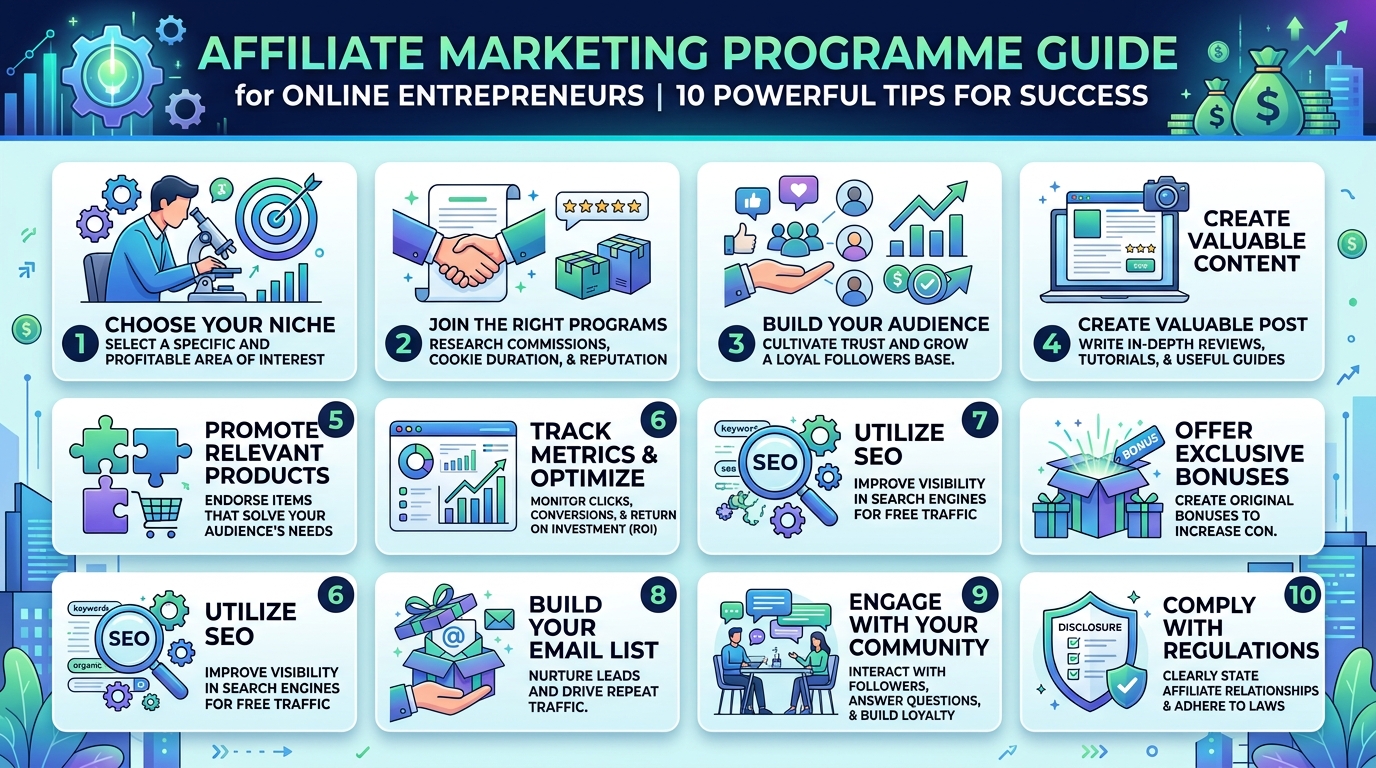
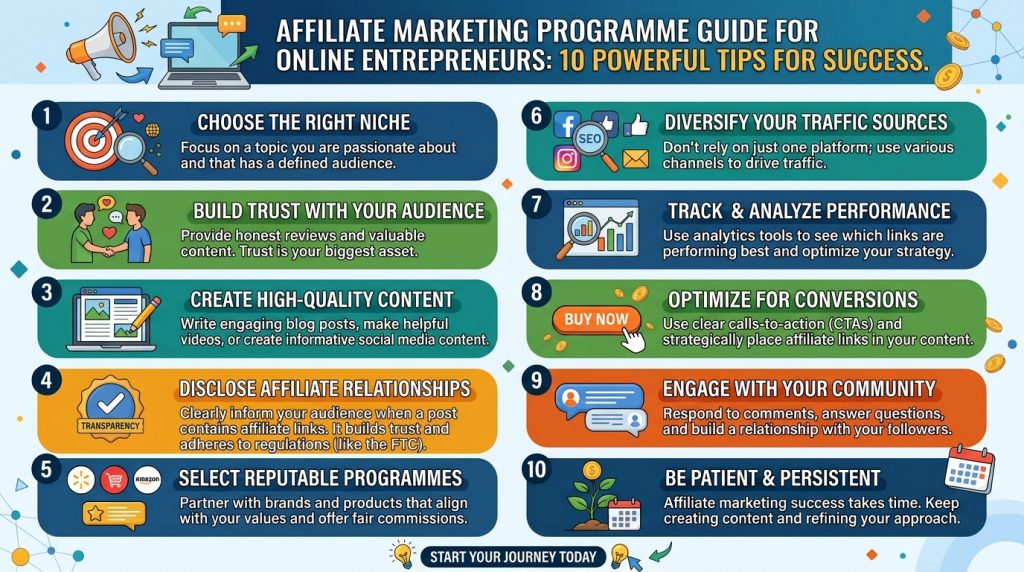
A successful affiliate marketing venture is built upon several foundational elements. The first and most critical step is niche selection. Choosing the right niche involves identifying a topic you are genuinely passionate about and knowledgeable in, as this makes content creation easier and more authentic. It’s vital to research the market to ensure there’s a sizeable audience and profit potential, balancing demand with competition. Overly broad niches can lead to intense competition, while extremely narrow ones might limit earning potential.
Once a niche is established, content creation becomes the cornerstone of your strategy. High-quality, valuable, and engaging content is essential to attract and retain an audience. This can take various forms, including blog posts, product reviews, video tutorials, social media updates, and email newsletters. The content should aim to educate and persuade the audience, naturally integrating affiliate links. Search Engine Optimisation (SEO) plays a crucial role here, ensuring your content ranks well in search results to drive organic traffic.
Audience building and relationship development are equally important. Engaging with your audience on social media, responding to comments, and fostering a sense of community builds trust and loyalty. A reliable affiliate who genuinely connects with their audience tends to have higher conversion rates. Lastly, a comprehensive strategy involves promoting your content across multiple channels, tracking performance with analytics tools, and continuously optimising based on results.
Navigating the Landscape: Choosing the Right Affiliate Programmes and Products
The success of an affiliate marketing business largely hinges on the careful selection of affiliate programmes and products. With a plethora of options available, entrepreneurs must employ a strategic approach. The first consideration is reputation and reliability. It’s preferable to work with established vendors and programmes that have a good track record and high traffic, ensuring both product quality and consistent payouts. Always investigate the merchant’s landing page for potential “traffic leaks” – links that redirect users away from the intended purchase, which could cost you commissions.
Product relevance to your chosen niche and audience is paramount. Promoting products that genuinely align with your content and cater to your audience’s interests and needs will lead to higher engagement and conversion rates. As an entrepreneur, it’s beneficial to choose products you know or have used, or to thoroughly research them to build genuine product knowledge, which enhances credibility.
Commission rates and structures are, of course, a significant factor. While higher commission rates are attractive, it’s essential to consider the bigger picture. A product with a lower commission rate but high sales volume and conversion potential might yield more overall profit than a high-commission product with low sales. Look for programmes offering competitive percentage commissions or even recurring commissions for subscription-based products, which can provide a stable, long-term income stream. The cookie duration is also important; this refers to how long an affiliate’s referral is tracked after a click. Longer cookie durations increase the chance of earning a commission, even if a purchase is delayed. Many programmes offer 30 to 90-day cookie durations. Finally, ensure the programme provides a robust system for tracking sales and performance metrics.
| Affiliate Marketing Key Statistics (as of 2024-2026) | Details | Source (Example) |
|---|---|---|
| Global Market Size | Valued at approximately $18.5 billion, projected to grow to $31.7 billion by 2031. | Hostinger / Cognitive Market Research |
| U.S. Spending (2025) | Expected to reach nearly $12 billion. | Statista / Hostinger |
| Average ROI | Businesses earn an average of $15 for every $1 invested (1400% return). | FirstPromoter / Affiliate Statistics |
| Brands Using Affiliate Marketing | Over 80% of brands utilise affiliate programmes. | FirstPromoter / Forrester |
| E-commerce Sales Contribution | Accounts for 16% of all e-commerce sales in the U.S. and Canada. | TrustPulse / Impact |
| Average Monthly Earnings | Affiliate marketers earn an average of about $8,038 a month. | Authority Hacker |
| Mobile Traffic Share | Over 50% of affiliate traffic comes from mobile devices. | SimilarWeb |
| Top Traffic Source for Marketers | SEO is the main tactic for 78.3% of marketers to acquire traffic. | Authority Hacker |
Attracting Your Audience: Driving High-Quality Traffic
Generating consistent, high-quality traffic is the lifeblood of any affiliate marketing business. Without visitors to your content, there are no clicks, and consequently, no commissions. Entrepreneurs need a diversified approach to traffic generation, combining organic and paid strategies. Organic traffic sources are highly valuable because they bring genuinely interested prospects and can be cost-effective in the long term, though they require consistent effort.
- Search Engine Optimisation (SEO): Building a search engine-optimised website and creating a robust content library around relevant keywords is fundamental. By targeting “buyer-intent” keywords, affiliates can attract users who are further along in their purchase journey, increasing conversion likelihood. Regular content updates and acquiring backlinks from reputable sites also boost search rankings. More information on optimising your website can be found at this internal resource.
- Blog Posts: Informative blog posts, product reviews, and comparison guides are excellent for providing value and naturally integrating affiliate links.
- Social Media Marketing: Platforms like Facebook, Instagram, and YouTube are bustling marketplaces. Building a strong social media presence, engaging with communities, and consistently sharing valuable content can drive significant traffic. YouTube, in particular, is the second-biggest search engine and offers a powerful channel for video reviews and demonstrations.
- Email Marketing: Building an email list is crucial as it gives you direct access to an engaged audience, independent of platform algorithms. Email subscribers have actively expressed interest in your niche, making them highly qualified leads.
Paid traffic sources can accelerate visibility and reach a target audience quickly, especially for new product launches or promotions. These include paid search (PPC), social media campaigns, display advertising, and native ads. While effective, careful management is required to balance advertising costs with potential commissions to ensure profitability. The key is to run tightly targeted ads that attract people likely to convert. Many successful affiliates use a blend of both paid and organic strategies.
Optimising for Success: Tracking, Analytics, and Scaling
Effective affiliate marketing goes beyond initial setup; it demands continuous monitoring, analysis, and optimisation. Affiliate tracking software is indispensable for this, allowing entrepreneurs to monitor clicks, conversions, earnings, and commissions in real-time. These tools provide invaluable insights into campaign performance, helping to identify what’s working and what isn’t. Popular options include platforms like Trackdesk, FirstPromoter, Impact, and Affise, which offer features such as customizable dashboards, fraud detection, and flexible commission structures.
Data analytics is central to optimisation. By regularly evaluating key performance indicators (KPIs) like click-through rates, conversion rates, and revenue generated, entrepreneurs can refine their strategies. A/B testing different ad creatives, headlines, and calls-to-action can significantly impact click-through and conversion rates. The goal is to continuously improve the return on investment (ROI) of your marketing efforts. Many platforms offer detailed reports and customised spend management to aid in this process.
Scaling an affiliate business involves leveraging successful strategies and expanding your reach. This includes diversifying your affiliate partners, exploring new channels, and refining your content strategy. Building strong, authentic relationships with affiliates and, if you are a merchant, with your network, is vital for long-term success. These relationships foster loyalty and engagement, leading to more sustainable growth. Staying informed about the latest market trends, such as the increasing importance of mobile optimisation and influencer partnerships, is also critical for maintaining a competitive edge. For a deeper dive into the technical aspects of tracking and analytics, Wikipedia provides comprehensive information on affiliate marketing.
Common Pitfalls and How to Sidestep Them
While affiliate marketing offers immense potential, it’s not without its challenges. Online entrepreneurs often encounter several common pitfalls that can hinder their success. The most prevalent mistake is treating affiliate marketing as a “get-rich-quick scheme”. This unrealistic expectation often leads to a lack of sustained effort and a quick abandonment of the strategy when immediate results don’t materialise. Affiliate marketing requires patience, consistent work, and a long-term strategic approach.
Another significant challenge is poor niche selection or a lack of specialisation. Choosing a niche that is too broad, or one solely based on high commission rates without genuine interest or expertise, can lead to difficulty in creating valuable content and competing with established players. Similarly, creating content without a clear strategy, or producing low-quality content that merely rewrites existing information, fails to attract an audience and build trust. Always prioritise providing genuine value to your readers.

Many affiliates also make the mistake of ignoring audience building and relationship development, focusing solely on driving traffic. Without a loyal and engaged audience, conversions will remain low. Entrepreneurs should also be wary of failing to treat affiliate marketing as a real business. This includes neglecting proper planning, goal setting, and continuous learning. Moreover, lack of diversity in partnership strategy can be detrimental; relying too heavily on one type of affiliate or marketing channel can expose your programme to risks if that channel’s performance declines. This guide on effective digital marketing strategies can provide further insights into diversifying your online efforts.
Finally, regulatory compliance is a growing concern. The affiliate marketing sector faces increasing complexities regarding consumer protection laws and advertising regulations. Entrepreneurs must ensure transparency in their advertising practices and clearly disclose affiliate relationships to avoid penalties and maintain brand reputation. Regularly monitoring and optimising your programme, coupled with clear communication and guidelines for affiliates, can help mitigate these risks.
Conclusion
Affiliate marketing offers an exciting and accessible avenue for online entrepreneurs to generate substantial income by leveraging their platforms and influence. Its inherent advantages, such as low startup costs, flexibility, and the potential for passive income, make it a highly attractive model. However, true success in this dynamic field demands a strategic, disciplined, and audience-centric approach. From meticulously selecting a profitable niche and creating high-quality, value-driven content to diversifying traffic sources and diligently tracking performance, every step plays a crucial role.
Entrepreneurs who invest in building genuine relationships with their audience, remain transparent in their promotions, and continuously adapt to evolving market trends and technologies are most likely to thrive. By understanding and proactively addressing common pitfalls, aspiring and established online entrepreneurs can transform affiliate marketing into a powerful, sustainable, and highly rewarding component of their digital business portfolio. The journey may require patience and consistent effort, but the rewards of a well-executed affiliate marketing programme can be truly transformative.