
10 Publishers Strategies for Better Affiliate Marketing Partnerships
Table of Contents
Affiliate marketing, for publishers, represents a dynamic and potentially highly lucrative revenue stream. However, merely placing affiliate links is no longer sufficient in today’s competitive digital landscape. To truly thrive, publishers must move beyond transactional thinking and cultivate robust, strategic partnerships with merchants. This comprehensive guide delves into the nuances of building and maintaining better affiliate marketing partnerships, offering actionable insights for publishers aiming to optimize their performance, enhance credibility, and achieve sustainable growth in their affiliate ventures.
Understanding the Affiliate Marketing Ecosystem for Publishers
At its core, affiliate marketing involves a publisher promoting a merchant’s product or service and earning a commission for every sale, lead, or click generated through their unique affiliate link. The ecosystem comprises several key players: the merchant (or advertiser), the affiliate (or publisher), the affiliate network, and the customer. Publishers, in this setup, act as trusted intermediaries, bridging the gap between potential customers and relevant products. Their role extends beyond mere promotion; it involves understanding their audience’s needs, curating valuable content, and strategically integrating affiliate offers in a way that provides genuine value.
The success of an affiliate partnership hinges on mutual benefit. Merchants seek increased sales and brand exposure, while publishers aim for fair compensation and relevant monetization opportunities that resonate with their audience. A deep understanding of this symbiotic relationship is the foundation for forging better partnerships. Publishers must recognize that they are not just marketers; they are content creators, audience builders, and trusted advisors. Their authority and credibility are their most valuable assets in securing and maintaining high-quality affiliate relationships.
Several models exist within affiliate marketing, including pay-per-sale, pay-per-lead, and pay-per-click. Publishers often find pay-per-sale to be the most common and often the most profitable, but this depends heavily on the product, industry, and conversion rates. Understanding the different commission structures and how they align with your content type and audience engagement is crucial. For instance, a review site might excel with pay-per-sale, while a news portal might benefit from pay-per-click models for certain types of content. The chosen model directly influences the partnership’s structure and the publisher’s strategic approach. According to Wikipedia, affiliate marketing has grown significantly, evolving from a niche strategy to a mainstream digital marketing approach. The Wikipedia article on affiliate marketing further elaborates on its history and various models.
Selecting the Right Affiliate Programs and Networks
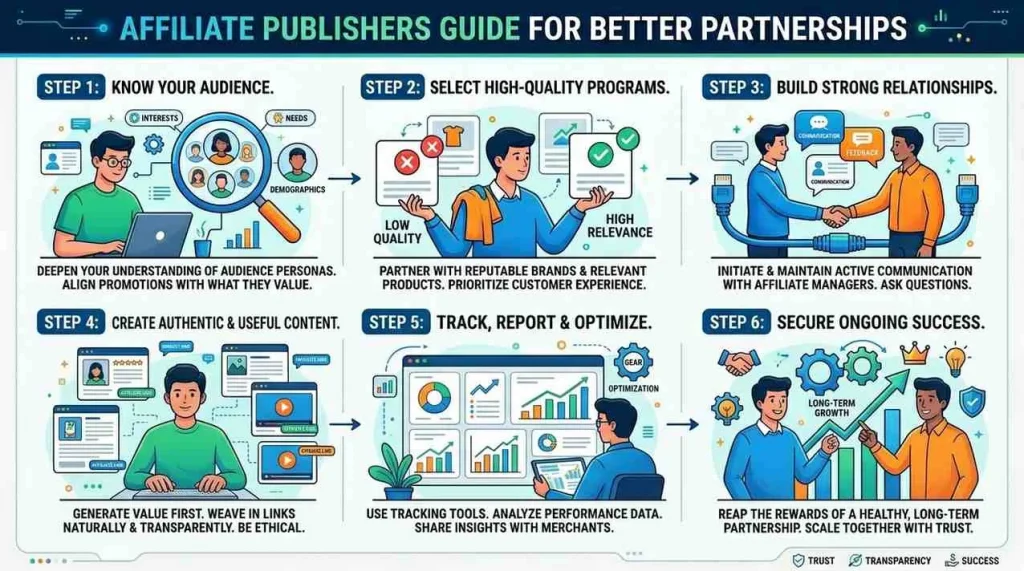
The sheer volume of affiliate programs and networks available can be overwhelming for publishers. The key to better partnerships begins with strategic selection. This involves a rigorous evaluation of programs, networks, and individual merchants to ensure alignment with your niche, audience, and ethical standards. Randomly joining programs can dilute your brand and lead to low conversion rates, ultimately harming your reputation and revenue.
- Niche Relevance: Prioritize programs whose products or services directly align with your content and audience interests. Promoting irrelevant items can erode trust. For example, a tech review site should focus on electronics, not gardening tools.
- Audience Demographics: Understand who your audience is and what they are likely to buy. Programs offering products that meet your audience’s pain points or desires will naturally perform better.
- Merchant Reputation and Product Quality: Partnering with reputable merchants offering high-quality products is paramount. Poor products lead to customer dissatisfaction, returns, and damage to your credibility. Research merchant reviews, product quality, and customer service before committing.
- Commission Structure and Payouts: Evaluate commission rates, cookie duration, and payout thresholds. Higher commission rates are attractive, but a lower commission on a high-converting, popular product might be more profitable than a high commission on a niche, low-converting item. Ensure payout terms are favorable and reliable.
- Affiliate Network Support: For programs run through networks (e.g., ShareASale, CJ Affiliate, Rakuten Advertising), assess the network’s support, reporting tools, and ease of use. A robust network provides valuable resources, timely payments, and dedicated affiliate managers.
- Terms and Conditions: Always read the fine print. Understand forbidden promotional methods, brand bidding rules, and any restrictions that could impact your marketing efforts.
Identifying the right partners is an ongoing process. Regularly review your affiliate portfolio to ensure that programs are still performing and aligning with your evolving content strategy. Publishers should consider diversifying their partnerships across different networks and direct programs to mitigate risk and explore new opportunities. It’s about quality over quantity; a few strong, well-aligned partnerships will always outperform a multitude of mismatched ones.
Building and Nurturing Strong Merchant Relationships
The cornerstone of a successful affiliate strategy for publishers is the cultivation of strong, collaborative relationships with merchants. This goes beyond simply signing up and embedding links. It involves proactive communication, demonstrating value, and fostering a sense of partnership.
Effective communication is key. Publishers should aim to be responsive, transparent, and proactive in their interactions with affiliate managers. This includes providing feedback on promotions, suggesting new product angles, and sharing insights into audience behavior. Regularly check in with your affiliate manager to discuss upcoming promotions, new product launches, or any challenges you might be facing. A strong relationship can lead to exclusive offers, higher commission rates, extended cookie durations, and early access to products – all of which can significantly boost your earning potential.
Demonstrating value is also critical. Merchants appreciate publishers who drive consistent, quality traffic and conversions. Provide reports on your performance, highlight successful campaigns, and explain how you are strategically promoting their products. Share data-driven insights on what resonates with your audience and how their products fit into your content strategy. Offering to test new products or participate in beta programs can also solidify your status as a valuable partner. Building a rapport ensures that merchants view you as a strategic asset rather than just another affiliate ID. This collaborative approach fosters an environment where both parties are invested in each other’s success, leading to more resilient and profitable partnerships in the long run.
Content Strategies for Maximizing Affiliate Conversions
Content is king in affiliate marketing, and for publishers, it’s the primary vehicle for driving conversions and building trust. Optimizing your content for affiliate success requires a blend of SEO best practices, persuasive writing, and a deep understanding of your audience’s journey. It’s not about forcing products but seamlessly integrating recommendations that add value to the reader’s experience. Crafting content that naturally leads to conversion while maintaining editorial integrity is a delicate balance.
- Value-First Approach: Every piece of content should first and foremost provide value to the reader. Whether it’s an informative guide, an in-depth review, or a problem-solving tutorial, the affiliate product should be a natural solution or recommendation within that valuable context.
- In-Depth Reviews and Comparisons: Detailed product reviews, pros and cons, and side-by-side comparisons are highly effective. Provide genuine insights, personal experiences (if applicable), and clear justifications for your recommendations. Transparency about your affiliate relationship builds trust.
- Tutorials and How-To Guides: Showcasing how a product solves a problem or enhances an activity can be incredibly powerful. Integrate affiliate products as essential tools within these guides.
- Curated Lists and Roundups: “Best of” lists (e.g., “Top 10 Laptops for Students,” “Best Budget Cameras”) are popular for comparison shopping. Ensure your selections are well-researched and justified.
- Optimized Calls to Action (CTAs): Your CTAs should be clear, compelling, and strategically placed. Use strong action verbs and create a sense of urgency or benefit. Experiment with different placements and phrasing to see what resonates most with your audience.
- SEO Best Practices: Optimize your content with relevant keywords to ensure it ranks well in search engines. A well-optimized piece of content can bring passive, high-intent traffic for years. This involves thorough keyword research, on-page optimization, and technical SEO considerations. For more insights on this, you might explore resources on SEO best practices.
- Mobile Responsiveness: A significant portion of online traffic comes from mobile devices. Ensure your website and content are fully responsive and provide an excellent user experience on all screen sizes.
Content should be regularly updated to reflect new product versions, current market trends, and fresh insights. Stale content can lead to decreased conversions and a perception of irrelevance. Staying current ensures your recommendations remain accurate and valuable, reinforcing your authority as a trusted publisher.
| Partnership Stage | Publisher’s Role | Key Merchant Expectation | Benefit to Publisher |
|---|---|---|---|
| Discovery & Selection | Researching and evaluating programs/merchants for fit. | Clear understanding of niche and audience alignment. | Access to relevant, high-converting products. |
| Onboarding & Setup | Integrating links, understanding terms, initial communication. | Adherence to program guidelines, proactive questions. | Smooth setup, correct tracking, quick problem resolution. |
| Content Creation & Promotion | Producing high-quality content featuring products. | Consistent, high-quality traffic and conversion intent. | Commissions earned, brand authority built. |
| Optimization & Analysis | Monitoring performance, testing strategies, adjusting content. | Feedback on performance, data-driven suggestions. | Improved conversion rates, higher revenue. |
| Relationship Nurturing | Proactive communication, sharing insights, collaborative planning. | Long-term commitment, strategic growth ideas. | Exclusive offers, higher commissions, early access. |
Leveraging Data and Analytics for Partnership Growth
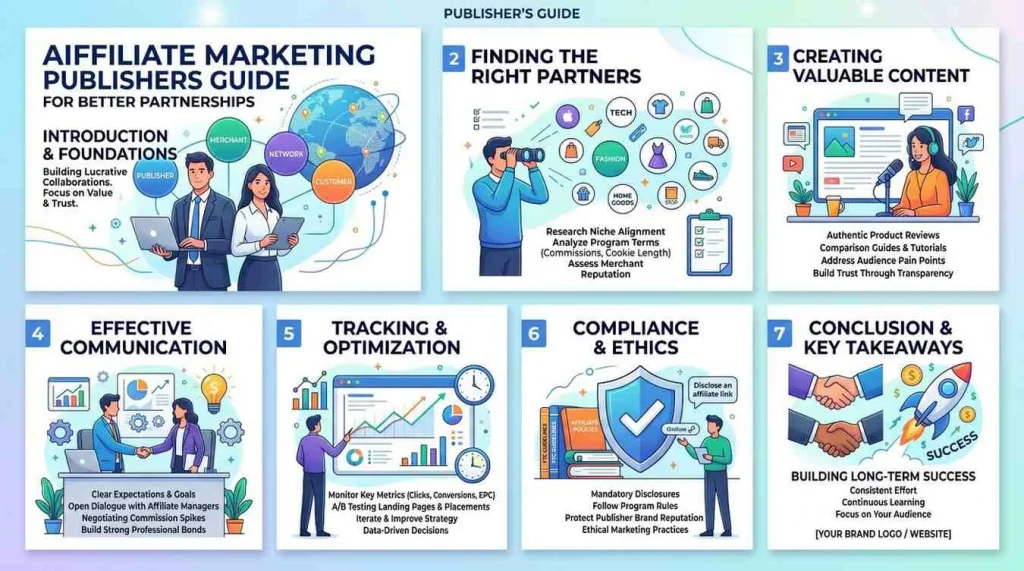
In the world of affiliate marketing, data is your most powerful ally. Publishers who effectively analyze their performance metrics are better equipped to identify opportunities, optimize campaigns, and ultimately strengthen their partnerships. Relying on guesswork will only lead to suboptimal results and strained relationships.
Key metrics to track include:
- Click-Through Rate (CTR): How many people click your affiliate links compared to how many view your content. A low CTR might indicate poor link placement, weak CTAs, or irrelevant product recommendations.
- Conversion Rate: The percentage of clicks that result in a sale or desired action. This is a critical indicator of the effectiveness of your content and the product’s appeal.
- Earnings Per Click (EPC): The average amount of money you earn for each click you send to a merchant. This helps you compare the profitability of different programs and content types.
- Return on Ad Spend (ROAS): If you’re running paid promotions for affiliate products, this measures the revenue generated for every dollar spent on ads.
- Average Order Value (AOV): Understanding the typical value of sales generated through your links can help you identify high-ticket items or opportunities for upselling.
- Audience Behavior: Utilize tools like Google Analytics to understand how users interact with your content before and after clicking an affiliate link. Where do they come from? How long do they stay? What other content do they view?
Share your performance data with merchants. This transparency builds trust and can lead to collaborative optimization efforts. For example, if you notice a particular product converting exceptionally well, sharing this insight could prompt the merchant to provide you with exclusive promotional materials or higher commissions for that item. Conversely, if a product is underperforming despite strong traffic, an open dialogue with the merchant might reveal issues with their landing page, pricing, or product availability, allowing for joint problem-solving. Effective data analysis empowers publishers to make informed decisions, tailor their strategies, and present a clear case for why they are a valuable partner. Understanding your audience’s journey is crucial for effective content marketing strategies and affiliate success.
Navigating Legalities, Ethics, and Best Practices
Maintaining a successful and trustworthy affiliate business requires strict adherence to legal and ethical guidelines. Publishers must prioritize transparency and compliance to protect their audience, their reputation, and their partnerships. Failure to do so can result in hefty fines, program termination, and a significant loss of audience trust. The regulatory landscape, particularly regarding consumer disclosures, is constantly evolving, making continuous education essential.
- Disclosure Requirements: It is legally mandated in many regions (e.g., FTC guidelines in the US, CMA in the UK) that publishers clearly and conspicuously disclose their affiliate relationship. This means informing readers that you may earn a commission if they purchase through your links. Disclosures should be placed prominently near affiliate links, at the top of content, or within an easily accessible disclosure page. Ambiguous or hidden disclosures are not sufficient.
- Privacy Policies: Ensure your website has a comprehensive privacy policy that details how you collect, use, and store user data, especially if you are using cookies for tracking or analytics. Compliance with GDPR (General Data Protection Regulation) and CCPA (California Consumer Privacy Act) is critical if your audience includes individuals from those regions.
- Terms of Service: Always review and adhere to the terms of service of both the affiliate network and individual merchants. Violations can lead to immediate program expulsion and forfeiture of earned commissions. This includes rules around brand bidding, coupon code usage, and disallowed promotional methods.
- Honesty and Integrity: Promote products you genuinely believe in or have personally tested (if applicable). Exaggerated claims or misleading information will quickly erode trust with your audience. Your credibility is your most valuable asset, and it takes years to build but moments to destroy.
- Avoid Spamming: Do not engage in unsolicited email marketing, comment spamming, or other black-hat SEO tactics to promote affiliate products. These practices harm your reputation and violate ethical guidelines.
By proactively addressing these legal and ethical considerations, publishers not only safeguard their business but also establish themselves as responsible and trustworthy entities within the affiliate marketing ecosystem. This commitment to best practices strengthens relationships with merchants, who prefer to partner with reliable and compliant affiliates.
Scaling Your Affiliate Partnerships for Sustainable Growth
Once a publisher has established a solid foundation of effective partnerships and content strategies, the next step is to explore avenues for scaling. Scaling in affiliate marketing doesn’t just mean adding more links; it means strategically expanding your reach, optimizing existing efforts, and diversifying your revenue streams to achieve sustainable, long-term growth.
- Diversify Merchants and Niches: While focusing on your core niche is important, consider expanding into closely related sub-niches or products that naturally appeal to your existing audience. This reduces reliance on a single merchant or industry and opens up new revenue opportunities.
- Expand Content Formats: If you primarily write blog posts, consider incorporating video reviews, comparison tables, infographics, or even podcasts. Different content formats appeal to different audience segments and can create more touchpoints for affiliate promotions.
- Explore New Traffic Channels: Beyond organic search, investigate social media marketing, email marketing, or even paid advertising (if profitable) to drive more qualified traffic to your affiliate content. Each channel requires a tailored approach and understanding of its specific audience.
- Automate Where Possible: Utilize tools for content scheduling, social media posting, and performance tracking to free up time for strategic planning and relationship building. Automation can significantly improve efficiency without sacrificing quality.
- Negotiate Better Terms: As you consistently deliver strong results, don’t be afraid to negotiate for higher commission rates, longer cookie durations, or exclusive promotional opportunities with your top-performing merchants. Your proven track record is your leverage.
- Build a Team: For larger publishers, consider hiring content creators, SEO specialists, or virtual assistants to manage and expand your affiliate efforts. Delegation allows for greater scalability and expertise across different areas.
- Focus on Lifetime Value: Think beyond individual sales. Foster a loyal audience that trusts your recommendations, leading to repeat purchases and higher lifetime value for merchants, which in turn makes you a more valuable partner.
Scaling requires continuous monitoring and adaptation. What works today might not work tomorrow, so staying agile and experimenting with new strategies is crucial. By strategically growing your partnerships and optimizing your operational efficiency, publishers can transform their affiliate efforts into a robust and reliable source of long-term income, solidifying their position as valuable assets within the affiliate marketing ecosystem.
Conclusion
The journey to better affiliate marketing partnerships for publishers is one of continuous learning, strategic planning, and diligent execution. It moves beyond the transactional mindset to embrace a collaborative approach, where publishers act as genuine partners to merchants. By understanding the ecosystem, carefully selecting programs, nurturing relationships, optimizing content for conversion, leveraging data, adhering to legal and ethical standards, and strategically scaling operations, publishers can unlock the full potential of affiliate marketing.
Ultimately, success hinges on trust – the trust your audience places in your recommendations and the trust merchants place in your ability to drive quality traffic and sales. By consistently providing value, maintaining transparency, and proactively engaging with your partners, publishers can build an affiliate marketing empire that is not only profitable but also sustainable and highly respected in the digital space. The future of affiliate marketing belongs to those who view it as a partnership, not just a paycheck.