5Affiliate Marketing for Businesses: Increase Sales Online
Table of Contents
Affiliate marketing has become an indispensable strategy for businesses looking to significantly increase their online sales and expand their digital footprint. In today’s highly competitive e-commerce landscape, merely having a great product or service is often not enough. Businesses need innovative and cost-effective ways to reach their target audience, and affiliate marketing offers a performance-based solution that aligns perfectly with this goal. By leveraging a network of individuals or other businesses (affiliates) to promote products or services, companies can tap into diverse audiences and drive conversions without significant upfront investment. This article will delve into the intricacies of affiliate marketing, exploring its mechanics, benefits, implementation strategies, and how businesses can maximize its potential to achieve remarkable online sales growth.
What is Affiliate Marketing and How Does It Work?
Affiliate marketing is an advertising model where a company compensates third-party publishers (affiliates) to generate traffic or leads to the company’s products and services. The core principle is “pay-for-performance,” meaning affiliates are typically paid only when a specific action, such as a sale, a click, or a lead, occurs. This makes it an attractive model for businesses seeking measurable returns on their marketing spend.
The affiliate marketing ecosystem typically involves four key players:
- The Merchant (or Advertiser): This is the company that sells the product or service. They create the affiliate program and pay commissions to affiliates.
- The Affiliate (or Publisher): This individual or entity promotes the merchant’s products/services through various channels, such as websites, blogs, social media, or email lists. They earn a commission for successful referrals.
- The Consumer: The end-user who makes a purchase or completes an action as a result of the affiliate’s promotional efforts.
- The Affiliate Network: Often, a third-party platform acts as an intermediary between merchants and affiliates. Networks like ShareASale, CJ Affiliate, or Rakuten Advertising provide tracking technology, payment processing, and a directory of programs.
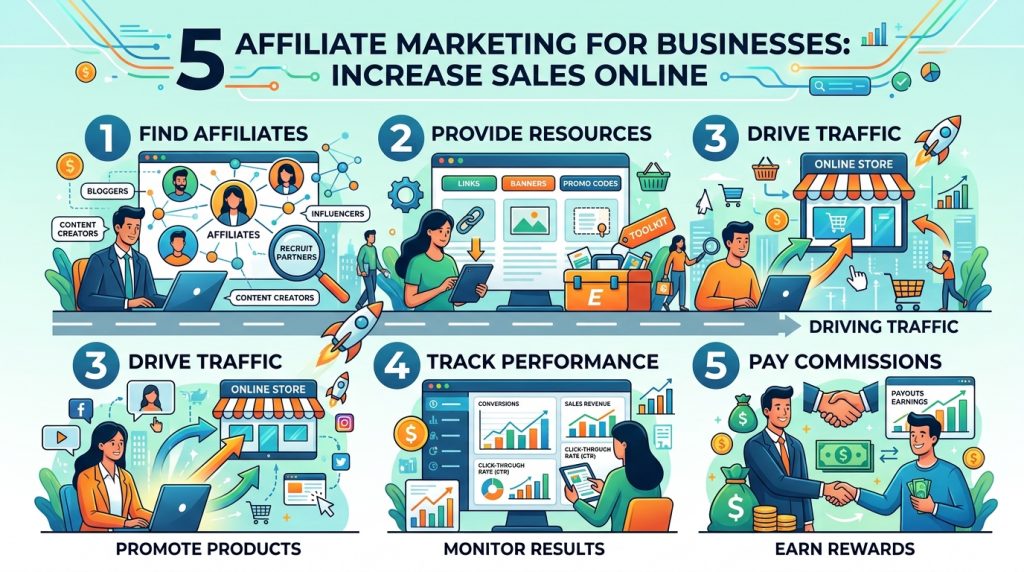
The process generally works as follows: A merchant creates an affiliate program and provides unique tracking links or codes to its affiliates. When an affiliate promotes these links, and a consumer clicks on them to make a purchase, the affiliate network (or the merchant’s own tracking system) records the sale and attributes it to the correct affiliate. The affiliate then earns a pre-agreed commission, which can be a percentage of the sale, a fixed amount per lead, or a per-click payment.
The Undeniable Benefits of Affiliate Marketing for Businesses
For businesses, integrating affiliate marketing into their overall strategy offers a myriad of advantages that directly contribute to increased online sales and brand development.
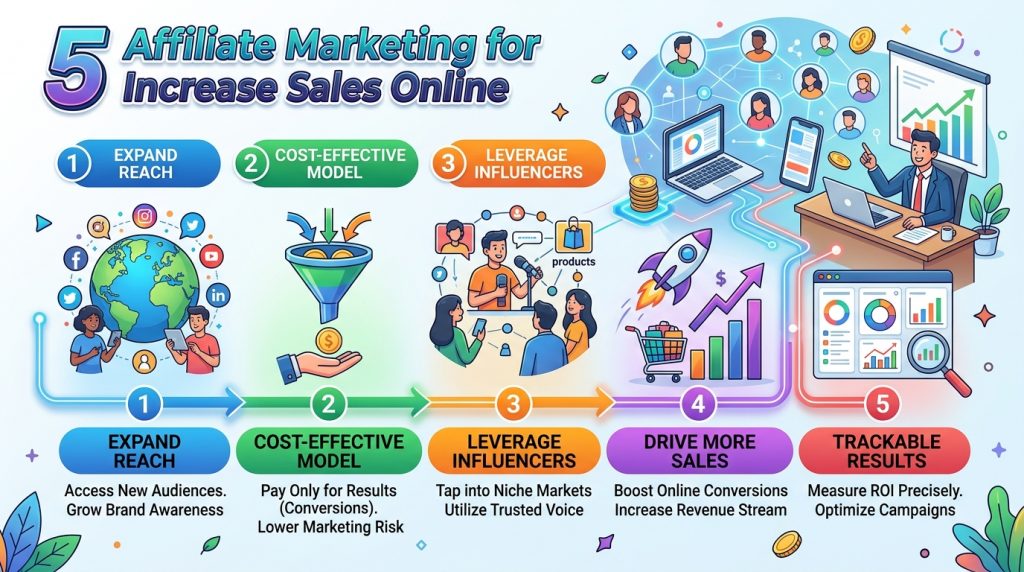
- Cost-Effectiveness and Low Risk: One of the most significant benefits is its performance-based nature. Businesses only pay when a desired action (like a sale or lead) occurs, dramatically reducing marketing risk. Unlike traditional advertising where costs are incurred upfront regardless of results, affiliate marketing ensures a direct return on investment. This pay-for-performance model makes it a highly efficient use of marketing budget.
- Wider Reach and Brand Exposure: Affiliates often have established audiences and credibility within specific niches. By partnering with multiple affiliates, businesses can extend their reach far beyond their existing customer base and tap into new, highly targeted demographics. This exposure helps build brand awareness and recognition among potential customers who might not have otherwise discovered the product or service.
- Targeted Traffic and Higher Conversion Rates: Effective affiliates specialize in specific niches and understand their audience’s needs and interests. When an affiliate promotes a product, they are typically doing so to an audience already predisposed to that type of offering. This results in higher quality, more targeted traffic to the merchant’s website, leading to significantly better conversion rates compared to broader advertising campaigns.
- Scalability: Affiliate programs are inherently scalable. Businesses can easily expand their marketing efforts by recruiting more affiliates without a proportionate increase in fixed overhead costs. This allows for rapid growth and market penetration as the business scales its affiliate network.
- Enhanced SEO and Content Generation: Many affiliates drive traffic through content marketing, reviews, and search engine optimization (SEO). Their efforts to create valuable content around the merchant’s products can indirectly boost the merchant’s own search engine rankings and provide valuable backlinks, further enhancing online visibility.
- Diversification of Marketing Channels: Relying on a single marketing channel can be risky. Affiliate marketing allows businesses to diversify their promotional efforts, reducing dependence on platforms like paid ads or social media that can be subject to algorithm changes or increasing costs.
Key Components of a Successful Affiliate Marketing Program
To run an effective affiliate marketing program, businesses need to focus on several crucial elements that ensure smooth operation, motivated affiliates, and optimal results.
- Choosing the Right Niche and Products: The success of an affiliate program hinges on offering products or services that genuinely resonate with potential customers. Businesses must clearly define their target audience and ensure their offerings are attractive and competitive within their chosen niche. Products with clear benefits, strong unique selling propositions, and good customer reviews are ideal for affiliate promotion.
- Selecting an Affiliate Platform/Network: An affiliate network acts as the backbone of your program, providing essential infrastructure for tracking, reporting, and payments. Platforms like Impact.com, Awin, or PartnerStack offer robust solutions, but some businesses may opt for in-house software if they have the technical capability and a large program. The choice depends on the business’s size, budget, and specific needs.
- Competitive Commission Structures: The commission rate is a primary motivator for affiliates. Businesses need to offer a commission that is attractive enough to incentivize top performers while remaining sustainable for the business. This often involves researching competitor programs and considering different models such as percentage of sales, fixed fees per lead, or tiered commissions based on performance.
- Robust Tracking and Analytics: Accurate tracking is paramount for attributing sales and commissions correctly. A reliable tracking system ensures affiliates are compensated fairly, building trust and encouraging continued effort. Detailed analytics allow businesses to monitor performance, identify top-performing affiliates, track conversion rates, and make data-driven decisions to optimize the program.
- Affiliate Support and Resources: Providing affiliates with the tools and support they need is critical. This includes a clear terms and conditions document, a dedicated affiliate manager, a comprehensive FAQ section, and a library of high-quality marketing creatives (banners, text links, product images, email templates). Regular communication, performance reports, and timely payouts also foster strong relationships.
Setting Up Your Affiliate Program: A Step-by-Step Guide
Launching an affiliate program requires careful planning and execution. Here’s a practical guide to help businesses establish a successful program:
- Define Your Goals: Clearly outline what you want to achieve with your affiliate program. Is it increased sales, lead generation, brand awareness, or a combination? Specific, measurable, achievable, relevant, and time-bound (SMART) goals will guide your strategy.
- Research Competitors and Industry Standards: Investigate what successful affiliate programs in your industry are doing. What are their commission rates? What kind of support do they offer? This research will help you benchmark your program and ensure you offer competitive incentives.
- Choose an Affiliate Platform or Software: Based on your budget, technical capabilities, and desired features, select an affiliate network (like CJ Affiliate, Rakuten Advertising) or an in-house software solution. The platform will manage tracking, reporting, and payouts.
- Develop Your Program Structure: Determine your commission model (e.g., 10% of sales, $5 per lead). Decide on cookie duration (how long a click is tracked), payment terms, and any specific rules or restrictions for affiliates.
- Create Marketing Assets: Prepare a suite of high-quality marketing materials for your affiliates. This includes appealing banners, text links, product feeds, unique coupon codes, and compelling product descriptions. Ensure these assets are easy for affiliates to access and use.
- Recruit Affiliates: This is a continuous process. Start by reaching out to existing customers, industry influencers, bloggers, and content creators. Utilize your chosen affiliate network’s marketplace to find potential partners. Promote your program on your website and social media channels.
- Monitor, Optimize, and Communicate: Once launched, continuously monitor performance. Analyze conversion rates, affiliate activity, and ROI. Provide regular feedback to affiliates, offer performance incentives, and refine your program based on data. Strong communication builds loyal and productive affiliate relationships.
Strategies for Attracting and Retaining High-Quality Affiliates
The success of an affiliate program largely depends on the quality and motivation of its affiliates. Attracting and retaining top performers requires a proactive and supportive approach.
| Strategy | Description | Benefit for Businesses |
|---|---|---|
| Competitive Commission Rates | Offer commissions that are attractive and fair, aligning with or exceeding industry standards for your niche. Consider tiered structures for top performers. | Motivates experienced affiliates and attracts new talent, leading to higher engagement and sales. |
| Performance Bonuses & Incentives | Implement bonuses for reaching specific sales targets, launching new products, or achieving exceptional conversion rates. | Encourages affiliates to push harder and rewards loyalty, fostering a sense of partnership. |
| Clear Communication & Support | Provide a dedicated affiliate manager, regular newsletters with updates, promotions, and tips. Be responsive to affiliate queries. | Builds trust and reduces friction, ensuring affiliates feel valued and informed. |
| High-Quality Marketing Resources | Supply a wide range of up-to-date, professional creatives, product feeds, compelling copy, and clear guidelines. | Empowers affiliates to create effective campaigns, saving them time and effort. |
| Exclusive Offers & Early Access | Give affiliates unique discount codes, special promotions for their audience, or early access to new products. | Provides affiliates with unique selling points, enhancing their appeal to their audience. |
| Timely and Transparent Payouts | Ensure commissions are paid accurately and on time according to the agreed-upon schedule. | Establishes credibility and reliability, crucial for long-term affiliate relationships. |
Beyond these strategies, businesses should also actively search for affiliates who are genuinely passionate about their products or industry. These “brand advocates” often produce more authentic and effective content, leading to higher conversion rates and stronger customer loyalty. Building strong relationships with affiliates is key, transforming them from mere promoters into genuine partners in your business’s growth. According to an article from Forbes, affiliate marketing spend is projected to grow significantly in the coming years, highlighting its increasing importance as a revenue driver. Forbes Advisor’s report emphasizes the continued expansion and effectiveness of affiliate marketing programs for businesses globally.
Measuring Success and Optimizing Your Affiliate Marketing Efforts
To ensure your affiliate program remains profitable and grows, consistent monitoring and optimization are essential. Businesses need to track key performance indicators (KPIs) and use data to refine their strategies.
- Key Performance Indicators (KPIs):
- Conversion Rate: The percentage of clicks that result in a desired action (e.g., sale, lead). This is a primary indicator of affiliate effectiveness.
- Return on Investment (ROI): Comparing the revenue generated by the affiliate program against the costs (commissions, platform fees). A positive ROI indicates profitability.
- Average Order Value (AOV): The average amount spent by customers referred by affiliates. This helps assess the quality of traffic.
- Click-Through Rate (CTR): The percentage of impressions that result in a click. Useful for evaluating the effectiveness of affiliate creatives and promotional placements.
- Number of Active Affiliates: Tracks the engagement level of your affiliate network.
- Lifetime Value (LTV) of Affiliate-Referred Customers: Understanding how valuable customers brought in by affiliates are over their entire relationship with your business.
- A/B Testing: Continuously test different commission structures, landing pages, creative assets, and even affiliate communication strategies. A/B testing helps identify what works best and allows for incremental improvements over time.
- Fraud Detection: While affiliate marketing is largely performance-based, businesses must be vigilant against fraudulent activities such as cookie stuffing, false advertising, or incentivized clicks. Most reputable affiliate networks have built-in fraud detection tools, but merchants should also monitor unusual traffic patterns or conversion spikes.
- Leveraging Data for Improvements: Use the insights gained from your analytics to provide targeted feedback to affiliates, identify opportunities for new partnerships, adjust your commission structure, or even refine your product offerings based on what sells well through affiliate channels. For example, if certain product categories consistently perform well with specific affiliates, you can provide those affiliates with more tailored resources.
Regular review meetings with top-performing affiliates can also provide invaluable qualitative feedback, helping to refine strategies and strengthen partnerships. This collaborative approach ensures that both the merchant and the affiliate are working towards shared success.
Conclusion: The Future of Sales is Collaborative
Affiliate marketing offers businesses a powerful, scalable, and cost-effective pathway to increase online sales and expand brand reach. By embracing a performance-based model, companies can mitigate risk while tapping into a vast network of content creators and influencers eager to promote quality products and services. From establishing competitive commission structures and providing robust support to meticulously tracking performance and optimizing strategies, every aspect contributes to the program’s overall success.
As the digital landscape continues to evolve, affiliate marketing remains a vital component of a diversified online sales strategy. For businesses willing to invest time in building genuine relationships with their affiliates and committed to continuous improvement, the potential for growth is immense. It’s a testament to the power of collaboration, proving that by empowering others to champion your brand, you can unlock unparalleled sales opportunities in the online marketplace.