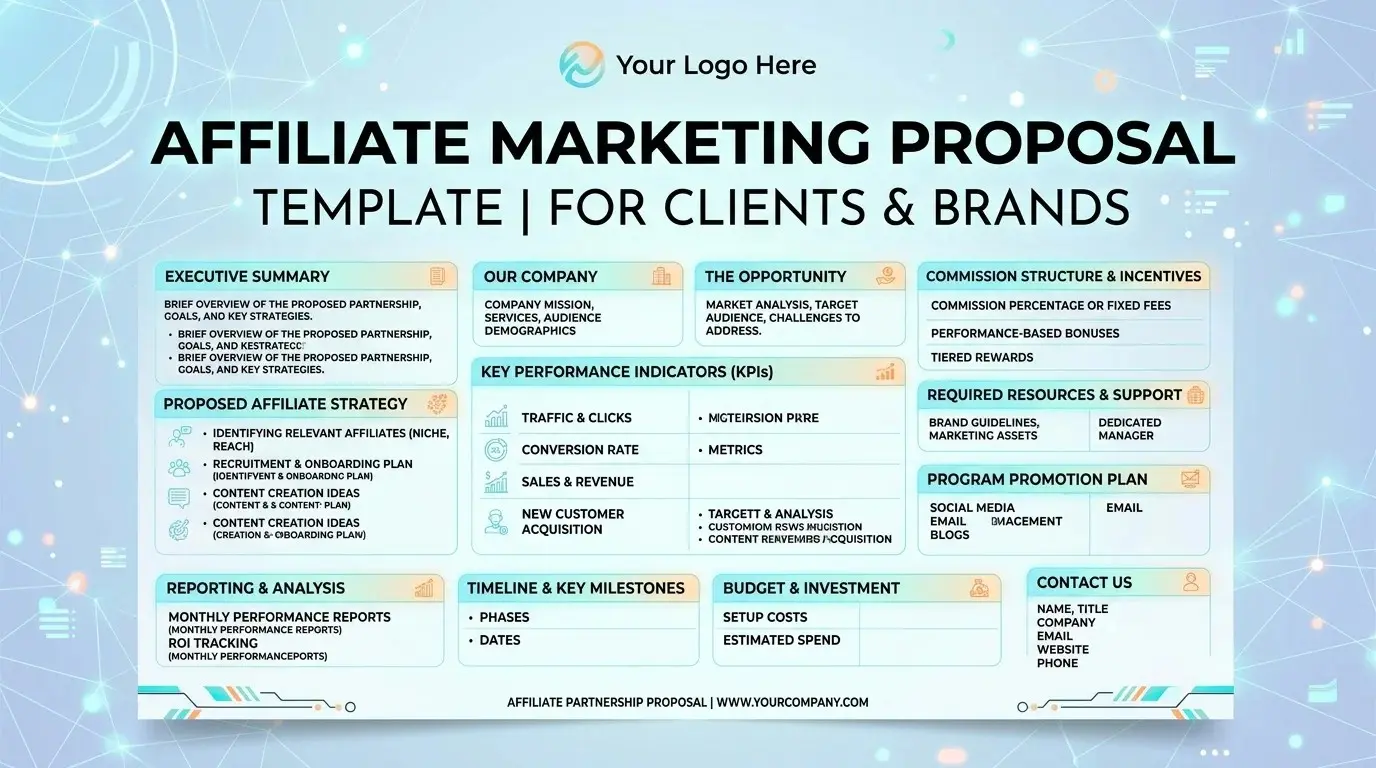
Proven Affiliate Marketing Proposal Template for Clients and Brands 2026
Table of Contents
Affiliate marketing proposal templates are invaluable tools for agencies, consultants, and individual marketers looking to forge profitable partnerships with clients and brands. In the dynamic landscape of digital marketing, where reaching the right audience efficiently is paramount, affiliate marketing stands out as a performance-based strategy that delivers measurable results. A robust proposal is not merely a formality; it serves as a critical blueprint, articulating your strategic vision, outlining mutual benefits, and establishing the groundwork for a successful collaboration. It transforms a mere idea into a concrete, persuasive plan that resonates with potential partners, demonstrating your professionalism and expertise.
The ability to present a clear, concise, and compelling affiliate marketing proposal is a significant differentiator in a competitive market. It streamlines the communication process, ensures all stakeholders are aligned on objectives and expectations, and ultimately helps in securing profitable deals. This comprehensive guide will explore the essential elements of an effective affiliate marketing proposal template, providing insights into how to customize it for various clients and brands, and best practices for presentation and follow-up.
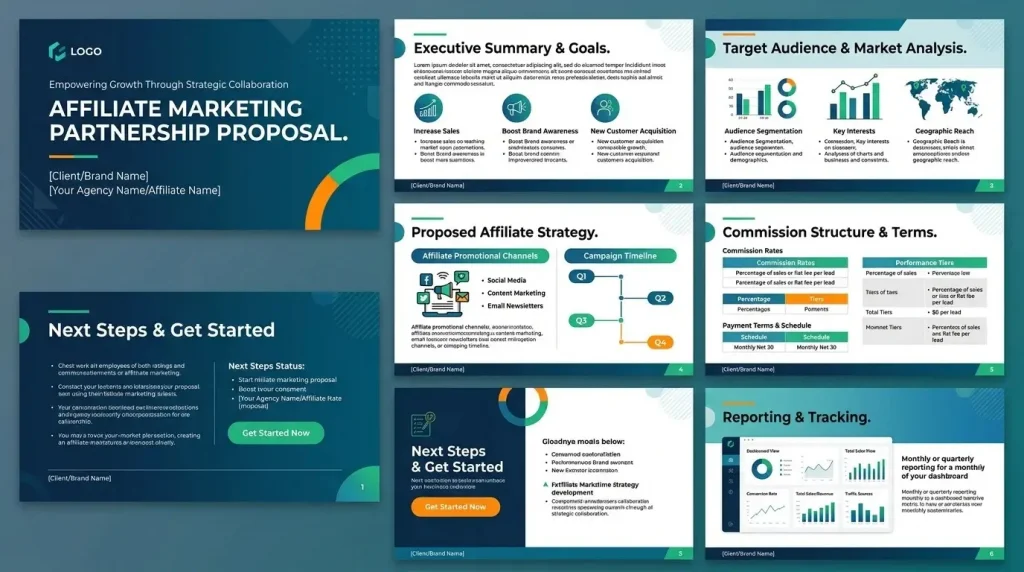
What is an Affiliate Marketing Proposal?
An affiliate marketing proposal is a formal document designed to present a strategy for an affiliate program to a potential client or brand. It outlines how a proposed affiliate marketing initiative will help the client achieve their business objectives, such as expanding market reach, increasing revenue, or strengthening brand equity. Essentially, it’s a persuasive document that details the “what, why, and how” of an affiliate partnership, tailored to the specific needs and goals of the recipient. The proposal should clearly define the roles, responsibilities, and expected outcomes for both parties. It serves as a foundational agreement, setting the tone for a transparent and mutually beneficial relationship.
For a brand looking to launch or optimize an affiliate program, the proposal explains how the marketer will identify, recruit, and manage affiliates, establish commission structures, and track performance. For an affiliate marketer pitching their services to a brand, it details how they will leverage their audience and promotional channels to drive sales or leads for the brand. Regardless of the specific context, the core purpose remains to convince the other party that the proposed affiliate marketing strategy is a worthwhile investment with a clear path to return.
Why a Well-Crafted Proposal is Crucial for Success
In the world of affiliate marketing, where trust, transparency, and efficiency are paramount, a well-crafted proposal is far more than a mere formality; it is a strategic asset. Its importance cannot be overstated, as it provides numerous advantages that contribute to the success of any affiliate partnership:
- Clarity and Alignment: A detailed proposal ensures that both parties have a clear understanding of the program’s objectives, strategies, and expectations. This prevents misunderstandings and aligns everyone towards common goals from the outset.
- Professionalism and Credibility: A polished and comprehensive proposal demonstrates your professionalism and expertise, instilling confidence in your potential client or partner. It shows that you have thoroughly researched their needs and meticulously planned a solution.
- Risk Reduction: By clearly outlining performance expectations, commission structures, and terms of engagement, the proposal helps to mitigate potential risks and disputes. It provides a contractual framework that protects both the brand and the affiliate.
- Value Proposition: It allows you to effectively showcase your unique value proposition and highlight the specific benefits you bring to the collaboration. Rather than just listing features, it emphasizes the tangible outcomes and transformations the partnership can deliver.
- Decision-Making Tool: For clients and brands, the proposal serves as a vital document for evaluating potential partners and making informed decisions. It provides all the necessary information to assess the viability and potential ROI of the proposed affiliate program.
- Efficiency and Time-Saving: Utilizing a template streamlines the proposal creation process, reducing the time spent on formatting and allowing you to focus on tailoring the content to specific client needs. This efficiency is invaluable, especially when pursuing multiple opportunities.
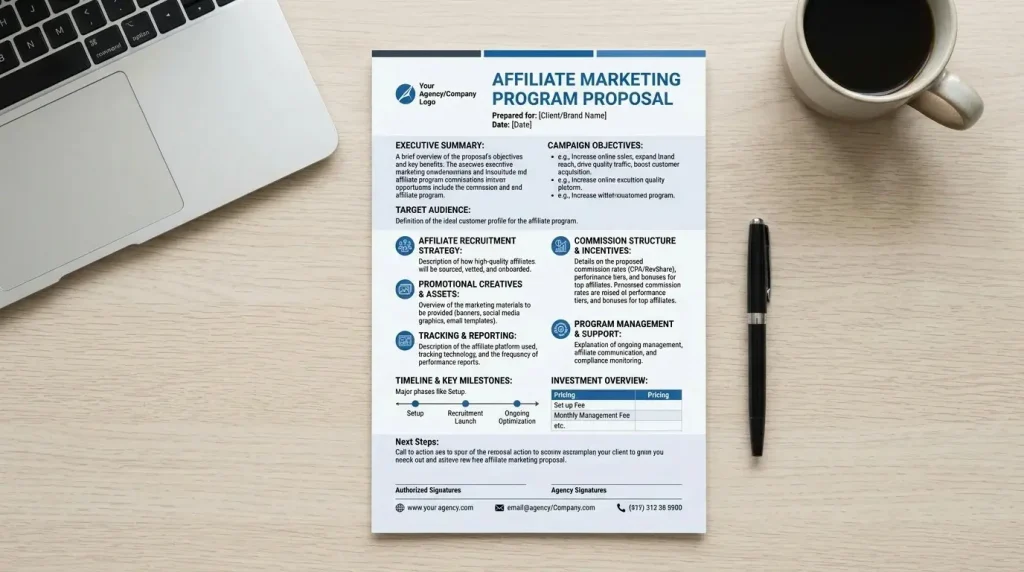
Key Components of an Effective Affiliate Marketing Proposal
A winning affiliate marketing proposal is structured to be both informative and persuasive, guiding the reader through your proposed strategy with clarity and conviction. While specific sections may vary, the following components are typically essential for a comprehensive and impactful proposal:
Executive Summary: Your Elevator Pitch
The executive summary is arguably the most critical part of your proposal. It provides a brief, high-level overview of the entire document, designed to grab the reader’s attention and summarize the core value proposition. It should concisely state the client’s challenge, your proposed solution, the anticipated benefits, and the key differentiators of your approach. The goal is to make a compelling case that encourages the reader to delve deeper into the proposal. Keep it focused on outcomes and the mutual benefits of the partnership.
Understanding the Client/Brand: Tailoring Your Approach
Before presenting your solution, demonstrate a thorough understanding of the client’s business, industry, target audience, and current challenges. This section shows that you’ve done your homework and that your proposal is not a generic template, but a bespoke solution. Discuss their products/services, market position, and their specific pain points or goals related to growth, revenue, or brand visibility. This foundational understanding allows you to frame your affiliate marketing strategy as the ideal solution to their unique needs.
Your Affiliate Marketing Strategy: The Blueprint for Growth
This section is the core of your proposal, detailing your comprehensive plan for the affiliate program. Outline the specific strategies you intend to employ, which may include:
- Affiliate Recruitment: How will you identify, vet, and onboard high-value affiliates who align with the brand’s values and target audience? This could involve influencer outreach, niche blogger partnerships, or leveraging existing networks.
- Program Structure: Define the type of affiliate program (e.g., CPA, CPL, CPS) and any tiered structures or incentive plans you plan to implement to motivate affiliates.
- Promotional Tactics: Explain how affiliates will promote the products or services (e.g., content marketing, social media campaigns, email marketing, banner ads).
- Technology and Platforms: Specify the affiliate tracking platform or network you will utilize to manage the program, track performance, and facilitate payments.
Target Audience and Market Research: Pinpointing Potential
Detail your understanding of the target audience for the products or services being promoted. Provide insights from market research, including demographics, interests, online behavior, and purchasing habits. Explain how your chosen affiliates will effectively reach and influence this audience, ensuring that promotional efforts are directed towards the most relevant consumer segments. This section underscores the strategic thinking behind your affiliate selection and campaign targeting.
Commission Structure and Payment Terms: Fair and Transparent
Transparency in financial terms is paramount. Clearly outline the proposed commission rates, specifying whether it’s a percentage of sales, a flat fee per lead or sale, or a hybrid model. Explain any bonus commissions, tiered reward systems, or incentive plans designed to motivate top-performing affiliates. Additionally, detail the payment schedule (e.g., monthly, quarterly), the minimum payout thresholds, and the preferred payment methods. This section builds trust and ensures both parties understand the financial implications of the partnership.
Tracking, Reporting, and Analytics: Demonstrating ROI
Explain how you will track, measure, and report on the performance of the affiliate program. Outline the key performance indicators (KPIs) you will focus on, such as clicks, conversions, average order value, revenue generated, and return on investment (ROI). Describe the reporting frequency and the tools or dashboards you will use to provide clear, actionable insights. This demonstrates your commitment to data-driven decision-making and accountability, assuring the client that they will have full visibility into the program’s effectiveness.
Timeline and Deliverables: Setting Clear Expectations
Provide a realistic timeline for the various phases of the affiliate program, from setup and affiliate recruitment to campaign launch and ongoing optimization. Clearly list the deliverables you will provide at each stage, such as a comprehensive affiliate agreement, creative assets, regular performance reports, and strategic recommendations. This section helps manage expectations and provides a clear roadmap for the project’s progression.
| Proposal Section | Key Content | Purpose |
|---|---|---|
| Executive Summary | Overview of problem, solution, benefits, and key differentiators. | Hook the reader and summarize the value proposition. |
| Client/Brand Understanding | Analysis of client’s business, goals, and challenges. | Demonstrate tailored understanding and build rapport. |
| Affiliate Strategy | Detailed plan for recruitment, program structure, promotional tactics. | Outline the “how” of achieving objectives. |
| Target Audience & Research | Demographics, interests, and how affiliates will reach them. | Show strategic targeting and audience relevance. |
| Commission & Payments | Rates, incentives, payment schedule, and terms. | Ensure financial transparency and motivation. |
| Tracking & Reporting | KPIs, reporting frequency, tools for performance measurement. | Demonstrate accountability and data-driven approach. |
| Timeline & Deliverables | Project phases, milestones, and expected outputs. | Set clear expectations and provide a project roadmap. |
| Marketing Support | Resources, tools, and assistance for affiliates. | Show commitment to affiliate success. |
| Contractual Safeguards | Legal terms, compliance, performance expectations. | Protect both parties and ensure adherence to regulations. |
| Case Studies & Testimonials | Examples of past successes and client feedback. | Build credibility and trust through proven results. |
| Call to Action | Clear next steps for the client. | Guide the client towards engagement. |
Marketing Support: Empowering Affiliates
A successful affiliate program thrives on strong support for its partners. Detail the marketing support you will provide to affiliates to help them effectively promote the brand’s products or services. This can include:
- Creative Assets: High-quality banners, logos, product images, videos, and ad copy.
- Content Resources: Product descriptions, blog post ideas, social media templates, and email swipe files.
- Dedicated Support: Access to a dedicated affiliate manager or support team to answer questions, provide guidance, and offer best practices.
- Training: Onboarding materials or training sessions to familiarize affiliates with the products and program guidelines.
Contractual Safeguards: Ensuring Mutual Protection
While often detailed in a separate agreement, it’s beneficial to briefly touch upon the contractual safeguards within the proposal. This demonstrates your commitment to a professional and legally sound partnership. Mention that comprehensive contracts will outline the terms and conditions, including performance expectations, compliance with relevant advertising regulations (such as FTC guidelines), and data privacy laws. This section underscores the importance of a clear and fair agreement for both the brand and its affiliates.
Case Studies and Testimonials: Building Trust and Credibility
To reinforce your expertise and build trust, include relevant case studies or testimonials from previous successful affiliate marketing campaigns or clients. These real-world examples illustrate the positive impact of your work and provide social proof of your capabilities. Quantify results where possible (e.g., “Increased sales by X%,” “Generated Y leads”). If you are an individual affiliate, showcase your track record of driving conversions for other brands. This section speaks volumes about your ability to deliver on your promises.
Call to Action: Guiding the Next Steps
Conclude your proposal with a clear and concise call to action. What do you want the client or brand to do next? This could be to schedule a follow-up meeting to discuss the proposal in more detail, sign the agreement, or request further information. Make it easy for them to take the next step by providing clear instructions and your contact information.
Tailoring Your Proposal for Different Clients and Brands
While an affiliate marketing proposal template provides a strong foundation, its true power lies in customization. A generic proposal is unlikely to resonate as effectively as one specifically tailored to the unique needs and aspirations of each client or brand.
When approaching a new client, begin by conducting thorough research into their industry, competitive landscape, target audience, and current marketing efforts. Understanding their specific business goals—whether it’s increased brand awareness, direct sales, lead generation, or customer acquisition—will allow you to frame your proposal as a direct solution to their objectives.
For instance, a fast-growing e-commerce brand might prioritize scalable revenue growth, suggesting a performance-based commission structure with attractive incentives for high-volume affiliates. In contrast, a new B2B SaaS company might be more interested in lead generation and brand authority, necessitating a proposal that focuses on content creators and industry influencers. The language, tone, and specific examples used in your proposal should reflect the client’s industry and corporate culture. Incorporate their brand voice where appropriate to create a sense of familiarity and relevance.
Highlight specific affiliates or types of affiliates that would be a perfect fit for their brand, explaining why their audience aligns with the client’s products or services. Customize the proposed commission rates, payment terms, and reporting metrics to align with their budget and strategic priorities. By demonstrating a deep understanding of their business and presenting a bespoke solution, you significantly increase the likelihood of securing the partnership. Remember, the proposal is an opportunity to show not just what you do, but how well you understand their needs and how you can deliver tangible results specifically for them. A great resource for general business and marketing concepts, including affiliate marketing, can be found on Wikipedia.
Presenting and Following Up: Maximizing Your Impact
The delivery of your affiliate marketing proposal is just as important as its content. When presenting, whether in person or virtually, focus on outcomes and the transformation the partnership can bring. Clearly articulate the mutual benefits and how your strategies will drive measurable results. Make the presentation interactive, inviting questions and feedback to foster a dynamic conversation rather than a static monologue.
After submitting the proposal, strategic follow-up is crucial. Don’t simply send a generic “checking in” email. Instead, reference specific points from the proposal or discussion, offer to clarify any details, or provide additional relevant information that might strengthen your case. Propose a follow-up meeting to discuss any concerns or explore potential adjustments. Be persistent but respectful, understanding that clients often have multiple proposals to review. Prompt responses to inquiries and a proactive approach to addressing questions can significantly impact the final decision. Regularly reviewing and updating your proposal template, incorporating feedback from previous pitches, will help refine your approach and ensure your proposals remain compelling and effective in an evolving market.
Conclusion: Sealing the Deal with Strategic Proposals
In conclusion, an affiliate marketing proposal template is an indispensable tool for anyone looking to establish or expand successful affiliate partnerships. It provides a structured, professional framework to articulate your strategy, demonstrate your understanding of the client’s needs, and clearly outline the mutual benefits of collaboration. From a compelling executive summary to detailed strategies, transparent financial terms, and a clear call to action, each component plays a vital role in building trust and securing profitable agreements.
By investing time in tailoring each proposal to the specific client or brand, leveraging case studies to build credibility, and maintaining proactive communication throughout the process, marketers can transform opportunities into enduring and highly successful affiliate marketing programs. The ability to present a well-articulated, persuasive, and data-driven proposal is not just about winning a contract; it’s about laying the foundation for long-term growth and shared success in the competitive digital landscape.