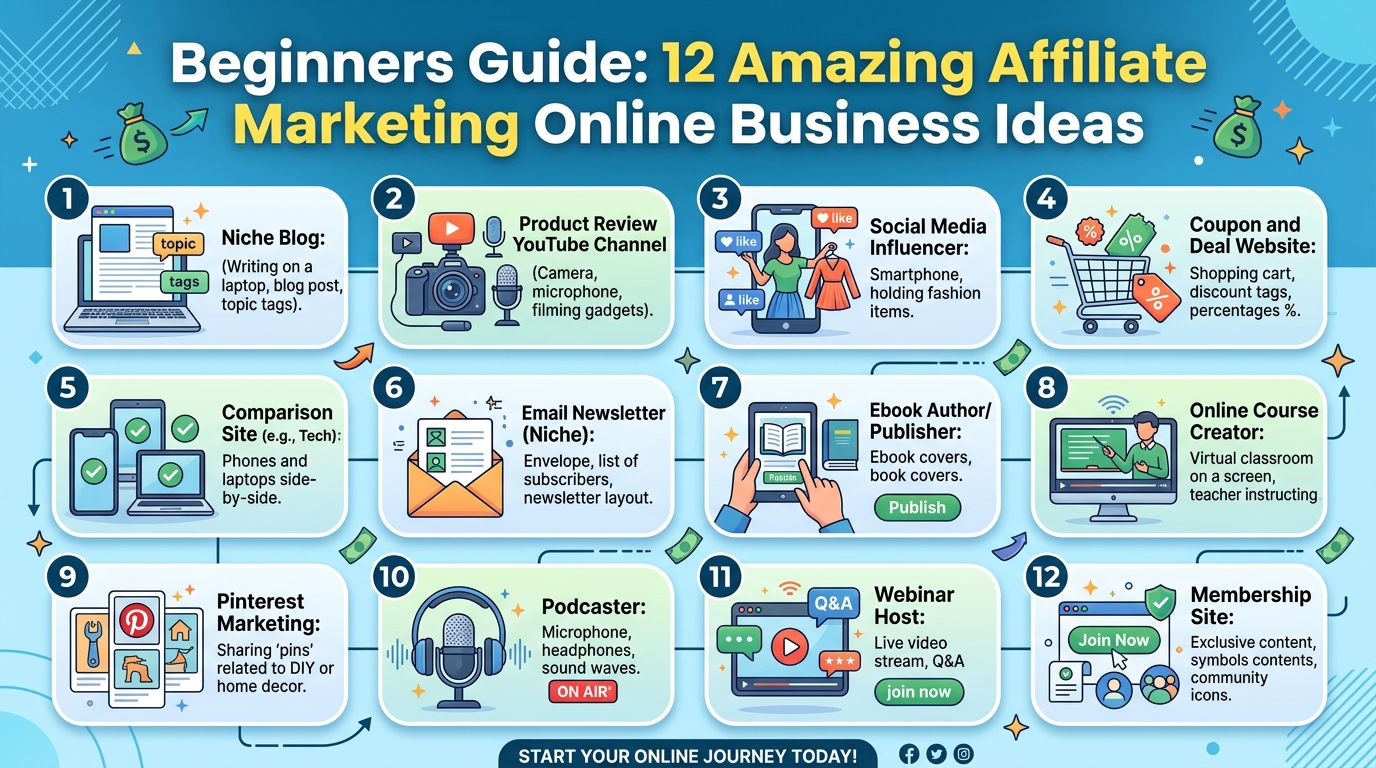
Beginners Guide: 12 Amazing Affiliate Marketing Online Business Ideas
Table of Contents
Affiliate marketing offers a dynamic and accessible pathway for individuals looking to venture into the world of online business, particularly for beginners. It’s a performance-based marketing strategy where you earn a commission by promoting another company’s products or services. This means you don’t need to create your own products, handle inventory, or manage customer service, significantly lowering the barrier to entry for aspiring entrepreneurs. The global affiliate marketing market continues to experience robust growth, with estimates placing its value around $18.5 billion in 2024-2025 and projections suggesting it could reach $31.7 billion by the early 2030s. This sustained growth makes it an increasingly attractive field for those seeking to generate income online.
What is Affiliate Marketing?
Affiliate marketing is essentially a partnership between a merchant (the company selling a product or service) and an affiliate (an individual or business that promotes the product). The affiliate earns a commission for each sale, lead, or other desired action generated through their unique affiliate link. The process is straightforward: an affiliate shares an ad or link on their chosen platform, and when a customer clicks and makes a purchase or completes a predefined action, the conversion is tracked, and the affiliate receives a commission. This model is highly beneficial for both parties; businesses expand their reach and boost sales with minimal risk, while affiliates can earn money online and grow their income without significant upfront investment.
The core concept revolves around tracking. When you join an affiliate program, you receive a special link with a unique ID. This link allows the merchant to track the traffic and sales originating from your promotional efforts. If a customer clicks your link and subsequently makes a purchase, a small file called a cookie is stored on their device. This cookie usually has an expiry date, ensuring you get paid even if the customer delays their purchase for a period.
Why Choose Affiliate Marketing as a Beginner?
For beginners, affiliate marketing presents numerous compelling advantages that make it an ideal online business model:
- Low Cost and Low Risk: Unlike traditional businesses, starting affiliate marketing requires little to no upfront investment. You don’t need to develop a product, manage inventory, or handle shipping, significantly reducing financial risk.
- Flexibility and Independence: Affiliate marketing offers immense flexibility. You can work from anywhere, set your own hours, and be your own boss. This freedom is a major draw for many looking to escape the traditional 9-to-5 grind.
- No Product Creation Required: One of the biggest hurdles for new entrepreneurs is product development. With affiliate marketing, you leverage existing products and services, saving considerable time and resources.
- Scalability: Once you establish a successful strategy, affiliate marketing is relatively easy to scale. You can expand into new niches, promote more products, or increase your traffic sources to boost earnings.
- Passive Income Potential: While it requires initial effort to set up and generate content, affiliate marketing can eventually lead to passive income. Content you create today can continue to generate sales for years to come.
It’s important to set realistic expectations; immediate success is rare, and building an audience takes time and dedication. Beginners typically earn between $0 and $1,000 per month during their first year, with most reaching around $300-$500 monthly by month twelve. However, the earning potential is uncapped, and experienced affiliates can earn significantly more.
Identifying Your Niche: The Foundation of Success
Choosing the right niche is arguably the most critical step in affiliate marketing, especially for beginners. A niche is a specific area of interest you focus on when promoting products or services. Trying to appeal to everyone often results in reaching no one. When you select a specific niche, you attract a targeted audience, making your content more relevant, your recommendations more trusted, and your affiliate links more likely to convert.
Here’s how to effectively identify your niche:
- Align with Your Interests and Expertise: Your passion will shine through your content. Choose a niche that genuinely interests you or aligns with your existing knowledge. This will make the content creation process more enjoyable and sustainable.
- Consider Evergreen Niches: These are niches with consistent, year-round demand, such as health and wellness, personal finance, and relationships. While often competitive, focusing on a micro-niche within these broader categories can yield excellent results.
- Research Profitability: Look for niches with products that offer decent commission rates and have a strong demand. Tools like Google Trends, Ubersuggest, Amazon Best Sellers, and affiliate marketplaces like ClickBank can help you validate demand and explore profitable offers.
- Analyze Competition: While some competition is healthy (indicating demand), overly saturated niches can be challenging for beginners. Look for sub-niches where you can establish authority more easily.
- Think About Problem-Solving: Successful affiliate marketing often involves providing solutions to people’s problems. Consider what challenges your potential audience faces and how affiliate products can help.
For absolute beginners in 2026, accessible niches include Digital Products & Online Courses, Remote Work & Productivity Tools, and Creator Economy Tools. These often have lower sub-niche competition, don’t require specialist credentials, and offer strong recurring commission potential.
Popular Affiliate Marketing Niches and Product Ideas for Beginners
Several niches consistently prove profitable for affiliate marketers due to ongoing consumer demand and attractive commission structures. Here are some of the best affiliate marketing online business ideas for beginners:
| Niche Category | Sub-Niches/Focus Areas | Potential Affiliate Products/Services | Why It’s Good for Beginners |
|---|---|---|---|
| Health & Wellness | Gut health, sleep optimization, women’s health, mobility for over 40, stress reduction, fitness programs, supplements, healthy eating. | Supplements, fitness trackers, meal plans, online workout programs, health apps, ergonomic equipment. | Evergreen demand, wide range of products, and personal experience can build strong trust. |
| Personal Finance & Investing | Budgeting, debt management, retirement planning, beginner investing, credit repair, crypto. | Budgeting apps, investment platforms, financial planning services, credit cards, loan services, educational courses. | High-value products often mean higher commissions; strong demand in all economic climates. |
| E-learning & Online Courses | Skill development, language learning, digital marketing, coding, creative arts, personal development. | Online course platforms (e.g., Coursera, Skillshare), individual courses, e-books, webinar software. | High payouts, recurring commissions, strong demand for self-improvement and new skills. |
| Software-as-a-Service (SaaS) & AI Tools | Productivity tools, CRM software, marketing automation, AI writing tools, graphic design software. | Subscription-based software, project management tools, email marketing services (e.g., GetResponse, MailerLite), website builders. | Often offers recurring commissions, high payout potential, growing market with constant innovation. |
| Home & DIY | Smart home devices, beginner DIY projects, home organization, gardening tools. | Tools, storage solutions, smart thermostats, security cameras, home decor, online DIY tutorials. | Many high-ticket purchases, constant search for tutorials and product recommendations. |
| Pet Care | Dog training, cat health, pet food, grooming supplies, pet tech. | Specialized pet foods, training courses, grooming products, smart pet feeders, pet insurance. | Passionate audience, recurring purchases, and a wide variety of products. |

Essential Steps to Start Your Affiliate Marketing Journey
Once you’ve identified your niche, it’s time to lay the groundwork for your affiliate marketing business. Here’s a step-by-step guide for beginners:
1. Build Your Platform (Website or Social Media)
While some affiliate programs allow promotion without a dedicated website, having your own platform offers more control and long-term stability. A blog, a YouTube channel, or a strong social media presence are common choices.
- Website/Blog: This provides a central hub for your content. Focus on a mobile-responsive design and a user-friendly interface. Platforms like WordPress make it relatively easy to start a professional website for a low annual cost.
- YouTube Channel: Video content is highly engaging and can build trust quickly. Unboxing videos, product reviews, and tutorials perform well.
- Social Media: Platforms like Instagram, TikTok, and Pinterest can be effective, especially for visual niches. However, always check the affiliate program’s terms regarding social media linking.
- Email List: Building an email list is crucial for long-term success. It allows you to nurture leads, provide value, and promote additional offers directly to a highly engaged audience.
2. Find and Join Affiliate Programs
There are three main types of affiliate programs: large affiliate networks, individual company programs, and smaller niche-specific platforms.
- Affiliate Networks: These platforms act as intermediaries between merchants and affiliates, offering a vast selection of products. Popular networks for beginners include Amazon Associates, ClickBank, ShareASale, CJ Affiliate (Commission Junction), and Impact. Amazon Associates is often recommended for its ease of use and wide product range.
- Direct Programs: Many companies run their own affiliate programs. You can often find these by searching “[product name] + affiliate program” on Google.
3. Create High-Quality, Valuable Content
Content is the backbone of your affiliate strategy. Your goal is to provide genuine insights, clear recommendations, and solutions to real problems. Effective content ideas include:
- Product Reviews: Honest and in-depth reviews, highlighting both pros and cons, build trust.
- Comparison Articles: “Best X vs. Y” or “Top 5 Products for Z” help users make informed decisions.
- “How-to” Guides and Tutorials: Solve specific problems and naturally integrate product recommendations.
- Listicles: Easy-to-digest content that lists recommended products or tips.
- Video Content: Unboxings, demonstrations, and video reviews are highly engaging.
- Seasonal Content: Capitalize on holidays or seasonal trends (e.g., “Best Gifts for Father’s Day”).
Focus on creating content that is informative, educational, and addresses the needs and pain points of your target audience. The average first-page Google result is around 1,447 words, so aim for comprehensive content. Do not overload content with affiliate links; integrate them naturally.
4. Drive Traffic to Your Content
Even the best content won’t generate commissions if no one sees it. Key traffic generation strategies include:
- Search Engine Optimization (SEO): Optimize your content with relevant keywords to rank higher in search engine results. This involves keyword research, creating valuable content, and building backlinks.
- Social Media Marketing: Share your content across relevant social platforms to reach a wider audience.
- Email Marketing: Use your email list to promote new content and exclusive offers. Segmenting your audience can help tailor promotions for better engagement.
5. Optimize and Track Performance
Affiliate marketing is not a “set it and forget it” business. Continuously monitor your performance to understand what works and what doesn’t.
- Analytics: Use tools like Google Analytics to track clicks, conversions, and traffic sources.
- A/B Testing: Experiment with different headlines, calls to action, and page layouts to improve conversion rates.
- Adapt to Trends: Stay informed about industry changes, new platforms, and evolving consumer behaviors. For example, AI integration, mobile-first strategies, and video content are significant trends for 2025-2026.
Building Your Platform: Content Creation and Promotion
Building a robust platform is paramount for sustained affiliate marketing success. Your platform serves as the central hub where you provide value, build trust, and ultimately guide your audience toward affiliate products. For beginners, the choice of platform often hinges on their comfort level and the nature of their chosen niche. Options range from dedicated blogs and websites to powerful social media channels and email lists.
When it comes to content creation, authenticity and value are non-negotiable. Generic or superficial content rarely stands out in today’s crowded digital landscape. Instead, focus on creating insightful, educational, and engaging content that genuinely addresses your audience’s needs and pain points. This could take various forms: in-depth product reviews that highlight both strengths and weaknesses, comparative analyses of similar products, practical “how-to” guides and tutorials that walk users through solutions, or engaging listicles that offer curated recommendations. Video content, in particular, continues to be a powerful medium for building connection and demonstrating products in action.
Promoting your content is equally crucial. Even the most valuable article or video won’t generate sales if it doesn’t reach the right eyes. Search Engine Optimization (SEO) is a fundamental strategy, ensuring your content appears prominently in search engine results when users look for relevant information. This involves strategic keyword research and consistent high-quality content creation. Leveraging social media platforms is another effective way to distribute your content and engage with your audience, while building an email list allows for direct, personalized communication and nurturing leads over time.
Common Pitfalls and How to Avoid Them
While affiliate marketing offers significant potential, beginners often encounter common mistakes that can hinder their progress. Recognizing these pitfalls early can save you time, money, and frustration.
- Prioritizing Commissions Over Audience Trust: This is a major misstep. Chasing high commission rates for low-quality or irrelevant products will quickly erode your audience’s trust, making future recommendations ineffective. Always promote products you genuinely believe in and would use yourself.
- Neglecting Content Quality: Thin, generic, or copied content adds little value and struggles to rank in search engines. Invest time in creating comprehensive, well-researched, and original content that solves problems for your audience.
- Not Building an Audience: Many beginners focus solely on driving traffic to affiliate links without first building a loyal audience. Without trust and engagement, conversions will be low. Focus on providing value and fostering a community around your niche.
- Expecting Quick Results: Affiliate marketing is not a get-rich-quick scheme. It requires patience, consistency, and a long-term perspective. It takes time to build authority, audience, and organic traffic. Beginners typically earn less than $1,000 per month in their first year.
- Ignoring Data and Tracking: Without proper analytics, you’re guessing what works. Track clicks, conversions, traffic sources, and other key metrics to optimize your campaigns effectively.
- Relying on a Single Traffic Source or Affiliate Program: Diversifying your traffic sources (e.g., SEO, social media, email) and promoting products from multiple reputable affiliate programs reduces risk and increases potential earnings.
- Failing to Optimize Your Funnel: Simply sending traffic directly to an affiliate link without pre-selling or providing context often leads to low conversion rates. Build a simple funnel with landing pages or helpful articles to warm up your audience.
By consciously avoiding these common errors and approaching affiliate marketing as a legitimate business, beginners can significantly increase their chances of long-term success. For further insights into avoiding common mistakes, Wikipedia’s article on Affiliate Marketing provides details on common criticisms and challenges faced in the industry.
Scaling Your Affiliate Marketing Business
Once you’ve achieved initial success and understand the fundamentals, the next step is to scale your affiliate marketing business for greater revenue. Scaling involves strategically expanding your efforts without disproportionately increasing your workload. Here are several effective strategies:
- Expand Your Content Strategy: Diversify your content formats. If you primarily write blog posts, consider adding video reviews, podcasts, or webinars. Webinars, for example, can be powerful for building community and promoting higher-ticket items by providing in-depth education.
- Diversify Traffic Sources: Don’t put all your eggs in one basket. If you rely heavily on SEO, start exploring paid advertising (e.g., Google Ads, social media ads) or building a stronger presence on other platforms like Pinterest or TikTok.
- Build an Email List and Nurture Leads: An email list is a powerful asset for scaling. It allows for direct communication, repeat promotions, and building a deeper relationship with your audience, leading to higher lifetime value.
- Explore New Niches or Micro-Niches: Once you’ve mastered one niche, consider expanding into related micro-niches or entirely new ones. This diversifies your income streams and broadens your audience.
- Automate and Outsource: As your business grows, look for opportunities to automate repetitive tasks, such as email sequences or social media scheduling. Consider outsourcing content creation or SEO tasks to freelancers if your budget allows.
- Optimize for Conversions Continuously: Consistently analyze your data to identify areas for improvement in your sales funnels. A/B test different elements, from headlines to call-to-action buttons, to maximize your conversion rates.
- Focus on High-Paying or Recurring Commission Programs: While lower-commission products can provide volume, strategically integrating higher-paying or recurring commission products (like SaaS tools) can significantly boost your overall earnings.
The future of affiliate marketing is influenced by trends like AI integration, mobile prioritization, and collaboration with micro-influencers. Leveraging these trends, such as using AI for keyword research or optimizing content for mobile devices, can help affiliates stay ahead and maximize growth.
Conclusion
Affiliate marketing offers a compelling online business model for beginners due to its low barriers to entry, flexibility, and significant income potential. While it is not a path to overnight riches, consistent effort, strategic niche selection, and a commitment to providing genuine value to your audience can lead to substantial and sustainable earnings. By carefully selecting a profitable niche, building a strong content platform, joining reputable affiliate programs, and continuously optimizing your strategies, you can transform affiliate marketing into a thriving online venture. Remember that building trust, creating high-quality content, and avoiding common pitfalls are key to navigating this dynamic industry. The affiliate marketing landscape continues to evolve with technological advancements and changing consumer behaviors, making it an exciting and rewarding field for those willing to adapt and learn.