Affiliate Marketing Links: How to Create and Share Them
Table of Contents
Affiliate marketing links are the cornerstone of a performance-based marketing strategy, enabling individuals and businesses to earn commissions by promoting products or services. At its core, affiliate marketing involves a unique URL that tracks a user’s journey from click to a desired action, such as a purchase or sign-up. This comprehensive guide will delve into how these crucial links are created, the best strategies for sharing them effectively, and essential practices to maximize your affiliate marketing success.
What Are Affiliate Marketing Links?
Affiliate marketing links are specialized URLs assigned to individual affiliates to track the traffic, leads, or sales they generate for a company. These links act as digital fingerprints, ensuring that affiliates receive proper credit and compensation for the customers they refer. When a user clicks an affiliate link, a tracking cookie is often saved in their browser, noting that the affiliate referred them. If the user completes a purchase or another predefined action within a specified timeframe, the sale is attributed to the affiliate, who then earns a commission.
The primary purpose of an affiliate link is to enable precise attribution, allowing businesses to identify which affiliate generated a click, lead, or sale. This is crucial for performance-based marketing, where payments are made only for actual results. While similar to referral links, affiliate links are predominantly used in business collaborations where affiliates receive monetary payments, whereas referral links often offer rewards like discounts or credits to existing customers for inviting new ones.
The Anatomy of an Affiliate Link
An affiliate link, though seemingly a simple URL, is a carefully constructed tool designed for accurate tracking. Understanding its components is key to comprehending how it functions:
- Base URL: This is the standard web address of the product or landing page being promoted (e.g.,
www.brand.com/product). - Unique Affiliate ID: This is the most crucial part, a unique identifier code embedded within the URL that distinguishes one affiliate’s promotions from another, ensuring they receive credit for conversions.
- Tracking Parameters: These are additional technical elements (often seen after a “?” or “&” in the URL, like
?ref=affiliate123or?utm_source=affiliate_name) that monitor specific user behavior, including clicks, conversions, and attribution windows. - Tracking Cookie: While not part of the visible URL, a tracking cookie is a small piece of data stored in the user’s browser upon clicking the link. This cookie contains the affiliate’s unique ID and the click timestamp, ensuring the sale is credited correctly if a purchase is made within the cookie’s lifespan.
Many affiliate platforms automatically append these parameters to the main URL when you generate a link, simplifying the process for affiliates.
Getting Started with Affiliate Programs and Networks
To begin your journey in affiliate marketing, the first step is to join relevant affiliate programs or networks. This is where you find the products or services you wish to promote and obtain your unique affiliate links. There are generally two main paths:
- Individual Company Affiliate Programs: Many large companies, such as Amazon (through Amazon Associates) and eBay, run their own in-house affiliate programs. If accepted, they provide you directly with product links to use in your content. Amazon Associates is often considered an easy starting point for beginners due to its vast product selection and straightforward process for creating links.
- Affiliate Networks: These platforms act as intermediaries, offering a central hub where publishers can access links from multiple brands. Networks manage various aspects of partnerships, including contract negotiation and commission payouts. Popular affiliate networks include:
- ClickBank: Known for offering high commissions, particularly for digital products.
- Awin: A large network with over 15,000 brands, known for reliable and sometimes accelerated payments.
- ShareASale: A beginner-friendly network with a solid track record and extensive data on conversions and merchant performance.
- CJ Affiliate (formerly Commission Junction): Specializes in big brand names and provides high-quality affiliate tools.
- Impact: A modern network with fast approvals and tools for managing partnerships across various channels.
- Rakuten Advertising: Features big brands and a reputation for reliability.
When selecting a program or network, it’s crucial to choose one that aligns with your niche and audience, offering products or services you genuinely believe in and can authentically recommend.
Step-by-Step: Creating Your First Affiliate Link
The process of creating an affiliate link is generally straightforward, though it may vary slightly depending on the platform or network you use. Here’s a typical step-by-step guide:
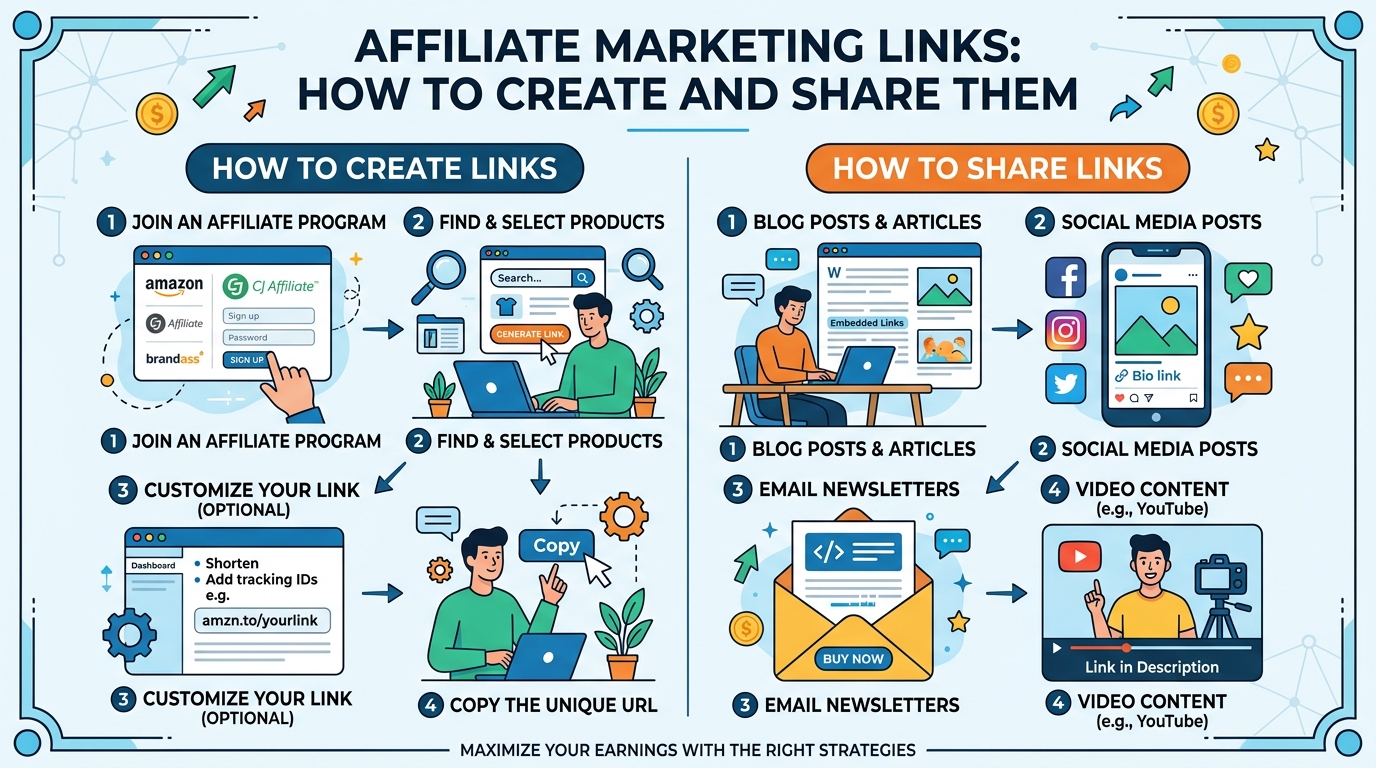
- Sign Up for an Affiliate Program/Network: As discussed above, choose a program or network that fits your content and audience. Complete the application process and get approved.
- Log In to Your Affiliate Dashboard: Once approved, you’ll gain access to a dedicated dashboard. This is your central command center for managing partnerships and generating links.
- Select the Product or Offer: Browse the available products or services from the merchants. Choose the specific item or landing page you wish to promote. For better conversion rates, it’s often a best practice to link directly to specific product pages rather than a brand’s homepage.
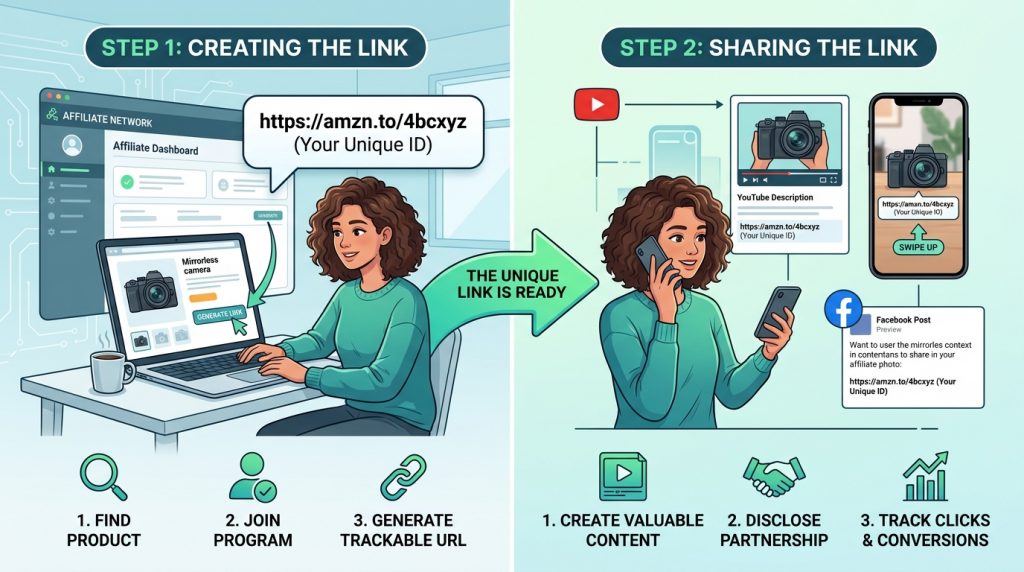
- Generate the Link: Most platforms will have a “Get Link,” “Generate Link,” or similar button. Clicking this will create a unique URL embedded with your affiliate ID and tracking parameters. Many platforms also offer “deeplink” functionality, allowing you to link to any specific page on the merchant’s site while retaining your tracking code.
- (Optional) Customize or Cloak the Link: Raw affiliate links can sometimes appear long and unattractive. Link cloaking or using URL shorteners (like Bitly) can make them tidier and more professional, improving user trust and click-through rates. Cloaking can also help hide your affiliate ID, which some marketers prefer for various reasons, including preventing commission theft.
- Test the Link: Always test your newly created affiliate link to ensure it directs to the correct destination and that the tracking is working properly.
For example, in platforms like Impact or Shopify’s affiliate system, you would typically log in, navigate to a “Create A Link” section on the dashboard, and a unique link will be generated.
| Affiliate Link Component | Description | Purpose |
|---|---|---|
| Base URL | The main web address of the product/service. | Directs user to the correct page. |
| Affiliate ID | Unique code identifying the specific affiliate. | Ensures commission is attributed to the correct referrer. |
| Tracking Parameters | Additional data points (e.g., utm_source). | Monitors specific campaign performance, source of traffic. |
| Tracking Cookie | Small data file stored in user’s browser. | Remembers the affiliate referral for a set duration. |
| Call-to-Action (CTA) | Text/button encouraging a click. | Prompts user engagement and conversion. |
Best Practices for Sharing Affiliate Links
Effectively sharing affiliate links goes beyond merely pasting them into your content. It involves strategic placement, transparency, and value delivery to your audience. Here are key best practices:
1. Integrate Links Within Quality Content
The most effective way to promote affiliate links is by embedding them naturally within valuable content.
- Product Reviews: Write genuine, in-depth reviews that discuss the product’s design, functionality, pros, and cons. Share personal experiences to build trust.
- Tutorials and How-To Guides: Create user-friendly tutorials that integrate relevant products as solutions. This positions the product as helpful rather than purely promotional.
- Comparison Posts & Listicles: Compare similar products or create “top 10” lists, helping your audience make informed decisions. Include affiliate links for the recommended items.
- Resource Pages: Create a dedicated page listing tools, services, or products you regularly use and recommend, with accompanying affiliate links.
Always focus on educating and informing your readers so they are naturally inclined to explore the products you endorse.
2. Strategic Placement on Your Website and Blog
Consider where your links will be most visible and relevant:
- Contextual Links: Place links within the body of your articles where they are highly relevant to the surrounding text.
- Sidebar Widgets & Banners: Utilize these areas for prominent display, but ensure they don’t appear spammy.
- Within Images and Buttons: Make interactive elements clickable with your affiliate link.
3. Leverage Social Media Platforms
Social media offers numerous opportunities for sharing, but rules vary by platform:
- Link in Bio: A universal method for platforms like Instagram, allowing you to link to your latest content or a curated landing page of affiliate products.
- Posts, Reels, and Stories: Mention products in your content and direct viewers to your bio link or use platform-specific features like link stickers in Instagram Stories.
- YouTube: Include affiliate links in video descriptions, pinned comments, or even within the video itself for product demonstrations or reviews.
- Facebook: Share links on your timeline or in relevant groups (if allowed and adds value), ensuring context and engagement.
Always be helpful and avoid randomly blasting links; relevance adds value and prevents a “spammy” feel.
4. Email Marketing
For those with an email list, direct communication can be highly effective.
- Newsletters: Share valuable content, product recommendations, or exclusive deals with clear calls to action.
- Segmented Campaigns: Tailor product recommendations to specific segments of your audience for higher relevance and conversion.
5. Affiliate Disclosure is Mandatory
Transparency is paramount. You are legally required to disclose your affiliate relationships to your audience.
- Clear and Conspicuous: The disclosure must be easy for users to notice, placed close to the affiliate links, and in plain language. It should not be buried in graphics or require scrolling to find.
- On Every Page: Disclosures should appear on every page that includes affiliate links, not just a single “disclaimer” page.
- Direct Language: Use phrases like “This post contains affiliate links” or “I receive a commission when you purchase through these links.” Hashtags like #ad or #sponsored can supplement, but are not sufficient on their own.
Failing to disclose affiliate links can result in fines and penalties, particularly under FTC Endorsement Guides in the U.S.. More information on these guidelines can be found on authoritative sources like Wikipedia’s page on the Federal Trade Commission.
Common Mistakes to Avoid When Using Affiliate Links
While affiliate marketing offers significant opportunities, beginners often fall into traps that hinder their success. Avoiding these common mistakes can save time, money, and frustration:
- Promoting Irrelevant or Low-Quality Products: Choosing products solely based on high commission rates, rather than their relevance or benefit to your audience, can damage trust and lead to poor conversion rates. Always prioritize products you would genuinely use or recommend and those with strong positive reviews.
- Ignoring Content Quality and Depth: Simply dropping affiliate links into shallow or generic content is unlikely to yield results. Today’s audience seeks genuine insights and valuable information. High-performing content goes deeper, providing real solutions and authentic recommendations.
- Lack of Transparency: Failing to clearly and conspicuously disclose your affiliate relationships erodes audience trust and can lead to legal repercussions. Transparency builds credibility.
- Sending Traffic Without a Funnel: Directing visitors straight to an affiliate link without any pre-selling or engagement often results in low conversions. Building a funnel that educates and nurtures your audience before presenting an offer is more effective.
- Not Testing Offers Before Scaling: Many affiliates rush to scale an offer without testing its performance with their specific audience. An offer that works for one traffic source might not work for another. Small, structured tests are crucial to identify early cracks and avoid wasting budget.
- Neglecting Data and Tracking: Affiliate marketing without proper tracking is guesswork. Without monitoring clicks, conversions, and ROI, you won’t know what’s working and what isn’t, leading to wasted effort.
- Treating it as a “Set It and Forget It” System: Affiliate marketing requires continuous attention. User behavior, platform policies, and market trends change rapidly. Successful campaigns demand regular monitoring, optimization, and adaptation.

Tracking and Optimizing Your Affiliate Link Performance
To maximize your earnings, it’s essential to continually track and optimize your affiliate marketing efforts. This involves analyzing data, identifying successful strategies, and refining your approach.
1. Utilize Affiliate Tracking Software
Affiliate tracking software is indispensable for monitoring clicks, conversions, earnings, and other key metrics in real-time. Many affiliate networks provide built-in tracking tools. Dedicated affiliate trackers offer more advanced features:
- ClickMagick: Praised for accurate click tracking, bot filtering, built-in split testing, and server-side attribution.
- Impact: Offers real-time data on conversions and goals, automating end-to-end management of partnerships.
- Voluum: Ideal for high-volume media buyers and performance marketers, with powerful automation and optimization features for managing vast traffic data.
- Trackdesk: Provides real-time analytics, customizable reports, and AI-powered insights for affiliate program performance.
- Everflow: An enterprise-grade solution for managing multi-channel partner programs, offering unified tracking for affiliates, influencers, and referrals.
These tools help you understand which traffic sources are most profitable, which campaigns are performing well, and where users might be dropping off.
2. Analyze Key Metrics
Go beyond simple click-through rates. Monitor conversion rates, earnings per click (EPC), return on investment (ROI), and customer lifetime value (CLV) where possible. Segment your data by content type, product category, traffic source, and device type to gain deeper insights.
3. Continuously Test and Optimize
Affiliate marketing is not a “set it and forget it” endeavor.
- A/B Testing: Test different landing pages, calls to action (CTAs), creative assets, and even different affiliate offers to see what resonates best with your audience.
- Content Optimization: Continuously refine your content based on performance data. Improve SEO for your affiliate content to drive more organic traffic.
- Affiliate Relationship Management: For brands, recruiting the right affiliates, providing quality creative assets, and maintaining strong communication are vital for optimization. For affiliates, focusing on niche alignment and building trust with your audience is key.
Regularly review performance and adjust your strategy accordingly. Successful affiliates treat data as a core part of their strategy, making small, consistent improvements that compound over time.
Conclusion
Affiliate marketing links are powerful tools for generating online income, but their effectiveness hinges on understanding their mechanics, strategic creation, and ethical sharing. By selecting the right affiliate programs, meticulously crafting and cloaking your links, and integrating them seamlessly into high-quality, valuable content, you lay a solid foundation for success. Transparency through clear disclosures builds invaluable trust with your audience, while continuous tracking and optimization ensure your efforts translate into sustainable revenue. Avoid common pitfalls like promoting irrelevant products or neglecting data, and instead, focus on building genuine relationships and providing authentic value. With a strategic approach and a commitment to continuous improvement, affiliate marketing links can indeed become a significant and reliable revenue stream in your digital endeavors.