4Affiliate Marketing What Is: Complete Beginner Explanation
Table of Contents
Affiliate marketing is a dynamic and performance-based marketing strategy where individuals or businesses, known as affiliates, earn a commission for promoting another company’s products or services. This process involves the affiliate driving traffic and generating sales or leads for the merchant, and in return, receiving a predetermined payout for each successful conversion. It stands as one of the most impactful and cost-effective digital marketing strategies available to businesses today, offering a win-win scenario where affiliates monetize their platforms, and businesses expand their reach and boost sales with minimal upfront investment. The global affiliate marketing industry has seen substantial growth, valued at approximately $18.5 billion in 2024 and projected to exceed $20 billion in 2026, with forecasts suggesting continued expansion towards $31.7 billion by the early 2030s. This robust growth underscores its increasing significance in the digital commerce landscape, making it an attractive avenue for both seasoned marketers and aspiring entrepreneurs alike.
What is Affiliate Marketing? A Foundational Understanding
At its core, affiliate marketing is a revenue-sharing model. An affiliate acts as a third party, advertising a business’s goods or services to help it achieve sales or marketing objectives. In exchange for driving these desired actions, the affiliate receives commissions or other rewards. This model eliminates the need for affiliates to handle product creation, inventory, shipping, or customer support, simplifying the entrepreneurial journey significantly. For businesses, it offers a way to broaden brand awareness and increase sales without incurring substantial marketing costs, as payments are typically performance-based, meaning they only pay for results like sales, leads, or clicks.
The concept is straightforward: an affiliate promotes a product or service using a unique affiliate link. When a potential customer clicks this link and completes a predefined action, such as making a purchase or signing up for a trial, the action is tracked, and the affiliate earns a commission. This unique tracking link is crucial for attributing sales back to the correct affiliate, ensuring transparency and accurate payouts. The power of affiliate marketing lies in its ability to leverage the trusted relationships that affiliates have built with their audiences, essentially turning content creators and influencers into an extended sales force for businesses.
How Does Affiliate Marketing Work? The Core Relationship Dynamics
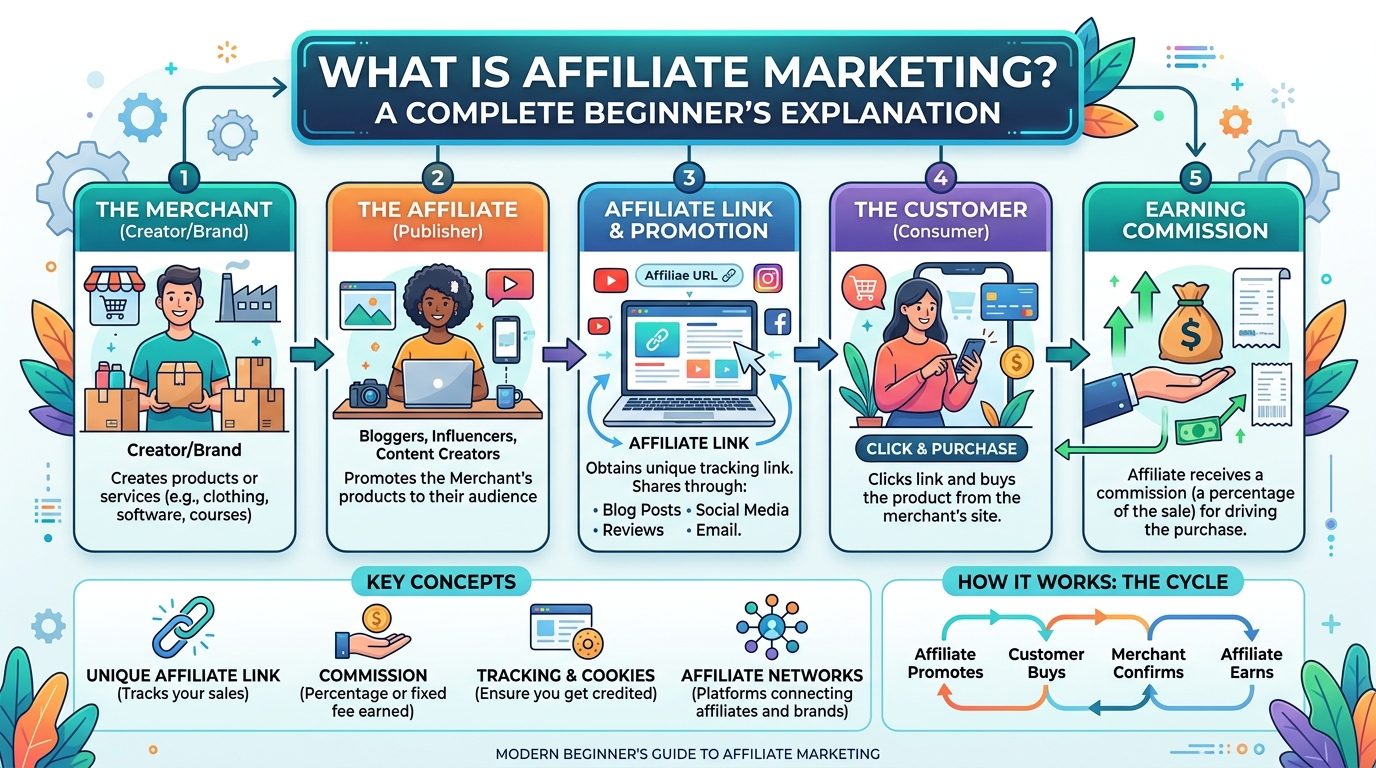
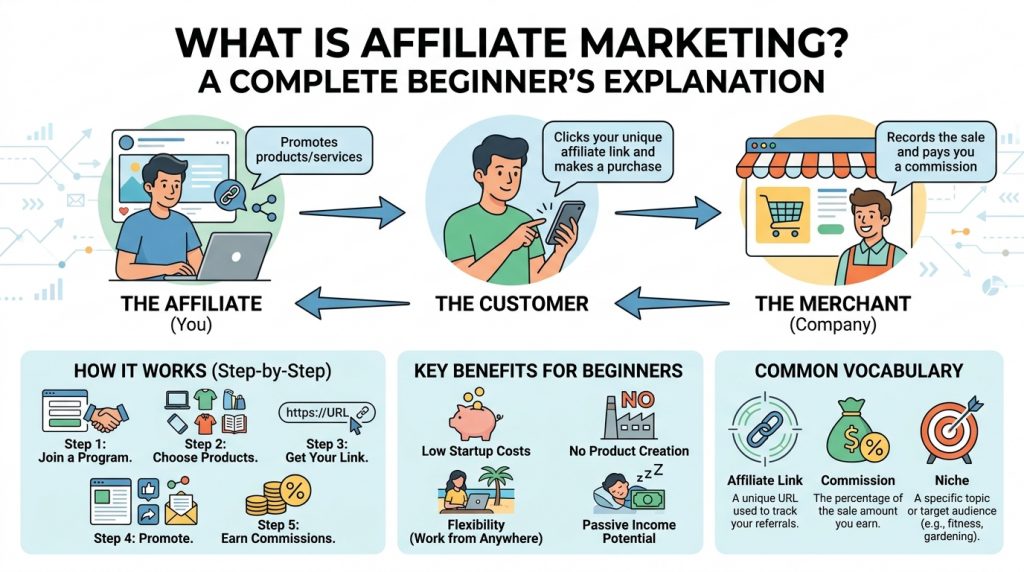
The affiliate marketing ecosystem typically involves four main players, each with distinct roles that contribute to the overall success of the partnership:
- The Merchant (or Advertiser): This is the company or individual who creates the product or service. They are looking to increase sales and reach a wider audience. The merchant provides the affiliate program, products, marketing materials, and handles order fulfillment, shipping, and customer service.
- The Affiliate (or Publisher): This is the individual or business that promotes the merchant’s products or services. Affiliates can range from large media companies to individual bloggers, social media influencers, or email marketers. Their goal is to attract and persuade potential customers to purchase the product or complete a desired action through their unique affiliate links.
- The Consumer (or Customer): These are the individuals who see the affiliate’s promotions and, if convinced, click on the affiliate link to make a purchase from the merchant. Without the customer’s action, no commission is earned.
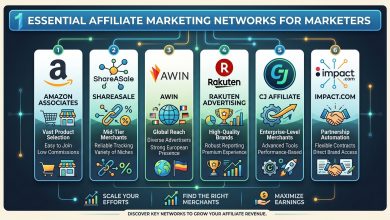
- The Affiliate Network: While not always present, affiliate networks often act as intermediaries between merchants and affiliates. They provide a platform where merchants can list their products and manage their affiliate programs, and where affiliates can find products to promote. Networks handle tracking, reporting, and commission payments, simplifying the process for both parties. Examples include Amazon Associates, ClickBank, and Impact.
The process generally unfolds as follows: An affiliate joins a merchant’s program, receives a unique tracking link, and then promotes the product on their chosen platform (e.g., website, blog, social media, email). When a consumer clicks the link and completes a qualifying action, the network or merchant’s tracking system records the transaction. The affiliate then receives a commission, which can vary based on the product, industry, and commission model. Transparency is key, and affiliates are often required to disclose their affiliate relationships to their audience.
The Multifaceted Benefits of Affiliate Marketing
Affiliate marketing offers significant advantages for both merchants and affiliates, contributing to its sustained growth and popularity.
Benefits for Merchants:
- Cost-Effective and Low Risk: Merchants typically pay affiliates only when a sale or desired action is completed. This performance-based model means businesses aren’t spending money on advertising that doesn’t yield results, minimizing risk and maximizing ROI.
- Expanded Reach and Brand Awareness: Affiliates tap into new customer segments and leverage their established audiences, significantly extending the merchant’s market reach. This exposure can lead to increased brand recognition without extensive internal marketing efforts.
- Scalability: Businesses can easily scale their marketing efforts by recruiting more affiliates to promote their products, allowing for rapid expansion without a proportional increase in fixed marketing costs.
- Diverse Marketing Channels: Affiliates utilize various channels—blogs, social media, email, review sites—providing diversified exposure for the merchant’s products.
- Increased Sales and Leads: The primary benefit is the direct impact on revenue. Affiliates are incentivized to drive conversions, translating into more sales and qualified leads for the merchant.
Benefits for Affiliates:
- Passive Income Potential: Once content with affiliate links is created, it can continue to generate income over time with minimal ongoing effort, creating a stream of passive revenue.
- Low Startup Costs and Low Risk: Becoming an affiliate marketer requires little to no upfront investment. Affiliates don’t need to create products, manage inventory, or handle customer service, reducing financial risk.
- Flexibility and Independence: Affiliate marketing offers the freedom to work from anywhere, at any time, with just a computer and internet connection. Affiliates can choose products they are genuinely interested in and align with their content.
- No Need for Product Creation: Affiliates can focus solely on marketing and content creation, avoiding the complexities and costs associated with product development and fulfillment.
- Performance-Based Earnings: Earnings are directly tied to performance, meaning highly effective affiliates can achieve significant income, often more than a traditional salary.
Exploring the Diverse Types of Affiliate Marketing
Affiliate marketing encompasses various models and channels through which affiliates promote products and earn commissions. Understanding these types can help beginners choose the most suitable path.
Common commission models determine how affiliates get paid:
- Pay-Per-Sale (PPS): This is the most prevalent model. The affiliate earns a percentage of the sale price when a customer purchases a product through their unique link. It is highly performance-driven, ensuring merchants only pay for actual revenue generated.
- Pay-Per-Lead (PPL): Affiliates are compensated for generating qualified leads, such as when a customer fills out a form, signs up for a newsletter, or registers for a free trial. This model is popular for industries with longer sales cycles.
- Pay-Per-Click (PPC): In this model, affiliates earn a commission each time a visitor clicks on their referral link, regardless of whether a sale or lead is generated. While easier to achieve, payouts are typically lower.
- Recurring Commissions: Common in subscription-based services (SaaS, membership sites), affiliates earn ongoing commissions as long as the referred customer remains subscribed. This offers powerful long-term earning potential.
- Flat-Rate Commissions: Affiliates earn a fixed amount for each sale or action, regardless of the product’s value. This provides predictability in earnings.
Affiliates also utilize various platforms and content strategies:
- Bloggers and Content Websites: Creating valuable content like reviews, tutorials, and comparison guides that naturally incorporate affiliate links is a common and effective method.
- Social Media Influencers: Individuals with significant followings on platforms like Instagram, TikTok, and YouTube promote products to their engaged audiences. Micro-influencers with highly engaged niche audiences are becoming increasingly popular.
- Email Marketing: Building an email list allows affiliates to directly communicate with subscribers, offering product recommendations and exclusive deals.
- Coupon and Deal Sites: These sites attract users looking for discounts and provide affiliate links to products with promotional offers.
- Review Websites: Dedicated platforms that provide in-depth product reviews, often ranking highly in search results, are powerful drivers of affiliate sales.
The global affiliate marketing industry has demonstrated consistent growth, reflecting its increasing adoption and effectiveness across various sectors. The market size is substantial and continues to expand year over year.
| Metric | Value/Projection | Source/Year |
|---|---|---|
| Global Market Size (2024) | ~$32.3 billion | |
| Global Market Size (2025) | ~$17-18.5 billion | |
| Global Market Size (2026 Projection) | Exceed $20 billion | |
| Global Market Size (2027 Projection) | $48 billion | |
| Global Market Size (2034 Projection) | $71.74 billion | |
| North America Market Share (2024) | ~40% (~$7.4 billion) | |
| Europe Market Share (2024) | ~30% (~$5.5 billion) | |
| Asia-Pacific Market Share (2024) | ~23% (~$4.2 billion) | |
| Average Monthly Earnings for Affiliates | ~$8,038 | |
| % of Brands with Affiliate Programs | 81% | |
| % of E-commerce Businesses Leveraging Affiliate Marketing (by 2026) | Over 90% |
Getting Started with Affiliate Marketing: A Practical Roadmap
For beginners, the prospect of starting affiliate marketing can seem daunting, but a structured approach can pave the way to success.
- Pick Your Niche: This is arguably the most crucial first step. Choose an industry or topic you are passionate about and knowledgeable in. A niche allows you to create specialized, valuable content and build a highly targeted audience, increasing the likelihood of conversions. Examples include health and fitness, finance, gaming, or specific software tools.
- Choose Your Marketing Channel: Decide how you will reach your audience. Common platforms include a blog or website, a YouTube channel, social media (Instagram, TikTok, Facebook), or an email list. Focus on where your target audience is most engaged.
- Join Affiliate Programs: Once your platform is established, research and join affiliate programs relevant to your niche and audience. Popular choices include Amazon Associates, ClickBank, ShareASale, or direct programs offered by companies. Consider the products, commission rates, and payment structures.
- Create High-Quality, Conversion-Focused Content: The core of affiliate marketing is providing value. Create engaging and informative content that genuinely helps your audience. This could be product reviews, tutorials, comparisons, or resource guides. Naturally integrate your affiliate links within this content, ensuring they add value rather than appearing spammy. Honesty in reviews is key to building trust.
- Drive Traffic to Your Content: Without traffic, your content won’t be seen. Utilize various strategies to attract visitors, such as Search Engine Optimization (SEO) to rank higher in search results, social media promotion, and building an email list. Consistently publishing quality content is fundamental.
- Track Performance and Optimize: Monitor your results using analytics. Track clicks, conversions, and earnings. Analyze what content performs best, which links get clicked, and refine your strategies based on data. This continuous optimization is vital for long-term success.
- Comply with Disclosure Requirements: Always disclose your affiliate relationships to your audience. This builds trust and is often a legal requirement, especially in regions like the US.
Key Performance Indicators (KPIs) in Affiliate Marketing
To succeed in affiliate marketing, it’s crucial to track and analyze key performance indicators (KPIs). These metrics provide insights into what’s working and what needs improvement.
- Click-Through Rate (CTR): The percentage of people who click on your affiliate link after seeing it. A higher CTR indicates that your content and calls to action are effective in grabbing attention. An average CTR can range from 0.5% to 1%, with anything above 1% considered excellent.
- Conversion Rate (CR): The percentage of clicks that result in a desired action (e.g., a sale or lead). This is a critical metric for gauging the effectiveness of your promotions in converting interest into actual outcomes. A rate above 3% often signals a well-matched audience and an effective landing page.
- Earnings Per Click (EPC): The average revenue generated for each click on your affiliate links. EPC helps evaluate the profitability of different affiliate programs and products. A good EPC is typically higher than your Cost Per Click (CPC).
- Average Order Value (AOV): The average amount of money customers spend when making a purchase through your affiliate links. A higher AOV can significantly increase overall earnings, even with fewer conversions.
- Cost Per Acquisition (CPA): For merchants, this is the average cost to acquire a customer through affiliate efforts. For affiliates, understanding how merchants calculate CPA can inform strategy.
- Customer Lifetime Value (CLV): The total revenue a customer is expected to generate over their entire relationship with a business. Affiliates who attract high CLV customers are particularly valuable.
- Return on Investment (ROI): For merchants, this measures the profitability of their affiliate program. For affiliates, it assesses the return on their time and effort invested. Affiliate marketing boasts a high ROI, often cited around 12:1 to 15:1.
Navigating Challenges and Embracing Best Practices
While affiliate marketing offers immense potential, it also comes with its share of challenges. Beginners need to be aware of these and adopt best practices to ensure long-term success.
Common Challenges:
- Difficulty Choosing a Niche: Many beginners get stuck trying to find “the perfect niche,” leading to procrastination.
- Generating Consistent Traffic: Driving high-quality, relevant traffic that converts is a persistent challenge for many affiliates.
- Poor Conversion Rates: Even with traffic, converting visitors into sales or leads can be difficult if the audience isn’t well-matched to the product or the content isn’t persuasive.
- Inaccurate Tracking and Commission Disputes: Technical issues with tracking or disagreements over commissions can strain relationships between affiliates and merchants.
- Fraudulent Activity: Merchants face issues like click fraud, fake leads, and bot traffic, which can hurt campaign performance and trust.
- Brand Misrepresentation: Affiliates might use misleading messaging or unauthorized branding, damaging the merchant’s reputation.
- Staying Updated with Algorithms and Trends: The digital marketing landscape constantly evolves, requiring affiliates to adapt to new SEO rules, social media algorithms, and consumer behaviors.
- Lack of Consistency: Sustained effort in content creation and promotion is crucial but often overlooked.
Best Practices for Success:
- Niche Down Effectively: Instead of searching for the “perfect” niche, choose one you’re genuinely interested in and where you can provide value. You can always expand later.
- Focus on Value First: Prioritize creating helpful, informative, and engaging content that solves problems for your audience. Authentic recommendations build trust and lead to higher conversions.
- Build an Audience: Whether through SEO for organic search traffic, social media engagement, or an email list, cultivate a loyal audience that trusts your recommendations. An email list is often considered an affiliate’s most valuable asset.
- Choose Reputable Affiliate Programs: Partner with merchants and products you genuinely believe in and that offer fair commission structures and reliable tracking.
- Diversify Traffic Sources: Don’t rely on a single platform. Leverage a mix of organic search, social media, and email marketing to mitigate risks from algorithm changes.
- Monitor and Optimize Continuously: Regularly review your KPIs to identify what’s working and what isn’t. A/B test different calls to action, content formats, and promotional strategies.
- Transparency and Disclosure: Always clearly disclose your affiliate relationships to maintain trust and comply with regulations.
- Stay Consistent: Regular content creation and engagement are vital for maintaining audience interest and algorithm favorability.
For more insights into the challenges faced by the industry, a good resource is Wikipedia’s overview of affiliate marketing challenges, which details various hurdles from fraud to brand control.
The Evolving Landscape: Future Trends in Affiliate Marketing
The affiliate marketing industry is constantly evolving, driven by technological advancements and shifting consumer behaviors. Several key trends are expected to shape its future:
- AI-Driven Automation and Personalization: Artificial intelligence will play an increasingly significant role in content creation, campaign optimization, predictive analytics, and personalized recommendations, helping affiliates improve targeting and efficiency. AI tools for content creation are already being used by a significant percentage of affiliate marketers.
- Rise of Micro and Nano-Influencers: Brands are increasingly partnering with niche content creators and micro-influencers due to their highly engaged audiences and authentic connections. This shift emphasizes quality and relevance over sheer follower count.
- Enhanced Attribution Models: Improved tracking technologies and multi-touch attribution models will provide better insights into the customer journey, ensuring affiliates receive fair compensation for their contributions across various touchpoints.
- Social Commerce Integration: Social media platforms will continue to play a more significant role in driving affiliate sales, with seamless shopping experiences directly within platforms becoming more prevalent.
- Focus on User-Generated Content (UGC) and Authenticity: Consumers trust genuine recommendations. Affiliate marketing will increasingly leverage UGC and authentic reviews to build credibility and drive conversions.
- Data-Driven Decisions: The industry is becoming more data-driven, with affiliates and merchants relying on advanced analytics to make informed decisions and optimize strategies.
- Evolving SEO and Content Quality: As search engine algorithms become more sophisticated, prioritizing high-quality, user-focused content over outdated tactics will be crucial for maintaining visibility and driving organic traffic.
- Global Expansion: The Asia-Pacific region, in particular, is experiencing rapid growth in e-commerce and internet penetration, making it a fast-growing market for affiliate marketing.
These trends highlight a future where affiliate marketing becomes even more integrated, sophisticated, and focused on genuine value and measurable results.
Conclusion
Affiliate marketing is a powerful, performance-based strategy that connects merchants with an expansive network of promoters, offering mutual benefits and significant growth potential. For beginners, it presents an accessible pathway into online entrepreneurship with relatively low risk and the opportunity to generate passive income. By understanding its core components—the merchant, affiliate, consumer, and often, the network—and by adhering to a structured approach that includes niche selection, platform choice, content creation, and diligent performance tracking, aspiring affiliates can lay a solid foundation for success. While challenges exist, such as generating consistent traffic and navigating tracking complexities, these can be overcome through strategic planning, a commitment to delivering value, and continuous optimization based on data. The affiliate marketing landscape is dynamic, with emerging trends like AI integration and the rise of micro-influencers pointing towards a future that demands adaptability and authenticity. As the global market continues its robust expansion, affiliate marketing remains a compelling and lucrative venture for those ready to embrace its evolving demands and opportunities.