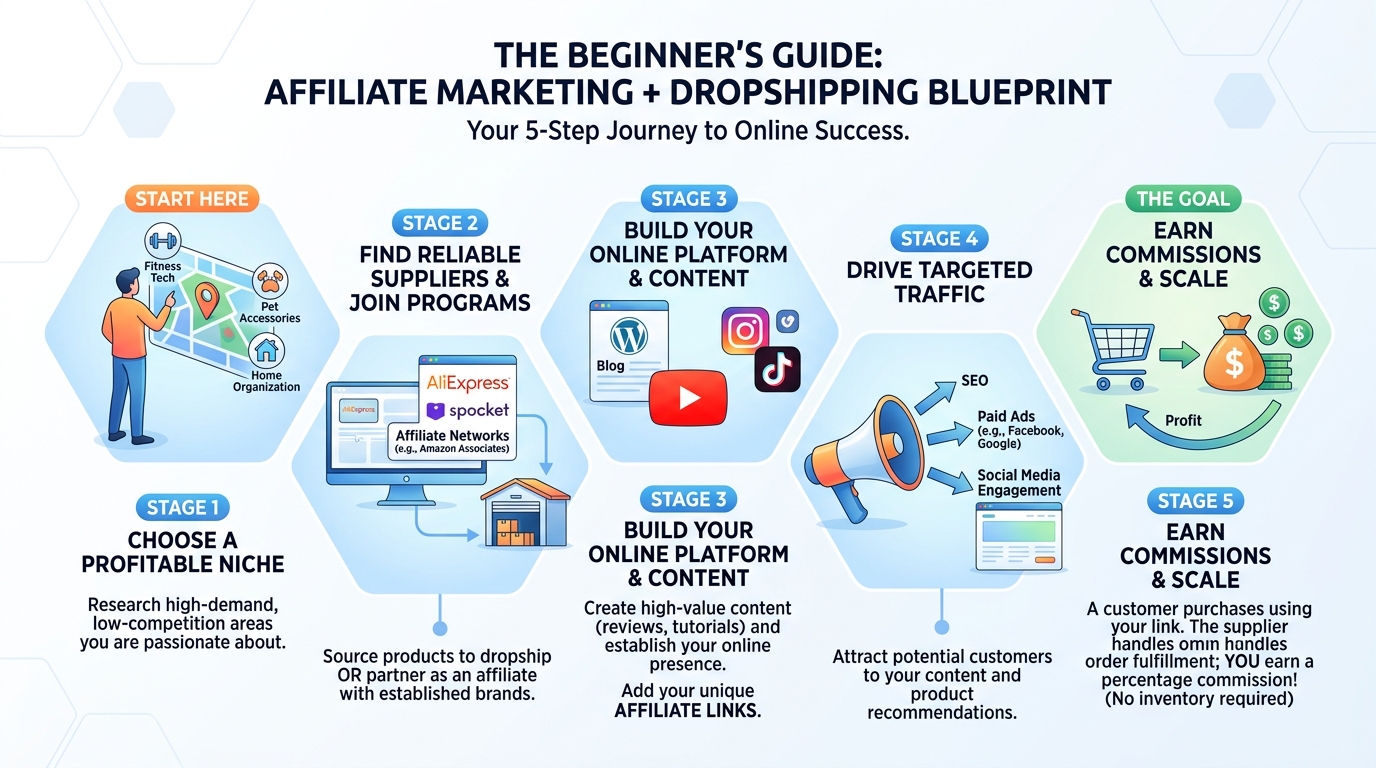
Affiliate Marketing Dropshipping Business Model: Powerful Guide for Beginners
Table of Contents
Affiliate marketing dropshipping represents a fascinating and increasingly popular hybrid approach in the vast landscape of e-commerce. As the digital marketplace continues its rapid expansion, entrepreneurs are constantly seeking innovative models that offer both flexibility and profitability. This business model combines the promotional power of affiliate marketing with the low-inventory benefits of dropshipping, creating a unique synergy that can be incredibly appealing for both budding and seasoned online retailers. Understanding this integrated approach requires a clear grasp of its foundational components: affiliate marketing and dropshipping as standalone strategies, followed by an exploration of how their combination can unlock new avenues for growth and efficiency.
Understanding Affiliate Marketing
Affiliate marketing is a performance-based marketing strategy where individuals or businesses, known as affiliates, earn a commission for promoting other companies’ products or services. The affiliate acts as a middleman, connecting potential customers with a merchant’s offerings. This model has seen substantial growth, with the affiliate marketing industry valued at approximately $12 billion and projected to continue increasing. Spending on affiliate marketing in the United States alone reached $9.56 billion in 2023, expected to rise to $10.72 billion in 2024 and $12 billion by 2025.
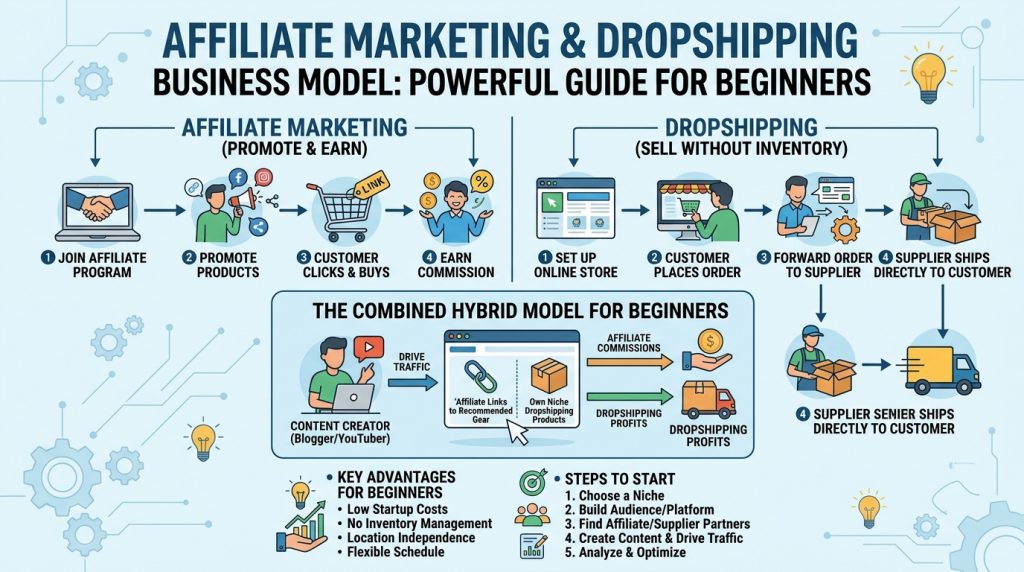
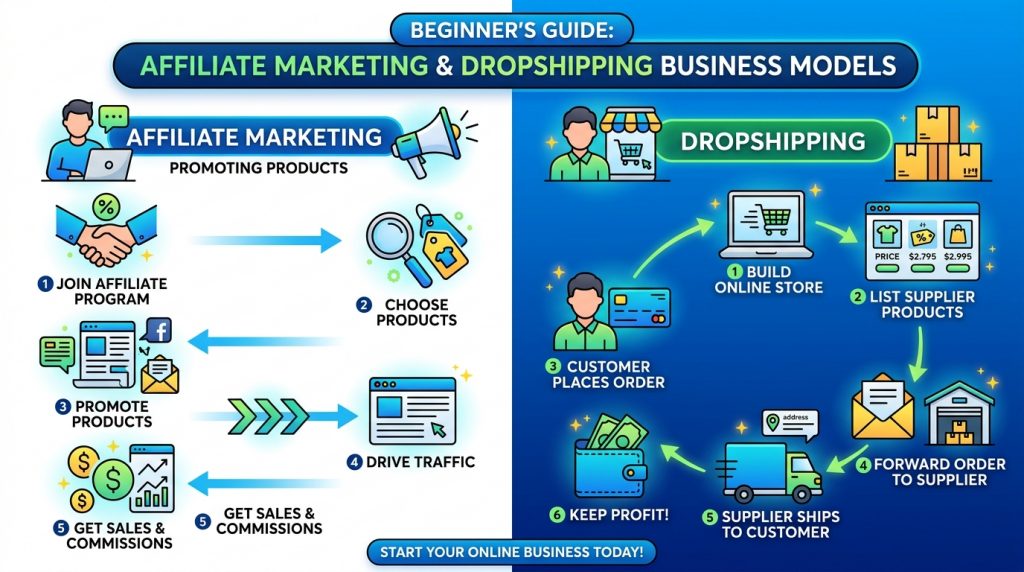
The process is relatively straightforward: an affiliate joins an affiliate program, receives a unique tracking link or code, and then promotes the merchant’s products through various channels such as blogs, social media, email campaigns, or websites. When a customer clicks on this link and completes a desired action—typically a purchase, but sometimes a lead or a free trial signup—the affiliate earns a predetermined commission.
One of the most significant advantages of affiliate marketing is its remarkably low barrier to entry and minimal startup costs. Affiliates do not need to create their own products, manage inventory, handle shipping, or deal with customer support. Their primary responsibility is to drive traffic and generate sales for the merchant. This inherent flexibility allows affiliates to work from anywhere and focus solely on marketing efforts. Once content is published and optimized, it can potentially generate passive income for years without extensive upkeep.
However, affiliate marketing also comes with its own set of challenges. Commission rates for physical products can be relatively low, often ranging from 1% to 20%, though digital products and SaaS niches can offer higher rates (20-50% or even up to 80%). This means affiliates might require high traffic volumes to achieve substantial revenue. Furthermore, affiliates have no control over product pricing, quality, customer service, or inventory—all of which remain the merchant’s responsibility. This lack of control can sometimes lead to credibility issues if the merchant’s performance is subpar, and commission payments can also be delayed or changed by the merchant. Building trust with an audience also takes time, which is crucial for consistent commission flow.
Understanding Dropshipping
Dropshipping is an e-commerce fulfillment model that allows entrepreneurs to sell products online without holding any inventory themselves. Instead of purchasing products in bulk and storing them, dropshippers partner with third-party suppliers who handle the inventory storage, packaging, and shipping directly to the customer.
The dropshipping process involves the customer placing an order on the dropshipper’s online store. The dropshipper then forwards this order to their supplier, who ships the product directly to the customer. The dropshipper profits from the difference between the wholesale price (paid to the supplier) and the retail price (charged to the customer). This model enables entrepreneurs to quickly and easily set up an online store without significant upfront investment in inventory.
The global dropshipping market was valued at $102.2 billion in 2018 and is projected to grow significantly, reaching $301 billion in 2024 and an estimated $476.1 billion by 2026. Its key advantages include low startup costs, no inventory management headaches, and the ability to offer a wide variety of products without needing physical storage space. This flexibility makes it an attractive option for those looking to enter the e-commerce space with reduced financial risk. Dropshippers can also build their own brand and have more control over their product catalog, pricing, and customer experience compared to affiliate marketers.
Despite its benefits, dropshipping presents several challenges. Success heavily depends on reliable suppliers, as issues with product quality, shipping delays, or returns directly reflect on the dropshipper’s brand. Dropshipping typically requires more operational work than affiliate marketing, including managing an online store, handling customer service, and often dealing with returns. Profit margins can also be thin, generally ranging from 10% to 30% after accounting for various costs like advertising, platform fees, and supplier expenses. Competition can be intense, potentially driving prices down and impacting profitability.
The Hybrid Model: Affiliate Marketing Dropshipping Explained
The “Affiliate Marketing Dropshipping Business Model” is essentially an e-commerce strategy where a dropshipping business leverages affiliate marketing to drive sales. It’s about combining the strengths of both models to create a more efficient and scalable online enterprise. Instead of the dropshipper relying solely on traditional advertising methods or their own content marketing, they recruit affiliates to promote their dropshipping store’s products. This creates a powerful synergy where the dropshipper benefits from a wider promotional reach, and affiliates earn commissions without the complexities of inventory or fulfillment.
At its core, this model works by setting up a dropshipping store as the primary sales channel. This store lists products sourced from dropshipping suppliers. The crucial difference from a standard dropshipping operation is the integration of an affiliate program. The dropshipping business, now acting as the merchant, provides unique affiliate links or coupon codes to its network of affiliates. These affiliates then promote the dropshipping store’s products to their respective audiences—be it through blogs, social media, review sites, or email lists.
When a customer clicks an affiliate’s link and makes a purchase from the dropshipping store, the affiliate earns a commission on that sale, and the dropshipping store processes the order with its supplier, who then ships the product directly to the customer. This arrangement means the dropshipper gains increased visibility and sales, effectively outsourcing much of their marketing efforts, while the affiliates are incentivized purely by performance. It’s a “pay-for-results” marketing strategy for the dropshipper.
This hybrid model can also manifest in a slightly different way where an individual might operate a dropshipping store while also engaging in affiliate marketing for other, complementary products. However, the most direct interpretation of “Affiliate Marketing Dropshipping Business Model” typically refers to a dropshipping business employing affiliates as a core marketing strategy. This approach is gaining traction because it allows businesses to expose their products to new and diverse audiences that they might otherwise struggle to reach through conventional advertising. The trust factor associated with influencer marketing and content creators, who often serve as affiliates, can significantly boost conversion rates for the dropshipping products.
Key Advantages of the Combined Approach
Combining affiliate marketing with dropshipping offers a compelling array of benefits that can significantly enhance an online business’s potential for growth and profitability. This synergistic model addresses some of the inherent limitations of each standalone strategy, creating a more robust and adaptable framework.
Cost-Effectiveness in Marketing: For the dropshipping business, integrating an affiliate program is incredibly cost-effective. Unlike traditional advertising, where costs are incurred upfront regardless of sales, affiliates are typically paid only when they generate a sale (Pay-Per-Sale model). This performance-based compensation minimizes marketing risk and ensures that promotional expenditure is directly tied to revenue. It’s like having a dedicated sales force that only gets paid when they deliver results.
Wider Reach and Increased Traffic: Affiliates, especially content creators, bloggers, and social media influencers, bring their established audiences to the table. By partnering with multiple affiliates, a dropshipping store can expose its products to diverse demographics and niches, dramatically expanding its market reach without needing to build each audience from scratch. This influx of traffic can lead to a significant increase in website visitors and potential customers.
Enhanced Brand Credibility and Trust: When products are promoted by trusted figures or reputable content platforms, it lends significant credibility to the dropshipping store and its offerings. Customers are often more inclined to purchase a product recommended by an influencer or reviewer they trust, bypassing some of the initial skepticism associated with unknown online stores. This “word-of-mouth” effect, amplified digitally, can be a powerful conversion driver.
Diversified Revenue Streams: For the dropshipping business, an affiliate program adds another robust revenue channel. Instead of relying solely on direct marketing efforts, sales are generated through a network of promoters. If an individual entrepreneur also acts as an affiliate for other products while running their dropshipping store, it further diversifies their income portfolio.
Scalability with Reduced Operational Overhead: This model allows the dropshipping business to scale its marketing efforts by adding more affiliates without a proportional increase in operational workload related to inventory or shipping. The fulfillment remains handled by the dropshipping suppliers, while the affiliate network drives sales growth. This allows the core dropshipping team to focus more on product curation, supplier management, and customer service for their own store, rather than constantly battling for new advertising space.
Leveraging Existing Content and SEO: Affiliates often create extensive content—reviews, comparisons, how-to guides—around the products they promote. This content not only drives direct sales but also contributes to better search engine optimization (SEO) for the product and the dropshipping store, generating organic traffic over time.
Navigating the Challenges: What to Expect
While the affiliate marketing dropshipping model offers significant opportunities, it is not without its complexities. Successfully integrating these two business models requires careful planning and management to overcome potential pitfalls.
Managing Affiliate Relationships: Establishing and maintaining a network of motivated and effective affiliates requires continuous effort. The dropshipping business needs to actively recruit affiliates, provide them with necessary promotional materials, and communicate effectively about new products, promotions, and changes. Without proper management, affiliates might lose interest or become less effective.
Setting Fair Commission Rates: Determining an attractive yet sustainable commission rate is critical. Affiliate commissions typically range from 5% to 30% for physical products. As a dropshipper, your profit margins can range from 10% to 30% net. You must strike a balance that incentivizes affiliates sufficiently (e.g., 10-30% per sale for dropshipping affiliates) without eating too heavily into your dropshipping profit margins. This requires a deep understanding of your cost of goods sold (COGS), advertising expenses, and overall profitability per product.
Ensuring Product Quality and Supplier Reliability: The dropshipping component means you are reliant on third-party suppliers for product quality, packaging, and timely shipping. Any issues from the supplier directly impact the customer experience and, by extension, your brand’s reputation. While affiliates drive sales, the dropshipper still bears the responsibility for product satisfaction. Diligent supplier vetting and continuous performance monitoring are crucial.
Customer Service Burden: Unlike pure affiliate marketing where the merchant handles customer support, in a dropshipping model, you, as the dropshipper, are typically responsible for customer inquiries, returns, and complaints, even if a supplier handles the physical fulfillment. This can be a significant time commitment and requires robust customer service infrastructure.
Tracking and Analytics Complexity: Accurate tracking of affiliate sales and their attribution can be complex. The dropshipping store needs reliable affiliate marketing software or platforms to monitor clicks, conversions, and commissions accurately. Ensuring affiliates are correctly compensated and that the dropshipper can analyze campaign performance is vital for optimizing the program.
| Feature | Pure Affiliate Marketing | Pure Dropshipping | Hybrid (Affiliate Marketing Dropshipping) |
|---|---|---|---|
| Inventory Management | None (promote others’ products) | None (supplier handles) | None (supplier handles for dropshipping store) |
| Startup Costs | Very Low (content platform, niche research) | Low to Moderate (store setup, initial ads) | Low to Moderate (store setup, affiliate program, initial ads) |
| Product Creation | None | None (source from suppliers) | None (source from suppliers for dropshipping store) |
| Customer Service | Handled by Merchant | Handled by Dropshipper | Handled by Dropshipper |
| Profit Model | Commission on sales (5-30% typical) | Markup on product (10-30% net margin) | Markup on product, driven by affiliate commissions (balanced for profitability) |
| Marketing Effort | Focus on content, traffic generation for affiliate links | Focus on direct ads, SEO for own store | Recruit/manage affiliates; affiliates drive traffic & content |
| Brand Building | Builds affiliate’s personal brand/audience | Builds dropshipping store’s brand | Primarily builds dropshipping store’s brand, amplified by affiliates |
| Control over Pricing | None (set by merchant) | Full (set by dropshipper) | Full (set by dropshipper) |
| Scalability | High (audience growth, content performance) | High (product range, ad spend) | Very High (leveraging affiliate network for broader reach) |
Building Your Hybrid Business: A Step-by-Step Guide
Launching a successful affiliate marketing dropshipping business involves a methodical approach, combining the best practices of both models. Here’s a step-by-step guide to help you get started:
Step 1: Niche Selection and Product Research:
The foundation of any successful e-commerce venture is a well-chosen niche. This applies even more to a hybrid model. Identify a niche with demonstrable demand, manageable competition, and products that lend themselves well to both dropshipping and affiliate promotion. Research products that have good profit margins for dropshipping (aim for over 20% net margin) and are appealing enough for affiliates to promote effectively. Consider niche selection strategies that align with your target audience’s interests and problems.
Step 2: Set Up Your Dropshipping Store:
Choose a reliable e-commerce platform like Shopify or WooCommerce to build your online store. Focus on creating a professional, user-friendly website with clear product descriptions, high-quality images, and a seamless checkout process. Integrate necessary payment gateways and ensure your store is optimized for mobile responsiveness. For guidance on platforms, refer to an e-commerce platform guide.
Step 3: Source Reliable Dropshipping Suppliers:
This is a critical step for the dropshipping component. Partner with reputable suppliers who offer good quality products, competitive pricing, efficient shipping, and responsive communication. Platforms like SaleHoo, Worldwide Brands, or AliExpress (with careful vetting) can be starting points. Negotiate terms, understand their return policies, and ideally, test products yourself to ensure quality before listing them.
Step 4: Establish Your Affiliate Program:
Integrate an affiliate management platform or app with your e-commerce store. Popular options include Refersion, GoAffPro, UpPromote, or Tapfiliate, especially for Shopify stores. Define your commission structure (e.g., percentage of sale, flat fee) and payout terms. As discussed, aim for a competitive commission rate (e.g., 10-30% of the sale) that motivates affiliates while maintaining your dropshipping profit margins.
Step 5: Develop Promotional Materials for Affiliates:
Provide your affiliates with a comprehensive toolkit to help them succeed. This should include high-quality product images, videos, compelling ad copy, brand guidelines, and information about your target audience. Making it easy for affiliates to promote your products will encourage their participation and effectiveness.
Step 6: Recruit and Onboard Affiliates:
Actively seek out potential affiliates who align with your niche and target audience. This can include bloggers, social media influencers (on platforms like Instagram, TikTok, YouTube), content creators, and niche website owners. Outreach can be done directly, through affiliate networks, or by offering incentives for existing customers to refer others. Provide clear instructions on how to join your program and access their unique links and resources.
Step 7: Monitor, Track, and Optimize:
Continuously monitor the performance of your affiliate program. Use your chosen affiliate platform to track clicks, conversions, and commissions. Analyze which affiliates are performing best, which products are being most effectively promoted, and what marketing strategies yield the highest ROI. Use this data to refine your affiliate recruitment, commission structure, and promotional materials. Regular communication with affiliates is key to fostering a strong working relationship.
Optimizing for Long-Term Success
For sustained growth in an affiliate marketing dropshipping business, continuous optimization is paramount. Beyond the initial setup, several strategies can help maximize profitability and ensure longevity.
Maintain Strong Supplier Relationships: The backbone of your dropshipping operation is reliable suppliers. Regularly evaluate their performance, negotiate better terms as your order volume grows, and maintain open lines of communication to mitigate potential issues before they impact customers. Building these relationships is crucial for consistent product availability and quality.
Nurture Your Affiliate Network: Treat your affiliates as true partners. Provide ongoing support, share performance insights, offer bonuses for exceptional results, and keep them informed about new product launches or promotions. An engaged and well-supported affiliate network will be more motivated to drive sales for your store. Running promotions with your affiliates, such as exclusive discount codes, can also boost their effectiveness.
Diversify Product Offerings and Niche Markets: While starting with a focused niche is important, explore expanding your product catalog within or into complementary niches. This can attract a wider range of customers and provide more opportunities for your affiliates to promote.
Invest in Your Own Marketing: Even with affiliates driving traffic, don’t neglect your own marketing efforts. Optimize your dropshipping store for SEO, run targeted paid ad campaigns (e.g., Google Shopping, social media ads) to capture direct sales, and build an email list for direct customer engagement. This dual approach ensures a steady stream of traffic from multiple sources.
Focus on Customer Experience: Since you own the customer relationship, providing excellent customer service is non-negotiable. Promptly address inquiries, resolve issues efficiently, and strive to create a positive shopping experience. This fosters customer loyalty and encourages repeat business, which is highly profitable.
Data-Driven Decision Making: Regularly analyze your sales data, affiliate performance metrics, customer feedback, and supplier reliability. Identify trends, popular products, successful marketing channels, and areas for improvement. Use these insights to make informed decisions about product sourcing, pricing strategies, affiliate commission adjustments, and marketing campaigns.
Conclusion: The Future of E-commerce Synergy
The affiliate marketing dropshipping business model offers a compelling pathway for entrepreneurs navigating the competitive e-commerce landscape. By strategically blending the low-risk, wide-reach benefits of affiliate marketing with the inventory-free advantages of dropshipping, businesses can create a highly scalable and cost-effective operation. This hybrid approach allows dropshipping stores to tap into diverse audiences through a network of motivated affiliates, effectively amplifying their marketing efforts on a performance-based model. While challenges such as affiliate management, commission structuring, and maintaining supplier reliability exist, careful planning and continuous optimization can transform these into manageable aspects of a thriving online business.
As the e-commerce sector continues its robust growth, embracing innovative models like affiliate marketing dropshipping will be crucial for maintaining a competitive edge. It represents a powerful evolution in online retail, empowering entrepreneurs to build strong brands and generate substantial revenue by leveraging collaboration and smart resource allocation. For those looking to capitalize on the dynamic opportunities of online commerce, understanding and implementing this synergistic model could very well define their success. The future of e-commerce increasingly lies in such integrated strategies that optimize for efficiency, reach, and profitability, allowing businesses to adapt and flourish in an ever-changing digital world. For further reading on the broader context of online commercial activities, consider consulting resources like Wikipedia’s page on E-commerce.