10 Affiliate Marketing Expenses Breakdown for Beginners Starting Online
Table of Contents
Affiliate marketing, for many aspiring online entrepreneurs, represents a gateway to earning passive income and establishing a flexible business model. The allure of promoting products and services without the burdens of inventory, customer service, or product creation makes it a highly attractive venture. However, while often touted as a “low-cost” or “free” way to start an online business, a comprehensive understanding of the affiliate marketing cost breakdown for starting online is crucial for setting realistic expectations and budgeting effectively. The truth is, while joining affiliate programs themselves is typically free, scaling your efforts to generate meaningful income usually involves strategic investments.
The expenses associated with launching and growing an affiliate marketing business can vary significantly based on the chosen approach. Some individuals opt for a completely free strategy, leveraging social media platforms like Facebook, TikTok, YouTube, or Instagram, with their primary investment being time. Others choose to invest in a website, various tools, and paid advertisements to accelerate growth and establish a more robust presence. This article will delve into a detailed breakdown of potential costs, from initial setup to ongoing operations, helping you navigate the financial landscape of starting your affiliate marketing journey.
Initial Investment: Setting Up Your Affiliate Marketing Foundation
The initial investment in affiliate marketing can range from absolutely zero to several hundred or even thousands of dollars, depending on your chosen strategy and desired pace of growth. The fundamental principle is to start within your means, validate your concept, and then reinvest earnings to scale.
At its core, affiliate marketing involves promoting someone else’s products or services and earning a commission on sales or leads generated through your unique affiliate link. The low barrier to entry is one of its primary advantages, as you don’t need to invest in physical inventory, storefronts, or manufacturing facilities. This performance-based model means merchants only pay you when you deliver results, making it a win-win scenario.
For those starting with a minimal or zero budget, social media platforms and free blogging sites offer viable avenues. Platforms like YouTube, Instagram, and TikTok can be used to create product reviews, tutorials, or helpful content, with the main investment being time and effort. Many successful affiliates began this way, focusing on building an audience and trust organically. However, to truly scale and establish a professional presence, some optional investments often become necessary. These include domain registration, website hosting, and potentially basic content creation tools.
Understanding the distinction between joining affiliate programs (which are free) and the costs associated with growing a profitable affiliate business is essential. The “minimal investment” approach might involve spending around $50-$100 for a basic setup like a domain and hosting, while a mid-range budget of $200-$300 is often recommended for better tools and resources.
Website/Blog Costs: Your Digital Storefront
While it’s possible to engage in affiliate marketing without a dedicated website, having one significantly enhances credibility and earning potential. A website provides a central hub for your content, allows for greater control over your brand, and is crucial for leveraging search engine optimization (SEO) to drive organic traffic.
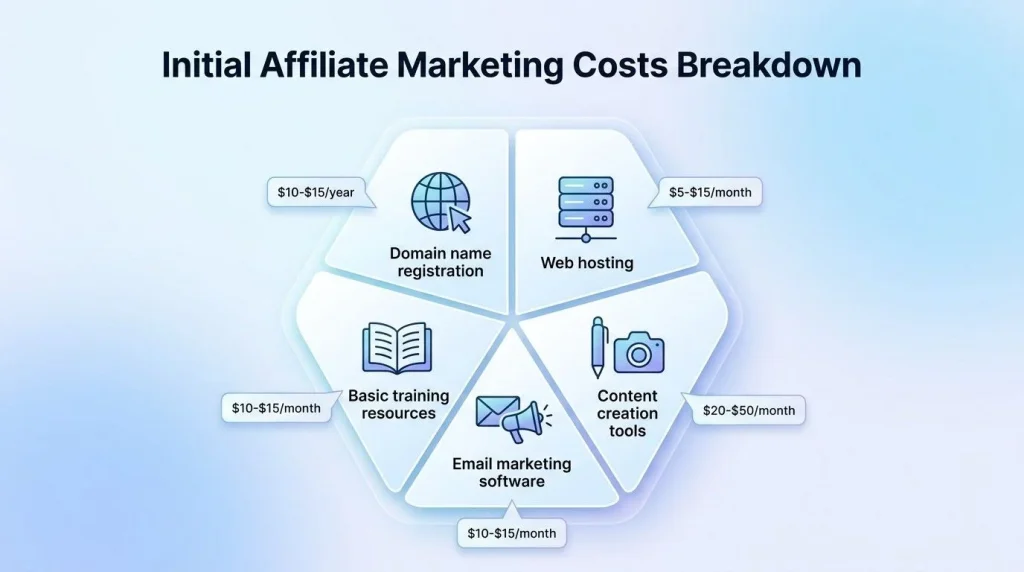
Domain Name Registration
Your domain name is your online identity, such as “yourbusiness.com”. This is a recurring annual cost, typically ranging from $10 to $20 per year. Choosing a memorable and relevant domain name is important for branding and discoverability. A custom domain is significantly more professional than using free subdomains and is often a requirement for approval by many affiliate programs, including Amazon Associates.
Web Hosting
Web hosting keeps your website online and accessible to visitors. Hosting costs vary widely depending on the type of hosting (shared, VPS, dedicated) and the provider. For beginners, shared hosting plans are usually sufficient and more affordable. Costs can range from $3 to $30 per month. More robust hosting for larger sites can go up to $100 per month or more. It’s crucial to select a reliable web host that offers good uptime, performance, and features like SSL certificates, which are important for SEO and user trust.
Website Theme or Template
The visual design of your website is delivered through a theme or template. Many platforms offer free themes, which can be a great starting point for those on a tight budget. However, premium themes often come with more features, better design, and dedicated support, costing anywhere from $30 to $100 or more. If you’re skilled, you can design your entire website for free, though this will require a significant time investment.
Website Builder/CMS
Utilizing a Content Management System (CMS) like WordPress (often self-hosted with your chosen web host) is a popular choice for affiliate marketers due to its flexibility and vast ecosystem of plugins. While WordPress itself is free, certain premium plugins for SEO, caching, or affiliate link tracking may incur subscription costs. Alternatively, website builders like Squarespace or Wix offer all-in-one solutions with monthly fees ranging from $7 to $99 per month.
Content Creation Expenses: Fueling Your Affiliate Engine
Content is the cornerstone of affiliate marketing. Whether it’s blog posts, product reviews, videos, or social media updates, high-quality content attracts and engages your target audience, ultimately driving conversions. The cost here primarily depends on whether you create content yourself or outsource it.
Your Time Investment
For those starting with a zero or minimal budget, your time is your most significant investment. Crafting compelling content, researching keywords, and optimizing for search engines can take considerable time. Many successful affiliates spend hours creating high-quality content to build trust and authority in their niche.
Outsourcing Content
As your affiliate business grows, you might consider outsourcing content creation to freelancers or agencies to save time and scale your output. The costs for outsourced content can vary significantly:
- Blog Posts/Articles: A typical blog post can range from $25 to $75 per piece, with higher quality articles costing $200-$300 or more, especially for in-depth reviews or expert content.
- Graphic Design: Custom graphics, banners, and visuals for your website or social media can cost anywhere from $50 to $600+ per design, or you might pay a monthly fee for design services.
- Video Content: Video production is generally more expensive, ranging from $2,000 to $50,000+ per project, depending on complexity and professional involvement. Influencer affiliates often invest in equipment like cameras and microphones, costing $500-$2,000 initially.
Content Creation Tools
While many free tools exist, premium tools can significantly enhance your content strategy:
- Keyword Research & SEO Tools: Tools like Ahrefs or SEMrush, essential for finding profitable keywords and analyzing competitors, can start from $99-$140 per month, or even $500+ for more advanced features. However, beginners can start with free alternatives before committing to paid subscriptions.
- AI Content Generation: Tools like ChatGPT can assist with content creation, with paid versions costing around $20+ per month. While useful, AI-generated content still requires human editing to ensure quality and avoid sounding “robotic.”
- Design Software: Free tools like Canva are excellent for basic graphic design, but professional software subscriptions (e.g., Adobe Creative Suite) can add to your monthly overhead if you require advanced features.
Traffic Generation Costs: Reaching Your Audience
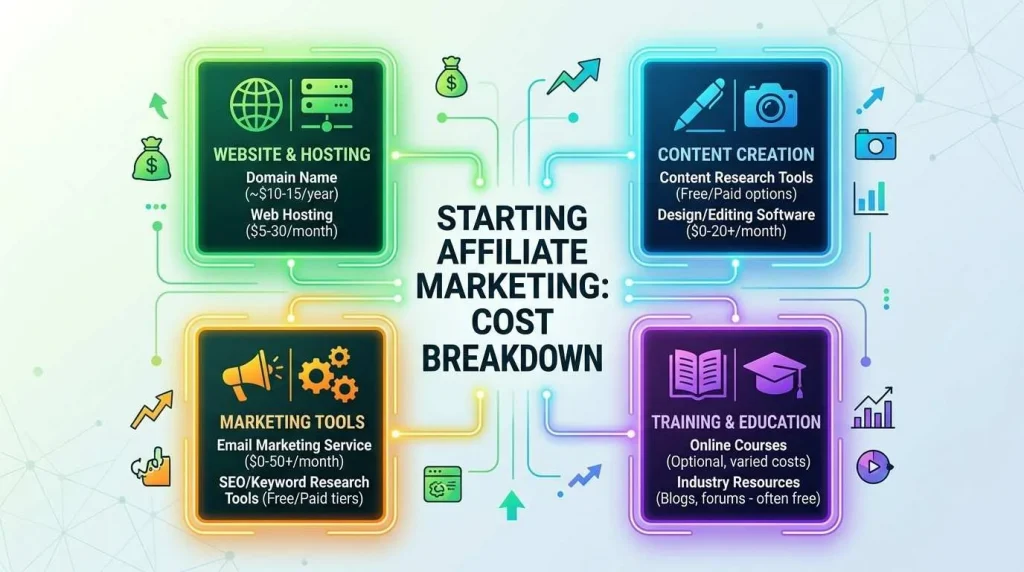
Getting visitors to your affiliate offers is paramount. There are two primary strategies for generating traffic: organic and paid, each with its own cost implications.
Organic Traffic (Free but Time-Intensive)
Organic traffic refers to visitors who find your content through unpaid channels, primarily search engine results and social media. While often referred to as “free,” it requires a significant investment of time, effort, and expertise. Strategies include:
- Search Engine Optimization (SEO): Optimizing your website and content to rank higher in search engine results. This involves keyword research, on-page optimization, link building, and technical SEO. While the tools can be costly, the strategy itself is “free.”
- Content Marketing: Consistently creating valuable, high-quality content that naturally attracts your target audience.
- Social Media Marketing: Building a following and engaging with communities on platforms like Instagram, TikTok, YouTube, or Facebook to promote your affiliate products.
- Email Marketing: Building an email list (often through lead magnets) and nurturing subscribers with valuable content and affiliate offers. While email service providers can have costs, many offer free tiers for small lists.
The long-term sustainability and credibility associated with organic traffic make it a highly desirable strategy. However, it can take 3-6 months or even longer to generate meaningful traffic from SEO efforts.
Paid Traffic (Fast but Costly)
Paid traffic involves paying to have your content displayed in prominent positions on search engines, websites, or social media platforms. This method can deliver immediate results and allows for precise targeting, making it ideal for testing products or promotions quickly.
- Pay-Per-Click (PPC) Advertising: Platforms like Google Ads, Facebook Ads, YouTube Ads, or native ads allow you to pay for clicks or impressions. The cost can range from $100 to $5,000+ per month, or even $5-$100+ per day, depending on your budget and campaign goals. Media buyers often start with at least $2,000 set aside for ad spend.
- Landing Page Builders: To maximize the effectiveness of paid ads, you’ll often need dedicated landing pages. Tools for building these can cost between $40-$200 per month.
- Ad Spy Tools: These tools help analyze competitor ad strategies and can cost $70-$150 per month.
The key with paid traffic is to ensure your advertising costs do not exceed your commission earnings to maintain profitability. A positive return on ad spend (ROAS) is crucial. While it offers quick results, the investment stops as soon as you stop paying for ads.
Tools and Software: Essential Support Systems
To operate an affiliate marketing business efficiently, various tools and software can become essential. While many offer free basic versions, advanced features often come with a monthly or annual subscription.
Email Marketing Platforms
Building an email list is vital for long-term engagement and promotion. Free options like Mailchimp are available for beginners, but advanced platforms for automation and segmentation can cost $50-$300+ per month.
Affiliate Tracking and Analytics Tools
Tracking your performance is crucial to understanding what works and optimizing your campaigns. Basic tracking tools can cost $50-$500 per month, while platforms with fraud detection, advanced analytics, and partner dashboards can range from $300 to $700 per month, or even $1,000+ for enterprise solutions. Some affiliate management software tools like Refersion or Modash start from around $199/month.
Productivity and Organization Tools
While not directly marketing-related, these tools can save time and improve efficiency. This might include project management software, cloud storage, or communication tools, often available with free tiers or affordable monthly subscriptions.
| Category | Specific Item | Typical Monthly Cost (USD) | Notes |
|---|---|---|---|
| Website & Hosting | Domain Name | $1-$2 (annually $10-$20) | Annual renewal. Essential for a professional image. |
| Web Hosting (Shared) | $3-$30 | Keeps your website online. Varies by provider and features. | |
| Premium Theme/Builder | $0-$100 (one-time or monthly) | Optional, but can enhance design and functionality. | |
| Content Creation | Keyword Research Tool (e.g., Ahrefs, SEMrush) | $0-$500+ | Free options exist; paid tools offer advanced features. |
| Content Outsourcing (per article) | $25-$300+ | If hiring writers/designers. Your time is free. | |
| Traffic Generation | Paid Ads (PPC) | $0-$5,000+ (or $5-$100+ per day) | Optional. Can accelerate growth; requires careful budget management. |
| Landing Page Builder | $40-$200 | Often used with paid ads to optimize conversions. | |
| Essential Tools | Email Marketing Software | $0-$300+ | Free tiers for small lists; scales with subscriber count. |
| Affiliate Tracking Software | $0-$1,000+ | Basic tools free or low cost; advanced platforms for large programs. | |
| Total Estimated Initial Monthly Costs (excluding paid ads & outsourcing) | $50-$300 | This range represents a moderate investment for a solid foundation. |
Ongoing Costs and Scaling: Sustaining Your Growth
Once you’ve established your initial affiliate marketing presence, maintaining and scaling your efforts will involve ongoing costs. These are typically recurring expenses that allow your business to grow and remain competitive.
Recurring Software Subscriptions
Many of the tools mentioned above, such as web hosting, email marketing platforms, and SEO tools, operate on a subscription model. These monthly or annual fees are crucial for the continued operation and effectiveness of your affiliate business. As your needs evolve, you might upgrade to more comprehensive plans with higher costs. For instance, basic affiliate tracking tools might cost $50-$500 per month, while more feature-rich options can go up to $1,000+ per month.
Content Refresh and Updates
To maintain relevance and strong search engine rankings, your content will need regular updates, refreshes, and potentially new additions. This can incur costs if you outsource content creation, or it will continue to demand your time investment. Evergreen content, which remains relevant over time, is particularly cost-effective in the long run.
Testing and Optimization
Affiliate marketing is an iterative process. You’ll constantly be testing different strategies, product promotions, ad creatives, and landing pages to optimize your conversion rates. This testing phase can consume both time and money, especially if you’re running paid advertising campaigns. Successful affiliates understand the importance of analyzing data and making data-driven decisions to refine their approach. It’s important to know your ROI, especially with paid ads, to ensure profitability.
Educational Resources and Training
The digital marketing landscape is constantly evolving. Investing in courses, workshops, or premium forums to stay updated on the latest strategies, tools, and trends can be a significant ongoing cost. These educational investments can range from $50 to $700 per course. While there’s a wealth of free information available, structured training can save time and provide valuable insights.
Outsourcing Management (Optional)
For larger affiliate programs or those who prefer to focus on other aspects of their business, outsourcing program management to an agency or an outsourced program manager (OPM) is an option. These services can range from $2,000 to $10,000 per month, covering tasks like recruiting affiliates, setting up campaigns, and reporting.
Hidden Costs to Consider: Unexpected Expenses
Beyond the direct, quantifiable expenses, there are several “hidden” costs in affiliate marketing that can impact your budget and profitability if not anticipated. Being aware of these can help you better prepare for the challenges of building a successful online business.
Time Investment as a Cost
As repeatedly mentioned, if you’re starting with a low budget, your time is your most valuable asset. The hours spent on research, content creation, SEO, social media engagement, and learning new skills are a significant, albeit unquantified, cost. Many affiliates underestimate the sheer amount of time required to build an audience and generate quality content.
Learning Curve and Failed Campaigns
There’s a learning curve involved in affiliate marketing, especially for beginners. You will likely spend time and money on strategies or campaigns that don’t yield the desired results. Failed campaigns are a part of the process, and budgeting for experimentation and learning is essential. This includes understanding technical aspects like SEO, email marketing, and paid advertising, which might require investing in courses or hiring experts.
Fraud and Tracking Issues
Affiliate fraud, such as cookie stuffing or URL hijacking, can lead to misattributed conversions and wasted commissions. Maintaining reliable tracking systems is crucial, and issues can arise due to website updates or technical glitches, potentially leading to missed commissions. Investing in fraud prevention tools and regularly auditing traffic can help mitigate these risks.
Payment Processing Delays and Fees
Delays in commission payouts from some affiliate networks can create cash flow problems, particularly if you’re heavily reliant on affiliate income. Additionally, some payment processors or networks might charge fees for transactions or withdrawals, which can slightly reduce your net earnings. It is important to understand the payout rules of each affiliate program you join.
Taxes and Legal Considerations
As an affiliate marketer, you are essentially running a business, and that comes with tax obligations. While not an upfront cost, budgeting for taxes and potentially seeking professional advice on business structure and legal compliance can be a hidden expense that needs to be factored in as your income grows. Ignorance of these can lead to future financial complications.
For more detailed insights into the complexities of online business and associated regulations, especially for those operating internationally, it can be beneficial to consult resources like Wikipedia’s page on E-commerce, which provides a broad overview of the digital economy and its operational frameworks.
Conclusion
Affiliate marketing offers a remarkable opportunity to enter the online business world with comparatively low barriers to entry. While it’s technically possible to start with zero monetary investment, relying solely on free platforms and organic methods, this often requires a substantial investment of time and patience. For those serious about building a sustainable and profitable affiliate marketing business, a more realistic approach involves a modest initial investment and ongoing operational costs.
A typical affiliate marketing cost breakdown for starting online includes expenses for a domain name ($10-$20 annually), web hosting ($3-$30 monthly), and potentially premium tools for email marketing or SEO (ranging from free tiers to hundreds of dollars monthly). Content creation, whether self-produced or outsourced, and traffic generation, through organic efforts or paid advertising, will be the primary drivers of your budget. Hidden costs such as time investment, learning curves, and fraud prevention also warrant consideration.
The key to success lies in a strategic approach: start lean, validate your niche and methods, and then judiciously reinvest your earnings into scaling your operations. By understanding this comprehensive cost breakdown, aspiring affiliate marketers can create a realistic budget, mitigate unexpected expenses, and build a solid foundation for long-term growth and profitability in the dynamic world of online marketing. The flexibility of affiliate marketing allows you to tailor your investment to your comfort level, ensuring that your journey is both financially sustainable and rewarding.