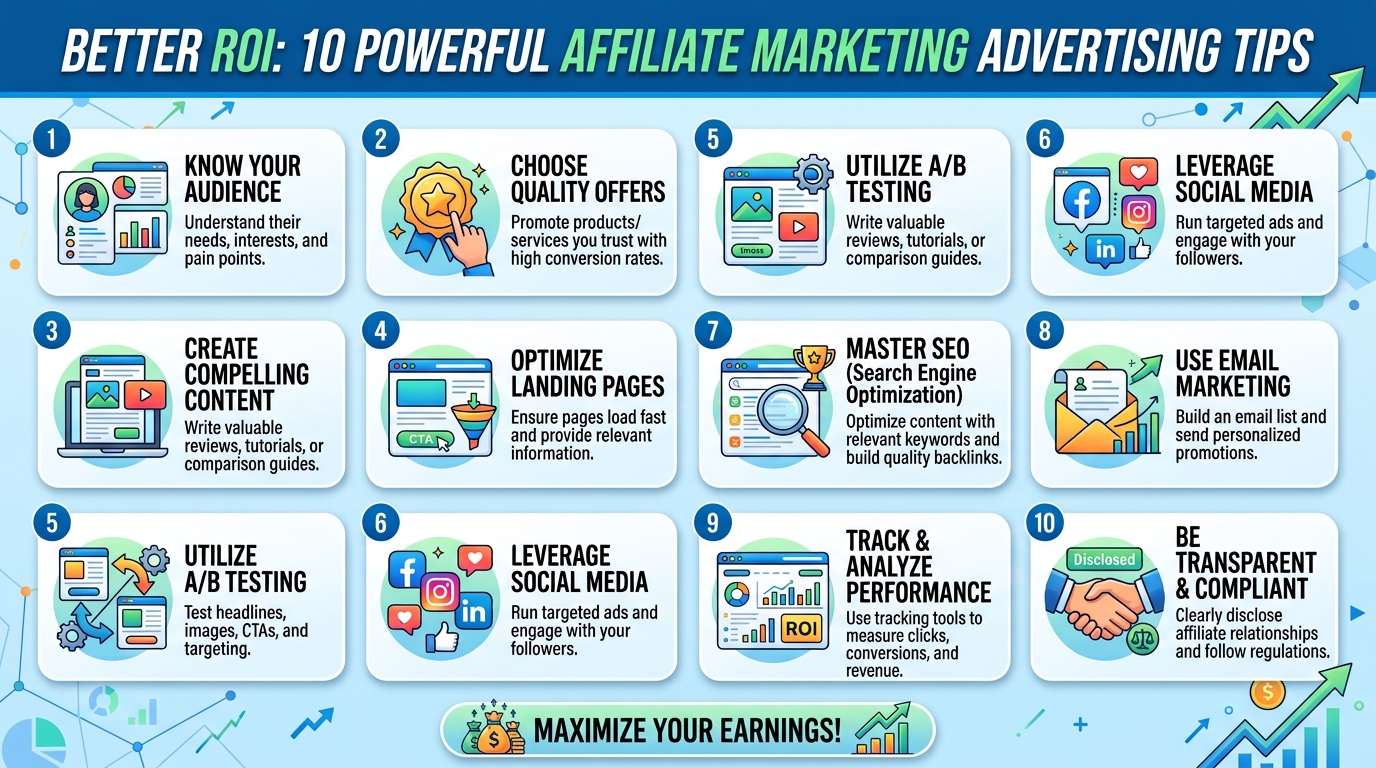
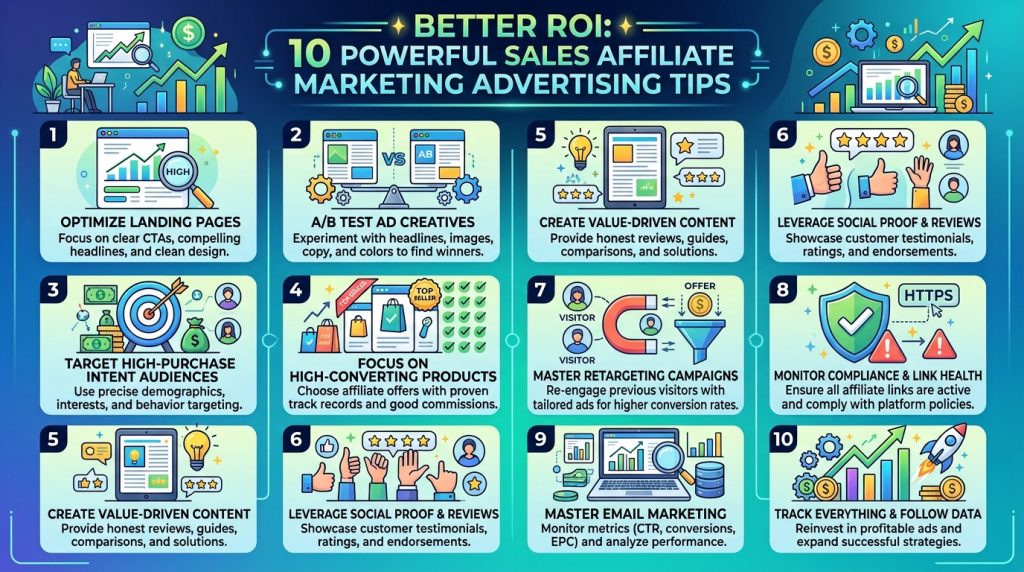
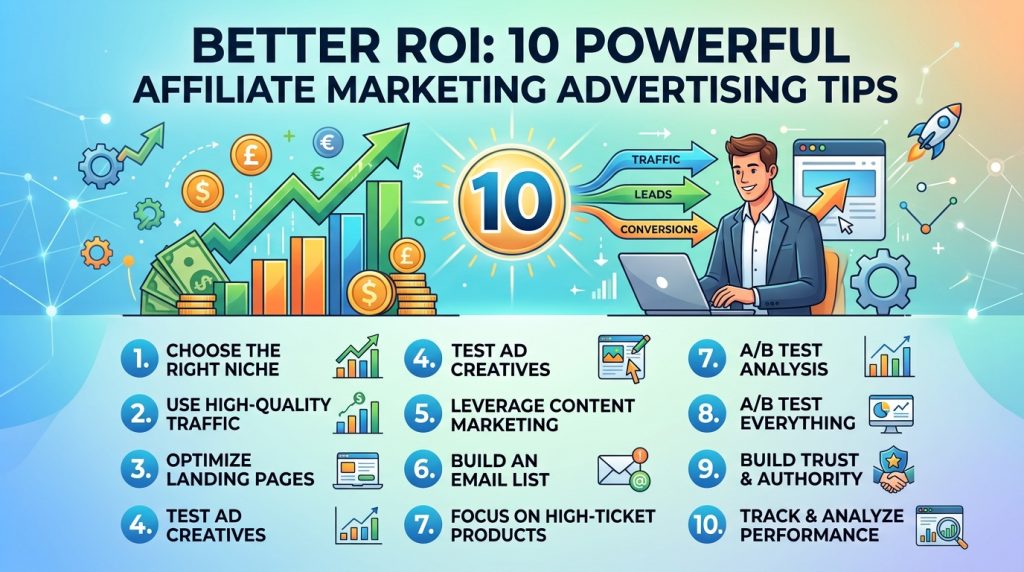
Better ROI: 10 Powerful Affiliate Marketing Advertising Tips
Table of Contents
Affiliate marketing has solidified its position as a cornerstone of digital advertising, offering a compelling performance-based model where businesses only pay for tangible results, such as leads or sales. This inherent efficiency makes affiliate marketing a highly attractive channel for businesses aiming to maximize their return on investment (ROI) while minimizing upfront risks. The industry itself is experiencing robust growth, with global interest steadily increasing and significant spending projections, underscoring its importance in modern marketing landscapes. Industry data consistently shows that affiliate marketing delivers an impressive average ROI, often ranging between 200% and 500%, with optimized programs capable of achieving returns exceeding 1,400%. However, simply launching an affiliate program isn’t enough; achieving and sustaining a high ROI requires a strategic, agile, and continuously optimized approach. This comprehensive guide will delve into actionable advertising tips and strategies designed to significantly enhance your affiliate marketing ROI.
The Power of Performance-Based Marketing
Affiliate marketing operates on a principle that directly aligns the interests of the merchant with those of the affiliate: success for one translates to success for the other. This performance-based model distinguishes it from traditional advertising, where costs are incurred regardless of conversion. By paying commissions only upon actual conversions, businesses can significantly reduce their customer acquisition costs (CAC) and ensure their marketing spend is directly tied to measurable business outcomes. The robust ROI figures associated with affiliate marketing highlight its effectiveness, often outperforming other digital channels in terms of efficiency. However, the actual return can vary based on factors like industry, product category, commission structure, and the quality of affiliates. Therefore, a deep understanding of how to optimize each facet of your affiliate advertising efforts is paramount for unlocking its full potential.
Understanding Your Audience and Niche Selection
A fundamental step towards achieving a better ROI in affiliate marketing is a profound understanding of your target audience and a precise selection of your niche. Spreading efforts too thin across broad categories rarely yields optimal results. Instead, focusing on a specific niche that aligns with your interests and expertise, and crucially, has a receptive audience, positions you as a trusted authority.
- In-depth Audience Research: Before promoting any product, invest time in understanding who your potential customers are. This goes beyond basic demographics. Delve into their pain points, needs, preferences, online behavior, and buying intent. Tools and analytics can help identify what resonates most with them, guiding your content and promotional strategies.
- Strategic Niche Selection: Choose a niche where you can genuinely offer value and establish credibility. Your chosen niche should have sufficient market demand and growth potential without being overly saturated with competition. The closer the niche is to your genuine interests, the more authentic and successful your promotions are likely to be.
- Targeting High Buyer Intent: Tailoring content to target high buyer intent keywords is a crucial strategy. These keywords often include terms like “best,” “top,” “review,” “rating,” or “comparison” alongside specific product names. By focusing on users who are actively looking to make a purchase, you can attract better-qualified leads and achieve higher conversion rates.
Crafting High-Converting Content Strategies
In affiliate marketing, content is not just king; it’s the entire kingdom. High-quality, valuable, and relevant content is what attracts, engages, and converts your audience. Your content should educate, inspire, and build trust, shifting from a sales-first to a value-first approach.
- Value-Driven Content Formats: Diversify your content to appeal to different segments of your audience and various stages of the buyer journey. This includes detailed product reviews and comparisons that offer valuable insights and help users make informed decisions. How-to guides, unboxing videos, tutorials, and problem-solution articles are also highly effective. Ensure your content addresses specific pain points and offers genuine solutions.
- Search Engine Optimization (SEO): Optimize your content for search engines to drive organic traffic, which is a sustainable long-term strategy. Conduct thorough keyword research and naturally integrate relevant keywords into your titles, meta descriptions, headings, and body text. Focus on creating comprehensive, authoritative content that meets your audience’s needs and establishes your site’s authority.
- Compelling Calls-to-Action (CTAs): Even the best content needs a clear direction. Craft persuasive CTAs that guide your audience towards the desired action, whether it’s clicking an affiliate link, subscribing to a newsletter, or exploring a product page. A/B test different CTAs to see what resonates most effectively.
- Visuals and Engagement: Incorporate high-quality images, videos, and infographics to make your content more engaging and digestible. Visual content is crucial for grabbing attention and can be repurposed across different platforms to broaden your reach.
Diversifying Traffic Sources for Sustainable Growth
Relying on a single traffic source can be risky, as algorithm changes or platform policy shifts can severely impact your income overnight. A robust affiliate marketing strategy incorporates a diversified approach to traffic generation, ensuring multiple independent revenue streams.
- Organic Search (SEO): As mentioned, SEO is vital for driving consistent, high-intent organic traffic over the long term. This involves continuous content creation, keyword optimization, and technical SEO best practices.
- Email Marketing: Building an email list allows for direct communication with your audience. Segment your list and personalize content to increase campaign effectiveness. Newsletters should provide genuine value, with affiliate promotions woven in naturally.
- Social Media Marketing: Leverage platforms like Instagram, Facebook, TikTok, YouTube, and Pinterest to engage with your audience and promote products. Tailor content for each platform, using engaging posts, stories, and even targeted social media ads. Short-form video content on platforms like TikTok and Instagram Reels has proven particularly effective for driving engagement.
- Paid Advertising (PPC): While organic methods are sustainable, paid ads can provide an immediate boost of highly targeted visitors and accelerate results, especially for new campaigns. Platforms like Google Ads and social media advertising offer robust targeting options. A/B test ad copy and creatives to optimize performance.
- Native Advertising: This involves integrating advertisements that blend seamlessly with the surrounding content, appearing less intrusive than traditional ads. Native advertising can be highly effective, but often requires a testing budget to find profitable campaigns.
Here’s a comparative look at various traffic sources and their primary benefits for affiliate marketing:
| Traffic Source | Primary Benefit | Considerations for ROI | Best For |
|---|---|---|---|
| Organic Search (SEO) | Long-term, sustainable, high-intent traffic | Requires consistent effort, takes time to see results, susceptible to algorithm changes | Building authority, evergreen content, passive income |
| Email Marketing | Direct communication, high conversion rates with segmented lists | List building takes time, requires valuable content, risk of unsubscribes | Nurturing leads, exclusive offers, repeat purchases |
| Social Media Marketing | Broad reach, audience engagement, viral potential | Requires platform-specific content, rapidly changing trends, potential for low conversions without strategy | Brand building, quick promotions, engaging diverse audiences |
| Paid Advertising (PPC) | Immediate results, highly targeted traffic | Can be expensive, requires constant monitoring and optimization, ad fatigue | Rapid scaling, testing offers, specific campaigns |
| Native Advertising | Less intrusive, higher engagement rates | Requires careful content alignment, initial testing budget needed | Content-driven promotions, soft selling |
Continuous Optimization and A/B Testing
Affiliate marketing is not a “set and forget” endeavor; it demands continuous iteration, testing, and refinement. High ROI comes from constant optimization, making data-driven adjustments to improve campaign performance over time.
- A/B Testing Key Elements: Regularly test different elements of your promotional content and landing pages. This includes headlines, ad copy, images, calls-to-action (CTAs), and even layout. Data-driven testing reveals what truly resonates with your audience and drives conversions.
- Landing Page Optimization: The quality of your landing pages significantly impacts conversion rates. Ensure they are clear, concise, visually appealing, and designed for conversions with strong headlines, persuasive copy, and compelling CTAs. Mobile optimization is crucial, as is fast loading speed, to improve user experience and reduce bounce rates.
- Refining Promotional Tactics: Experiment with different types of content and promotional channels to see what works best. This could involve trying out new content formats, adjusting your posting schedule, or exploring new social media platforms.
- Commission Structure Optimization: Review and refine your commission structure. Tiered commission models, exclusive bonuses, and performance-based incentives can motivate affiliates to prioritize your products and drive higher-value customers. Rewarding affiliates for repeat buyers or subscription-based products with recurring commissions can also incentivize long-term value generation.
Mastering Tracking and Analytics for Data-Driven Decisions
Accurate tracking and comprehensive analytics are the backbone of any successful affiliate marketing program. Without robust data, it’s impossible to identify what’s working, pinpoint areas for improvement, and make informed decisions that drive ROI.
- Implement Detailed Tracking: Set up comprehensive analytics to monitor every step of the customer journey, from the initial click to conversion. Specialized platforms like PostAffiliatePro or Impact.com offer tools for real-time conversion tracking, commission management, and detailed performance analytics, enabling you to identify which affiliates, campaigns, and strategies deliver the highest returns.
- Key Performance Indicators (KPIs): Track essential metrics such as click-through rates (CTR), conversion rates (CVR), average order value (AOV), customer lifetime value (CLV), and return on ad spend (ROAS). CTR directly impacts your ability to generate volume, while CLV helps in understanding the long-term profitability of customers acquired through affiliate channels.
- Real-time Data and Dashboards: Monitor performance metrics continuously using real-time dashboards. This enables quicker adjustments, prevents wasted spending on underperforming campaigns, and facilitates faster optimization.
- Fraud Detection: Protect your ROI by implementing fraud detection mechanisms to identify and eliminate fraudulent traffic, ensuring your payouts are based on genuine conversions.
- Attribution Accuracy: Improve attribution accuracy to ensure the right partners are rewarded. Poor attribution can lead to misallocation of resources, under-rewarding top performers and overpaying ineffective ones.
Building Strong Affiliate Relationships and Trust
Your affiliates are more than just traffic sources; they are strategic partners whose success directly impacts yours. Cultivating strong, transparent relationships is crucial for long-term growth and sustained ROI.
- Recruit Aligned Affiliates: Prioritize partners who genuinely align with your brand’s ethos, voice, and customer base. Niche influencers, industry-specific bloggers, and content creators who already resonate with your audience often outperform generalist affiliates. Authenticity and a proven track record in your niche are key indicators.
- Provide High-Quality Resources: Equip your affiliates with the tools they need to succeed. This includes optimized banners, compelling ad copy, high-resolution product images, swipe files, and pre-written email content. Regularly update these creative assets to reflect seasonal promotions or new product launches.
- Offer Ongoing Support and Education: Invest in your affiliates’ success by offering regular communication, real-time support, and educational resources. This could involve video training series on effective promotion tactics, monthly strategy calls, or Q&A sessions. The better trained and supported your affiliates are, the more revenue they will generate for both parties.
- Foster Transparency and Trust: Maintain open communication channels and provide regular performance feedback. Celebrate their wins and offer constructive insights. Transparency in reporting and fair compensation structures build trust and loyalty.
- Ethical Practices and Disclosures: Always encourage affiliates to maintain ethical standards and transparently disclose their affiliate relationships to their audience. This builds consumer trust, which is invaluable for long-term success. A comprehensive resource on ethical marketing practices can be found on Wikipedia’s Marketing Ethics page, highlighting the importance of honesty and responsibility in promotions.
Conclusion
Affiliate marketing, when executed strategically, offers an unparalleled opportunity for businesses to achieve impressive returns on investment. The key lies in a meticulous approach that begins with a deep understanding of your audience and a carefully selected niche. From there, crafting high-converting content, diversifying your traffic sources, and committing to continuous optimization through A/B testing become critical pillars of success. Mastering tracking and analytics ensures every decision is data-driven, while fostering strong, trusting relationships with your affiliates lays the groundwork for sustainable, long-term growth. By embracing these comprehensive advertising tips and strategies, you can transform your affiliate marketing efforts into a powerful engine for sustained revenue growth and exceptional ROI in the ever-evolving digital landscape.