7Affiliate Marketing Income Per Month: Realistic and Powerful Earnings Guide
Table of Contents
Table of Contents
- Introduction to Affiliate Marketing Income
- What is Affiliate Marketing and How Does It Work?
- Factors Influencing Affiliate Marketing Income
- Realistic Income Expectations: What to Expect
- Strategies to Increase Your Affiliate Marketing Income
- Common Niches and Their Earning Potential
- Challenges and Pitfalls in Affiliate Marketing
- Long-Term Vision: Building Sustainable Affiliate Income
- Conclusion
Affiliate Marketing Income Per Month is a topic that sparks immense curiosity and, often, a good deal of misconception. The allure of earning passive income by promoting products you trust is powerful, but understanding the realistic earning potential and the journey required to achieve it is crucial. This guide aims to demystify the financial aspects of affiliate marketing, providing a data-backed breakdown of what individuals can truly expect to earn, from beginners taking their first steps to seasoned professionals generating substantial revenue. It’s a performance-based model where success hinges on strategic execution, consistent effort, and a deep understanding of your audience and the products you champion.
What is Affiliate Marketing and How Does It Work?
Affiliate marketing is a performance-based online marketing strategy where individuals or businesses (affiliates) earn a commission for promoting another company’s products or services. Essentially, you act as a referrer, connecting potential customers with products they might be interested in. When a customer makes a purchase, signs up for a service, or sometimes even clicks a link through your unique affiliate link, you receive a commission.
The Core Components:
- The Merchant (Advertiser): This is the company that creates the product or service. They want to increase sales and reach a wider audience.
- The Affiliate (Publisher): This is you – the individual or company that promotes the merchant’s products. Affiliates can be bloggers, social media influencers, email marketers, or website owners.
- The Consumer: The end-user who sees the affiliate’s promotions and makes a purchase.
- The Affiliate Network: Often, affiliates and merchants connect through an affiliate network (e.g., Amazon Associates, ShareASale, ClickBank). These platforms manage tracking, payments, and reporting.
How the Process Unfolds:
- Joining an Affiliate Program: Affiliates select products or services they want to promote and join the corresponding affiliate program. This often involves applying and receiving a unique affiliate link.
- Promoting Products: Affiliates integrate their unique links into various forms of content, such as blog posts, product reviews, social media updates, YouTube videos, or email newsletters. The goal is to drive targeted traffic to the merchant’s website.
- Tracking and Conversion: When a user clicks the affiliate link, a tracking cookie is typically placed on their device. This cookie ensures that if the user makes a purchase within a set timeframe (e.g., 30 days), the affiliate receives credit for the sale. Commissions can be based on a percentage of the sale (Cost-Per-Sale – CPS), a fixed amount per lead (Cost-Per-Lead – CPL), or even per click (Cost-Per-Click – CPC), though CPC is less common for affiliates.
- Earning Commission: Once a tracked conversion occurs, the affiliate earns a commission. This payment is typically processed by the merchant or the affiliate network once a minimum payout threshold is met.
Factors Influencing Affiliate Marketing Income
The income generated from affiliate marketing is far from uniform. It’s a complex interplay of several critical factors that determine an affiliate marketer’s monthly earnings. Understanding these elements is essential for setting realistic expectations and strategizing for growth.
1. Niche Selection and Market Demand
The profitability of your chosen niche is paramount. Niches with high demand, a receptive audience, and products that offer good commission rates tend to yield higher returns. Researching lucrative niches with low competition is crucial. Evergreen niches like health, wellness, finance, and technology often have consistent demand.
2. Quality and Quantity of Traffic
Simply driving traffic isn’t enough; the quality and relevance of that traffic are paramount. Targeted traffic from an audience genuinely interested in the products you promote is far more likely to convert into sales. High traffic volume combined with high relevance creates a powerful earning engine. Strategies like effective SEO, social media marketing, and email campaigns are vital for attracting the right audience.
3. Conversion Rates
Conversion rate is the percentage of visitors who complete a desired action, such as clicking an affiliate link and making a purchase. Even with significant traffic, a low conversion rate will limit earnings. Factors like the quality of the product, the effectiveness of your marketing content, and the trust you’ve built with your audience significantly influence conversion rates.
4. Affiliate Program Commission Structures
Commission structures vary widely. Some programs offer a fixed commission per sale, while others provide a percentage of the sale amount, which can range from 5% to 75%. High-ticket items or recurring commission models (common in SaaS) can lead to substantially higher earnings over time. Understanding these structures and selecting programs with favorable terms is crucial.
5. Experience Level and Expertise
Experience is arguably the most significant determinant of affiliate marketing income. Beginners typically earn modest amounts as they learn the ropes, build their platforms, and establish an audience. As skills develop, audiences grow, and strategies are optimized, earnings tend to increase significantly.
6. Content Quality and Relevance
High-quality, informative, and engaging content that genuinely helps or entertains your audience is fundamental to building trust and driving conversions. Content that directly addresses reader needs and offers solutions naturally integrates affiliate products.
Realistic Income Expectations: What to Expect
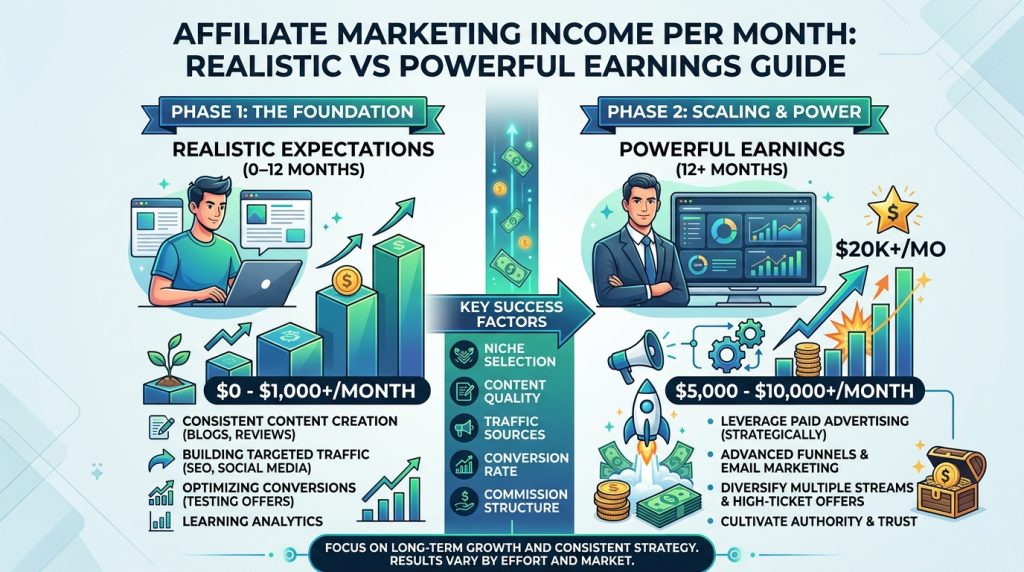
Setting realistic expectations is paramount in affiliate marketing. While stories of “super affiliates” earning millions exist, they are not the norm, especially for newcomers. The honest answer to how much affiliate marketers make is that it varies enormously, from $0 to over $1 million per month.
Beginner Affiliate Marketers (0-1 Year Experience)
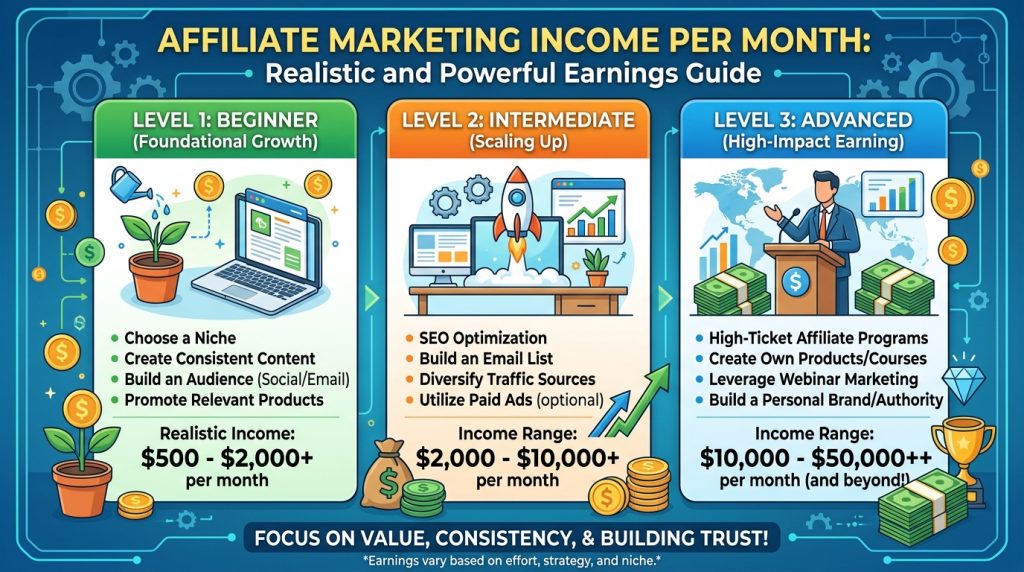
During the first year, beginners can realistically expect to earn between $0 and $1,000 per month. Many will earn very little or nothing for the first few months as they focus on learning fundamentals, building their platform, and creating initial content. By month twelve, most beginners might reach approximately $300-$500 monthly. Data suggests that about 41% of affiliate marketers earn less than $1,000 per month, and 23% report earning literally $0. This initial phase is an investment period, building assets rather than generating immediate high returns.
Intermediate Affiliate Marketers (1-3 Years Experience)
With 1-3 years of consistent effort, intermediate marketers typically see a significant jump in earnings, ranging from $1,000 to $10,000 per month. At this stage, affiliates have generally grown their audience, optimized their content, and refined their promotional strategies. The average intermediate marketer might earn around $4,196 per month after 1-2 years.
Advanced Affiliate Marketers (3-5+ Years Experience)
Experienced affiliates, often with 3-5+ years in the field, can earn between $10,000 to $100,000 per month. These marketers have established authority, command high-traffic platforms, and often operate in premium or high-ticket niches. They benefit from years of building trust, refining SEO, and optimizing conversion rates.
“Super Affiliates” (5+ Years Experience)
The top 1% of affiliate marketers, often termed “super affiliates,” can earn $100,000 to over $1,000,000+ per month. These individuals or teams often run full-scale media operations, similar to digital agencies, with significant resources dedicated to content, SEO, and diversified income streams. They are essentially CEOs of media brands like NerdWallet or Wirecutter (before acquisition). This level of income is heavily skewed by their success and is not representative of the average affiliate.
It’s important to note that the average affiliate marketer across all experience levels is reported to net approximately $8,038 per month. However, this “average” is heavily influenced by the earnings of super affiliates, making the median income significantly lower and highlighting the wide disparity in earnings.
| Experience Level | Typical Monthly Income Range | Key Characteristics |
|---|---|---|
| Beginner (0-1 Year) | $0 – $1,000 | Learning fundamentals, building platform, establishing audience. Most make $0-$100 in first few months. |
| Intermediate (1-3 Years) | $1,000 – $10,000 | Growing audience, optimizing content, engaging with multiple programs. |
| Advanced (3-5 Years) | $10,000 – $100,000 | Authority status, high-traffic platforms, premium niches, strong conversion rates. |
| Super Affiliate (5+ Years) | $100,000+ | Mastery level, multiple income streams, strategic partnerships, often running media companies. |
Strategies to Increase Your Affiliate Marketing Income
Maximizing affiliate marketing income involves a multi-faceted approach, combining smart strategy with consistent execution. It’s not about quick tricks but about building a sustainable and valuable online presence.
1. Master Niche Selection and Product Research
As highlighted earlier, choosing the right niche and carefully selecting products is fundamental. Focus on evergreen niches with high demand and strong commission rates. Beyond broad niches, consider profitable sub-niches where you can build deep authority. Prioritize high-quality products that genuinely add value to your audience and align with your content.
2. Create High-Quality, SEO-Optimized Content
Content is king in affiliate marketing. Develop content that is well-researched, informative, engaging, and directly addresses your audience’s needs and pain points. Optimize your content for search engines (SEO) to drive organic, targeted traffic. This includes keyword research, on-page optimization, and building a strong backlink profile. Focus on creating evergreen content that remains valuable over time.
3. Diversify Traffic Sources
Relying on a single traffic source is risky. Diversify your efforts across various channels:
- Search Engine Optimization (SEO): Building organic search presence for long-term, sustainable traffic.
- Social Media Marketing: Engaging with your audience on platforms where they spend their time.
- Email Marketing: Building an email list allows for direct communication with a highly engaged audience, which can significantly boost conversions.
- Paid Advertising: While requiring upfront capital, paid ads can accelerate results and test offers quickly.
4. Optimize for Conversions (CRO)
Conversion Rate Optimization is about guiding visitors through your content to take action. This involves:
- Engaging Content: Start strong, directly addressing visitor needs.
- Clear Calls to Action: Make it obvious what you want visitors to do next.
- Trust Building: Provide honest reviews, transparent disclosures, and build credibility.
- Website Design & User Experience: Ensure your website is professional, fast, and easy to navigate.
5. Renegotiate Commission Rates
As you build trust with merchants and demonstrate consistent sales, don’t shy away from negotiating higher commission rates. Many affiliates start at lower tiers but can secure more favorable terms as they prove their value.
6. Leverage Recurring Commissions and High-Ticket Products
Programs offering recurring commissions (e.g., SaaS products) or high-ticket products (e.g., finance, luxury travel) can significantly amplify your monthly income, as you earn repeatedly from a single referral or a larger commission per sale.
7. Build an Engaged Audience and Trust
Ultimately, affiliate marketing success boils down to trust. An engaged audience that trusts your recommendations is more likely to convert. Focus on providing genuine value and solving problems for your audience, rather than simply pushing products. Pat Flynn, a renowned affiliate marketer, emphasizes transparency and authenticity, teaching through his podcast and blog and promoting products that align with his audience’s needs. Similarly, Michelle Schroeder-Gardner of Making Sense of Cents built a highly profitable platform by sharing her personal finance journey and promoting relevant financial products.
Common Niches and Their Earning Potential
Choosing the right niche is often cited as the number one reason new affiliate marketers succeed or fail. Some niches consistently demonstrate higher earning potential due to factors like high demand, high commission rates, or recurring revenue models.
1. Personal Finance and FinTech
This niche is consistently one of the most profitable, with high demand during economic uncertainties. It includes sub-niches like debt management, investing for beginners (robo-advisors), budgeting apps, high-yield savings accounts, and credit card rewards. Commissions can be very high, with some finance affiliates earning $50-200+ per conversion or even $150+ per lead. Building trust is paramount in this sector.
2. SaaS (Software-as-a-Service) and AI & Automation Software
This is a “heavy hitter” niche offering significant recurring commissions (20-70% monthly) for every customer referred to subscription services. Examples include project management tools, CRM software, marketing automation platforms, and AI-driven solutions. The high-ticket nature and recurring revenue make it extremely attractive for long-term income.
3. Health, Wellness & Longevity
An evergreen niche where people are always looking for ways to improve their lives. Sub-niches include diet and nutrition, fitness programs, supplements, mental wellness apps, and longevity solutions. While commissions can vary (typically 5-30%), the sheer volume and continuous demand make it highly profitable.
4. Digital Education & E-Learning
The demand for online courses, certifications, and educational platforms continues to grow. This niche often offers high-ticket course prices and recurring commission models, leading to average monthly earnings that can exceed $15,551 for top performers.
5. Home Improvement & Smart Home
With a growing focus on enhancing living spaces, products related to home renovation, smart home devices, and sustainable living solutions present strong opportunities.
6. Pet Care
Pet owners are willing to spend significantly on their companions. This evergreen niche includes pet food, accessories, health products, and insurance, offering a consistent market.
While high-paying niches often come with higher competition, choosing a specific sub-niche within these broad categories can help you stand out and build authority.
Challenges and Pitfalls in Affiliate Marketing
Despite its potential, affiliate marketing is not without its hurdles. Understanding these challenges can help aspiring and current affiliates navigate the landscape more effectively.
1. High Competition
As affiliate marketing grows, so does the competition. Many individuals and businesses are vying for attention in popular niches, making it difficult for newcomers to stand out and gain visibility. Differentiating yourself through unique value propositions and targeted content is crucial.
2. Generating Consistent Traffic and Conversions
Driving high-quality, targeted traffic consistently is a persistent challenge. Furthermore, converting that traffic into sales requires compelling content, strong calls to action, and building trust. Many affiliates struggle with low conversion rates despite decent traffic.
3. Building Trust and Credibility
In an online world full of misinformation and low-quality products, consumers are increasingly skeptical. Affiliates must prioritize transparency, honesty, and promoting products they genuinely believe in to build and maintain credibility. Over-promoting or recommending subpar items can quickly damage reputation.
4. Algorithm and Industry Changes
Affiliate marketers often rely on platforms like Google and social media for traffic. Algorithm updates from these platforms can significantly impact rankings and visibility, leading to sudden drops in earnings. Staying updated with industry changes, including consumer data protection regulations (like GDPR and CCPA), is also critical for compliance.
5. Affiliate Fraud and Tracking Issues
Fraudulent activities, such as click fraud or cookie stuffing, can skew performance metrics and waste marketing budgets. Additionally, ensuring accurate tracking of sales and commissions is vital for maintaining fair partnerships and avoiding disputes.
6. Mindset and Consistency
Affiliate marketing requires a resilient mindset. It’s not a get-rich-quick scheme; initial earnings can be minimal, and facing rejection or slow progress is common. Many new affiliates give up too soon. Consistency in content creation, strategy optimization, and audience engagement is key to long-term success.
A notable example of overcoming challenges is the journey of Pat Flynn. After being laid off from his architect job, he transformed his website, initially for LEED exam study notes, into Smart Passive Income. His dedication to transparency and providing value helped him build a multimillion-dollar empire, proving that persistence and a focus on audience needs can lead to significant success.
Long-Term Vision: Building Sustainable Affiliate Income
For those looking to achieve substantial and sustainable income from affiliate marketing, a long-term vision is essential. This isn’t a sprint; it’s a marathon that rewards consistent effort, continuous learning, and strategic adaptation.
1. Focus on Building an “Asset”
Instead of chasing quick commissions, focus on building a valuable online asset, such as a strong blog, a YouTube channel with a loyal following, or a highly engaged email list. These assets provide a stable foundation for generating consistent traffic and conversions over time.
2. Continuous Learning and Adaptation
The digital marketing landscape is constantly evolving. Successful affiliates are lifelong learners, staying updated on SEO best practices, algorithm changes, new marketing technologies, and emerging niches. Being adaptable and willing to experiment with new strategies is crucial.
3. Nurture Relationships with Merchants
Developing strong relationships with affiliate managers and merchants can open doors to higher commission rates, exclusive offers, and deeper insights into product roadmaps. This collaboration can be mutually beneficial, leading to increased earnings for the affiliate.
4. Automate and Scale
As your operations grow, look for opportunities to automate repetitive tasks, such as content scheduling, email sequences, and social media posting. This frees up time to focus on higher-level strategy and scaling your business. Scaling involves expanding into new sub-niches, launching new content formats, or building a team.
5. Prioritize Audience Value Over Immediate Sales
The most successful affiliates prioritize serving their audience and providing genuine value. This approach fosters trust and loyalty, which are the cornerstones of long-term affiliate income. When you genuinely help your audience, sales naturally follow. Wikipedia’s article on Affiliate Marketing highlights the importance of building genuine relationships and credibility with your audience.
6. Analyze Data and Optimize
Regularly analyze your performance data to understand what’s working and what isn’t. Track traffic sources, conversion rates, and the performance of individual affiliate links. Use these insights to refine your content, optimize your strategies, and identify new opportunities.
Conclusion
Affiliate marketing offers a genuine path to earning significant income online, but it requires a realistic understanding of the journey involved. While the potential for “super affiliates” to earn millions is real, most beginners will start with modest earnings, typically between $0 and $1,000 per month in their first year. Success is not instant but is directly tied to factors like niche selection, traffic quality, conversion rates, and consistent effort over time.
By focusing on building trust, creating high-quality, SEO-optimized content, diversifying traffic sources, and continuously optimizing for conversions, affiliate marketers can steadily increase their monthly income. Choosing profitable niches like finance, SaaS, health, or e-learning, and leveraging recurring commission models, can accelerate growth. While challenges like high competition and algorithm changes exist, a resilient mindset and a commitment to providing value to your audience are the most powerful tools for building a sustainable and lucrative affiliate marketing business. It is a dynamic field that rewards dedication and strategic execution, offering the potential for financial independence for those willing to invest the time and effort.