5Affiliate Marketing for Students to Earn Passive Income
Table of Contents
Affiliate marketing presents a significant opportunity for students looking to generate passive income while navigating their academic journeys. In an era where digital literacy is paramount, affiliate marketing offers a flexible, low-cost pathway to earning money online, often from the comfort of a dorm room or study desk. Unlike traditional part-time jobs that demand fixed hours and can lead to burnout, affiliate marketing allows students to manage their time effectively, aligning work with their study schedules without causing undue stress. This comprehensive guide will delve into the world of affiliate marketing, outlining its benefits for students, providing a step-by-step approach to getting started, and offering strategies to maximize earning potential.
What is Affiliate Marketing? A Foundation for Students
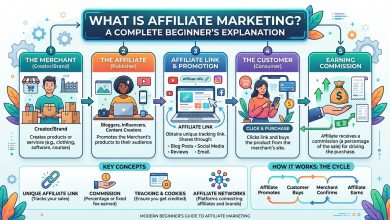
Affiliate marketing is a performance-based online marketing strategy where individuals, known as affiliates, earn a commission by promoting another business’s products or services. The core idea is simple: an affiliate shares a unique link or ad for a product on their chosen platform, such as a website, blog, or social media channel. When a customer clicks this link and completes a desired action – typically making a purchase, but sometimes signing up for a trial or generating a lead – the affiliate receives a commission from the merchant. This creates a win-win situation: businesses expand their reach and boost sales with minimal risk, while affiliates earn income by leveraging their online presence and recommendations.
The process is transparent, with shoppers typically aware they are using an affiliate link, fostering trust and honesty between the affiliate and their audience. Affiliate marketing involves several key players:
- The Merchant (or Advertiser): This is the company or individual who creates the product or service. They provide the product, handle fulfillment, inventory, shipping, and customer support.
- The Affiliate (or Publisher): This is you, the marketer. You promote the product to your audience in an engaging way, aiming to persuade potential customers of its value.
- The Customer: The individual who purchases the product or service through the affiliate’s unique link.
- The Affiliate Network (Optional but Common): Many affiliate programs are managed through networks (e.g., Amazon Associates, CJ Affiliate, ShareASale) that act as intermediaries, connecting affiliates with merchants and handling tracking and payments.
Affiliate marketing can involve a wide array of products, from physical goods and software subscriptions to digital courses and services. Commission structures vary, commonly being a percentage of the sale or a fixed amount per sale, or even on a cost-per-lead (CPL) or cost-per-action (CPA) basis.
Why Affiliate Marketing is Ideal for Students: Flexibility, Low Cost, and Skill Development
For students juggling academic demands, social lives, and often limited budgets, affiliate marketing offers a compelling solution for earning supplementary income. Its inherent characteristics make it uniquely suited to the student lifestyle:
- Flexibility and Time Management: Unlike rigid part-time jobs, affiliate marketing can be pursued at one’s own pace, fitting around class schedules, assignments, and exams. Students can dedicate spare moments to content creation and promotion, avoiding burnout and maintaining a healthy work-life balance. This autonomy is particularly valuable during intensive study periods.
- Low Startup Costs: Most affiliate programs are free to join, eliminating the need for heavy upfront investment, product creation, or inventory management. Students can start by leveraging existing platforms like social media accounts or free blogging websites, making it accessible to anyone with a smartphone or computer. This minimal financial barrier removes a major obstacle for students seeking alternative income streams.
- Passive Income Potential: One of the most attractive aspects of affiliate marketing is its potential for passive income. The effort invested in creating engaging content and setting up affiliate links once can continue to generate commissions long after the initial work is done, allowing students to earn money even while they sleep or study.
- Skill Development: Engaging in affiliate marketing naturally fosters a range of valuable digital marketing skills highly sought after in today’s job market. Students gain practical experience in content creation, Search Engine Optimization (SEO), social media management, email marketing, and analytics. These skills can provide a competitive edge and pave the way for future career opportunities in online business or marketing fields.
- Leveraging Tech-Savvy Audience: Students often have inherent access to a tech-savvy audience—their peers—who are highly active on social media and digital platforms. This makes it easier to promote products authentically and leverage existing social networks for organic promotion.
- Pursuing Passions: Affiliate marketing allows students to monetize their interests and hobbies. Whether their passion lies in gaming, technology, beauty, or academic subjects, they can turn it into a profitable online business by promoting products they genuinely believe in. This aligns work with passion, making the earning process more enjoyable and sustainable.
Getting Started with Affiliate Marketing: A Step-by-Step Guide
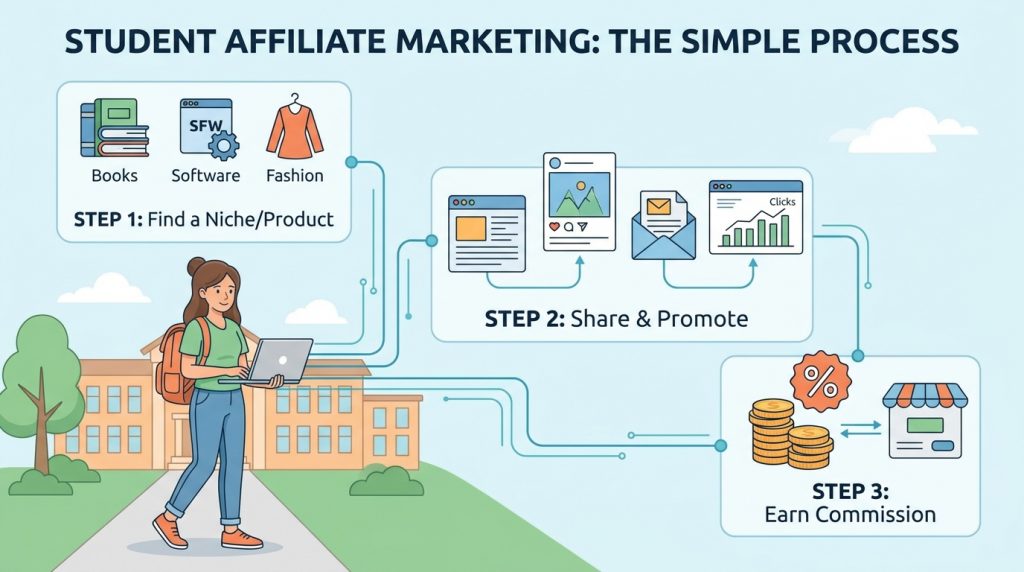
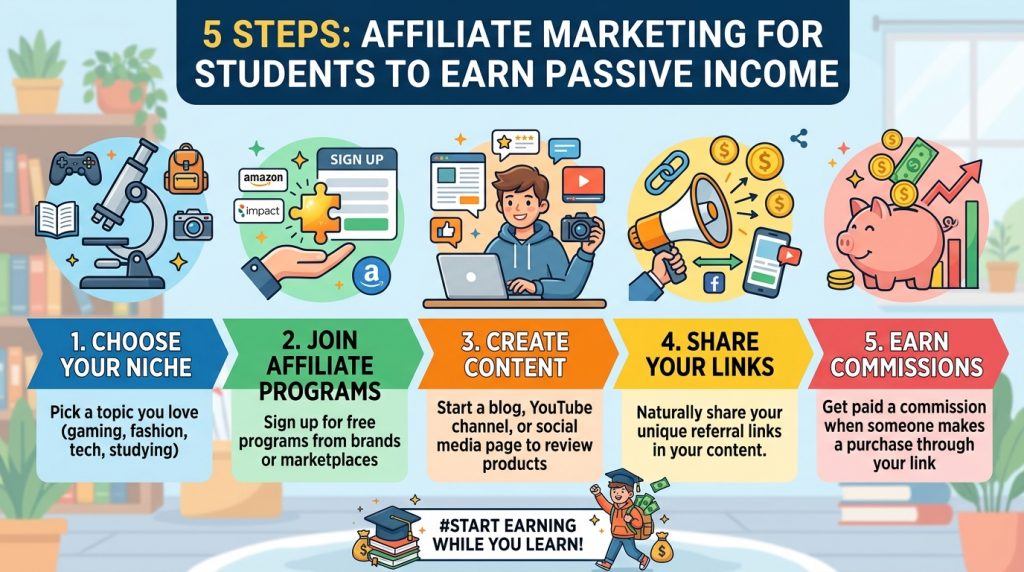
Embarking on an affiliate marketing journey requires a structured approach to ensure sustained success. Here’s a step-by-step guide for students:
Step 1: Understand the Basics and Set Realistic Expectations
Before diving in, grasp that affiliate marketing is not a get-rich-quick scheme. It demands consistent effort, patience, and dedication. While initial earnings might be limited, persistence and a long-term mindset are crucial for gradually increasing income. Focus on providing value rather than simply pushing products.
Step 2: Choose a Niche (More on this in the next section)
Selecting a specific niche is fundamental. It helps you target the right audience, create relevant content, and build authority. A focused niche prevents scattered efforts and makes it easier to stand out in a competitive market.
Step 3: Select Reputable Affiliate Programs
Once you have a niche, research and join affiliate programs that align with your chosen products or services. Popular programs for beginners include:
- Amazon Associates: This is a beginner-friendly giant with a massive product catalog across virtually every category. Its trusted brand recognition makes it easy to drive conversions, although commission rates can range from 1% to 10% depending on the product category.
- ClickBank: Specializes in digital products like e-books, online courses, and software, often offering significantly higher commission rates (average $50+ per sale) and recurring commission opportunities.
- ShareASale: Known for its user-friendly platform and diverse merchant network across categories like retail, tech, and finance. It offers competitive commission rates (5-30%) and a generous 120-day cookie duration.
- CJ Affiliate (Commission Junction): A large network providing access to thousands of merchants and products, with commissions varying widely (5-50%) based on merchant agreements.
Other notable platforms include Impact, Rakuten Marketing, and specific brand-direct programs (e.g., Teachable, Skillshare for online courses).
Step 4: Build Your Platform
Your platform is where you will showcase your content and embed your affiliate links. While social media channels can be a good starting point, having your own blog or website is often recommended for greater control and long-term potential.
- Blog/Website: Create a blog to publish articles, product reviews, guides, and other valuable content. Platforms like WordPress are popular for their customization options and ease of use.
- YouTube Channel: Produce engaging videos that demonstrate, review, or tutorialize affiliate products. YouTube is the second biggest search engine and an excellent way to drive traffic.
- Social Media: Use platforms like Instagram, TikTok, X (formerly Twitter), and Facebook to share content, engage with your audience, and organically promote products.
Choosing Your Niche and Products: Aligning Passions with Profitability
The success of your affiliate marketing efforts heavily relies on selecting the right niche and products. As a student, you have a unique advantage: you are part of a specific demographic with distinct needs and interests.
Identifying a Profitable Niche
A strong affiliate niche should meet several criteria:
- Personal Interest and Expertise: Choose a topic you are genuinely passionate about or have some knowledge in. This makes content creation enjoyable and authentic, which is key to building trust with your audience.
- Audience Understanding: Since you are a student, you likely understand the pain points and interests of your peers. Niches related to student life, such as study stress, exam pressure, budgeting, or digital skills, can be highly effective.
- Market Demand: Ensure there’s an active audience searching for solutions and products within your chosen niche. Keyword research tools can help identify popular topics and products.
- Product Availability: There should be multiple products or services available for promotion within that niche, so you don’t rely on a single product or program.
- Long-Term Relevance: Opt for evergreen topics that will remain relevant for years, such as digital skills, productivity, health, career growth, or personal finance.
Examples of Profitable Niches for Students (2026 Focus)
Based on current trends, several niches are particularly promising for students:
| Niche Category | Why it’s Promising for Students | Example Products/Services for Promotion | Typical Commission Rates |
|---|---|---|---|
| Online Courses & Skill Platforms | Students understand the need for digital skills beyond traditional degrees. High demand for coding, design, marketing, AI, and video editing courses. | Skillshare, Teachable, Udemy, Coursera, Codecademy (online courses, certifications, specialized skill paths). | 10-45% per sale, often recurring. |
| AI Tools & Productivity Software | AI is everywhere, and students seek tools for research, writing, design, and automation. Recurring commission models are common. | AI writing assistants (Jasper, Copy.ai), research tools, AI design software, productivity apps (Notion AI, ClickUp). | 20-30% recurring. |
| Personal Finance & Budgeting | Students often manage budgets, loans, and seek ways to save and invest. High-value leads can lead to significant commissions. | Budgeting apps, investment platforms, credit monitoring services, student loan refinance services (e.g., SoFi). | Often high CPA ($100-$150 per lead) or percentage for investment platforms. |
| Home Office & Productivity Gear | Remote learning and work create demand for ergonomic furniture, software, and gadgets. | Ergonomic chairs, standing desks, noise-canceling headphones, productivity software, webcams. | 5-50% depending on product type (physical vs. software). |
| Eco-friendly & Sustainable Products | Growing awareness among younger demographics about environmental impact. Appeals to conscious consumers. | Sustainable fashion, reusable products, ethical beauty, eco-friendly tech accessories. | 6-15% on physical goods. |
Building Your Platform and Content Strategy for Success
Once you’ve chosen your niche and affiliate programs, the next crucial step is to build a platform and develop a robust content strategy that attracts and engages your target audience. Your content is your primary tool for driving traffic and converting clicks into commissions.
Choosing and Setting Up Your Platform
- Blogging/Website: A blog offers maximum control and is excellent for SEO (Search Engine Optimization). Tools like WordPress are beginner-friendly for setting up a website. You can write detailed product reviews, comparison articles, how-to guides, and resource pages.
- YouTube Channel: Video content is highly engaging and effective for product demonstrations, tutorials, and unboxings. Many students and young adults prefer learning through video.
- Social Media (Instagram, TikTok, X, Pinterest): These platforms are ideal for visual content, short-form videos, and direct engagement with your audience. Adapt your messaging to each platform’s format and culture. For instance, TikTok and Instagram are great for short-form video content, while Pinterest is excellent for product-focused visuals.
- Email Marketing: Building an email list provides direct communication with engaged subscribers, allowing you to share new content, exclusive offers, and nurture relationships that drive conversions.
Crafting a High-Converting Content Strategy
Your content should primarily deliver genuine value to your audience while naturally incorporating affiliate recommendations.
- Focus on Helpfulness and Authenticity: Prioritize solving problems, answering questions, and providing honest assessments (including pros and cons) of products. Transparency builds trust, which is paramount in affiliate marketing.
- Diversify Content Formats: A mix of content types keeps your audience engaged and caters to different preferences.
- Product Reviews: Offer detailed, honest reviews, highlighting benefits and drawbacks, and share personal experiences.
- Comparison Posts: Compare several products to help your audience make informed decisions.
- How-to Guides/Tutorials: Demonstrate how to use products effectively, especially for software or complex tools.
- Resource Pages: Curate a list of recommended tools or products relevant to your niche.
- Listicles/Roundups: “Top 5 Budgeting Apps for Students” or “Must-Have Tech Gadgets for College.”
- Optimize for Search Engines (SEO): Use relevant keywords naturally in your titles and content to improve discoverability on search engines. Structure your content with clear headings and make it easy to read.
- Address Audience Pain Points: Identify what your audience struggles with through polls, surveys, or comment analysis, and then match affiliate products to those needs.
- Include Clear Calls-to-Action (CTAs): Guide your readers toward the affiliate links with compelling and natural CTAs. Make the buying process frictionless.
- Regular Updates: Keep your content fresh by updating prices, product information, and ensuring links are active. This maintains relevance for search engines and accuracy for your audience.
Driving Traffic and Optimizing for Conversions
Creating valuable content is only half the battle; getting eyes on that content and encouraging clicks on your affiliate links is equally important. Driving high-quality traffic and optimizing for conversions are key to maximizing your earnings.
Effective Traffic Generation Methods
- Search Engine Optimization (SEO): The most reliable way to generate organic (free) traffic. This involves optimizing your content with relevant keywords, building high-quality backlinks, and ensuring your website is technically sound. Focusing on buyer-intent keywords can attract visitors ready to make a purchase.
- Social Media Marketing: Actively share your content on platforms where your target audience congregates. Repurpose long-form content into engaging short-form videos or graphics for platforms like TikTok, Instagram Reels, and Facebook. Engage in discussions and build a community around your niche.
- Video Marketing (YouTube): YouTube is a powerful search engine in itself. Create instructional videos, product reviews, and demonstrations that naturally integrate your affiliate links in the description or through verbal mentions.
- Email Marketing: Build an email list and use it to directly share new content, exclusive deals, and product recommendations with an already engaged audience. Email subscribers are often highly qualified leads.
- Guest Blogging: Write high-quality articles for other reputable blogs in your niche and include links back to your relevant content. This helps build backlinks and referral traffic, boosting your site’s authority.
- Niche Communities and Forums (e.g., Reddit, Quora): Participate in relevant online communities by answering questions and providing valuable insights. While direct self-promotion is often frowned upon, you can subtly reference your content or products when genuinely helpful, building credibility over time.
- Paid Advertising (Optional, for scaling): Once you have a proven content and conversion strategy, consider paid ads on platforms like Google Ads, Facebook Ads, or YouTube Ads to quickly reach a cold audience and scale what’s already working. This requires careful budgeting and optimization to ensure profitability.
Optimizing for Conversions
Getting traffic is one thing; converting that traffic into sales is another. Optimization strategies include:
- High-Quality Content: As mentioned, helpful, honest, and well-researched content builds trust, which is a primary driver of conversions.
- Clear Calls to Action (CTAs): Make it easy for your audience to find and click your affiliate links. Use compelling language and strategically place CTAs throughout your content.
- Mobile Responsiveness: Ensure your website and content are optimized for mobile devices, as many students access information on their smartphones.
- Page Speed: Slow-loading pages can deter visitors. Optimize your site for speed to improve user experience.
- Special Offers and Deals: Leverage exclusive discounts or limited-time offers from merchants to encourage purchases.
- Visuals: Use high-quality images, videos, and graphics to make your content more engaging and easier to digest. Original photos of you using the product add immense credibility.
An example of a successful content piece for students leveraging an external resource is a guide on “Effective Study Techniques using Productivity Apps.” You could link to Wikipedia’s article on Digital Marketing to provide a foundational understanding of the broader context in which affiliate marketing operates, reinforcing your authority by referencing a globally recognized, authoritative source on the subject.
Tracking Performance and Overcoming Challenges
To ensure your affiliate marketing efforts are fruitful, it’s essential to track your performance and be prepared to navigate common challenges.
Tracking and Analytics
Affiliate tracking refers to the process of recording and analyzing data related to your marketing activities, including clicks, conversions, and sales generated through your unique affiliate links. This data is crucial for understanding what works, identifying top-performing content, and optimizing your strategies.
- Unique Tracking Links: Every affiliate is assigned specific links with embedded parameters to monitor traffic sources and attribute sales correctly.
- Tracking Methods: Common methods include cookie tracking (storing a small data piece in the user’s browser), IP address tracking, and pixel tracking.
- Key Metrics to Monitor:
- Click-Through Rate (CTR): Measures how many people click your affiliate links.
- Conversion Rate: The percentage of clicks that result in a desired action (e.g., a purchase or signup).
- Earnings Per Click (EPC): The average amount you earn each time someone clicks one of your affiliate links.
- Return on Ad Spend (ROAS) / Return on Investment (ROI): Especially relevant if you use paid traffic, this measures the profitability of your marketing efforts.
- Customer Lifetime Value (CLV): Helps understand the long-term value of customers referred by your links.
- Tools: Affiliate program dashboards, Google Analytics, and specialized affiliate tracking tools (e.g., those offered by affiliate networks or third-party solutions like wecantrack) help consolidate data and provide insights. Reviewing these metrics monthly allows you to adjust your strategy based on findings.
Common Challenges for Students and How to Overcome Them
While affiliate marketing offers immense potential, students may encounter several hurdles:
- Time Management: Balancing studies, social life, and affiliate marketing can be demanding.
Solution: Implement strong time management techniques. Create a schedule, set realistic goals, and prioritize tasks. Leverage technology for scheduling and block out specific times for study and marketing activities. - Limited Initial Earnings & Patience: Affiliate marketing may not yield substantial income immediately. Many beginners quit early due to a lack of instant results.
Solution: Be prepared for slow growth and maintain persistence. Adopt a long-term mindset, celebrate small wins, and continuously produce high-quality content. The compound effect of consistent effort pays off over time. - Building Trust and Credibility: As new affiliates, students might find it challenging to build an audience that trusts their recommendations.
Solution: Focus on authenticity and transparency. Only promote products you genuinely use and believe in. Disclose your affiliate relationships clearly and prominently, as mandated by legal requirements like FTC guidelines. Provide honest reviews that include both pros and cons. - Content Creation Consistency: Maintaining a regular posting schedule and producing high-quality content can be difficult amidst academic pressures.
Solution: Develop a structured content creation workflow. Brainstorm ideas weekly, draft content, optimize for SEO, and format for readability. Repurpose content across different platforms to maximize reach with less effort. - Technical Skills: Setting up a website, understanding SEO, or using analytics tools might seem daunting.
Solution: Many resources are available online (free tutorials, courses). Start with user-friendly platforms and tools. Focus on developing one skill at a time. The skills learned are highly valuable for future careers. - Financial Anxiety (if relying heavily on income): Income variance can lead to stress, especially for students without parental support.
Solution: Diversify income streams if possible, and initially, view affiliate marketing as supplementary income rather than a sole source. Build a support network with peers and leverage online resources.
Conclusion
Affiliate marketing offers students a compelling and flexible pathway to earn passive income while developing invaluable digital skills. By understanding how affiliate marketing works, strategically choosing a niche aligned with personal interests, building a strong content platform, and consistently optimizing their strategies, students can create a sustainable source of income that complements their academic pursuits. The journey requires dedication, transparency, and a long-term vision, but the rewards – financial independence, practical marketing experience, and the freedom to pursue passions – make it a highly worthwhile endeavor for the modern student. Starting small, focusing on providing genuine value, and learning continuously are the cornerstones of success in this dynamic online landscape.