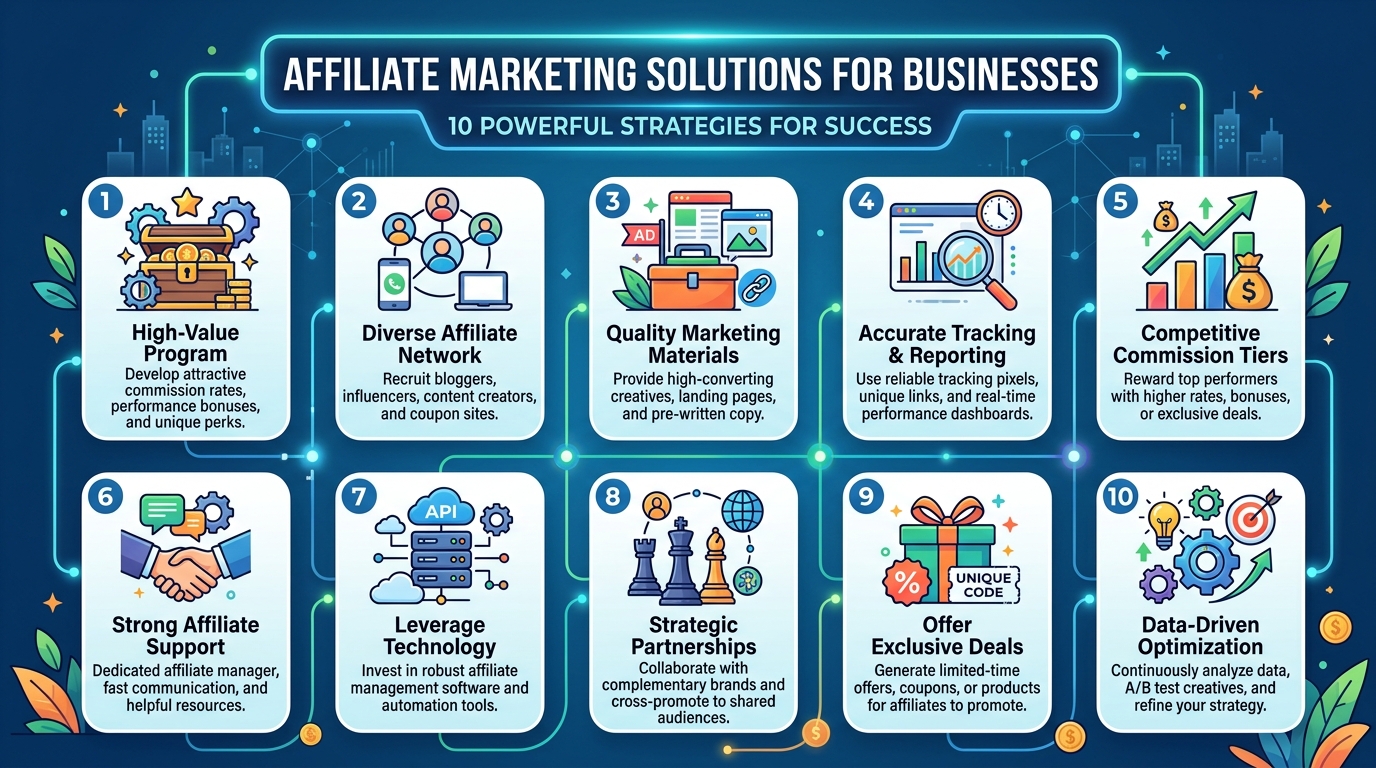
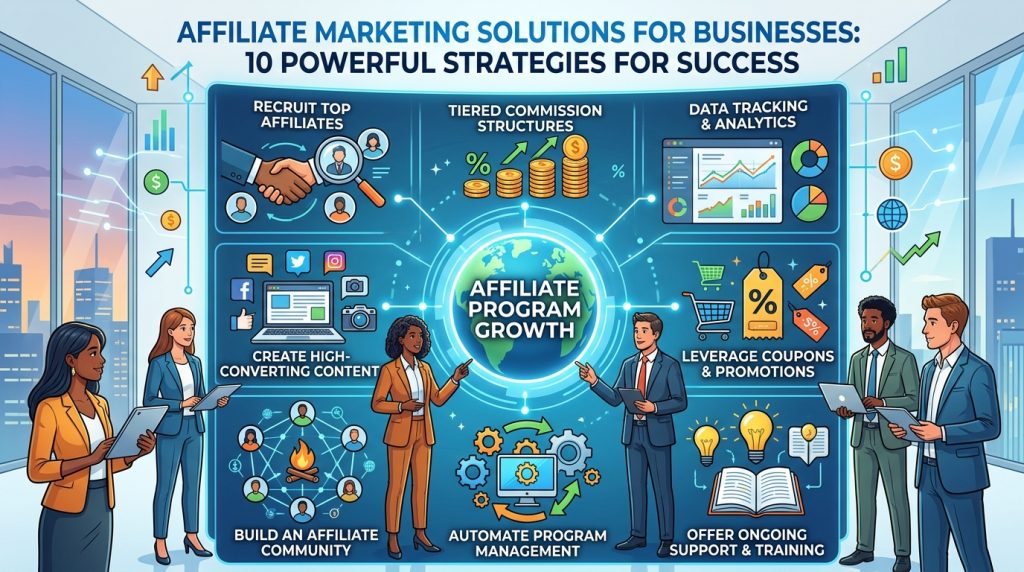
Affiliate Marketing Solutions for Businesses: 10 Powerful Strategies for Success
Table of Contents
Affiliate Marketing Solutions have emerged as a cornerstone of modern digital commerce, offering a performance-based pathway for businesses to expand their reach and for creators to monetize their influence. This dynamic marketing model fosters a symbiotic relationship where external ‘affiliates’ promote a business’s products or services in exchange for a commission based on specific actions, such as sales, leads, or clicks. In an increasingly crowded digital landscape, affiliate marketing provides a cost-effective and scalable method for brands to connect with highly targeted audiences, while simultaneously empowering content creators to build sustainable businesses around their authentic recommendations. The industry’s growth is substantial, with global affiliate marketing market value projected to exceed $20 billion in 2026, demonstrating its critical role in contemporary marketing strategies.
Understanding the Core Concepts of Affiliate Marketing
At its heart, affiliate marketing operates on a clear, results-driven principle: businesses pay affiliates only when a desired action is completed. This performance-based approach differentiates it from traditional advertising, where payment is often for impressions or clicks regardless of conversion. The ecosystem typically involves four key players: the merchant (or advertiser), the affiliate (or publisher/creator), the consumer, and the affiliate network/platform.
- The Merchant: This is the brand or business with a product or service to sell. Their role involves creating a compelling product and designing an attractive affiliate program with clear terms and competitive compensation.
- The Affiliate: Also known as a publisher or creator, the affiliate promotes the merchant’s offerings to their audience through various channels such as blogs, social media, email lists, or review sites. They use unique tracking links or codes to ensure their referrals are attributed correctly.
- The Consumer: The end-user who makes a purchase or takes a desired action through the affiliate’s recommendation. Transparency is crucial here, with the Federal Trade Commission (FTC) requiring clear disclosure of any commercial relationship between the affiliate and the merchant.
- The Affiliate Network/Platform: These act as intermediaries, connecting merchants with affiliates and providing the technological infrastructure for tracking, reporting, and payment processing. They facilitate the entire ecosystem, handling crucial functions like attributing sales, managing payments, and providing performance analytics.
The beauty of this model lies in its mutual benefit: merchants gain wider exposure and pay only for conversions, while affiliates earn commissions by leveraging their influence and audience trust.

The Strategic Edge: Benefits of Affiliate Marketing for Businesses
For businesses of all sizes, from nascent startups to established enterprises, affiliate marketing presents a potent strategy to drive growth and enhance market presence. The advantages are numerous and contribute significantly to a healthier marketing ROI.
- Low Start-up and Ongoing Costs: Unlike traditional advertising that demands upfront investment in ad visuals or media space, affiliate programs require minimal initial spend. Affiliates bear the chunk of marketing activities and their associated costs, making it a low-risk venture for businesses.
- Performance-Based Model: Businesses only pay for results, such as sales or leads, directly aligning marketing expenditure with tangible outcomes. This ensures a high return on investment (ROI) and cost-effectiveness.
- Expanded Reach and Targeted Traffic: Affiliates often have established, niche audiences that are highly receptive to their recommendations. Partnering with diverse affiliates allows businesses to tap into new customer segments and drive highly targeted traffic to their websites, which might otherwise be difficult to reach.
- Enhanced Brand Recognition and Credibility: When trusted blogs, influencers, or media outlets endorse a product, it builds social proof and significantly boosts brand recognition and credibility. This authentic endorsement from a third party often resonates more strongly with consumers than direct advertising.
- Scalability and Flexibility: Affiliate programs are highly scalable. Businesses can easily expand or reduce their affiliate efforts with little cost, allowing for flexible adaptation to market changes or business growth without breaking the bank.
- Access to Diverse Marketing Channels: Affiliates employ a variety of promotional methods, including content marketing, social media campaigns, email marketing, and search engine optimization (SEO), providing businesses with exposure across multiple channels.
Empowering the Creator Economy: Affiliate Marketing for Content Creators
The rise of the creator economy has found a powerful ally in affiliate marketing. For content creators—bloggers, YouTubers, podcasters, social media influencers—affiliate marketing provides a scalable and authentic way to monetize their platforms and content.
- Diversified Revenue Streams: Affiliate marketing allows creators to move beyond reliance on ad revenue or sponsorships, adding a robust, often passive, income stream. This diversification ensures greater financial stability and allows creators to focus on producing quality content.
- Monetizing Trust and Authenticity: Creators build loyal audiences based on trust and genuine connection. By promoting products and services they genuinely use and believe in, creators can monetize these recommendations authentically, reinforcing their credibility rather than eroding it. Consumers are more likely to trust recommendations from a trusted content creator.
- Passive Income Potential: Once content with affiliate links is published and optimized, it has the potential to generate commissions continuously over time, offering a form of passive income. While it requires initial groundwork, the long-term benefits are significant.
- Brand Partnerships and Growth: Affiliate marketing opens doors to collaborations with various brands, expanding a creator’s professional network and providing opportunities for growth. These partnerships can often lead to deeper engagements and even co-created content.
- Flexibility and Control: Creators maintain control over their content and schedule, choosing which products to promote and how to integrate them into their narratives, aligning with their authentic voice and audience interests.
The creator economy’s synergy with affiliate marketing is clear, with creator-driven affiliate campaigns demonstrating higher engagement and conversions due to the trust creators build with their audiences.
Key Components of a Successful Affiliate Marketing Strategy
A thriving affiliate marketing program is built on several fundamental components, each playing a crucial role in its overall success.
- Product and Niche Identification: Before launching, a business must have a compelling, high-quality product or service that aligns with a specific market need. For affiliates, choosing a niche where they are passionate and knowledgeable allows for the creation of authentic and valuable content.
- Affiliate Recruitment and Relationship Management: Identifying and onboarding the right affiliate partners is paramount. Quality often trumps quantity, as high-performing affiliates aligned with brand values can generate more revenue than numerous misaligned ones. Ongoing communication, support, and providing necessary marketing assets are crucial for fostering strong, lasting relationships.
- Commission Structures and Payment Models: A clear, competitive, and fair commission structure is essential to attract and motivate affiliates. Common models include Cost Per Sale (CPS), Cost Per Lead (CPL), or even Cost Per Click (CPC). Performance bonuses and tiered commissions can further incentivize top performers.
- Tracking and Attribution Systems: Accurate tracking is the backbone of affiliate marketing, ensuring that affiliates are properly credited for every conversion they drive. Robust tracking technology connects actions across various events, channels, and devices, using both cookie and non-cookie based methods.
- Promotional Materials and Assets: Providing affiliates with high-quality, diverse promotional materials (banners, product images, compelling descriptions, unique discount codes) empowers them to effectively market the product.
- Compliance and Disclosure: Adhering to regulatory guidelines, such as the FTC’s disclosure requirements for affiliate relationships, is not just a best practice but a legal mandate. Transparency builds consumer trust and protects both the merchant and the affiliate.
For businesses looking to launch or optimize their affiliate strategies, understanding the nuanced interplay of these components is vital for creating a robust and profitable program. Further insights into effective digital marketing practices, which often complement affiliate efforts, can be found through resources like Wikipedia’s article on Digital Marketing.
Choosing the Right Affiliate Marketing Platform
Selecting the appropriate affiliate marketing platform is a critical decision for both businesses and creators, as it dictates the ease of management, tracking capabilities, and access to a network of partners. There’s a wide array of platforms, each with its strengths and ideal use cases.
| Platform Name | Ideal For | Key Features | Commission/Pricing Model |
|---|---|---|---|
| ShareASale | Businesses of all sizes, diverse niches (digital & physical products) | Large merchant and publisher network (4,500+ merchants), self-service management, real-time tracking, custom commission management. | Pay-per-sale, pay-per-lead, pay-per-click; rates vary (e.g., 4% to 50%). Joining fee for merchants. |
| Amazon Associates | Bloggers/influencers with diverse audiences, promoting physical products | Largest online marketplace, easy link creation (SiteStripe), universal appeal. | Commission rates 1% to 20% depending on product category. |
| CJ Affiliate (Commission Junction) | Experienced affiliates and major brands | Sophisticated technology, access to premium advertisers, robust platform for scalable partnerships. | Performance-based. |
| Impact.com | Brands seeking cloud automation, multi-channel partnerships (affiliates, influencers, referrals) | Partnership Cloud, automated workflows, real-time insights, fraud protection, custom tracking, unified partner management. | Custom pricing (contact sales). |
| PartnerStack | B2B SaaS companies and affiliates | Robust infrastructure for B2B, automates partner lifecycle (onboarding, tracking, rewards), single dashboard for affiliates. | Fixed, percentage-based, recurring. |
| Refersion | E-commerce brands (integrates with Shopify, Amazon) | Extensive integrations, unified payments, real-time tracking, custom commission management. | Flat, tiered, product-level; ~15% commission. |
| Awin | Merchants and affiliates looking for access to a large global network | Access to 13,000+ merchants globally, robust platform. | Varies by merchant. |
| ClickBank | Affiliates promoting digital products (eBooks, courses, memberships) | Strong focus on digital goods, a wide variety of smaller merchants. | Varies (often higher for digital products). |
| Skimlinks | Editorial publishers, shopping platforms, creators monetizing content automatically | Automatically monetizes product links, single integration to 48,500 merchants and 50+ networks, exclusive negotiated rates. | Varies, automatically optimized. |
When choosing a platform, businesses should consider their niche, target audience, preferred commission model, and the level of support and analytics they require. Creators should look for platforms with products relevant to their audience, ease of use, and transparent payout structures. For a broader understanding of various e-commerce solutions, one might consider exploring resources on e-commerce platform comparison.
Measuring Success and Optimizing Performance
To ensure an affiliate marketing program is truly effective, businesses and creators must meticulously track key performance indicators (KPIs) and continuously optimize their strategies. Measuring success goes beyond mere sales figures; it involves a comprehensive analysis of various metrics.
- Clicks and Click-Through Rate (CTR): These metrics indicate initial interest and engagement. A high CTR suggests that the affiliate’s content and promotional efforts are effectively capturing audience attention.
- Conversions and Conversion Rate (CR): Conversions measure the number of users who complete a desired action (purchase, sign-up, download) after clicking an affiliate link. Conversion rate reveals what percentage of interested visitors actually take action, serving as a direct measure of campaign effectiveness.
- Average Order Value (AOV): For sales-based programs, AOV indicates how much the average buyer spends per transaction, offering insights into customer purchasing behavior and the overall profitability of sales generated through affiliates.
- Customer Lifetime Value (CLV): This metric helps understand the long-term value of customers acquired through affiliate channels. It’s crucial for assessing the true ROI of affiliate partnerships.
- Return on Investment (ROI) and Return on Ad Spend (ROAS): ROI measures overall profitability by comparing revenue generated to total program costs, while ROAS specifically focuses on revenue generated per dollar spent on advertising. These are critical for understanding the financial viability and efficiency of the program.
- Earnings Per Click (EPC): This metric tells you how much revenue is earned per click on an affiliate link, helping to compare the performance of different programs and products.
Tracking these KPIs often involves a combination of affiliate management software with real-time tracking capabilities and analytics tools like Google Analytics. Continuous monitoring allows for data-driven decisions, identifying top-performing affiliates, optimizing promotional content, and refining commission structures for sustained growth.
Navigating Challenges in Affiliate Marketing
Despite its immense potential, affiliate marketing is not without its hurdles. Businesses and creators often encounter common challenges that require strategic planning and robust solutions to overcome.
- Finding the Right Affiliate Partners: One of the most critical challenges is identifying and recruiting high-quality affiliates whose audience demographics and values align with the brand. The temptation to accept many partners can backfire; quality always trumps quantity. Solution: Thorough vetting processes, focusing on content quality, audience engagement, and track record.
- Affiliate Fraud: Protecting the program from fraudulent activities, such as fake clicks or fabricated leads, is a constant concern. Solution: Implementing advanced fraud detection tools and setting clear, enforceable terms and conditions.
- Maintaining Brand Integrity and Consistency: Ensuring that affiliates promote products in a manner consistent with brand guidelines can be challenging, especially with a large network. Solution: Providing clear brand guidelines, comprehensive training materials, and regular communication.
- Tracking and Attribution Issues: Accurate tracking across different devices and customer journeys can be complex, potentially leading to incorrect commission payouts. Solution: Investing in sophisticated multi-touch attribution models and reliable tracking technologies that combat cookie blocking.
- Generating Consistent Traffic and Conversions: Simply having affiliates doesn’t guarantee sales. Ensuring they drive relevant, high-converting traffic is key. Solution: Optimizing landing pages, providing compelling promotional assets, and offering competitive commission rates to motivate affiliates.
- Staying Current with Industry Changes: The digital marketing landscape evolves rapidly, with algorithm updates, new technologies (like AI), and changing consumer behaviors. Solution: Continuous education, active participation in industry forums, and agile strategy adaptation.
- Unrealistic Expectations: Many newcomers view affiliate marketing as a “get-rich-quick” scheme, leading to frustration when immediate substantial results aren’t seen. Solution: Setting realistic financial projections, treating it as a legitimate business, and focusing on long-term relationship building and value creation.
By proactively addressing these challenges, businesses can build resilient and highly effective affiliate programs, while creators can safeguard their reputations and optimize their earning potential. For more on navigating these complexities, particularly in a B2B context, resources discussing B2B marketing challenges can offer valuable parallels.
The Future of Affiliate Marketing: Trends to Watch
The affiliate marketing landscape is continuously evolving, driven by technological advancements and shifts in consumer behavior. Staying ahead of these trends is crucial for sustained success in 2026 and beyond.
- AI-Driven Automation and Optimization: Artificial intelligence is poised to play an even larger role in affiliate marketing, from automating content creation and campaign optimization to providing predictive analytics. This will help affiliates improve targeting and efficiency.
- Enhanced Attribution Models: With complex customer journeys, improved tracking and multi-touch attribution models will provide better insights into where credit is due, ensuring affiliates receive fair payouts for their contributions across various touchpoints.
- Rise of Micro and Nano-Influencers: Brands are increasingly partnering with niche content creators and micro-influencers (those with 10K-100K followers) who often have highly engaged and trusting audiences. This shift emphasizes authenticity and connection over sheer follower count. Creator-driven affiliate revenue is projected to grow significantly.
- Focus on Authenticity and Genuine Content: The demand for authentic, relatable content is growing, moving away from overly polished promotions. Creators who genuinely believe in and use the products they promote will build stronger trust and drive better results.
- Video and Live Shopping Integration: Short-form videos (TikTok, Reels, Shorts), live shopping, and interactive content are proving to be highly effective tools for increasing conversion rates and maximizing affiliate earnings.
- Increased Performance-Marketing Budgets: As brands seek cost-effective ways to drive revenue, performance-based marketing channels like affiliate marketing are seeing increased budget allocation, as advertisers pay only for outcomes.
- B2B Partnerships: There’s a growing trend in brand-to-brand collaborations within the affiliate space, and B2B companies are increasingly leveraging affiliate marketing for lead generation and sales.
- Privacy and Data Changes: Evolving privacy regulations and the diminishing returns of cookie-dependent marketing will continue to shape tracking methods and data utilization, pushing for more robust and privacy-compliant solutions.
These trends highlight a move towards more data-driven, authentic, and diverse affiliate strategies, where technology and genuine relationships will be key drivers of success. Both businesses and creators must adapt to these shifts to remain competitive and unlock new growth opportunities.
Conclusion
Affiliate marketing solutions represent a powerful and ever-evolving channel for both businesses and content creators in the digital age. For businesses, it offers a cost-effective, performance-based model to expand reach, enhance brand recognition, and drive targeted sales with minimal risk. For creators, it provides a sustainable and authentic pathway to monetize their influence, diversify income streams, and forge meaningful brand partnerships. While navigating challenges such as partner recruitment, fraud prevention, and accurate tracking requires strategic foresight and robust tools, the benefits of a well-executed affiliate strategy are undeniable. By embracing emerging trends—from AI-driven optimization to the growing influence of micro-creators and video content—businesses and creators alike can harness the full potential of affiliate marketing. It is a dynamic ecosystem where trust, authenticity, and data-driven decisions converge to foster mutual growth and long-term success in the competitive online landscape.