12Affiliate Marketing for Brands: Increase Revenue and Reach
Table of Contents
Affiliate marketing has rapidly evolved from a niche digital strategy into a cornerstone of global e-commerce, offering brands a powerful, performance-based approach to significantly increase revenue and expand their market reach. This strategic partnership model connects businesses with a vast network of publishers, known as affiliates, who promote products or services to their audiences in exchange for a commission on desired actions, such as sales, leads, or clicks. It’s a win-win scenario: affiliates monetize their content and audience, while brands gain access to new customer segments and drive measurable outcomes with reduced risk. The global affiliate marketing industry itself is a testament to its effectiveness, with its value projected to reach over $20 billion in 2026 and continue growing significantly in the coming years.
What is Affiliate Marketing for Brands?
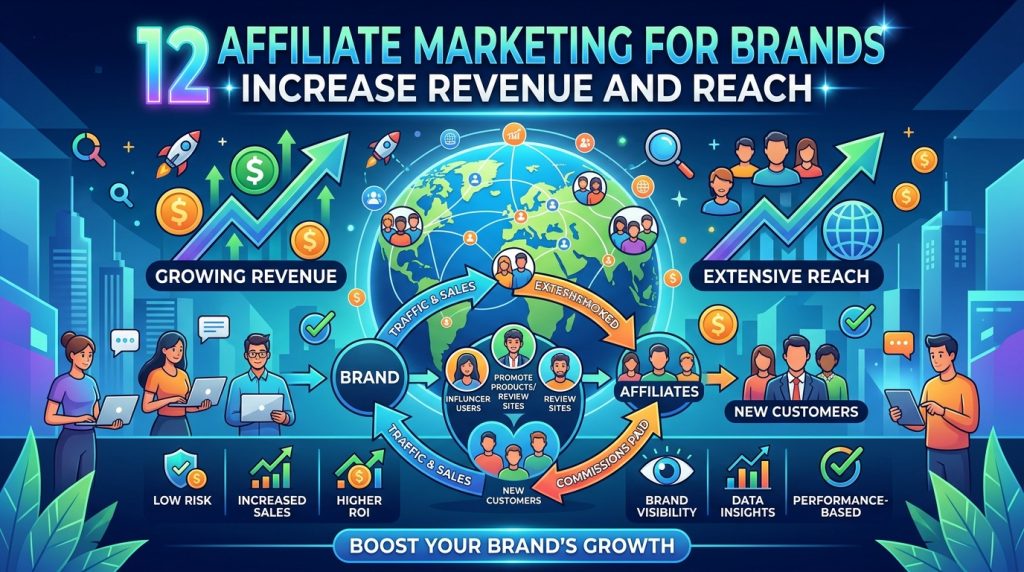
Affiliate marketing, at its core, is a revenue-sharing model where brands (also known as merchants or advertisers) partner with external individuals or entities (affiliates or publishers) to promote their offerings. The brand provides affiliates with unique tracking links or codes. When a customer clicks an affiliate’s link and completes a predefined action, such as making a purchase, filling out a form, or signing up for a service, the affiliate earns a commission.
This performance-based nature distinguishes affiliate marketing from traditional advertising. Instead of paying upfront for impressions or clicks regardless of outcome, brands only pay when a tangible result is achieved. This makes it an incredibly attractive and cost-effective marketing channel for businesses looking to optimize their marketing spend and demonstrate clear return on investment (ROI).
The key players in the affiliate marketing ecosystem typically include:
- The Merchant (Brand): The company that sells a product or service and wants to promote it.
- The Affiliate (Publisher): An individual or entity that promotes the merchant’s product. This could be a blogger, influencer, coupon site, review site, or email marketer.
- The Customer: The end-user who makes a purchase or completes an action through the affiliate’s efforts.
- The Affiliate Network/Platform: Often, an intermediary that connects merchants with affiliates, provides tracking technology, manages payments, and offers performance analytics. Major networks include CJ Affiliate, Rakuten Marketing, and Awin.
The Undeniable Benefits of Affiliate Marketing for Brands
Brands are increasingly integrating affiliate marketing into their broader digital strategies due to its compelling advantages. It’s a scalable, low-risk, and highly measurable approach to business growth.
Cost-Effective Marketing and ROI
One of the primary draws of affiliate marketing is its cost-effectiveness. Brands only pay for measurable results, such as sales or leads, minimizing wasted ad spend. This performance-based model means that marketing budgets are spent wisely, directly contributing to business goals. Studies have shown high returns on ad spending (ROAS) across various sectors, with travel generating $19 for every dollar invested and retail delivering $11 for every dollar invested.
Expanded Market Reach and Brand Awareness
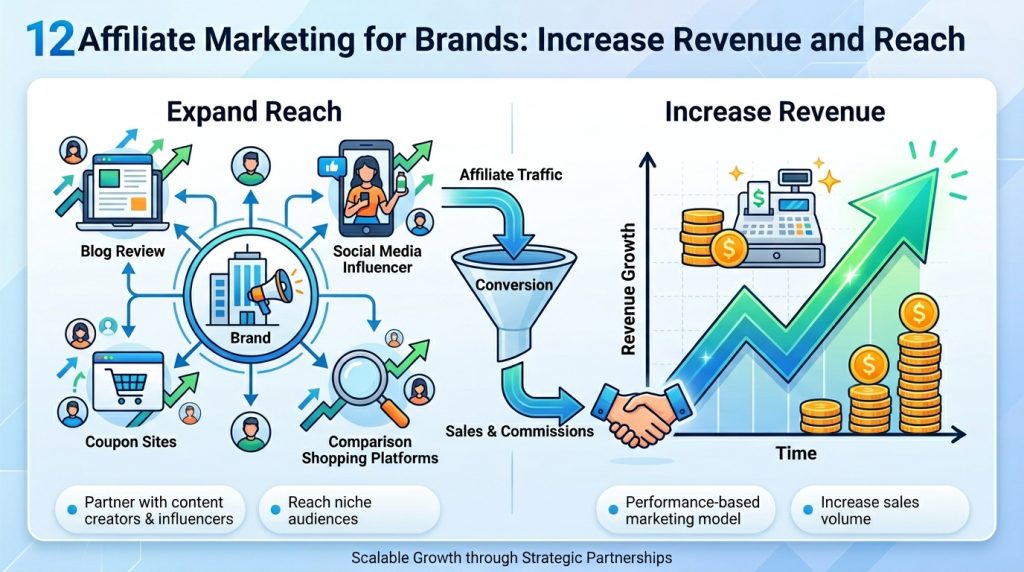
Affiliates act as an extended sales force, promoting products and services to audiences that brands might otherwise struggle to reach. Many affiliates specialize in niche markets, connecting brands with highly relevant and engaged consumers. This diversification of promotional channels significantly extends brand visibility and helps attract new customers. Data indicates that 84% of brands now utilize affiliate programs to access new audiences.
Performance-Based Model and Reduced Risk
The “pay-for-performance” nature of affiliate marketing significantly reduces financial risk for brands. Unlike traditional advertising, where upfront costs are fixed regardless of outcome, affiliate programs only incur costs when a desired action is completed. This makes it a highly efficient model for customer acquisition, aligning the interests of both the brand and the affiliate.
Valuable Data Insights and Customer Understanding
Affiliate marketing platforms provide robust tracking and analytics capabilities, offering brands invaluable data insights into consumer behavior, conversion paths, and the effectiveness of different promotional strategies. This data can be leveraged to optimize campaigns, identify high-performing affiliates, and refine overall marketing efforts, leading to a deeper understanding of the customer journey.
Understanding Different Types of Affiliates
The affiliate landscape is diverse, comprising various types of publishers who employ different strategies to promote products and services. Understanding these categories helps brands identify the best partners for their specific goals.
- Content Affiliates (Blogs, Review Sites): These affiliates create valuable content such as blog posts, product reviews, guides, and informational articles. They build trust with their audience by offering in-depth analysis and recommendations. Examples include tech review sites, lifestyle blogs, and comparison websites.
- Coupon/Deal Sites: These websites attract users looking for discounts, promotions, and special offers. They drive sales by providing immediate incentives, often at the bottom of the sales funnel.
- Influencers and Social Media Affiliates: Popular on platforms like Instagram, YouTube, TikTok, and blogs, influencers leverage their personal brand and engaged following to promote products they genuinely use and recommend. They are particularly effective for reaching specific demographics and building brand authenticity.
- Email Marketing Affiliates: These affiliates maintain large email lists and send out newsletters or dedicated campaigns featuring products and services. They can be highly effective for direct response marketing to a curated audience.
- Loyalty and Cashback Sites: These platforms reward customers with cashback, points, or other incentives for making purchases through their links. They encourage repeat business and can foster strong customer loyalty.
- Search Affiliates: These affiliates use paid search advertising (PPC) to drive traffic to landing pages that promote a brand’s products. They can quickly generate targeted traffic, but brands often need to establish clear bidding rules to avoid competition.
Setting Up a Successful Affiliate Marketing Program
Launching an effective affiliate program requires careful planning and execution. Here are key steps for brands to consider:
Defining Clear Goals and Objectives
Before launching, brands must establish clear, measurable goals. Are you aiming for increased sales, lead generation, brand awareness, or a combination? Defining these objectives will guide decisions on commission structures, affiliate recruitment, and performance tracking.
Choosing the Right Affiliate Platform
Selecting an appropriate affiliate marketing platform or network is crucial. These platforms provide the necessary technology for tracking, reporting, and managing affiliate relationships. Options range from self-hosted solutions to large networks like ShareASale, CJ Affiliate, or Rakuten Advertising, which offer access to a vast pool of potential affiliates. The global affiliate marketing platform market was valued at approximately $19.09 billion in 2024 and is projected to grow to around $76.03 billion by 2034.
Crafting an Attractive Commission Structure
The commission structure is a critical incentive for affiliates. Common models include:
| Commission Model | Description | Benefits for Brands |
|---|---|---|
| Pay-Per-Sale (PPS) / Cost Per Sale (CPS) | Affiliates earn a percentage of the sale price or a fixed amount for each sale generated. | Lowest risk, directly tied to revenue. Most prevalent model. |
| Pay-Per-Lead (PPL) / Cost Per Lead (CPL) | Affiliates are paid for generating qualified leads (e.g., sign-ups, form submissions, app installs). | Good for businesses focused on lead generation and nurturing. |
| Pay-Per-Click (PPC) / Cost Per Click (CPC) | Affiliates earn a small fixed commission each time a user clicks on their unique link. | Drives traffic and brand awareness, though less common due to higher risk for advertisers. |
| Tiered Commission | Higher commission rates are offered as affiliates achieve higher performance tiers (e.g., more sales, higher revenue). | Incentivizes top performers to drive even greater results. |
| Recurring Commission | Affiliates earn ongoing commissions for subscription-based products or services as long as the referred customer remains active. | Ideal for SaaS and subscription businesses, fosters long-term affiliate relationships. |
Brands should offer competitive rates to attract high-quality affiliates, considering industry averages and their own profit margins.
Recruiting and Vetting Affiliates
Actively recruit affiliates who align with your brand values and target audience. This can involve reaching out to relevant bloggers, influencers, or content creators directly, or leveraging affiliate networks to find suitable partners. Thorough vetting ensures that affiliates maintain brand safety and ethical promotional practices.
Tools, Tracking, and Analytics
Robust tracking tools are essential for monitoring affiliate performance, attributing sales correctly, and managing payments accurately. Affiliate platforms provide these functionalities, offering real-time data on clicks, conversions, commissions, and other key performance indicators (KPIs). Continuous analysis of this data allows for ongoing optimization of the program.
Strategies to Maximize Your Affiliate Marketing ROI
Beyond the initial setup, several strategies can help brands unlock the full potential of their affiliate programs.
Building Strong Affiliate Relationships
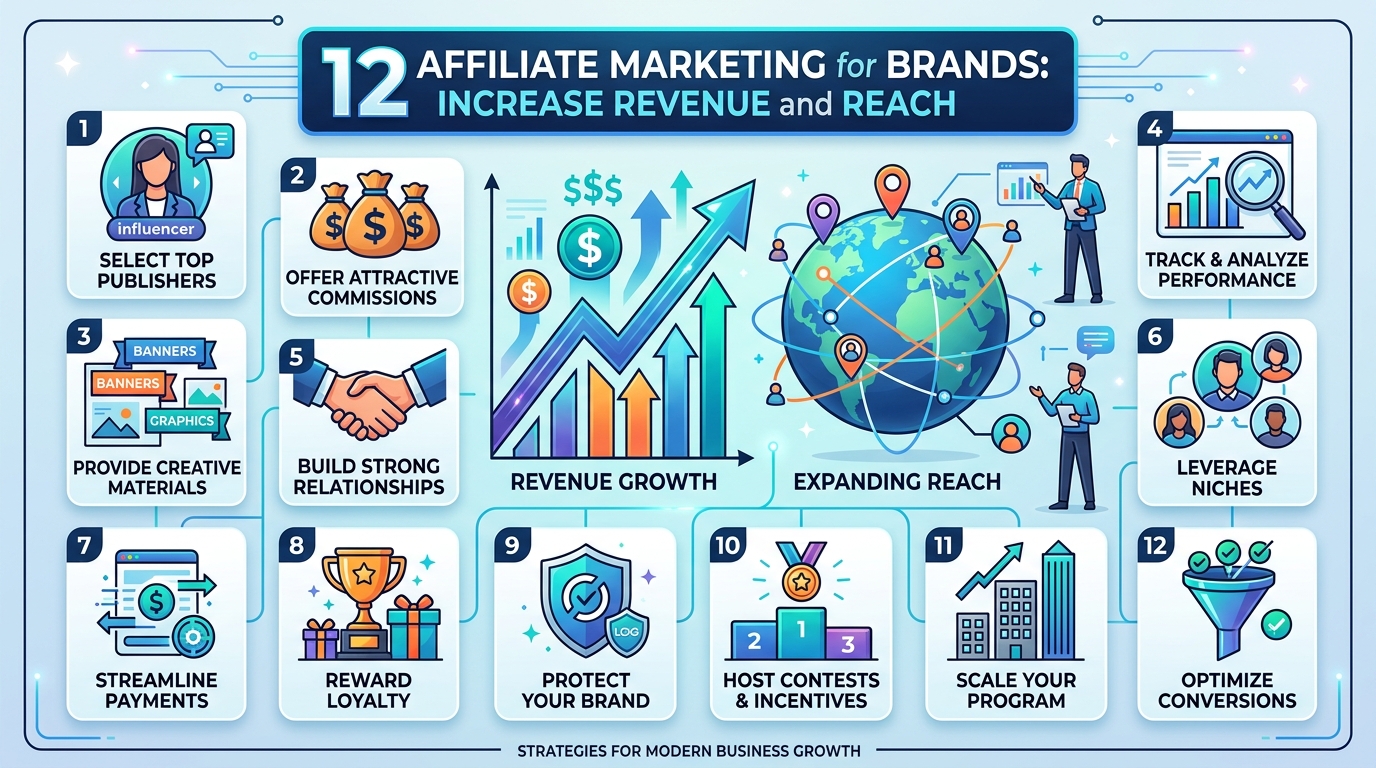
Treating affiliates as true partners is paramount. Regular communication, providing support, offering exclusive incentives, and acknowledging their contributions can foster loyalty and motivate affiliates to prioritize your brand. Strong relationships lead to more dedicated and creative promotional efforts.
Providing Compelling Creative Assets
Equip your affiliates with a diverse range of high-quality, conversion-optimized creative assets, including banners, text links, product images, videos, and compelling ad copy. Ensure these assets are regularly updated and reflect current promotions or seasonal campaigns. This simplifies the affiliate’s job and improves campaign effectiveness.
Continuous Optimization and Testing
Affiliate marketing is not a “set it and forget it” strategy. Regularly review performance data, test different commission structures, evaluate various affiliate types, and experiment with new promotional materials. A/B testing landing pages and offers can also yield significant improvements in conversion rates. This iterative approach ensures the program remains agile and highly effective. To learn more about optimizing marketing campaigns, you can refer to insights from Wikipedia’s page on marketing optimization.
Ensuring Compliance and Brand Safety
Maintain clear guidelines for affiliates regarding brand messaging, advertising practices, and regulatory compliance (e.g., FTC disclosure requirements). Regularly monitor affiliate activities to ensure adherence to these guidelines, protecting your brand’s reputation and avoiding potential legal issues. Fraud prevention tools integrated into affiliate platforms can also help in detecting and mitigating suspicious activities.
Overcoming Common Challenges in Affiliate Marketing
While highly beneficial, affiliate marketing is not without its challenges. Brands must be prepared to address issues such as:
- Fraud Prevention: Affiliate fraud, such as cookie stuffing, fake leads, or illegitimate sales, can dilute ROI. Implementing robust tracking technology, utilizing fraud detection tools provided by affiliate networks, and regularly auditing affiliate performance are crucial countermeasures.
- Attribution Complexities: In a multi-channel marketing landscape, attributing a sale to the correct affiliate can be complex. Advanced attribution models and reliable tracking software help ensure affiliates are credited fairly for their contributions.
- Managing Affiliate Relationships: As a program scales, managing a large network of affiliates can become time-consuming. Dedicated affiliate managers, clear communication channels, and automated tools within affiliate platforms are essential for efficient relationship management.
The Future of Affiliate Marketing for Brands
The affiliate marketing industry continues to grow at a robust pace. Global spending in the U.S. affiliate marketing sector is projected to reach nearly $12 billion in 2025 and climb to over $13 billion in 2026. Globally, the market is expected to reach $71.74 billion by 2034, growing at a compound annual growth rate of 15.2%. This growth is driven by several trends:
- Rise of Creator-Affiliates: The blurring lines between content creation and commerce mean that influencers and content creators will continue to play a pivotal role, offering authentic recommendations that resonate deeply with their audiences.
- Technological Advancements: AI-powered tools for personalization, fraud detection, and optimization will become more sophisticated, enhancing the efficiency and effectiveness of affiliate programs.
- Diversification beyond Retail: While retail remains a dominant vertical, sectors like financial services, travel, and telecommunications are significantly increasing their affiliate investments, indicating a broader application of performance marketing across various industries.
- Emphasis on Data and Analytics: Brands will continue to leverage advanced analytics to gain deeper insights into affiliate performance and customer behavior, making data-driven decisions to optimize their strategies.
Conclusion
Affiliate marketing presents an unparalleled opportunity for brands to increase revenue and extend their reach in a measurable and cost-effective manner. By fostering strong partnerships, implementing clear strategies, and leveraging advanced tracking technologies, businesses can tap into a vast network of dedicated promoters. As the digital landscape continues to evolve, affiliate marketing stands as a resilient and increasingly vital channel for sustainable growth, offering a powerful blend of performance, scalability, and brand amplification. Brands that embrace this dynamic model effectively will be well-positioned to navigate competitive markets and achieve their long-term business objectives.