
System Guide: 12 Amazing Affiliate Marketing Methods for Beginners
Table of Contents
Table of Contents
- What is Affiliate Marketing?
- How Does Affiliate Marketing Work? The Core Components
- The Benefits of Affiliate Marketing for Beginners
- Types of Affiliate Marketing Systems and Payment Models
- Choosing the Right Niche and Affiliate Products
- Strategies for Successful Affiliate Marketing
- Common Mistakes to Avoid in Affiliate Marketing
- Conclusion
Affiliate marketing system has emerged as a powerful and accessible method for individuals to earn income online, and for businesses to expand their reach and drive sales. For beginners, understanding the fundamentals of this performance-based marketing strategy is the first step towards building a successful online venture. It’s a revenue-sharing model where individuals or businesses, known as affiliates, earn a commission by promoting another company’s goods or services. This article will delve into the intricacies of affiliate marketing, breaking down its components, benefits, strategies, and common pitfalls to help aspiring marketers navigate this dynamic landscape.
What is Affiliate Marketing?
Affiliate marketing is essentially a partnership where an affiliate promotes a product or service created by another company (the merchant) and earns a commission for every sale, lead, or click generated through their unique referral link. This means affiliates act as brand promoters, sharing products or services with their audience in exchange for a commission when their referrals result in a predefined action. The beauty of this system lies in its performance-based nature; affiliates only get paid when a specific action is taken, making it a cost-effective advertising model for businesses.
The concept isn’t new; referral marketing has existed for centuries. However, the internet has revolutionized affiliate marketing, providing immense opportunities and automating the tracking and payment processes. Today, it’s a billion-dollar industry and a significant digital marketing strategy used by businesses to boost brand awareness and sales with minimal investment. Affiliates, on the other hand, have the opportunity to earn passive income and grow their earnings through platforms they already use.
How Does Affiliate Marketing Work? The Core Components
The affiliate marketing system involves several key players, each with a distinct role in the process:
- The Merchant (Product Creator or Seller): This is the company or individual who creates the product or service. They could be a large corporation, a small business, or even a solo entrepreneur. The merchant handles product development, inventory, shipping, and customer support. They establish an affiliate program and set the commission rates.
- The Affiliate (Publisher): This is the individual or entity that promotes the merchant’s product or service to their audience. Affiliates can be bloggers, YouTubers, social media influencers, email marketers, or website owners. Their primary goal is to persuade potential customers that the product is valuable and worth purchasing, driving traffic and conversions through unique affiliate links.
- The Consumer: These are the individuals who are exposed to the affiliate’s promotion and ultimately make a purchase or take the desired action. When a consumer clicks on an affiliate’s link and makes a purchase, the conversion is tracked, and the affiliate receives a commission. The cost to the purchaser is the same whether they buy through an affiliate link or directly from the manufacturer.
- The Affiliate Network: Often, a third party acts as an intermediary between merchants and affiliates. Affiliate networks provide a platform where affiliates can find products to promote and merchants can manage their affiliate programs. These networks handle tracking, reporting, and payment processing, simplifying the process for both parties. Examples include Amazon Associates, ClickBank, and Rakuten Advertising. Some businesses also run in-house or direct affiliate programs.
The process is straightforward: an affiliate shares an ad or link on their chosen platform. When a customer clicks on this link and makes a purchase or completes a predefined action, the conversion is tracked, and the affiliate is paid a commission.
The Benefits of Affiliate Marketing for Beginners
Affiliate marketing offers a compelling entry point for beginners looking to generate online income due to several distinct advantages.
- Low Cost and Low Risk: Unlike starting a traditional business that requires significant upfront investment in product development, inventory, or employees, becoming an affiliate marketer requires little to no upfront cost. Affiliates don’t need to purchase or store stock, and merchants handle customer service, reducing operational headaches. This makes it a low-risk venture, as affiliates are only paid when a sale is made, meaning businesses only pay for actual revenue generated.
- Passive Income Potential: Once affiliate links or ads are set up on a website, blog, or social media platform, affiliates can benefit from passive income. Each time a follower clicks through a link and makes a purchase, the affiliate earns a commission without continuous active effort. This allows entrepreneurs to build a business without necessarily quitting their day job.
- Flexibility and Convenience: Affiliate marketing offers significant flexibility, allowing individuals to work from anywhere with an internet connection and set their own schedules. It’s a convenient way to make money online, providing freedom and control over one’s work-life balance.
- No Need for Product Creation or Customer Service: Affiliates focus solely on marketing. They don’t need to worry about creating products, managing inventory, or handling customer service issues like refunds and complaints. These responsibilities remain with the merchant.
- Easy to Scale: Once an affiliate partnership is established and a strategic content plan is in place, scaling an audience and influence becomes easier. Affiliates can promote multiple products from different merchants, diversifying their income streams and expanding their reach.
- Targeted Traffic: Affiliates often build highly targeted audiences interested in specific types of products, increasing the likelihood of successful conversions. This allows businesses to reach niche audiences that might be harder to target through broader advertising efforts.
Types of Affiliate Marketing Systems and Payment Models
Affiliate marketing encompasses various models, primarily categorized by how commissions are earned. Understanding these models is crucial for beginners to choose the most suitable approach for their goals.
The primary types of affiliate marketing programs often revolve around compensation models:
- Pay-Per-Sale (PPS): This is the most common model, where affiliates earn a commission every time a customer purchases a product or service through their unique referral link. The commission is typically a percentage of the sale amount. This model aligns perfectly with business profitability, as payments are directly tied to generated revenue.
- Pay-Per-Lead (PPL): In this model, affiliates earn a commission by generating qualified leads for the merchant. This could involve getting users to sign up for newsletters, free trials, webinars, fill out a contact form, or register for an online class. PPL is often favored by industries with longer sales cycles, as it focuses on capturing interest rather than immediate sales. It can also be a good option for beginners, as generating a lead is often easier than securing a direct sale.
- Pay-Per-Click (PPC): This is a less common model where affiliates earn a commission for every click on their unique link, regardless of whether a purchase or sign-up occurs. Large retailers sometimes use this to build brand awareness and website traffic. While easier to achieve, the earnings per click are typically lower than other models.
Beyond compensation, affiliate marketing can also be categorized by the affiliate’s relationship with the product they promote:
- Unattached Affiliate Marketing: The marketer promotes a product without having any expertise or personal connection to the niche. They act as a simple conduit for information, often used in paid advertising.
- Related Affiliate Marketing: The affiliate promotes products that align with their audience’s preferences and interests, even if they don’t necessarily use the products themselves. For example, a cleaning YouTuber promoting a new detergent.
- Involved Affiliate Marketing: This type involves promoting products that the affiliate personally uses, trusts, and has deep expertise in. This approach builds significant trust and often leads to higher conversion rates, though it limits the variety of products an affiliate can promote.
Choosing the Right Niche and Affiliate Products
For beginners, selecting the right niche is arguably the most critical step in affiliate marketing. A well-chosen niche aligns with your audience’s interests, needs, and desires, significantly increasing the chances of successful conversions.
Steps to Identify the Right Niche:
- Start with Your Interests and Expertise: List topics where you have genuine knowledge, experience, or passion. This makes content creation more enjoyable and credible. Working in a niche you care about makes the journey more sustainable and authentic.
- Conduct Market Research: Use tools like Google Keyword Planner or Google Trends to identify popular search terms and analyze long-term viability. Look for niches with a significant audience and growing demand. This helps confirm there’s a viable audience for your niche.
- Evaluate Competition: Analyze competitors’ strengths and weaknesses. Look for underserved areas within popular niches where you can offer unique value. High competition isn’t always a disqualifier, but a less crowded niche can offer more opportunities to stand out.
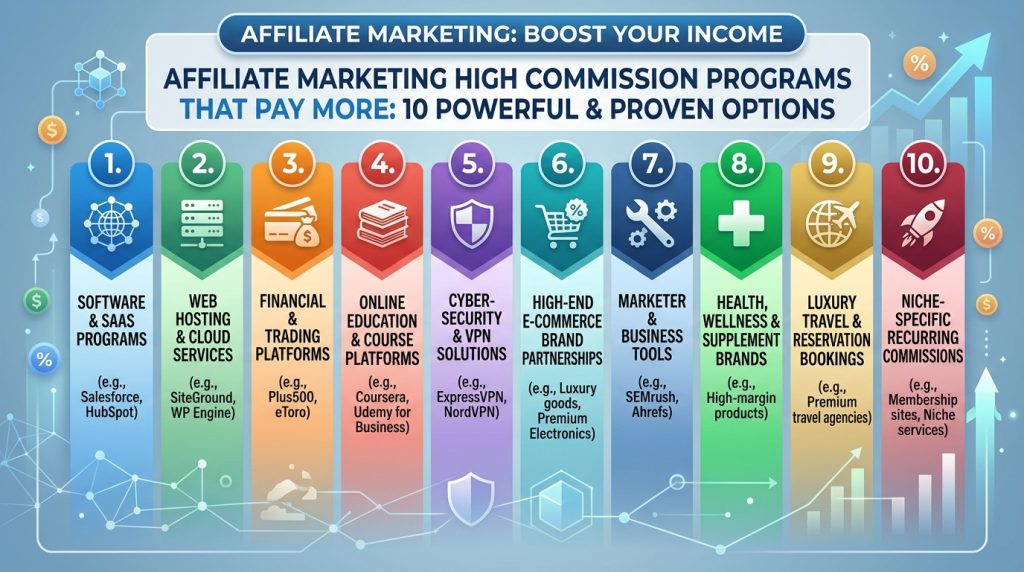
- Assess Profitability and Commission Rates: Research available affiliate programs within potential niches. Consider commission rates, the price range of products, and the potential for recurring revenue (e.g., subscription-based products). Sometimes, a lower commission on a high-demand product can be more profitable than a high commission on a low-demand product.
- Validate Your Niche: Test interest by engaging in forums, social media groups, and online communities related to your potential niche. This helps confirm that people are actively searching for solutions within that area.
Once a niche is chosen, the next step is selecting affiliate products. It’s crucial to pick high-quality products you genuinely believe in and, ideally, have personal experience with. Prioritizing audience trust over high commission rates is essential for long-term success.
| Affiliate Marketing System Component | Role and Function | Key Benefit |
|---|---|---|
| Merchant (Product Creator) | Creates product/service, sets up affiliate program, handles fulfillment (inventory, shipping, customer service). | Increased sales and brand awareness without upfront advertising costs. |
| Affiliate (Publisher) | Promotes products/services to their audience, drives traffic via unique links, earns commission. | Potential for passive income, flexibility, no need for product creation or customer support. |
| Consumer | Clicks on affiliate link, makes a purchase or takes a desired action. | Access to reviewed/recommended products, no extra cost. |
| Affiliate Network | Intermediary platform, connects merchants and affiliates, provides tracking, reporting, and payment processing. | Simplifies program management for merchants, offers product variety for affiliates. |
Strategies for Successful Affiliate Marketing
Achieving success in affiliate marketing requires more than just dropping links; it demands a strategic and consistent approach. Here are some key strategies for beginners:
- Create Valuable, High-Quality Content: Content is king in affiliate marketing. Whether it’s through blog posts, product reviews, tutorials, or social media updates, your content should genuinely add value to your audience. Focus on solving problems, providing helpful insights, and being honest about product limitations. This builds trust and credibility, which are paramount for conversions.
- Build an Engaged Audience: Successful affiliate marketers understand their audience and authentically share partnerships. Focus on building a strong community on platforms where your followers are most engaged, such as a blog, YouTube channel, or social media. Engage with your audience, respond to comments, and foster a sense of community.
- Diversify Your Affiliate Programs and Products: While focusing on a niche is important, relying on only one affiliate program can be risky. Consider promoting several products from different merchants, as long as they align with your niche and audience needs. However, avoid promoting too many products at once, as this can dilute your message and confuse your audience.
- Implement SEO Strategies: Optimize your content for search engines to drive organic traffic. Use keyword research to find what your audience is searching for and create content that matches those queries. Basic SEO techniques like creating valuable content and connecting with reputable sites can significantly increase visibility.
- Utilize Various Marketing Channels: Don’t limit yourself to one platform. Leverage blogs, social media (Instagram, YouTube, TikTok, Facebook), email marketing, and even dedicated landing pages to promote affiliate products. YouTube, for instance, is excellent for product reviews and tutorials.
- Be Transparent with Affiliate Links: Always disclose your affiliate relationships to your audience. The Federal Trade Commission (FTC) requires clear and conspicuous disclosure of financial relationships. Transparency builds trust and maintains credibility.
- Track Performance and Optimize: Regularly review your results to identify what’s working and what isn’t. Tracking clicks, conversions, and sales data helps you understand profitable merchants and content types, allowing you to refine your strategies.
- Continuous Learning and Adaptation: The digital marketing landscape is constantly evolving. Stay updated with current trends, algorithm changes, and new tools to remain competitive and effective.
For deeper insights into effective content strategies that resonate with a global audience, especially in diverse markets, consider exploring resources like BBC News’ coverage on digital trends and consumer behavior. Understanding how international media approaches content can provide valuable context for crafting engaging and authoritative affiliate marketing materials.

Common Mistakes to Avoid in Affiliate Marketing
While affiliate marketing offers immense potential, beginners often fall into common traps that hinder their success. Being aware of these pitfalls can help you navigate your journey more effectively.
- Choosing the Wrong Products: A major mistake is selecting products based solely on high commission rates rather than their relevance or benefit to your audience. Promoting low-quality or unreliable products, or those that don’t align with your values, can quickly erode audience trust.
- Neglecting Content Quality and Depth: Many beginners assume simply sharing an affiliate link will drive sales. However, thin, generic, or sales-driven content performs poorly. Audiences seek valuable information and genuine recommendations, not pushy sales pitches.
- Not Building an Audience or Trust: Without a loyal and engaged audience, affiliate efforts will likely fall flat. Trust is the cornerstone of affiliate marketing; once broken, it’s difficult to rebuild. Prioritizing audience needs and offering authentic recommendations are crucial.
- Expecting Quick Results: Affiliate marketing is not a get-rich-quick scheme. It takes time, strategy, and consistency to build an audience, establish credibility, and generate consistent commissions. Beginners often become disheartened by slow initial progress.
- Promoting Too Many Products at Once: Spreading your energy too thin by promoting a vast array of unrelated products can confuse your audience and weaken your message. It’s more effective to focus on a few high-quality products that you genuinely understand and can promote consistently.
- Ignoring SEO Strategies: Overlooking basic search engine optimization (SEO) can significantly limit your reach. Without SEO, even high-quality content may not reach the right audience, resulting in low website traffic.
- Failing to Track Performance: Without tracking clicks, impressions, and conversions, it’s impossible to know what strategies are effective. Neglecting analytics means you can’t identify profitable areas or optimize your efforts for better results.
- Lack of Focus and Consistency: Many newcomers jump from niche to niche or platform to platform without a clear direction, hoping something will stick. Consistency in content creation and promotion within a chosen niche is vital for long-term success.
Conclusion
The affiliate marketing system offers a remarkable opportunity for beginners to enter the world of online entrepreneurship with relatively low risk and significant earning potential. By understanding its core components – the merchant, affiliate, consumer, and often an affiliate network – aspiring marketers can grasp the fundamental mechanics of this performance-based model. The benefits, such as passive income, flexibility, and the absence of product creation or customer service responsibilities, make it particularly attractive.
Success, however, hinges on strategic execution. Choosing a niche aligned with your interests and market demand, creating valuable and trustworthy content, building an engaged audience, and diversifying your promotions are all crucial steps. Equally important is avoiding common mistakes like prioritizing commissions over trust, neglecting content quality, or expecting instant riches. Affiliate marketing is a journey that demands patience, consistent effort, continuous learning, and an unwavering commitment to providing value to your audience. By adhering to these principles, beginners can lay a solid foundation for a thriving and sustainable affiliate marketing business.