Affiliate Marketing for Small Business: Grow Sales Faster Online
Table of Contents
Affiliate marketing for small businesses presents a powerful and cost-effective strategy to significantly grow sales online. In a digital landscape increasingly defined by rising advertising costs and evolving consumer behaviors, small enterprises need agile and results-driven approaches to expand their reach and customer base. Affiliate marketing, a performance-based marketing model, allows businesses to leverage a network of external partners—affiliates—who promote their products or services in exchange for a commission on successful sales or leads. This innovative approach mitigates upfront marketing risks, making it particularly attractive for small businesses operating with limited budgets and resources. In fact, the affiliate marketing industry is experiencing robust growth, with global market value projected to exceed $20 billion in 2026, and over 90% of e-commerce businesses expected to leverage it by the same year.
Introduction to Affiliate Marketing for Small Businesses
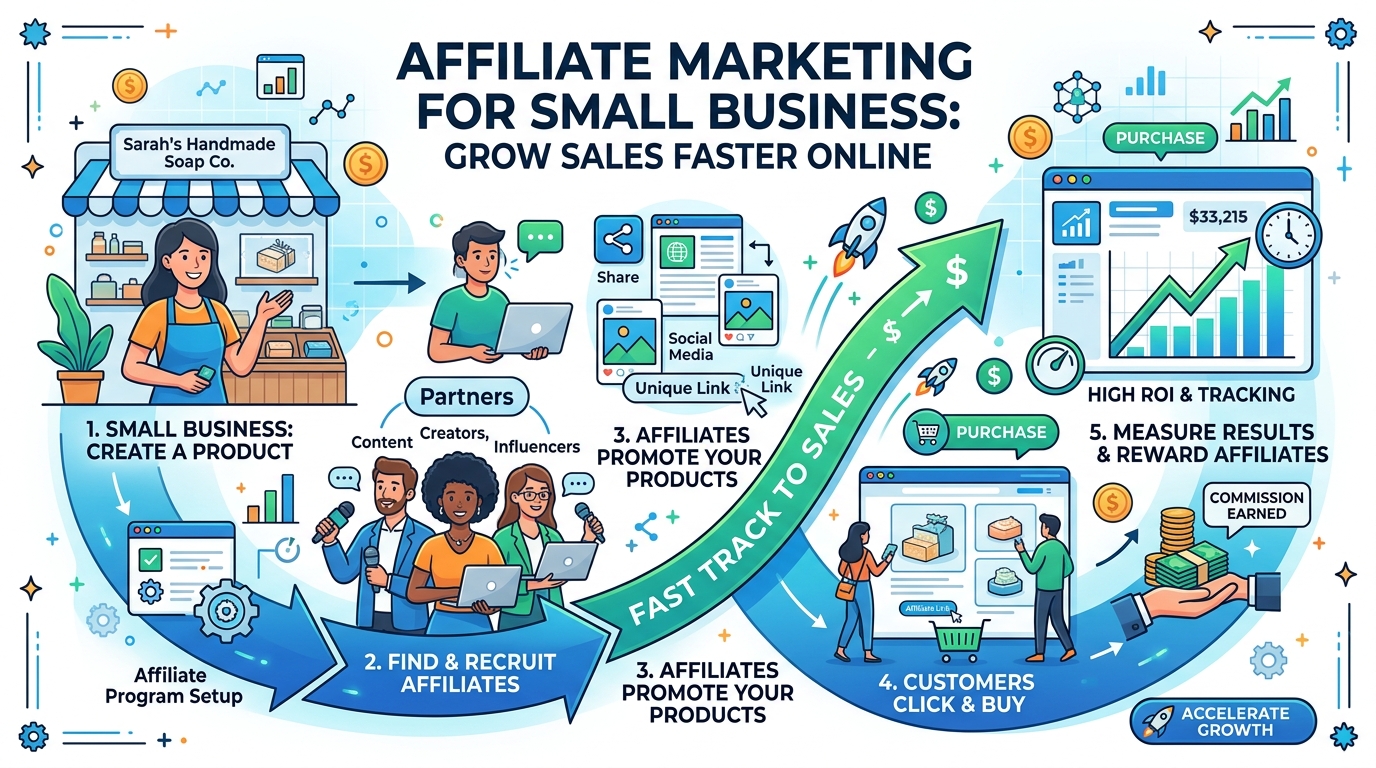
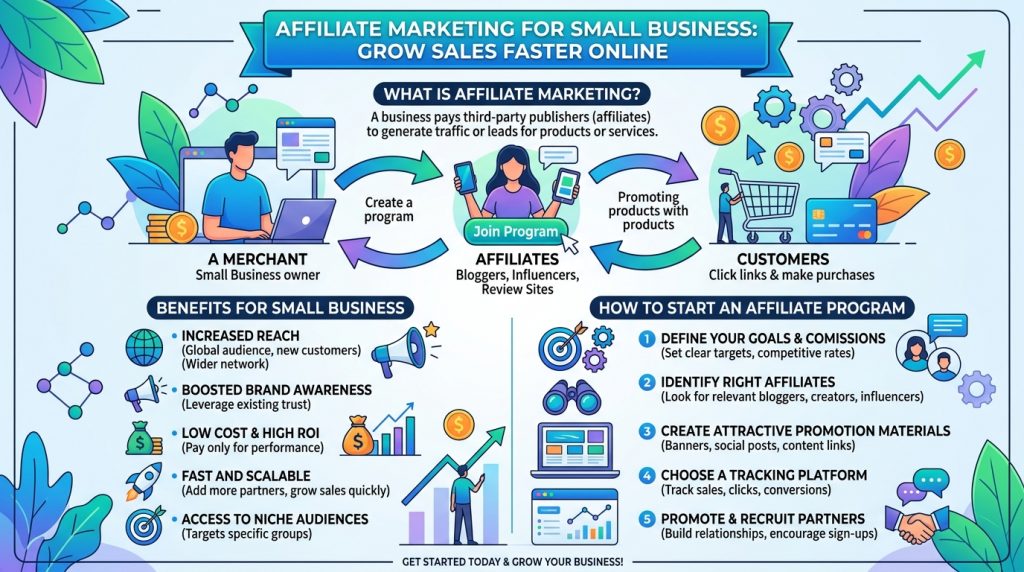
Affiliate marketing is essentially a partnership where a business rewards one or more affiliates for each visitor or customer brought by the affiliate’s own marketing efforts. This can involve mentions on websites, social media profiles, or emails, through articles, videos, or display ads that encourage consumers to buy. For small businesses, this translates into an outsourced marketing strategy that taps into a wealth of external expertise without the overhead of an in-house team. The core principle is straightforward: affiliates, often content creators, bloggers, or influencers, share unique links or discount codes. When a consumer uses these links or codes to make a purchase, the affiliate earns a commission. This performance-based model means businesses typically only pay for actual results, such as a new customer or a confirmed sale, rather than for clicks or impressions that may not convert. This makes it a low-risk way for small businesses to expand their market reach and boost sales.
The appeal of affiliate marketing for small businesses lies in its ability to generate rapid and recurring sales, which are crucial for moving beyond the startup phase. Current trends indicate that approximately 80% of brands already utilize affiliate programs, recognizing their proven effectiveness in increasing sales and brand reach. By collaborating with affiliates, small businesses can effectively put their products in front of already engaged audiences, capitalizing on the trust and credibility that affiliates have built with their followers. This strategy provides a distinct advantage over traditional advertising by tapping into established communities who are actively seeking product and service recommendations.
Why Affiliate Marketing is a Game-Changer for Small Businesses
For small businesses, where every marketing dollar counts, affiliate marketing offers a compelling proposition. Its performance-based nature means that companies generally only pay when a desired action occurs, such as a sale, minimizing financial risk. This stands in stark contrast to traditional advertising methods where costs can accumulate rapidly without guaranteed returns. The benefits extend beyond cost-effectiveness to include significant brand building and expanded audience reach.
- Enhanced Brand Awareness: Affiliate promotions increase visibility across diverse platforms and audiences, building brand recognition that can lead to future conversions. Even if an immediate sale doesn’t occur, the exposure contributes to overall brand awareness.
- Increased Credibility and Social Proof: Consumers often trust recommendations from affiliates they follow, such as trusted bloggers or social media influencers, more than direct advertising from an unknown brand. This inherent trust acts as powerful social proof, endorsing the small business’s products or services. Research indicates that 98% of customers consider testimonials an important part of their purchase decisions.
- Cost-Effectiveness and High ROI: With affiliate marketing, businesses typically pay a commission per sale or lead, ensuring that marketing spend is directly tied to results. This makes it one of the most cost-effective customer acquisition methods. Some programs achieve a return of $16 for every $1 spent, highlighting its high ROI potential.
- Expanded Market Reach: Affiliates introduce your products to new, often niche, audiences that your own marketing efforts might not easily reach. This diversified network helps small businesses break through the noise and connect with potential customers effectively.
- SEO Benefits: A robust affiliate program can drive more traffic to your website, potentially leading to increased search engine optimization (SEO) performance and a boost in organic traffic.
- Flexibility and Control: Small businesses maintain control over their affiliate programs, setting commission levels, incentives, and providing creative assets for affiliates to use. They can also choose which affiliates to partner with, ensuring alignment with brand values.
Understanding the Core Models of Affiliate Marketing
Affiliate marketing operates on various commission models, each with its own structure and advantages. Small businesses can choose the model that best aligns with their products, sales cycle, and financial goals.
- Pay-Per-Sale (PPS): This is the most common and lowest-risk model for advertisers. The affiliate earns a commission only when a sale is completed as a direct result of their referral. This model ensures that businesses only pay for conversions, making it highly attractive for managing marketing budgets efficiently.
- Pay-Per-Lead (PPL): In this model, affiliates are compensated for generating qualified leads, such as when a customer fills out a contact form, signs up for a newsletter, or requests a quote. This is often used for services or high-value products where the sales cycle is longer.
- Pay-Per-Click (PPC): While less common for small businesses due to potential fraud and lower ROI, in this model, affiliates earn a commission for every click their unique link generates, regardless of whether it leads to a sale or lead. This model generally requires more careful monitoring.
For small businesses, the pay-per-sale model is generally recommended as it directly ties remuneration to revenue generated, safeguarding margins and ensuring profitability. Commission rates typically range from 5% to 25% of the sale price, but can vary based on product type and profit margins. Offering tiered commission structures, where top-performing affiliates receive higher rewards, can further incentivize strong performance.
Building Your Affiliate Program: A Step-by-Step Guide
Launching a successful affiliate program requires careful planning and execution. Small businesses need to establish clear goals, choose appropriate tools, and define their offerings to attract the right partners.
- Set Clear Goals: Before anything else, define what you want to achieve. Are you aiming to boost profits, increase website traffic, expand into a new market, or improve brand awareness? Setting realistic and measurable goals will guide your strategy and allow you to track success.
- Choose an Affiliate Platform or Software: An affiliate marketing platform is crucial for tracking referrals, calculating payouts, and managing affiliates. For small businesses, user-friendly and affordable options exist. Platforms like ShareASale, Refersion, Tapfiliate, or UpPromote (for Shopify stores) are popular choices, offering features like automated payouts, real-time reporting, and fraud protection. Running your own program might offer more control and lower costs, but networks provide access to an existing pool of affiliates.
- Determine Your Commission Structure: This is a critical step in attracting quality affiliates. Calculate your profit margins to determine a sustainable commission rate. Typical rates range from 5% to 25%. Consider offering performance-based incentives or tiered commissions to motivate top performers. It’s advisable for small businesses to pay commissions only after a sale has been made, rather than per click or per lead, to maintain cost-effectiveness.
- Create Compelling Offers and Marketing Assets: Affiliates need attractive materials to promote your products. Provide a media kit with high-quality branded banners, product images, compelling ad copy, sample captions, and promotional copy optimized for different platforms. Ensure these assets are easily accessible and include clear guidelines on brand voice and image usage.
- Outline Terms, Conditions, and Compliance: Clearly define the rules for affiliates regarding brand usage, paid advertising, and ethical promotion. Include guidelines for disclosure, as affiliates are legally required by organizations like the U.S. Federal Trade Commission (FTC) to disclose their relationship with your business when promoting products. Setting clear expectations upfront helps prevent issues and ensures an ethical program.
| Affiliate Marketing Model | Description | Ideal for Small Business | Typical Commission Structure |
|---|---|---|---|
| Pay-Per-Sale (PPS) | Affiliate earns a commission only when a referred customer makes a purchase. | Highly Recommended (Low Risk) | Percentage of sale price (e.g., 5-25%) |
| Pay-Per-Lead (PPL) | Affiliate earns a commission for generating a qualified lead (e.g., form submission, sign-up). | Good for services or high-value products | Fixed amount per lead |
| Pay-Per-Click (PPC) | Affiliate earns a commission for every click their unique link generates. | Generally Not Recommended (High Risk for SMBs) | Small amount per click |
| Recurring Commission | Affiliate earns a commission for initial sale and subsequent subscription renewals or recurring payments. | Excellent for subscription-based products/services | Percentage of recurring revenue |
Finding the Right Affiliates for Your Brand
Recruiting affiliates who genuinely align with your brand values and target audience is paramount for program success. A strong brand presence, including a solid reputation and SEO visibility, can help attract high-quality affiliates.
- Influencers and Content Creators: Partnering with influencers, particularly micro and nano-influencers, who have an authentic connection with their niche audience, can be highly effective. These individuals often offer better ROI than larger counterparts due to higher engagement rates and more genuine recommendations.
- Niche Bloggers and Review Sites: Bloggers who write extensively about topics related to your products can be excellent affiliates. Their detailed reviews and guides can provide valuable context and drive informed purchases.
- Existing Customers: Your most loyal customers can become powerful advocates. They already love your products, so incentivizing them to become affiliates can generate highly authentic promotions and user-generated content.
- Leverage Affiliate Networks: Affiliate networks (e.g., ShareASale, Impact.com) provide a platform to discover affiliates and manage your program. They streamline the process, though they may come with higher costs.
- Direct Outreach: Actively search for potential affiliates whose audience demographics match your target market. Reach out with personalized messages highlighting the mutual benefits of a partnership.
The vetting process is crucial; review potential affiliates’ websites, social media presence, and engagement rates to ensure they can drive qualified traffic. Avoid relying on one affiliate for more than 25% of your affiliate revenue to diversify risk and reach.
Optimizing Your Affiliate Program for Maximum Impact
Once your affiliate program is established, continuous optimization is key to maximizing its effectiveness. This involves fostering strong relationships, providing ongoing support, and adapting to performance data.
- Build Strong Affiliate Relationships: Treat affiliates as strategic partners, not just traffic sources. Regular communication, real-time support, and performance-based incentives foster trust and motivation. Set up check-ins, celebrate their wins, and offer exclusive access to new launches.
- Provide Ongoing Resources and Training: Continuously equip your affiliates with updated marketing materials, product information, and promotional calendars. Consider email campaigns to keep them informed about sales, deals, and tips to improve their sales.
- Offer Competitive Incentives: Beyond standard commissions, consider bonuses for reaching sales milestones, contests, or higher commission tiers for top performers. For less popular products, boosting affiliate percentages can incentivize their promotion.
- A/B Test and Refine: Experiment with different creative assets, landing pages, and commission structures to see what resonates best with both affiliates and their audiences. Use data to make informed decisions and optimize for higher conversion rates.
- Encourage User-Generated Content (UGC): Promote and encourage affiliates to create authentic user-generated content, such as reviews, before/after photos, or day-in-the-life reels. This content often resonates strongly with consumers and serves as instant social proof.
- Diversify Promotional Channels: Encourage affiliates to use a variety of channels, including social media (TikTok, Instagram, YouTube), blogs, email marketing, and even webinars, to promote your products. This multi-channel approach can significantly expand your reach.
Measuring Success and ROI in Affiliate Marketing
Tracking and analyzing key performance indicators (KPIs) are essential to understand the effectiveness of your affiliate program and calculate its return on investment (ROI). Affiliate programs offer real-time online tracking, providing insights into clicks, impressions, and sales.
Key metrics to monitor include:
- Conversion Rate: The percentage of affiliate-referred visitors who complete a desired action, such as a purchase or sign-up. A higher conversion rate indicates a more effective strategy and better ROI.
- Click-Through Rate (CTR): The percentage of clicks an affiliate link receives relative to the number of times it’s viewed. This indicates the attractiveness of the affiliate’s promotion.
- Earnings Per Click (EPC): The average earnings an affiliate generates for each click they send to your site. This helps assess the profitability of individual affiliates or campaigns.
- Average Order Value (AOV): The average revenue earned per transaction driven by affiliate marketing. Increasing AOV can directly improve ROI without necessarily increasing traffic.
- Customer Lifetime Value (CLV): The predicted net profit attributed to the entire future relationship with a customer acquired through an affiliate. This metric helps tie affiliate marketing to long-term revenue growth.
- Cost Per Acquisition (CPA)/Cost Per Sale (CPS): The cost incurred for each customer or sale generated through affiliate channels. Lower CPA/CPS indicates a more cost-effective program.
To calculate the basic ROI for your affiliate program, you can use the formula: ROI = (Revenue from affiliates − Total affiliate program costs) / Total affiliate program costs × 100. For example, if you generate $50,000 in revenue, pay $10,000 in commissions, and spend $500 on software, your ROI would be approximately 376%. Many businesses report saving on marketing costs by using affiliate dashboards to streamline operations, with some seeing a 20-30% increase in ROI when implementing such tools.

Navigating Challenges and Ensuring Compliance
While highly beneficial, affiliate marketing also presents challenges that small businesses must anticipate and address.
- Brand Messaging and Consistency: A significant challenge is maintaining consistent brand messaging across multiple affiliate channels. Affiliates operate independently, which can lead to brand dilution or misrepresentation if not managed carefully. Providing clear guidelines and regular communication can mitigate this risk.
- Selecting the Right Partners: Finding and recruiting affiliates who truly align with your brand and target audience can be time-consuming. It requires vetting their credibility, audience demographics, and ethical standards.
- Affiliate Fraud: This can include fraudulent clicks, cookie stuffing, or unauthorized bidding on brand keywords. Implementing robust tracking software with fraud detection features is crucial.
- Competition: The affiliate marketing landscape is becoming increasingly saturated. Small businesses need to differentiate themselves by offering unique value propositions and providing superior support to their affiliates.
- Compliance and Disclosure: Adherence to regulatory guidelines, especially those concerning consumer protection and data privacy, is mandatory. In the U.S., the Federal Trade Commission (FTC) requires affiliates to clearly and conspicuously disclose their relationship with the brand when promoting products. This means clearly stating that they earn a commission from purchases. Failure to comply can result in significant penalties. Furthermore, global privacy laws such as GDPR (General Data Protection Regulation) and CCPA (California Privacy Rights Act) impact how affiliates collect and use data, necessitating transparent data collection methods and clear opt-in/opt-out options. Businesses should audit their affiliate programs for compliance gaps and ensure agreements and training materials match current regulations. For further details on these regulations, refer to the FTC’s Endorsement Guidelines.
The Future of Affiliate Marketing for Small Businesses
The affiliate marketing landscape is dynamic, with several trends shaping its future, offering new opportunities for small businesses.
- AI-Driven Automation: Artificial intelligence is increasingly playing a larger role in content creation, campaign optimization, and predictive analytics, helping affiliates and businesses improve targeting and efficiency. AI tools can assist with ad copy generation, A/B testing, and customizing customer experiences.
- Rise of Micro and Nano-Influencers: Brands are increasingly partnering with niche content creators and micro-influencers to build more authentic and effective campaigns. This trend emphasizes genuine connections over sheer follower count.
- Enhanced Attribution Models: Improved tracking and multi-touch attribution will provide better insights into the customer journey, ensuring affiliates receive fair payouts for their contributions across different touchpoints.
- Social Commerce Integration: Platforms like TikTok, Instagram, and YouTube are reshaping affiliate marketing strategies. Social media is a powerful channel for showcasing user-generated content and driving sales directly. Live stream sales are also expected to see significant growth.
- Content Diversification: Video content in affiliate marketing is predicted to grow significantly, with YouTube being a primary platform. Over 50% of affiliate marketers are expected to rely on content marketing as their primary promotional method by 2027.
- Focus on Authenticity and Value: Consumers are becoming more discerning, making authenticity and the provision of genuine value critical for affiliates. Creating high-quality content that competitors can’t easily replicate will be key to standing out.
By 2026, the global affiliate marketing industry is projected to exceed $20 billion, with U.S. spending alone climbing to over $13 billion. This continued growth, coupled with the increasing shift towards performance-based marketing and the integration of AI, underscores the enduring power of affiliate marketing for small businesses looking to scale their online sales.
Conclusion
Affiliate marketing offers small businesses a powerful, cost-effective, and scalable pathway to grow sales faster online. By leveraging a network of trusted affiliates, businesses can expand their reach, build brand credibility, and drive conversions without the significant upfront investment associated with traditional advertising. While challenges such as brand consistency and compliance require diligent management, the benefits—including high ROI and access to diverse audiences—make it an indispensable strategy for modern enterprises. As the industry continues to evolve with AI integration and a stronger focus on authentic partnerships, small businesses that strategically embrace affiliate marketing will be well-positioned to thrive in the competitive digital marketplace. Prioritizing clear goals, strong affiliate relationships, and continuous optimization will be key to unlocking the full potential of this dynamic marketing channel.