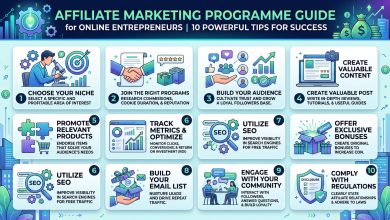
1 Powerful Affiliate Marketing Guide: How to Start and Earn Online
Table of Contents
Affiliate marketing is a dynamic and increasingly popular strategy for individuals looking to earn income online by promoting products or services. It’s a performance-based model where affiliates, often content creators, bloggers, or influencers, earn a commission for driving sales, leads, or other specified actions for a merchant. With global spending on affiliate marketing projected to reach $15.7 billion by 2024, its significance in the digital marketing landscape is undeniable. This comprehensive guide will walk you through the fundamentals of starting and succeeding in affiliate marketing, offering insights into best practices, current trends, and strategies for building a profitable online venture.
What is Affiliate Marketing?
Affiliate marketing is essentially a partnership where a company compensates third-party publishers (affiliates) to generate traffic or leads for their products and services. It’s a cost-effective and performance-based marketing strategy that allows individuals to earn commissions with minimal upfront investment, making it highly accessible for beginners. The core concept is straightforward: affiliates share an ad or link on their chosen platform, and when a customer clicks on it and completes a desired action—like making a purchase—the affiliate receives a commission.
The affiliate marketing ecosystem typically involves four key players:
- The Merchant (Advertiser): This is the company or seller of the product or service that wants to promote its offerings and increase revenue.
- The Affiliate (Publisher): This individual or company promotes the merchant’s products to their audience. Affiliates can be bloggers, social media influencers, email marketers, or website owners.
- The Consumer: These are the customers who purchase the products or services through the affiliate’s promotional efforts.
- The Affiliate Network: These platforms act as intermediaries, connecting merchants with affiliates and handling aspects like tracking, reporting, and payment processing.
In recent years, the landscape of affiliate marketing has evolved, with a growing focus on influencer partnerships and micro-influencers who connect authentically with their audiences. This shift emphasizes building trust and long-term relationships over transient campaigns.
How Does Affiliate Marketing Work?
The process of affiliate marketing is systematic and relies on tracking mechanisms to attribute sales or leads to the correct affiliate. Here’s a breakdown of how it typically functions:
- Affiliate Joins a Program: An individual or business signs up for an affiliate program offered directly by a merchant or through an affiliate network.
- Unique Affiliate Link: Upon approval, the affiliate receives a unique tracking link (or other tracking methods like discount codes). This link contains a unique identifier that allows the merchant or network to track all traffic and sales originating from that specific affiliate.
- Promotion: The affiliate promotes the product or service using their unique link across various marketing channels, such as a blog, social media, email newsletters, or YouTube videos.
- Customer Action: A potential customer clicks on the affiliate link. This click is recorded, often with a cookie that tracks the customer’s activity for a certain period (e.g., 24 hours to 90 days, depending on the program).
- Conversion: If the customer completes a desired action—such as making a purchase (Cost Per Sale – CPS), submitting a lead form (Cost Per Lead – CPL), or installing an app (Cost Per Install – CPI)—within the cookie window, the action is attributed to the affiliate.
- Commission Payout: The merchant then pays the affiliate a commission for the successful conversion. Commission rates can vary significantly, typically ranging from 5% to 30% or more, depending on the product, industry, and program terms.
The beauty of this model is that affiliates primarily focus on marketing, while merchants handle inventory, order processing, shipping, and customer service. This allows affiliates to concentrate on building an audience and creating valuable content.
Choosing Your Niche and Products
One of the most critical steps to success in affiliate marketing is selecting the right niche and products. A niche defines a market segment centered around a specific topic, interest, or demographic, allowing you to address a clearly defined audience.
When choosing a niche, consider the following:
- Your Interests and Expertise: Passion for a topic makes content creation enjoyable and authentic. Your genuine enthusiasm can build trust with your audience, which is paramount in affiliate marketing.
- Audience Demand and Profitability: Research what people are searching for and what products or services have consistent demand. Evergreen niches, such as health and wellness, personal finance, and home improvement, tend to have enduring popularity because they meet fundamental human needs.
- Competition: While popular niches offer high potential, they can also be saturated. Consider targeting sub-niches to reduce competition and improve your success rate. For example, instead of “fitness,” consider “vegan bodybuilding for beginners.”
- Product Availability: Ensure there are reputable affiliate programs and a variety of quality products within your chosen niche that you can genuinely recommend.
Some of the most profitable affiliate marketing niches in 2024 include Personal Finance (budgeting apps, investing platforms), Health and Wellness (weight loss, supplements, mental health), Beauty and Fashion (skincare, streetwear), and Technology and Gadgets (smartphones, laptops, SaaS). The recurring revenue model of SaaS products, for instance, makes them particularly lucrative, with some offering commissions up to 25% on subscriptions.

Building Your Platform: Website, Blog, or Social Media
Once you’ve identified your niche, the next step is to establish your platform. This is where you will create and distribute content to attract and engage your audience. Common platforms include websites, blogs, and various social media channels.
- Blogging: Blogs remain a highly effective channel for affiliate marketing, favored by many brands. A blog allows for in-depth content like reviews, tutorials, and comparison guides, which are excellent for integrating affiliate links naturally. It also provides a central hub of information that you control.
- YouTube Channels: Video content, especially product reviews, unboxings, and tutorials, can be highly engaging and effective for driving affiliate sales. Visual demonstrations can build strong trust and clearly showcase product benefits.
- Social Media: Platforms like Instagram, TikTok, Facebook, and LinkedIn offer immense reach and engagement potential. Micro-influencers with highly engaged audiences are particularly effective. Strategies include product showcases, stories, direct messages, and group promotions.
- Email Marketing: Building an email list allows for direct communication with engaged subscribers, offering opportunities for timely promotions, exclusive discounts, and relationship building.
The key is to focus on building a strong presence on the platform(s) where your target audience is most engaged and to create content that provides genuine value. Mobile optimization is also crucial, as a significant portion of affiliate-driven traffic comes from mobile devices.
Content Creation and Promotion Strategies
Content is the backbone of affiliate marketing. Without valuable, engaging content, it’s challenging to attract an audience and encourage them to click your affiliate links. Your content should always prioritize helpfulness, authenticity, and conversion focus.
Effective Content Types:
- Product Reviews: Detailed, honest reviews that cover both strengths and limitations of a product build trust and inform purchasing decisions.
- “How-To” Tutorials: Guides that demonstrate how to use a product or solve a problem with it are highly valuable.
- Comparison Posts/Product Roundups: These help consumers choose between several options, strategically integrating multiple affiliate links.
- Educational Content: Articles or videos that teach about a topic relevant to your niche can naturally lead to product recommendations.
- Seasonal Guides & Offers: Capitalize on holidays or seasonal trends to create relevant gift guides or promotional content.
Promotion Strategies:
- Search Engine Optimization (SEO): Optimize your content with relevant keywords, clear headings, and structured data to improve discoverability on search engines. Niche SEO is increasingly important for attracting dedicated audiences.
- Social Media Marketing: Share your content across appropriate social platforms, using platform-optimized captions, relevant hashtags, and clear calls-to-action. Engaging with your audience is vital for building connections.
- Email Campaigns: Leverage your email list to share new content, exclusive offers, and personalized recommendations.
- Paid Advertising: While starting with free methods is common, paid ads on platforms like Google or social media can drive targeted traffic to your affiliate content, though this requires budget and careful optimization.
Always remember to disclose your affiliate relationships transparently. Authenticity and transparency are key to building and maintaining audience trust.
| Affiliate Marketing Model | Description | Commission Type | Pros for Affiliates | Cons for Affiliates |
|---|---|---|---|---|
| Pay-Per-Sale (PPS / CPS) | Affiliate earns a percentage of the sale price when a customer purchases through their link. | Percentage of Sale (e.g., 5-30%) | High earning potential for high-ticket items; straightforward tracking. | No payment for leads or traffic if no sale occurs; conversion can be challenging. |
| Pay-Per-Lead (PPL / CPL) | Affiliate earns a fixed commission when a customer provides contact info, signs up for a trial, or fills out a form. | Fixed Rate per Lead | Easier to convert leads than sales; suitable for services and digital products. | Lower payout per action than PPS; requires careful vetting of lead quality. |
| Pay-Per-Click (PPC) | Affiliate earns a small commission each time a user clicks on their unique link, regardless of whether a sale occurs. | Fixed Rate per Click | Relatively easy to generate earnings; focus on traffic generation. | Very low commission per click; high volume of traffic needed for substantial income. |
| Pay-Per-Install (PPI / CPI) | Affiliate earns a commission when a user installs an app or software through their link. | Fixed Rate per Install | Good for promoting mobile apps or software trials. | Specific niche; relies on app/software popularity and user adoption. |
Understanding Affiliate Programs and Networks
To start earning, you need to join affiliate programs or networks that connect you with merchants. Affiliate programs are direct partnerships with individual vendors, while affiliate networks act as marketplaces hosting thousands of programs from different merchants.
Popular Affiliate Networks:
- Amazon Associates: One of the largest affiliate programs globally, offering commissions on a vast range of physical products. It’s often recommended for beginners due to its extensive product catalog and brand recognition.
- ShareASale: A popular network with over 1 million affiliate marketers and sophisticated attribution solutions. It supports both physical and digital products across various categories.
- CJ Affiliate (formerly Commission Junction): A highly trusted network with solutions for advertisers, publishers, and influencers, operating in over 240 countries with flexible commissioning options.
- ClickBank: Caters to a wide variety of merchants, particularly popular for digital products like ebooks and online courses, with many positive reviews from users.
- Rakuten Advertising: Another major network trusted by large brands, offering a diverse range of programs.
- Impact: A management platform that offers automation, analytics, and partnership management tools, optimizing the entire partnership lifecycle.
Key Considerations When Choosing:
- Commission Rates: Look for programs with competitive commission rates that make your efforts worthwhile. Digital products often offer higher percentages (20-50%) compared to physical goods (1-10%).
- Cookie Duration: This indicates how long a customer’s activity is tracked after clicking your link. Longer cookie durations (e.g., 30-90 days) increase your chances of earning a commission.
- Product Relevance: Ensure the products align with your niche and audience interests. Promoting products you genuinely believe in is crucial for authenticity and trust.
- Vendor Reputation: Partner with reputable companies that offer quality products and reliable customer service to maintain your credibility.
While many programs are free to join, some may have specific requirements regarding your platform’s traffic or content quality.
Tracking, Analysis, and Optimization
Successful affiliate marketing isn’t just about setting up links; it’s about continuously tracking performance, analyzing data, and optimizing your strategies for better results. The average conversion rate for affiliate marketing programs is around 1.8%, though top performers can achieve 5% or higher.
Key Metrics to Track:
- Click-Through Rate (CTR): The percentage of people who click on your affiliate links. A good CTR generally ranges from 0.5% to 1%, with anything above 1% considered excellent.
- Conversion Rate: The percentage of clicks that result in a desired action (sale, lead, etc.). This is a direct indicator of your content’s effectiveness and audience’s purchasing intent.
- Earnings Per Click (EPC) / Revenue Per Click (RPC): The average amount of money you earn for each click on your affiliate links. This helps evaluate the profitability of different promotions and products.
- Average Order Value (AOV): The average amount spent by customers through your affiliate links. Higher AOV can mean higher commissions, especially with percentage-based payouts.
- Return on Investment (ROI): For any paid campaigns or investments, tracking ROI helps ensure your efforts are profitable. Affiliate marketing generally offers a high ROI, with businesses often earning $6.50 for every dollar invested.
Affiliate Tracking Software: Tools like Trackdesk, FirstPromoter, Voluum, Affise, and Impact help manage and optimize affiliate programs by providing real-time data, fraud detection, and detailed performance analytics. These platforms enable marketers to monitor clicks, conversions, earnings, and make data-driven decisions to refine their strategies.
Optimization Strategies:
- A/B Testing: Test different headlines, calls-to-action, content formats, and even link placements to see what resonates best with your audience and drives higher conversions.
- Audience Feedback: Pay attention to comments, questions, and direct messages to understand what your audience needs and wants. Use this feedback to create more targeted and valuable content.
- Content Refresh: Regularly update old content to ensure it remains relevant, accurate, and continues to drive traffic and conversions.
- Diversify Traffic Sources: Don’t rely on a single platform. Explore multiple channels like SEO, social media, and email to reach a wider audience and mitigate risks.
Common Challenges and How to Overcome Them
While affiliate marketing offers significant opportunities, it also comes with its share of challenges, especially for beginners. Understanding and addressing these can pave the way for long-term success.
- Unrealistic Expectations: Many newcomers view affiliate marketing as a “get-rich-quick scheme,” leading to disappointment when immediate substantial returns aren’t met.
- Solution: Adopt a long-term mindset. Success in affiliate marketing requires patience, consistent effort, and continuous learning. Initial earnings might be modest, with affiliates with less than one year of experience earning around $636 per month on average.
- Traffic Generation: Approximately 45% of affiliate marketers cite traffic generation as their biggest challenge, often stemming from poor niche selection or ineffective promotion.
- Solution: Focus on a well-defined niche with clear audience demand. Master SEO techniques, leverage diverse content formats, and explore both organic and potentially paid traffic strategies to drive qualified visitors to your content.
- Building Trust and Credibility: With the rise of misinformation, consumers are increasingly skeptical. Promoting low-quality products or being untransparent can quickly erode audience trust.
- Solution: Prioritize authenticity, create genuine product reviews, and only promote products you truly believe in and have experience with. Transparently disclose your affiliate relationships.
- Content Creation Without Strategy: Haphazard content creation, or content that merely rehashes existing information, fails to provide genuine value.
- Solution: Develop a content strategy focused on solving audience problems, answering questions, and offering unique perspectives. Ensure affiliate links enhance the content, rather than driving it.
- Choosing the Wrong Niche: Selecting a niche that is too broad or based solely on high commission rates without considering personal interest or content potential can lead to failure.
- Solution: Combine your passions with market demand. Research sub-niches to find a balance between profitability and manageable competition, allowing you to create engaging and expert content.
- Tracking Discrepancies: Inaccurate tracking between affiliate networks and internal analytics can lead to misattributed sales and difficulty optimizing strategies.
- Solution: Utilize robust affiliate tracking software that provides real-time data and advanced analytics to ensure accurate attribution and allow for timely optimization.
The affiliate marketing industry is dynamic, with trends like the continued expansion of AI in content creation and analysis, the evolution of customer experience, and the rise of brand-to-brand partnerships shaping its future. Staying adaptable and focusing on building strong audience connections will be crucial for long-term success. For a deeper dive into the evolving landscape of digital marketing and consumer behavior, you can consult authoritative resources like Reuters’ coverage on market trends.
Conclusion
Affiliate marketing offers a viable and rewarding path to earning online, accessible to individuals with varying levels of experience. By understanding its core mechanics, carefully selecting a niche, building a valuable platform, and consistently creating high-quality, conversion-focused content, you can establish a successful affiliate business. The key lies in cultivating genuine trust with your audience, leveraging the right tools for tracking and optimization, and remaining adaptable to the ever-evolving digital landscape. While challenges exist, a strategic mindset, combined with continuous learning and a focus on providing authentic value, will empower you to navigate the complexities and unlock the significant earning potential that affiliate marketing holds. Embrace the journey, commit to consistency, and watch your online efforts translate into tangible results.