1 Affiliate Marketing Legit or Scam? Complete Truth Explained
Table of Contents
Affiliate Marketing, a term frequently encountered in the digital landscape, often sparks a crucial question: is it a legitimate business model or merely another online scam? This question is understandable given the proliferation of both genuine opportunities and deceptive schemes in the vast world of internet marketing. The complete truth is that affiliate marketing is unequivocally legitimate, a multi-billion dollar industry embraced by some of the world’s largest and most reputable companies. However, like any industry, it is not immune to fraudulent practices and bad actors who attempt to exploit its mechanisms, leading to widespread skepticism and confusion. This comprehensive article will delve into the intricacies of affiliate marketing, distinguishing between genuine opportunities and predatory scams, while providing a clear understanding of how to navigate this dynamic field successfully and ethically.
What is Affiliate Marketing? The Core Concept
At its heart, affiliate marketing is a performance-based marketing strategy where businesses reward individuals or other organizations (known as affiliates or publishers) for driving traffic or generating sales for their products or services. It’s essentially a partnership model where the merchant (the company with the product) leverages external promoters to extend their reach, and the affiliate earns a commission for every successful referral. This win-win situation allows merchants to gain exposure and new customers, while affiliates monetize their audience and content without having to create their own products.
The process typically involves three key players: the merchant (advertiser), the affiliate (publisher), and the consumer (customer). Sometimes, an affiliate network acts as an intermediary, connecting merchants with affiliates and handling tracking and payments. Affiliates promote the merchant’s offerings through various channels, such as websites, blogs, social media platforms, or email newsletters, using unique tracking links or codes. When a consumer clicks this link and makes a purchase or completes a desired action, the affiliate receives a predetermined commission. This performance-based model means affiliates are paid only for results, making it a cost-effective strategy for businesses. Common payment structures include pay-per-sale (PPS), pay-per-lead (PPL), or even pay-per-click (PPC), though PPS and PPL are more prevalent in legitimate programs.
How Does Legitimate Affiliate Marketing Work?
The operational mechanism of legitimate affiliate marketing is straightforward and transparent. It begins with a merchant offering an affiliate program for their products or services. Affiliates, often content creators, influencers, or website owners, apply to join these programs. Once accepted, they receive unique affiliate links containing tracking IDs. These links are crucial for attributing sales or leads back to the correct affiliate.
- Product/Service Promotion: Affiliates then integrate these links into their content. This could be through product reviews, comparisons, tutorials, blog posts, social media updates, or email campaigns. The key is to provide value to the audience and genuinely recommend products that align with their interests and needs.
- Audience Engagement: The affiliate’s content aims to inform, entertain, or solve a problem for their audience, naturally leading them to consider the promoted product. Transparency is paramount here; ethical affiliates always disclose their affiliate relationship, informing their audience that they may earn a commission if a purchase is made through their link. This builds trust and credibility, which are vital for long-term success.
- Click and Conversion: When a user clicks on an affiliate link, a cookie is typically placed on their device. This cookie tracks the user’s activity, and if they make a purchase within a specified timeframe, the sale is recorded and attributed to the affiliate.
- Commission Payment: The merchant then pays the affiliate a commission, which can be a percentage of the sale price or a fixed amount per lead or sale. Payments are usually made on a predetermined schedule, often through an affiliate network, ensuring accurate tracking and timely payouts.
The Undeniable Legitimacy of Affiliate Marketing
Any lingering doubt about the legitimacy of affiliate marketing can be dispelled by observing its widespread adoption by major corporations. Companies such as Amazon (through its Amazon Associates program), Shopify, Adobe, Bluehost, and Booking.com all operate significant and successful affiliate programs. These are not obscure or questionable ventures; they are established industry giants that leverage affiliate marketing to expand their reach and drive sales effectively.
The global affiliate marketing industry is a powerhouse, valued at over $18.5 billion, with an annual growth rate of 20%. Projections indicate that worldwide affiliate marketing revenue will exceed $17 billion in 2026, and affiliate marketing spending in the United States is expected to reach nearly $12 billion in 2025, growing to $15.80 billion by 2028. A significant 81% of brands utilize affiliate marketing programs to boost sales and increase brand awareness, and 94% of publishers are involved in affiliate marketing. These statistics clearly illustrate that affiliate marketing is a standard and accepted practice in the business world, generating real revenue and real results for both merchants and affiliates.
Moreover, top affiliate marketers demonstrate substantial and verifiable earnings. Individuals like Pat Flynn and Michelle Schroeder-Gardner have built multi-million dollar businesses primarily through affiliate commissions, publicly sharing their strategies and financial results. Their success stories are not outliers but serve as strong evidence of the legitimate income potential when affiliate marketing is pursued with dedication and ethical practices.
Why the Skepticism? Common Misconceptions
Despite its proven legitimacy, affiliate marketing often faces skepticism. This is primarily due to several common misconceptions and the actions of bad actors who exploit the model. One prevalent myth is the “get-rich-quick” mentality. While affiliate marketing offers significant income potential, it is not a shortcut to instant wealth. Success requires consistent effort, strategic planning, content creation, audience building, and a long-term approach. Those who promise overnight riches with minimal effort are usually promoting scams.
Another source of doubt stems from a lack of understanding of how the industry operates. People sometimes perceive it as “shady” because affiliates earn commissions, leading them to believe that products are being pushed solely for profit rather than genuine value. However, legitimate affiliate marketing emphasizes promoting products the affiliate genuinely believes in and that truly benefit their audience. Failing to do so quickly erodes trust, which is the cornerstone of any successful affiliate business. The competitive nature of the digital marketing space also contributes to unethical practices, where some try to game the system for quick gains, further fueling the negative perception.
Spotting Affiliate Marketing Scams: Red Flags to Watch For
Given the legitimate nature of the industry, it’s crucial for aspiring affiliates and consumers alike to differentiate between genuine opportunities and deceptive scams. Fraudulent schemes undermine trust and can lead to financial losses or damage to reputation.
Here are some red flags and common affiliate marketing scams to be aware of:
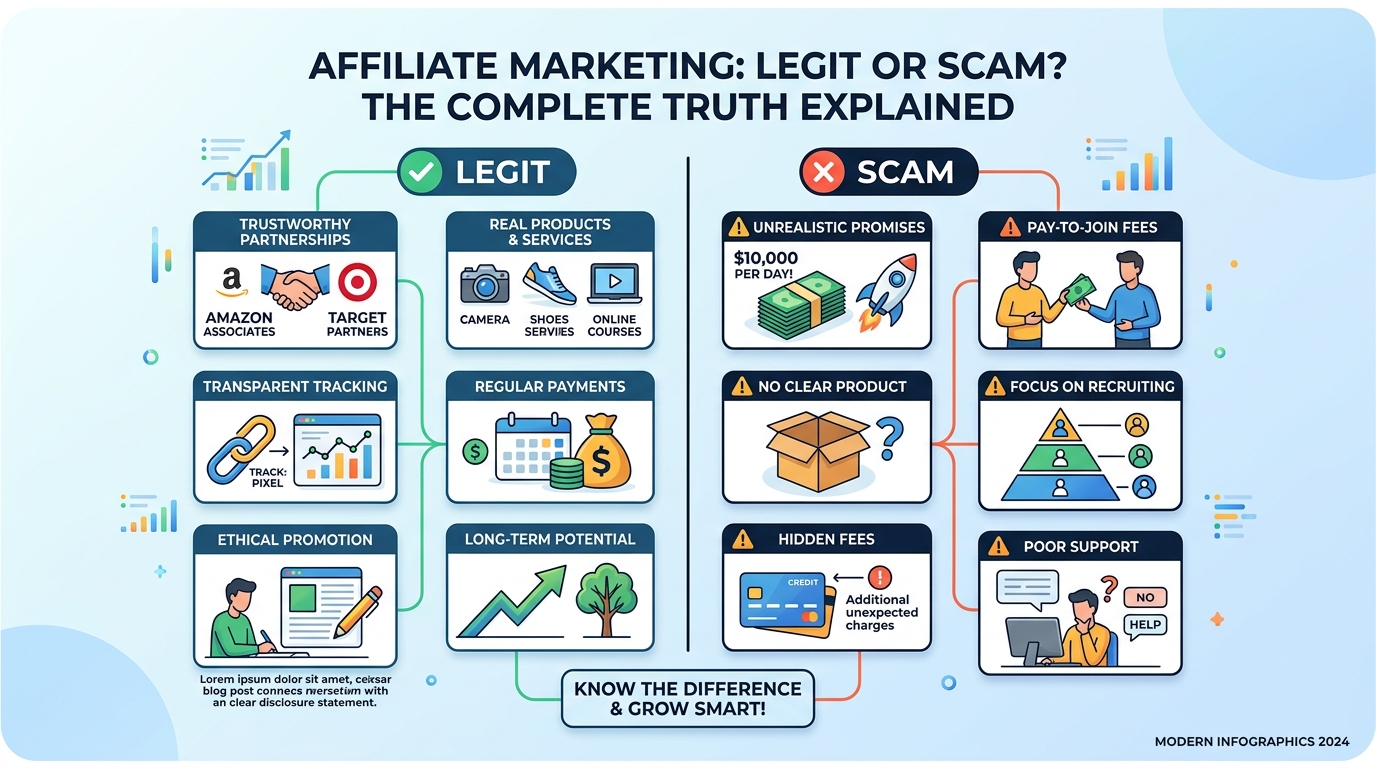
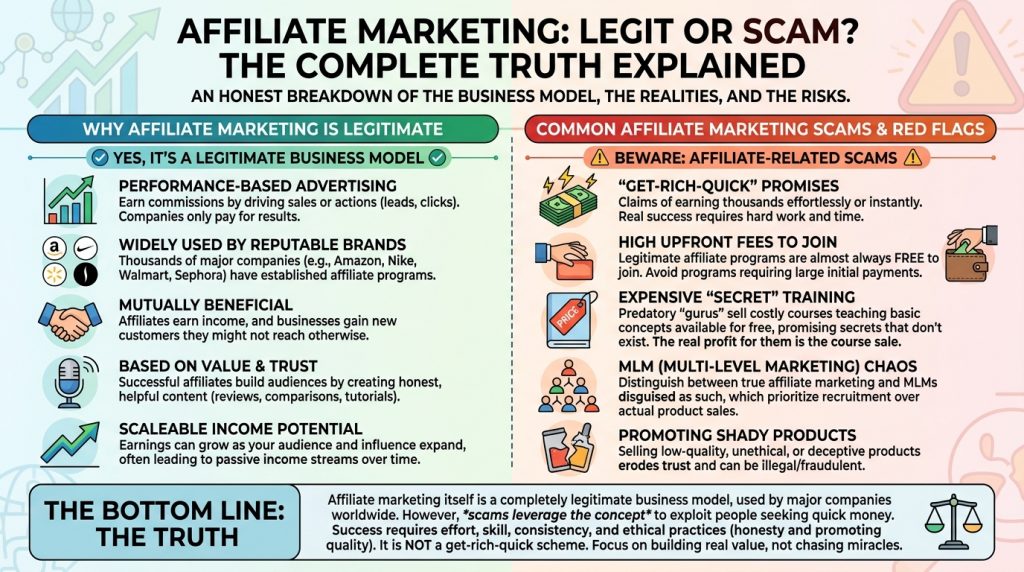
- Get-Rich-Quick Schemes: Beware of programs that promise substantial earnings with minimal effort or unrealistic timelines, often featuring exaggerated income claims and testimonials that seem too good to be true. Legitimate affiliate marketing requires work and dedication.
- Pay-to-Join Programs: Most legitimate affiliate programs are free to join. If a program requires an upfront fee to participate, it’s a significant red flag for a potential scam. True affiliate sites make money when you successfully promote their products, not by charging you to become a promoter.
- Fake Products or Offers: Scammers may promote “products” or “offers” that do not exist, are of extremely poor quality, or will never be delivered to the customer. This harms the affiliate’s reputation and leads to unpaid commissions.
- Cookie Stuffing (Cookie Dropping): This deceptive practice involves secretly placing multiple tracking cookies in a visitor’s browser without their knowledge or consent, allowing fraudsters to claim credit for sales they didn’t legitimately refer.
- Spoof Traffic and Fake Leads: Scammers use bots or other deceptive methods to generate fraudulent clicks, impressions, or fake leads to inflate traffic metrics and earn undeserved commissions. This leads to brands paying for worthless traffic and legitimate affiliates losing earnings.
- Google Ad Hijacking / URL Hijacking: Fraudsters bid on a company’s trademarked keywords or register similar URLs to redirect organic or paid traffic through their affiliate links, stealing commissions for sales that would have happened anyway.
- Lack of Transparency: Legitimate programs and affiliates prioritize transparency. If a program or marketer is vague about how commissions are earned, the product details, or regulatory compliance (like FTC disclosures), proceed with caution.
- Unpaid Commissions: Affiliates can also be victims of scams, where merchants refuse to pay commissions for legitimate sales or deliberately manipulate tracking to avoid payouts.
To protect yourself, always research programs thoroughly, verify company legitimacy, read reviews, and prioritize transparency and ethical practices.
| Aspect | Legitimate Affiliate Marketing | Affiliate Marketing Scam |
|---|---|---|
| Cost to Join | Generally free to join programs. | Requires upfront fees or expensive “starter kits.” |
| Income Claims | Realistic potential, requires consistent effort and time. | Promises instant riches, guaranteed high income with no work. |
| Transparency | Clear disclosure of affiliate relationships (FTC compliance). | Hidden links, vague disclosures, deceptive practices. |
| Product Quality | Promotes reputable products/services the affiliate believes in. | Promotes fake, low-quality, or non-existent products. |
| Focus | Providing value to the audience, building trust. | Exploiting loopholes, quick profits at any cost. |
| Traffic Generation | Organic content, paid ads, SEO, social media, email marketing. | Bot traffic, cookie stuffing, URL hijacking, click fraud. |
| Support & Training | Often provides resources, tools, and clear guidelines. | Little to no real support, often outdated or generic training. |
The Benefits of Ethical Affiliate Marketing
When pursued ethically and strategically, affiliate marketing offers numerous advantages for both affiliates and merchants, contributing to its sustained growth and popularity.
- Low Startup Costs and Low Risk: For aspiring entrepreneurs, affiliate marketing presents a low barrier to entry. There’s no need to create your own products, manage inventory, or handle customer service. Most affiliate programs are free to join, making it accessible to almost anyone. This low-risk model allows individuals to start an online business with minimal upfront investment.
- Potential for Passive Income: While not truly passive initially, once content is created and affiliate links are established, they can continue to generate commissions long after publication. This allows affiliates to earn money even when not actively working, contributing to a diversified income stream.
- Flexibility and Freedom: Affiliate marketers can work from anywhere with an internet connection, setting their own hours and choosing the products and niches they are passionate about. This offers significant lifestyle flexibility and autonomy.
- Targeted Traffic and Increased Reach: Affiliates often have established audiences interested in specific niches. By partnering with these affiliates, businesses can reach highly targeted customer segments that might otherwise be difficult or expensive to access. This expands brand awareness and customer acquisition.
- Performance-Based Model: Merchants only pay commissions when a sale or desired action is achieved, making it a highly cost-effective advertising model with a strong return on investment (ROI). Brands using affiliate marketing record an average ROI of $15 for every $1 spent, equating to a 1400% return.
- Enhanced Brand Credibility and Trust: When affiliates genuinely endorse products they believe in, their recommendations carry more weight with their audience than traditional advertising. This third-party endorsement acts as social proof, building trust and credibility for the promoted brand.
These benefits highlight why affiliate marketing remains a powerful and attractive model for generating revenue and scaling businesses in the digital age.
Navigating Challenges and Risks in Affiliate Marketing
While affiliate marketing offers substantial rewards, it also comes with its share of challenges and risks that both affiliates and merchants need to address. Understanding these can help in developing robust strategies and mitigating potential downsides.
- Intense Competition: The low barrier to entry means the affiliate marketing space can be highly competitive. Many affiliates may be promoting similar products, making it challenging to stand out and capture audience attention. Diversifying strategies and focusing on unique value propositions become crucial.
- Affiliate Fraud: As discussed, fraud is a significant concern. Scammers employing tactics like cookie stuffing, fake traffic, and ad hijacking can undermine legitimate efforts and lead to wasted advertising spend for merchants and unfair competition for honest affiliates. Merchants must implement robust fraud detection and prevention tools.
- Tracking and Attribution Issues: Accurate tracking is the backbone of affiliate marketing. Technical glitches, website updates, browser settings, or ad-blockers can lead to missed commissions or misattributed sales, causing frustration and damaging trust between merchants and affiliates.
- Dependency on Merchants: Affiliates are dependent on the products, services, and commission structures offered by merchants. Changes in program terms, product discontinuation, or even merchant unreliability can impact an affiliate’s income.
- Building Trust and Audience: For new affiliates, building a loyal audience and establishing trust takes time and consistent effort. Without a genuine connection with their audience, simply throwing links around is a “shortcut to failure”.
- Staying Updated with Regulations: Affiliate marketing operates under legal and ethical guidelines, such as the FTC’s disclosure requirements in the US. Affiliates must stay informed and comply with these regulations to avoid legal ramifications and maintain credibility.
- Quality Control for Merchants: For brands, ensuring affiliates maintain brand quality and consistency in their promotions can be challenging. Unqualified or unethical partners can misrepresent products or damage brand reputation. Vetting and clear guidelines are essential.
Addressing these challenges proactively, through diligent research, ethical practices, and strategic planning, is vital for long-term success in affiliate marketing.
Building a Successful and Ethical Affiliate Marketing Business
Success in affiliate marketing is not about luck but a combination of strategic planning, hard work, and unwavering commitment to ethical practices. Here’s how to build a thriving and legitimate affiliate marketing business:
- Choose a Niche You Are Passionate About: Select a niche that genuinely interests you and aligns with your expertise or passions. This makes content creation enjoyable and authentic, which resonates with your audience.
- Create Valuable, High-Quality Content: Your primary goal should be to provide immense value to your audience. This means creating informative blog posts, engaging videos, helpful tutorials, or honest product reviews that genuinely assist your audience in making informed decisions. Quality content naturally drives traffic and builds trust.
- Prioritize Transparency and Disclosure: Always disclose your affiliate relationships clearly and prominently. Inform your audience that you may earn a commission from purchases made through your links. This is not only a legal requirement (e.g., FTC guidelines in the US) but also fundamental for building and maintaining trust.
- Promote Products You Genuinely Trust and Use: Only recommend products or services that you have personally used, thoroughly researched, and genuinely believe in. Authenticity is key; promoting products solely for profit without conviction can quickly damage your reputation and audience trust.
- Diversify Your Traffic Sources: Relying on a single traffic source (e.g., SEO, social media) can be risky. Explore multiple channels like search engine optimization (SEO), social media marketing, email marketing, and even paid advertising to reach a broader audience and build a resilient business.
- Continuous Learning and Adaptation: The digital marketing landscape is constantly evolving. Stay updated with industry trends, algorithm changes, and new tools and strategies. Continuous learning is crucial for adapting and staying competitive.
- Build an Email List: An email list provides a direct communication channel with your audience, allowing for consistent engagement and promotion of relevant affiliate offers. It’s a powerful asset for long-term success.
- Engage with Your Audience: Interact with your audience through comments, social media, and email. Building a community fosters loyalty and trust, making your recommendations more impactful.
Conclusion: A Powerful and Legitimate Business Model
Affiliate Marketing is, without a doubt, a legitimate and powerful business model that has transformed the digital economy. It enables individuals to earn income by leveraging their platforms and influence to promote products they genuinely believe in, while providing businesses with a cost-effective, performance-based marketing channel to expand their reach and drive sales. The global market size, significant corporate adoption, and numerous success stories of top earners attest to its validity and immense potential.
However, the existence of fraudulent schemes and unethical practices within the industry has regrettably led to skepticism. It is imperative for anyone venturing into this field to remain vigilant, understand the red flags associated with scams—such as demands for upfront payments, unrealistic income promises, and deceptive marketing tactics—and prioritize ethical conduct. Success in affiliate marketing hinges on transparency, building genuine trust with an audience, creating valuable content, and promoting products that offer real solutions. By adhering to these principles and staying informed about industry best practices and regulatory compliance, individuals can harness the true power of affiliate marketing to build a sustainable, profitable, and genuinely rewarding online business. For further reading on the scale and impact of affiliate marketing globally, consider exploring reliable sources such as Wikipedia’s entry on Affiliate Marketing.