10 Proven Affiliate Marketing Google Strategies to Boost Your Rankings Fast
Table of Contents
- Understanding the Google Algorithm for Affiliate Marketers
- Niche Selection and Keyword Research: The Foundation of Ranking Success
- On-Page SEO Optimization for Affiliate Content
- Technical SEO Essentials for Affiliate Websites
- Building High-Quality Backlinks for Authority and Rankings
- Content Creation that Google Loves and Users Trust
- Monitoring and Adapting: Staying Ahead of Algorithm Updates
- Conclusion
Affiliate marketing is a dynamic and ever-evolving field, where success is intrinsically linked to visibility on search engines, particularly Google. In an increasingly competitive digital landscape, affiliate marketers must implement robust Google strategies to achieve and maintain better rankings. This involves a deep understanding of Google’s algorithms, a commitment to delivering exceptional user experience, and a relentless focus on creating high-quality, trustworthy content. The ultimate goal is not just to attract traffic, but to attract the right traffic – users who are genuinely interested in the products or services being promoted and are more likely to convert into sales.
Recent Google algorithm updates, particularly in 2024 and 2025, have significantly impacted affiliate sites, with many experiencing ranking declines due to low-value or thin content. These updates underscore Google’s unwavering commitment to rewarding “helpful, reliable, people-first content” over content designed solely to manipulate search rankings. Therefore, affiliate marketers must adapt their strategies to align with these evolving standards, prioritizing genuine value and user trust.
Understanding the Google Algorithm for Affiliate Marketers
The Google algorithm is a complex system of ranking signals that determines where a website appears in search results. For affiliate marketers, staying abreast of these signals is paramount. Key recent developments have shifted the focus heavily towards user experience and content quality. Google’s core updates in 2024 and 2025, for instance, integrated the Helpful Content System directly into the main ranking algorithm, meaning that content created primarily for search engines, rather than people, is less likely to rank well.
A critical concept for affiliate marketers to master is E-E-A-T: Experience, Expertise, Authoritativeness, and Trustworthiness. This framework, outlined in Google’s Search Quality Rater Guidelines, is used to evaluate the overall quality and reliability of web content. While not a direct ranking factor in itself, E-E-A-T guides Google’s algorithms and heavily influences how content is perceived and ranked. Affiliate sites that demonstrate strong E-E-A-T signals tend to achieve higher search visibility and conversion rates.
The “Experience” component, added more recently, emphasizes demonstrating real-world usage and personal insights with products, moving beyond generic descriptions. This means showing, not just telling, that you have hands-on experience with what you’re promoting. “Expertise” refers to the knowledge and skill of the content creator in the given topic, while “Authoritativeness” relates to the site’s overall reputation and recognition in its niche. “Trustworthiness” is perhaps the most crucial element, encompassing transparency (e.g., clear affiliate disclosures), accuracy of information, and a secure website. Google’s site reputation abuse policy, updated in March 2024, further reinforces this, penalizing websites that host third-party content with little oversight solely to manipulate search rankings.
Niche Selection and Keyword Research: The Foundation of Ranking Success
Effective affiliate marketing begins with strategic niche selection and thorough keyword research. Choosing a profitable niche with genuine demand and manageable competition is the first step. Once a niche is identified, comprehensive keyword research becomes the bedrock of any successful SEO strategy. This involves identifying the specific search terms your target audience uses to find information, products, or solutions related to your niche.
Affiliate marketers should focus on a mix of short-tail and long-tail keywords. While short-tail keywords often have high search volume, they are also highly competitive. Long-tail keywords, typically phrases of three to six words, are more specific, have lower search volume, but also less competition, making them easier to rank for and often leading to higher conversion rates due to clear user intent. Tools like Google Keyword Planner, Ahrefs, SEMrush, and Ubersuggest are invaluable for this process, helping to uncover keywords with good search volume and relatively low difficulty.
Understanding user intent behind keywords is crucial. Keywords can indicate various stages of the buying journey: informational (e.g., “how to choose a gaming laptop”), navigational (e.g., “Amazon best gaming laptops”), commercial investigation (e.g., “gaming laptop reviews 2026”), or transactional (e.g., “buy gaming laptop online”). Matching your content format to the search intent is one of the fastest ways to improve rankings and click-through rates. For instance, a user searching for “best [product] reviews” is likely looking for comparison articles or in-depth analyses.
On-Page SEO Optimization for Affiliate Content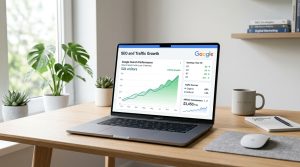
On-page SEO involves optimizing individual web pages to rank higher and earn more relevant traffic in search results. For affiliate marketers, this means ensuring that every piece of content is meticulously optimized for both search engines and users.
- Title Tags and Meta Descriptions: Craft compelling and keyword-rich title tags and meta descriptions that accurately summarize the content and entice users to click. These act as your “shop window” in the SERPs.
- URL Structure: Use short, descriptive URLs that include your target keywords, improving readability and SEO.
- Header Tags (H1, H2, H3): Organize your content logically with structured headers. The H1 should contain the primary keyword, and subsequent H2s and H3s should break down the content into digestible sections, enhancing readability and SEO.
- Content Quality and Readability: Create original, high-quality, and useful content that genuinely helps people. This means avoiding thin content, copied product descriptions, or content primarily designed to manipulate rankings. Content should be well-organized, easy to read, and free of spelling or stylistic issues. Incorporating supporting visuals like images, videos, or infographics can enhance engagement and make content more appealing.
- Image Optimization: Use relevant file names and alt text for images to boost search visibility. Compress images to improve page load speed.
- Affiliate Link Placement and Disclosure: Integrate affiliate links naturally within your content, using descriptive and relevant anchor text. It is crucial to clearly disclose affiliate relationships to maintain transparency and comply with regulations, avoiding potential penalties and loss of reader trust.
- Internal Linking: Strategically link to other relevant pages within your own website. This helps Google crawlers discover new content, strengthens topical authority, and keeps users engaged on your site.
Technical SEO Essentials for Affiliate Websites
Beyond content, a strong technical foundation is essential for affiliate websites to rank well. Technical SEO ensures that search engines can efficiently crawl, index, and understand your site, while also providing a seamless user experience.
Here’s a breakdown of critical technical SEO elements:
| Technical SEO Element | Importance for Affiliate Marketing | Actionable Steps |
|---|---|---|
| Page Speed (Core Web Vitals) | Google prioritizes fast-loading pages for both ranking and user experience. Slow sites lead to high bounce rates and lower conversions. Core Web Vitals (LCP, FID, CLS) are key metrics. | Compress images, leverage browser caching, minimize CSS/JavaScript, use a fast hosting provider, and utilize tools like Google PageSpeed Insights to identify and fix issues. |
| Mobile-Friendliness | The majority of users access the web from mobile devices. A responsive design is crucial for catering to a diverse audience and improving user experience and rankings. | Ensure your website has a responsive design that adapts seamlessly to various screen sizes. Test your site’s mobile usability with Google’s Mobile-Friendly Test. |
| HTTPS Security | Google considers HTTPS a ranking factor. Secure browsing builds trust with users and protects their data. | Implement an SSL certificate for your website to ensure all traffic is encrypted. |
| XML Sitemaps | A sitemap helps search engine crawlers understand your site’s structure and discover all your valuable pages, ensuring proper indexing. | Create and regularly update an XML sitemap. Submit it to Google Search Console to help search engines properly index your site. |
| Robots.txt File | This file instructs search engine bots which pages or sections of your site they should or shouldn’t crawl, optimizing crawl budget. | Ensure your robots.txt file is correctly configured to allow important pages to be crawled and to prevent less important pages from wasting crawl budget. |
| Schema Markup (Structured Data) | Structured data helps Google understand the content on your pages, leading to rich results (e.g., star ratings, prices) in SERPs, which can improve visibility and click-through rates. | Implement relevant schema markup (e.g., Product, Review, How-To) for your affiliate content. Use Google’s Rich Results Test tool to validate your implementation. |
| Canonicalization | Affiliate sites often have similar pages (e.g., product comparisons). Canonical tags prevent duplicate content issues by telling Google which version is the preferred one for indexing. | Use canonical tags on pages with similar content to consolidate ranking signals and avoid penalties. |
Building High-Quality Backlinks for Authority and Rankings
Backlinks, or incoming links from other websites, remain one of the most important ranking factors for Google. They act as “votes of confidence” in your site, signaling to search engines that your content is valuable, credible, and authoritative. However, the focus should always be on quality over quantity, as Google penalizes websites for manipulative or low-quality link schemes.
Effective link-building strategies for affiliate marketers include:
- Guest Posting: Offer to write valuable guest posts for other reputable websites in your niche. This allows you to include a link back to your site within relevant content, building authority and driving referral traffic. Ensure you choose sites with a good domain authority and trust flow.
- Creating Linkable Assets: Develop unique, non-commercial content designed specifically to attract links. This could include original research, survey data, free tools (like calculators), or benchmarking studies that other sites would naturally want to cite. These assets can then pass authority to your monetized pages through internal linking.
- Broken Link Building: Find broken links on other websites in your niche and offer your relevant content as a replacement. This provides value to the website owner and earns you a backlink.
- Testimonials and Reviews: Offer to write testimonials for products or services you genuinely use and recommend. Many businesses are happy to feature these on their sites and provide a link back to yours.
- “Help a Reporter Out” (HARO): Monitor platforms like HARO, where journalists seek insights for their stories. By providing valuable information, you can earn high-authority media links from news publications.
- Content Partnerships and Influencer Collaborations: Develop strategic partnerships with other content creators or influencers in your niche. This can involve co-marketing activities, content syndication, or getting included in their content, all of which can lead to valuable backlinks and increased visibility.
Content Creation that Google Loves and Users Trust
At the heart of all Google strategies for better rankings is superior content. Google’s algorithms are increasingly sophisticated at identifying and rewarding content that is truly helpful, reliable, and created for people, not just for search engines. For affiliate marketers, this means moving away from “thin affiliate sites” filled with recycled product descriptions and generic “best X” lists.
Key aspects of content creation that Google loves and users trust include:
- Originality and Depth: Provide original information, reporting, research, or analysis. Don’t just summarize manufacturer specs; offer in-depth reviews, comparisons, how-to guides, and tutorials that showcase products’ benefits and real-world usage. The content should be substantial, complete, and comprehensive, offering insightful analysis beyond the obvious.
- E-E-A-T Signals: As discussed, demonstrating Experience, Expertise, Authoritativeness, and Trustworthiness is crucial. This involves:
- **Showing real-world experience:** Personally test products, share detailed insights, and include original images or videos of products in use.
- **Named, credible authors:** Use author bios that highlight your expertise and experience, especially for YMYL (Your Money or Your Life) topics.
- **Honest comparisons:** Compare products honestly, even noting flaws, to build trust. Biased or overly positive reviews erode trust quickly.
- **Linking to high-authority sources:** Support your claims with links to credible, well-established sources and studies.
- **Transparency:** Clearly disclose affiliate relationships at the beginning of content.
- User Intent Matching: Align content with the specific intent of the user’s search query. If someone is looking for a product review, provide a comprehensive review. If they’re looking for a comparison, offer a detailed comparison table.
- Helpful Content System Compliance: Ensure your content is primarily made to help people, not just to rank in search engines. Avoid producing large amounts of low-value content on many different topics, especially with extensive automation, as Google’s Helpful Content System penalizes such practices.
- Evergreen Content: Focus on creating content that remains relevant and valuable over time, reducing the need for constant updates and providing long-term SEO benefits.
- Regular Updates: Even evergreen content benefits from regular updates to ensure accuracy, freshness, and continued relevance, especially in rapidly changing niches. Verify all information, including product features, prices, and links before publishing.
Monitoring and Adapting: Staying Ahead of Algorithm Updates
The SEO landscape is constantly shifting, with Google frequently rolling out algorithm updates that can significantly impact rankings. Affiliate marketers must adopt a proactive approach to monitoring performance and adapting their strategies. Ignoring these insights puts your site at a disadvantage, as competitors are already using data to outrank you.
Essential tools and practices for monitoring and adaptation include:
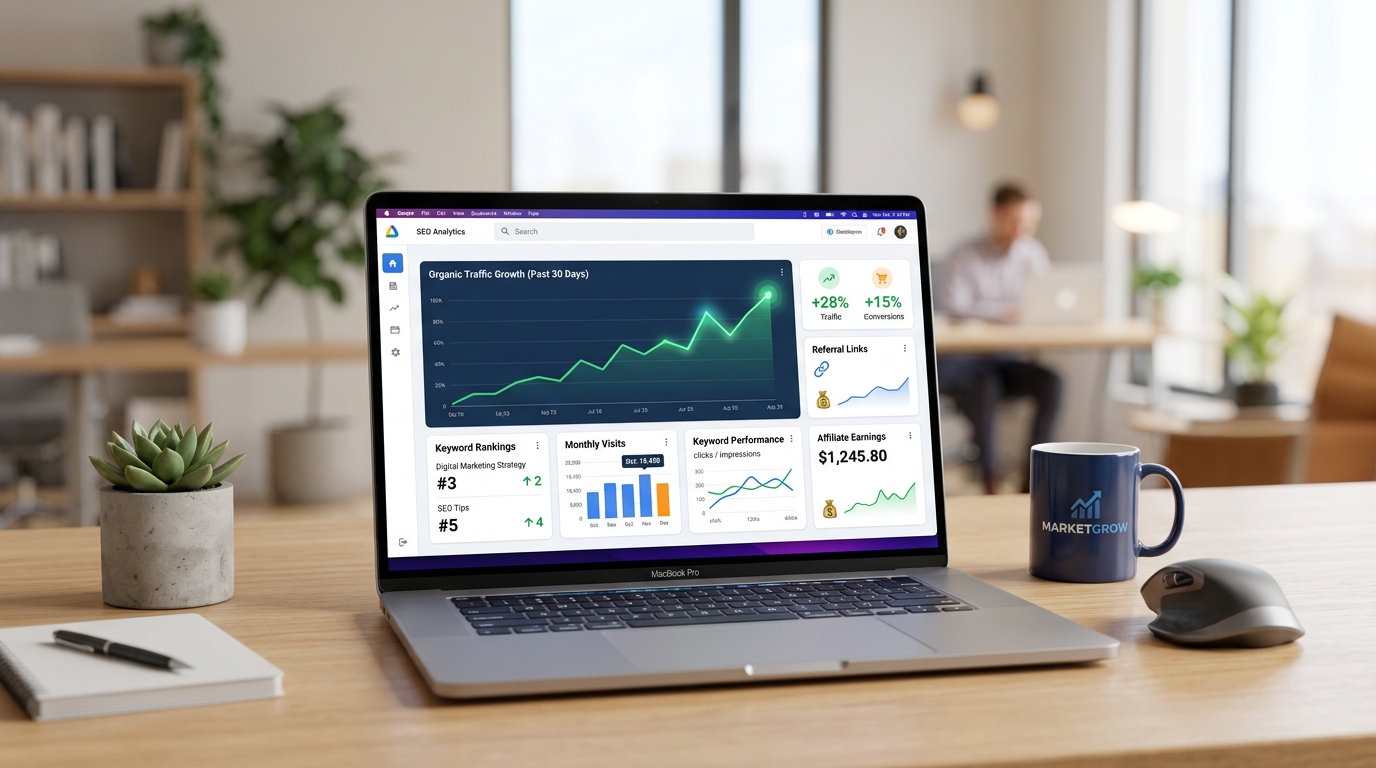
- Google Search Console (GSC): This free tool is indispensable. GSC provides direct communication from Google to site owners, revealing exactly how the search engine views your content. It helps you track important metrics such as:
- Organic Traffic, Impressions, and Clicks: See which queries bring users to your site and analyze your site’s performance.
- Keyword Rankings: Monitor the average position of your keywords in search results.
- Click-Through Rate (CTR): Identify pages ranking well (positions 3-10) with high impressions but low CTR, indicating a need to optimize title tags and meta descriptions.
- Indexing Errors: Identify and fix issues preventing Google from crawling or indexing your pages.
- Core Web Vitals Reports: Monitor your site’s performance on critical user experience metrics.
- Google Analytics (GA4): Integrate GA4 to track user behavior on your site, including bounce rates, time on page, and conversion events. This data helps you understand how users interact with your content and identify areas for improvement.
- SEO Audits: Regularly perform comprehensive SEO audits to identify technical issues, broken links, duplicate content, and opportunities for improvement. Tools like Screaming Frog can assist with site crawls.
- Stay Informed about Algorithm Updates: Keep up-to-date with Google’s major algorithm announcements. Industry publications and SEO experts often provide insights into the nature and impact of these updates. The March 2026 Core Update, for instance, significantly impacted affiliate sites, emphasizing genuine depth, original data, and evident real-world expertise from authors.
- Competitor Analysis: Regularly analyze your competitors’ content and SEO strategies to identify gaps and opportunities. Tools like Ahrefs and SEMrush are excellent for this, allowing you to see what keywords competitors rank for, analyze their backlink profiles, and understand their content strategies.
- Diversify Traffic Sources: While SEO is critical, avoid over-relying solely on Google for traffic. Diversify by exploring other channels like social media marketing, email marketing, or paid advertising to mitigate the impact of algorithm shifts. Engaging in community platforms and forums can also provide additional visibility.
The recent Google I/O 2025 update, with the rollout of AI Mode directly into core search (powered by Gemini 2.5), signals a fundamental shift in how users search, discover, and convert. Google is increasingly becoming the destination, providing answers directly through summaries and AI Overviews, which can fragment traditional traffic flows to websites. This necessitates a focus on creating content that is so valuable and authoritative it gets cited by AI-generated answers, and to be present where conversations are happening, such as forums and social media. To navigate this new landscape, affiliate marketers must focus on building a strong, trustworthy brand presence beyond just blog posts, including About, Contact, and Privacy Policy pages, and encouraging user testimonials. For further insights on adapting to Google’s evolving search landscape, particularly with AI integration, resources like Wikipedia’s comprehensive page on search engine optimization can provide valuable context and historical perspective. Read more about Search Engine Optimization on Wikipedia.
Conclusion
Affiliate marketing in today’s digital environment demands a strategic, user-centric approach to Google SEO. The era of “thin affiliate sites” is over; Google consistently prioritizes high-quality, helpful, and trustworthy content that genuinely benefits users. By meticulously implementing strategies centered around understanding Google’s algorithms, conducting thorough keyword research, optimizing on-page and technical SEO elements, building high-quality backlinks, and creating exceptional content that embodies E-E-A-T principles, affiliate marketers can significantly improve their rankings. Continuous monitoring of performance through tools like Google Search Console and Google Analytics, coupled with a proactive approach to adapting to algorithm updates and evolving search trends (including the rise of AI-driven search), will be crucial for sustainable success. Ultimately, affiliate marketers who focus on building a respected brand and providing authentic value to their audience will not only survive but thrive in the competitive landscape of Google Search.