10 Proven Affiliate Marketing Strategies for Beginners That Convert
Table of Contents
Affiliate marketing strategies for beginners that convert are more accessible and effective than ever, presenting a lucrative pathway for individuals to generate income online. This performance-based marketing model allows affiliates to earn commissions by promoting products or services of other companies, leveraging their unique marketing efforts. Its appeal for beginners lies in the relatively low upfront investment required and the flexibility it offers. As the global affiliate marketing industry continues its substantial expansion, with spending projected to reach $15.7 billion by 2024 and further growth anticipated, understanding and implementing effective strategies is paramount for success.
Understanding the Basics of Affiliate Marketing
At its core, affiliate marketing is a performance-based system where individuals or companies (affiliates) earn a commission for promoting another company’s products or services. The entire process is driven by unique affiliate links that track every click and subsequent action, such as a sale or lead. When a potential customer clicks on an affiliate link, a tracking cookie is typically stored on their browser. If that customer then completes a purchase on the merchant’s website within a specified timeframe, the sale is attributed to the affiliate marketer, who subsequently earns a commission.
The affiliate marketing ecosystem comprises four key players: the merchant (or advertiser), the affiliate (or publisher), the consumer, and the affiliate network. The merchant is the creator of the product or service. The affiliate is the individual or entity that promotes the merchant’s offerings. The consumer is the end-user who makes the purchase, and the affiliate network acts as an intermediary, managing the relationships and tracking sales. There are broadly three types of affiliate marketing strategies. Unattached affiliate marketing involves promoting products without any authority or connection to them. Related affiliate marketing means having some relation to the product, often by using it or having expertise in the niche. Finally, involved affiliate marketing refers to affiliates who are actively engaged and passionate about the products they promote, typically using them personally. For beginners, focusing on the ‘involved’ approach is often the most effective, as it naturally builds trust and authenticity with the audience.
Choosing the Right Niche and Products for Success
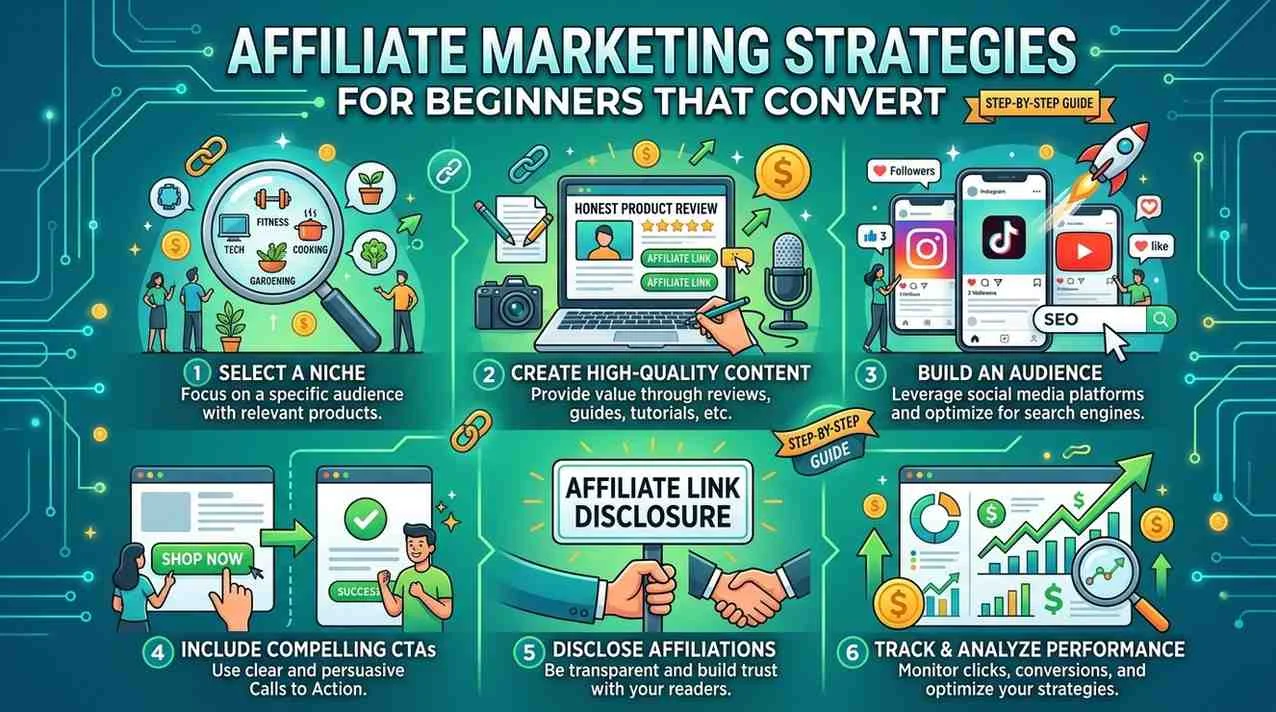
The foundation of a successful affiliate marketing journey lies in selecting the right niche and products. This initial step is critical because it dictates your target audience, content strategy, and ultimately, your earning potential. Rather than broadly tackling a vast subject like “fitness,” it’s more effective to narrow down your focus to a specific segment, such as “home workouts for busy parents” or “meal prep for beginners.” This allows for more targeted content and a clearer audience to serve.
When selecting products, several criteria should guide your decisions. First and foremost, the product must be relevant to your chosen niche and genuinely serve your audience’s needs. Promoting irrelevant products can severely damage your credibility and reduce conversion rates. Secondly, consider the quality and reputation of the product and the brand behind it. Only promote products you trust and would personally recommend. Poor recommendations can erode audience trust, which is difficult to rebuild. Researching customer reviews and the brand’s overall standing is essential.
The commission structure is another crucial factor, but it shouldn’t be the sole determinant. While higher commission rates are appealing, a lower-paying product that perfectly aligns with your audience often converts better than a high-paying one that feels random or out of place. Beginners should also consider products with higher price points or recurring revenue models, such as software subscriptions or information products, as these can yield substantial commissions from fewer sales. The most effective products are those that solve a real problem for your audience.
Once you have identified a niche and potential products, the next step is to join affiliate programs or networks. Popular options for beginners include Amazon Associates due to its vast product catalog and brand recognition, as well as platforms like ClickBank and ShareASale, which offer a diverse range of products and tools. Always review the program’s terms, commission rates, cookie duration, and payment thresholds to ensure they align with your strategy.
Building Your Platform: Where to Host Your Content
Establishing a strong platform is fundamental for any affiliate marketer. This platform serves as your digital storefront, the hub where you connect with your audience and showcase your affiliate offers. For beginners, a range of options exist, each with its own advantages, including blogs or websites, social media channels, and email lists. Organic traffic sources, such as those generated through blogging and social media, are often ideal for beginners due to their minimal investment requirements.
A dedicated blog or website offers the most control and is excellent for building long-term authority and recurring traffic. A well-optimized website, rich with valuable content, can attract organic traffic through search engines, providing a stable stream of potential customers. This platform allows for in-depth reviews, tutorials, and comparison articles, which are highly effective for driving conversions.
Social media platforms like YouTube, Instagram, and TikTok provide powerful avenues for engagement and direct connection with an audience. Video content, in particular, is increasingly popular, making platforms like YouTube and TikTok highly effective for demonstrating products and building a personal brand. Successful social media affiliate marketing hinges on creating native content that resonates with each platform’s algorithm and user base.
Building an email list is another invaluable strategy. It allows for direct communication with your audience, bypassing algorithmic changes and providing a highly engaged channel for sharing exclusive offers and new content. Email marketing consistently demonstrates a high return on investment, making it a critical component for nurturing leads and driving conversions.
Content is King: Crafting High-Converting Content
In affiliate marketing, your content is your primary tool for connecting with your audience and persuading them to act. The focus should always be on providing genuine value rather than merely pushing products. High-quality content builds trust, educates your audience, and guides them towards informed purchasing decisions.
Diversifying your content formats can help you reach a wider audience and cater to different stages of the buyer’s journey. Effective content types include:
- Product Reviews: Detailed assessments that help readers understand a product’s features, benefits, and potential drawbacks, aiding their decision-making process.
- Comparison Guides: Side-by-side analyses of similar products, simplifying complex choices for consumers.
- How-to Tutorials: Step-by-step instructions demonstrating product usage and value, often showcasing practical applications.
- Resource Pages: Curated collections of recommended tools and services, organized for easy reference.
- Buying Guides: Comprehensive overviews that educate readers on selection criteria for a specific product category.
Authenticity and honesty are paramount in all your content. Share your personal experiences with the products you promote, including both their strengths and limitations. This transparency fosters credibility and resonates more deeply with your audience than a purely promotional sales pitch. When possible, provide firsthand testing insights and real-world usage scenarios to demonstrate product value.
Beyond the written word, making your affiliate articles visually appealing can significantly increase conversion rates. Incorporate high-quality photos, graphics, and even comparison tables to break up text and make information easily digestible. Strong, clear calls-to-action (CTAs) are also essential. These should be prominently displayed and use compelling language to encourage clicks. A/B testing different CTA wordings and placements can help optimize their effectiveness.
| Content Type | Primary Goal | Key Elements for Conversion | Best Platform(s) |
|---|---|---|---|
| Product Reviews | Inform & Persuade | Honest pros/cons, personal experience, clear CTAs | Blogs, YouTube, Review Sites |
| Comparison Guides | Aid Decision-Making | Side-by-side analysis, feature breakdown, strong CTAs | Blogs, Niche Websites |
| How-to Tutorials | Educate & Demonstrate | Step-by-step instructions, product in action, relevant links | YouTube, Blogs, Social Media |
| Resource Pages | Provide Value | Curated lists, brief descriptions, organized categories | Blogs, Personal Websites |
| Buying Guides | Guide Purchase | Comprehensive overview, selection criteria, top recommendations | Blogs, E-commerce Support |
Effective Traffic Generation Strategies
Generating targeted traffic is the lifeblood of affiliate marketing. Without visitors to your content, even the most compelling offers won’t convert. Traffic sources can broadly be categorized into organic and paid methods. For beginners, organic strategies are often the most advisable as they require minimal financial investment, though they demand time and consistent effort.
Organic Traffic Strategies:
- Search Engine Optimization (SEO): This is a long-term strategy that involves optimizing your content and website to rank higher in search engine results. Key aspects include thorough keyword research to find high-volume, low-competition terms, creating high-quality, in-depth content that answers user questions, building backlinks from reputable websites, and ensuring your website offers a great user experience (fast loading, mobile-friendly). SEO takes time, but once established, it provides compounding, consistent traffic.
- Social Media Marketing: Platforms like Facebook, Instagram, YouTube, and TikTok offer immense reach. The key is to engage with potential customers, grow your brand, and drive traffic by creating native content that fits each platform’s unique algorithm and audience preferences. Consistent interaction and valuable content can significantly enhance your affiliate efforts.
- Content Marketing: This encompasses creating and distributing valuable, relevant, and consistent content across various channels beyond just your primary blog. This includes blog posts, articles, videos, guest posting on other niche blogs, and even appearing on podcasts. Guest blogging, for example, can expose you to new audiences and build authority.
- Email Marketing: Building an email list allows for direct engagement with your audience. Nurture your subscribers with valuable content, tips, stories, and exclusive offers. Email campaigns often yield high open and conversion rates because you’re communicating with an already interested and opted-in audience.
Paid Traffic Strategies:
While organic methods are excellent for long-term growth and budget-conscious beginners, paid advertising can offer quicker results if managed carefully.
- Pay-Per-Click (PPC) Advertising: Platforms like Google Ads, Facebook Ads, and Bing Ads allow you to place your affiliate offers in front of people actively searching for related products or services, or targeted demographics. PPC requires careful budgeting and continuous optimization to ensure profitability, balancing ad costs with commission received.
Diversifying your traffic sources is crucial for sustainable success, as it reduces dependency on a single platform and can lead to a higher overall ROI.
Optimizing for Conversions and Tracking Performance
Driving traffic to your affiliate offers is only half the battle; the other, equally critical half is converting that traffic into sales. Conversion Rate Optimization (CRO) is about maximizing the percentage of visitors who complete a desired action, such as making a purchase or signing up for a trial. Even small improvements in conversion rates can significantly increase your revenue without needing to generate more traffic.
One of the most effective CRO techniques is A/B split testing. This involves creating two versions of a webpage or element (e.g., a call-to-action button, headline, product image, or even the layout of a product comparison table) and testing which one performs better with your audience. Continuous testing and iteration based on data are key to identifying what resonates most with your visitors. Small changes, like the color of a CTA button or the phrasing of a headline, can sometimes lead to substantial improvements in conversions.
To make it easier for customers to convert, ensure your content includes:
- Clear Calls-to-Action (CTAs): Your affiliate links and buttons should be prominent and easy to find, using compelling language that motivates clicks.
- Real-Life Demos: Especially for product reviews, showing the product in use or providing video demonstrations can increase buyer confidence.
- Exclusive Deals or Discounts: Offering special promotions can create urgency and an incentive for immediate purchase.
- High-Quality Product Landing Pages: Ensure that the merchant’s landing page, where your affiliate link directs users, is trustworthy, clear, and provides a seamless user experience. A poor landing page can negate all your efforts.
Effective tracking and analytics are indispensable for optimizing performance. You need to understand key metrics such as your affiliate conversion rate (number of conversions divided by unique clicks), earnings per click (EPC), click-through rate (CTR), and average order value (AOV). Different affiliate programs may use various attribution models (e.g., last-click, first-click, multi-touch) to assign credit for a sale, so understanding these is important. Regularly monitor your performance data, analyze what’s working and what isn’t, and be prepared to adapt your strategies based on these insights. This continuous process of monitoring, analyzing, and optimizing is what separates successful affiliate marketers from those who struggle.
Ethical Considerations and Building Trust
In the world of affiliate marketing, building and maintaining trust with your audience is paramount for long-term success. Ethical practices are not just good for reputation; they are often legal requirements. As an affiliate, your credibility is your most valuable asset.
The most critical ethical principle is transparency. You must clearly and prominently disclose your affiliate relationships to your audience. This means explicitly stating when a link is an affiliate link and that you may earn a commission from purchases made through it. Regulatory bodies like the Federal Trade Commission (FTC) in the US require such disclosures. These disclosures should not be hidden in fine print or at the bottom of a page, but rather placed clearly and conspicuously, for example, at the beginning of a blog post or video.
Beyond disclosure, affiliates should only promote products they genuinely believe in and, ideally, have personal experience with. Recommending products solely for profit, without proper vetting or personal use, can quickly erode audience trust. Providing balanced reviews, highlighting both the pros and cons of a product, further establishes authenticity and offers genuine value to your audience.
It is also crucial to avoid misleading or deceptive marketing practices. This includes making false claims, exaggerating product benefits, writing fake reviews, or engaging in spamming tactics like sending unsolicited emails. Such practices are not only unethical but can also lead to legal repercussions and significantly harm your brand’s reputation and that of the merchant. Affiliate messaging should always align with the brand’s official statements to prevent any misrepresentation.
Finally, affiliates must respect data privacy and comply with relevant regulations such as the General Data Protection Regulation (GDPR) and the California Consumer Privacy Act (CCPA). This involves clearly communicating how user data is collected and used, obtaining consent for tracking, and ensuring the secure handling of consumer information. Prioritizing audience value over commissions, maintaining consistency across promotions, and understanding compliance guidelines are fundamental to ethical affiliate marketing. A commitment to these ethical guidelines fosters a lasting relationship with your audience and attracts better long-term opportunities in the affiliate marketing landscape. For more information on ethical guidelines and legal requirements in digital marketing, a reliable resource can be found on Wikipedia’s page on Digital Marketing.
Conclusion
Affiliate marketing offers an exciting and accessible path for beginners to earn income online, but success is not accidental. It demands a strategic approach, consistent effort, and unwavering commitment to ethical practices. By starting with a deep understanding of the basics, meticulously choosing a niche and relevant products, building a robust platform, and crafting genuinely valuable content, you lay a solid foundation for growth. Leveraging effective traffic generation strategies—whether organic or paid—and diligently optimizing for conversions will propel your efforts forward. Above all, remember that trust is the currency of affiliate marketing. Prioritizing transparency, authenticity, and ethical conduct in every interaction will not only ensure compliance but also foster a loyal audience, leading to sustainable and converting affiliate marketing success.