Beginners Guide: 12 Proven Affiliate Marketing Process Steps for Amazing Results
Table of Contents
Affiliate marketing is a performance-based online marketing strategy Beginners where individuals or businesses, known as affiliates, earn a commission for promoting another company’s products or services. This process involves the affiliate sharing an ad or link on their chosen platform, such as a website or social media channel. When a customer clicks on this unique affiliate link and completes a desired action, like making a purchase, the conversion is tracked, and the affiliate receives a commission. It’s a powerful way to generate passive income and build a sustainable online business, especially for beginners.
What is Affiliate Marketing?
Affiliate marketing essentially involves three main parties: the merchant (or advertiser), the affiliate (or publisher), and the consumer. The merchant is the company that creates the product or service. The affiliate is the individual or entity that promotes the merchant’s offerings, often through various digital channels. The consumer is the end-user who purchases the product or service through the affiliate’s referral. The core of affiliate marketing relies on unique tracking links provided by the merchant or an affiliate network, which allow for accurate attribution of sales and commission payments to the correct affiliate.
This marketing model is distinct because affiliates are typically paid only when a specific action, usually a sale, is made, making it a low-risk advertising method for businesses. The affiliate acts as an intermediary, bridging the gap between potential customers and products they might be interested in, without needing to handle inventory, customer service, or product development themselves. This makes it an attractive venture for those looking to enter the e-commerce space with minimal upfront investment.
Why Affiliate Marketing is Ideal for Beginners
For individuals just starting in the online business world, affiliate marketing presents several compelling advantages:
- Low Start-Up Costs: Unlike traditional businesses or even other online ventures that require significant capital for product creation, inventory, or extensive advertising, affiliate marketing can be started with very little money. You don’t need to develop your own products, nor do you need to manage stock or shipping.
- Low Risk: Since you’re not investing in product development or holding inventory, the financial risk is significantly reduced. You only earn when you successfully drive sales or desired actions, meaning businesses only pay for performance, which translates to a low-risk model for affiliates as well.
- Flexibility and Freedom: Affiliate marketing offers immense flexibility. You can work from anywhere with an internet connection, set your own hours, and promote products that genuinely interest you. This freedom allows you to scale your efforts around your existing commitments.
- No Customer Service: One of the biggest advantages is that affiliates typically don’t deal with customer service, shipping, or returns. These responsibilities remain with the merchant, allowing you to focus purely on marketing.
- Diverse Earning Potential: The affiliate marketing industry is robust and growing, with estimates valuing it at approximately $17 billion and projected to reach $27.78 billion by 2027. This signifies a large and expanding market with ample opportunities across various niches.
- Scalability: Once you establish a successful strategy for one product or niche, you can replicate and expand it to promote multiple products or explore new niches, thereby scaling your income potential.

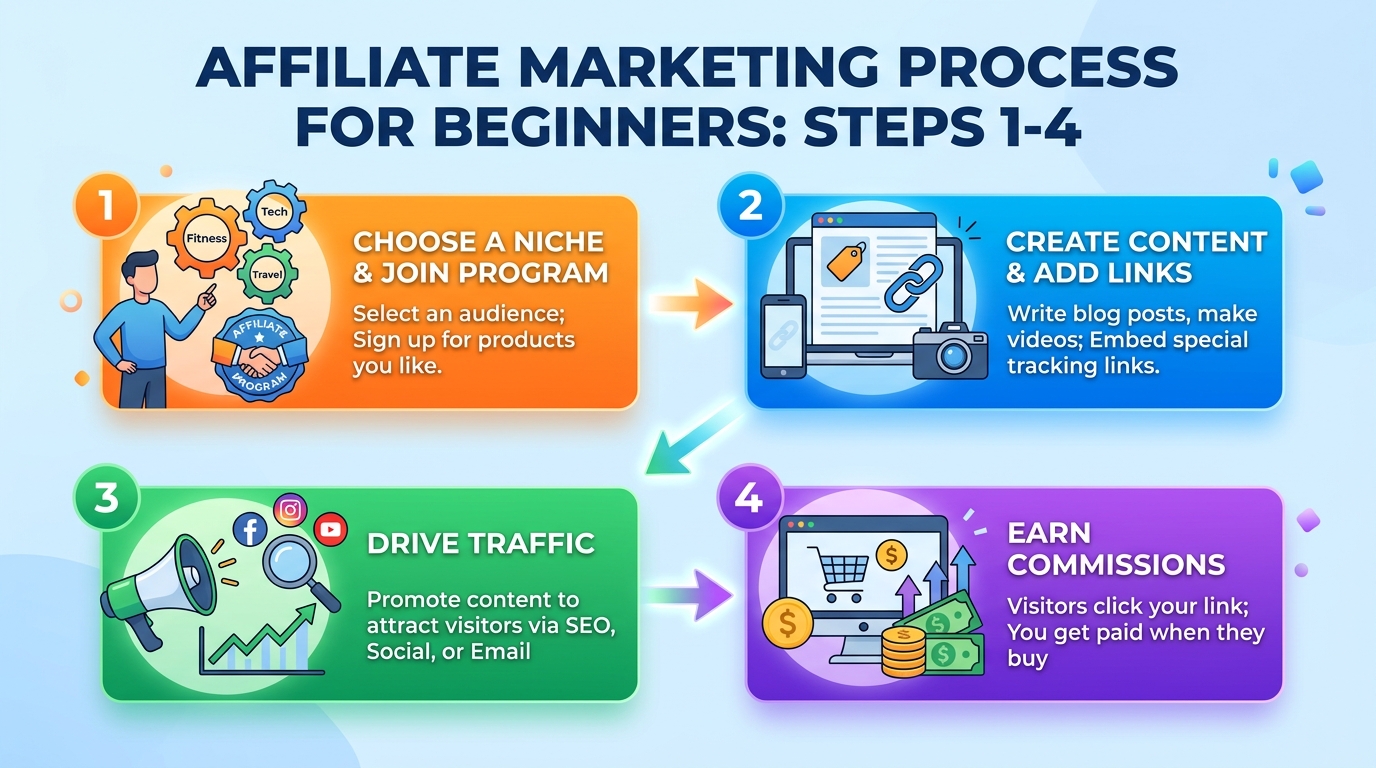
Step 1: Niche Selection and Audience Identification
The very first and arguably most critical step in your affiliate marketing journey is choosing a profitable niche and understanding your target audience. A niche is a specific segment of a larger market that you aim to serve. Rather than trying to appeal to everyone, focusing on a niche allows you to target a clearly defined audience, which can lead to better conversion rates and easier establishment of authority.
To identify the right niche, consider the following:
- Your Interests and Expertise: Start with topics you are genuinely passionate about or have significant knowledge in. Your enthusiasm will make content creation more enjoyable and help you build authenticity and credibility with your audience. If you don’t know much about a particular industry, it might be harder to sell within it.
- Market Demand and Profitability: Research whether there’s an active audience and demand for products within your chosen niche. Use tools like Google Keyword Planner and Google Trends to identify popular search terms, analyze trends, and gauge interest levels. Look for niches with high commission rates, recurring revenue opportunities, and products that balance high demand with attractive profit margins. An “evergreen niche,” which addresses problems that will always be important to people (like health and wellness, personal finance, or home improvement), offers long-term relevance regardless of passing trends.
- Competition Analysis: Evaluate the competition. While some competition indicates a healthy market, excessive competition can make it challenging for newcomers to rank and establish themselves. Look for underserved areas or specific sub-categories within broader niches where you can offer unique value and stand out.
- Monetization Potential: Ensure that there are existing affiliate programs within your niche that offer competitive commission structures and products you’d be happy to promote.
Step 2: Researching and Choosing the Right Affiliate Programs
Once you’ve selected your niche, the next step is to find and join affiliate programs or networks that align with your chosen products and target audience. These programs are the gateway to accessing affiliate links and earning commissions. When choosing, consider factors such as commission rates, cookie duration, payment terms, and the reputation of the merchant.
Affiliate programs can be broadly categorized:
- Individual Merchant Programs: Many companies, especially larger ones like Amazon, run their own in-house affiliate programs. Amazon Associates, for instance, is often recommended for beginners due to its ease of use, wide product selection, and trusted brand name.
- Affiliate Networks: These platforms act as intermediaries between merchants and affiliates, hosting numerous programs under one umbrella. They provide a marketplace where you can browse various products and services across different niches. Popular networks include ClickBank (best for digital products), Awin, ShareASale, CJ Affiliate (Commission Junction), Rakuten Advertising, and Impact. These networks often offer tools for tracking performance and processing payments.
When evaluating programs, prioritize those that offer products you genuinely believe in and would recommend to your audience. Promoting low-quality products solely for high commissions can damage your reputation and audience trust. Also, check the commission structure (percentage or fixed fee), cookie duration (how long a customer’s click is tracked), and payment thresholds. Many beginner-friendly programs, such as Amazon Associates, have streamlined sign-up processes and extensive resources to help new affiliates get started.
Step 3: Creating Engaging and Valuable Content
At the heart of successful affiliate marketing is high-quality, valuable content that resonates with your target audience. Your content should aim to solve problems, answer questions, or entertain, naturally integrating affiliate product recommendations rather than simply pushing sales. Content creation not only helps in engaging your audience but also plays a crucial role in improving your search engine rankings and increasing your approval rates for affiliate programs.
Here are key aspects of effective content creation for affiliate marketing:
- Understand Your Audience’s Needs: Effective affiliate content addresses specific audience needs, questions, and pain points. Research what your audience is searching for and tailor your content to provide solutions, with affiliate products presented as the best answer.
- Diversify Content Formats: The most successful affiliate marketers use a strategic mix of content formats to cater to different audience preferences and stages of the buyer journey. Common and effective types include:
- Product Reviews: Detailed, honest assessments of products, including pros and cons, help readers make informed decisions. Transparency builds credibility.
- Comparison Guides: Side-by-side analyses of similar products simplify choice for consumers by highlighting features, pricing, and performance.
- “How-To” Tutorials and Guides: These demonstrate how affiliate products solve specific challenges or can be used, adding significant value and engagement.
- Resource Pages: Curated lists of recommended tools, products, or services that your audience might find useful.
- Buying Guides: Comprehensive articles that help consumers navigate a product category and choose the best option for their needs.
- Videos: Platforms like YouTube are excellent for product reviews, tutorials, and demonstrations, allowing you to include compelling calls-to-action that link to your affiliate products.
- Blog Posts: Informative articles that incorporate affiliate links naturally and provide value to the reader.
- Prioritize Helpfulness and Authenticity: Focus on solving problems and answering questions. Affiliate links should enhance the content, not solely drive it. Share honest assessments, including both strengths and limitations of products, as readers value transparency.
- Optimize for Search Engines (SEO): Structure your content with clear headings, incorporate relevant keywords naturally, and answer specific questions to improve discoverability. This helps your content rank higher in search results, driving organic traffic.
Step 4: Driving Targeted Traffic to Your Affiliate Offers
Even the best content won’t generate commissions if no one sees it. Generating consistent, high-quality traffic to your affiliate offers is paramount. “Traffic is the lifeblood of any online business,” and choosing the right traffic sources is just as important as getting traffic itself. Traffic sources can be broadly classified into organic (unpaid) and paid methods.
Organic Traffic Sources (Free Methods):
- Search Engine Optimization (SEO): Optimizing your website and content for search engines helps you rank higher in search results, driving free, targeted traffic. This involves using buyer-intent keywords, creating high-quality, valuable content, and earning backlinks from reputable sites. While SEO can be time-consuming, it offers long-term, high-quality traffic.
- Social Media Marketing: Platforms like Facebook, Instagram, TikTok, and YouTube are excellent for building an audience and driving traffic. You can post engaging content, share product reviews, tutorials, and include your affiliate links. Consistency and engagement with your audience are key.
- Email Marketing: Building an email list allows you to directly communicate with interested subscribers, offering valuable content and promoting affiliate products. This is a highly effective way to nurture leads and drive conversions over time.
- Guest Blogging: Writing high-quality articles for other established blogs in your niche can expose your content to a new audience and earn valuable backlinks to your site, boosting your authority and traffic.
- Online Communities and Forums: Engaging in relevant niche communities on platforms like Reddit or Quora, and providing genuine value and expertise (without spamming links), can naturally attract interested individuals to your content.
Paid Traffic Sources:
Paid advertising can accelerate your traffic generation efforts, especially for testing offers and reaching cold audiences quickly. However, it requires careful management to ensure profitability.
- Pay-Per-Click (PPC) Advertising: Platforms like Google Ads and Bing Ads allow you to bid on keywords and display your ads to users actively searching for related products or information. PPC can be highly targeted and effective for driving buyer-intent traffic.
- Social Media Advertising: Platforms like Facebook, Instagram, and YouTube offer powerful advertising tools to target specific demographics and interests, reaching a broad audience with your affiliate offers.
- Display Ads and Native Advertising: These involve placing banners or other ad formats on websites and apps to generate awareness and clicks.
It’s crucial to balance the cost of paid advertisements with the commission you receive per sale to ensure profitability. For beginners, starting with organic methods is often recommended due to minimal investment, and then layering in paid sources as you scale.
| Traffic Source Category | Examples | Pros for Affiliate Marketing | Cons for Affiliate Marketing |
|---|---|---|---|
| Organic Traffic | SEO (Blog Posts, Articles), Social Media (Facebook, Instagram, YouTube), Email Marketing, Guest Blogging, Online Forums | Cost-effective (free), Builds long-term authority & trust, Sustainable over time, High-quality, engaged audience | Requires significant time & effort, Slower to show results, Algorithms can change, Requires consistent content creation |
| Paid Traffic | PPC (Google Ads, Bing Ads), Social Media Ads (Facebook Ads, Instagram Ads), Display Ads | Fast results, Highly targeted audience reach, Scalable, Can quickly test offers | Requires upfront investment, Can be costly if not optimized, Higher risk of losing money, Needs careful monitoring for ROI |

Step 5: Optimizing for Conversions
Driving traffic is only half the battle; the other half is converting that traffic into sales or desired actions. Conversion rate is a critical KPI (Key Performance Indicator) in affiliate marketing, measuring the percentage of visitors who complete a target action after clicking an affiliate link. A higher conversion rate means more commissions from the same amount of traffic.
Here are strategies to optimize your conversion rates:
- Build Trust and Credibility: Consumers are more likely to purchase from brands or individuals they trust. Be transparent about your affiliate partnerships, provide honest assessments (including pros and cons), and only recommend products you genuinely use or believe in. A well-branded website that looks aesthetically pleasing and professional can also enhance trust.
- Focus on Solving Problems: Structure your content around your audience’s needs and show how affiliate products offer practical solutions to their problems. Instead of being overly “salesy,” focus on being helpful.
- Clear Calls-to-Action (CTAs): Make it easy for visitors to take the next step. Your CTAs should be prominent, clear, and compelling, guiding users towards the affiliate link or desired action.
- Optimize Landing Pages: If you’re directing traffic to your own landing pages before sending them to the merchant, ensure these pages are optimized for a single goal (e.g., signing up for an email list or clicking an affiliate link). They should have minimal text and a clear CTA. Customizing landing pages for specific referral partners can also significantly increase conversions.
- Leverage Social Proof: Incorporate testimonials, reviews, and case studies into your content to demonstrate the product’s effectiveness and build confidence in potential buyers. People are influenced by others’ views and often research reviews before buying.
- Utilize Scarcity and Urgency: Limited-time offers, discounts, or coupon codes can create a sense of urgency and encourage immediate purchases, boosting conversion rates.
- A/B Testing: Continuously test different elements of your content and landing pages, such as headlines, CTAs, images, and copy, to see what performs best. Collect and analyze data to understand what’s working and what isn’t.
Step 6: Tracking Performance and Scaling Your Efforts
To truly succeed in affiliate marketing, it’s essential to track your performance diligently, analyze the data, and use those insights to optimize and scale your efforts. Affiliate tracking refers to the process of recording and analyzing data related to affiliate marketing activities, monitoring key metrics like clicks, conversions, and sales.
Key metrics and what they tell you:
- Clicks: The number of times users click on your affiliate links. This indicates initial interest and the effectiveness of your content in driving traffic.
- Click-Through Rate (CTR): The percentage of people who click on your links after seeing your content (clicks / impressions). A high CTR indicates compelling content and CTAs. A baseline CTR for affiliate links is around 0.5%, with anything above 1% being exceptional.
- Conversions/Sales: The number of times a desired action (like a purchase) is completed through your links. This is the ultimate goal of most affiliate campaigns.
- Conversion Rate (CR): The percentage of visitors who complete a target action after clicking an affiliate link. This directly reflects how well your marketing channels are performing. Average conversion rates typically range between 1% and 3%, but top affiliates can exceed 5%.
- Earnings Per Click (EPC): How much you’re earning on average for each click. This helps you understand your audience’s motivation to buy and the quality of the traffic you send.
- Average Order Value (AOV): The average amount spent per transaction. A higher AOV can significantly increase your revenue without needing more traffic.
- Return on Ad Spend (ROAS): For paid campaigns, ROAS measures the revenue generated per dollar spent on advertising. A high ROAS indicates efficient and profitable campaigns.
Many affiliate programs and networks provide dashboards with these metrics. Additionally, tools like Google Analytics can offer deeper insights into user behavior on your own platform. By regularly monitoring these KPIs, you can identify what’s working, what’s not, and where to optimize. This data-driven approach allows you to double down on winning strategies, improve underperforming campaigns, and scale your overall affiliate marketing business.
Common Pitfalls and How to Avoid Them
While affiliate marketing offers significant opportunities, beginners often make common mistakes that can hinder their progress:
- Not Having a Plan: Many new affiliates jump in without a clear strategy for acquiring affiliates or promoting products. Develop a detailed plan including your niche, content strategy, traffic generation methods, and chosen affiliate programs.
- Giving Up Too Soon: Affiliate marketing takes time and consistent effort to build a profitable business. Don’t expect instant riches. Most affiliate marketers see their first meaningful income within 6-12 months of consistent effort. Patience and persistence are crucial.
- Promoting Too Many Products at Once: Spreading your efforts too thin across numerous unrelated products can dilute your message and confuse your audience. Focus on one or two high-quality products you truly understand and promote them consistently to build trust.
- Choosing the Wrong Niche: Selecting a niche without sufficient demand, profitability, or one that’s too competitive can lead to wasted effort. Thorough niche research (as discussed in Step 1) is vital.
- Promoting Low-Quality Products Just for Money: Recommending products you don’t believe in or haven’t researched will quickly erode your audience’s trust and damage your reputation. Always prioritize honesty and value.
- Creating “Salesy” Content: People dislike being overtly sold to. Focus on creating helpful, informative, and engaging content that naturally integrates product recommendations as solutions to problems.
- Ignoring SEO: Relying solely on social media or paid ads without an SEO strategy can limit your long-term organic traffic potential. Invest time in keyword research and optimizing your content for search engines.
- Not Tracking Performance: Without monitoring key metrics, you won’t know what’s working or what needs improvement. Regularly analyze your clicks, conversions, and earnings to make data-driven decisions.
- Not Disclosing Affiliate Links: Transparency is not just ethical; it’s often a legal requirement. Always disclose that you may earn a commission from links in your content.
Conclusion: Your Journey to Affiliate Marketing Success
Affiliate marketing offers a viable and rewarding path for beginners to enter the world of online entrepreneurship. By understanding the core principles and diligently following a structured, step-by-step process, you can build a sustainable income stream and establish yourself as a trusted resource in your chosen niche. The journey begins with careful niche selection and audience identification, progresses through researching reputable affiliate programs, and hinges on creating truly valuable and engaging content. Driving targeted traffic through a mix of organic and paid strategies, coupled with continuous optimization for conversions, forms the engine of your affiliate business. Finally, consistent tracking, analysis, and learning from common mistakes are what will pave your way to long-term success. While it requires patience, dedication, and a commitment to providing value, the benefits of flexibility, low risk, and significant earning potential make affiliate marketing an incredibly attractive venture for anyone ready to start their online business journey. For more insights into the broader landscape of digital marketing, including various strategies and their effectiveness, you can refer to the comprehensive resource on Wikipedia’s definition of digital marketing.