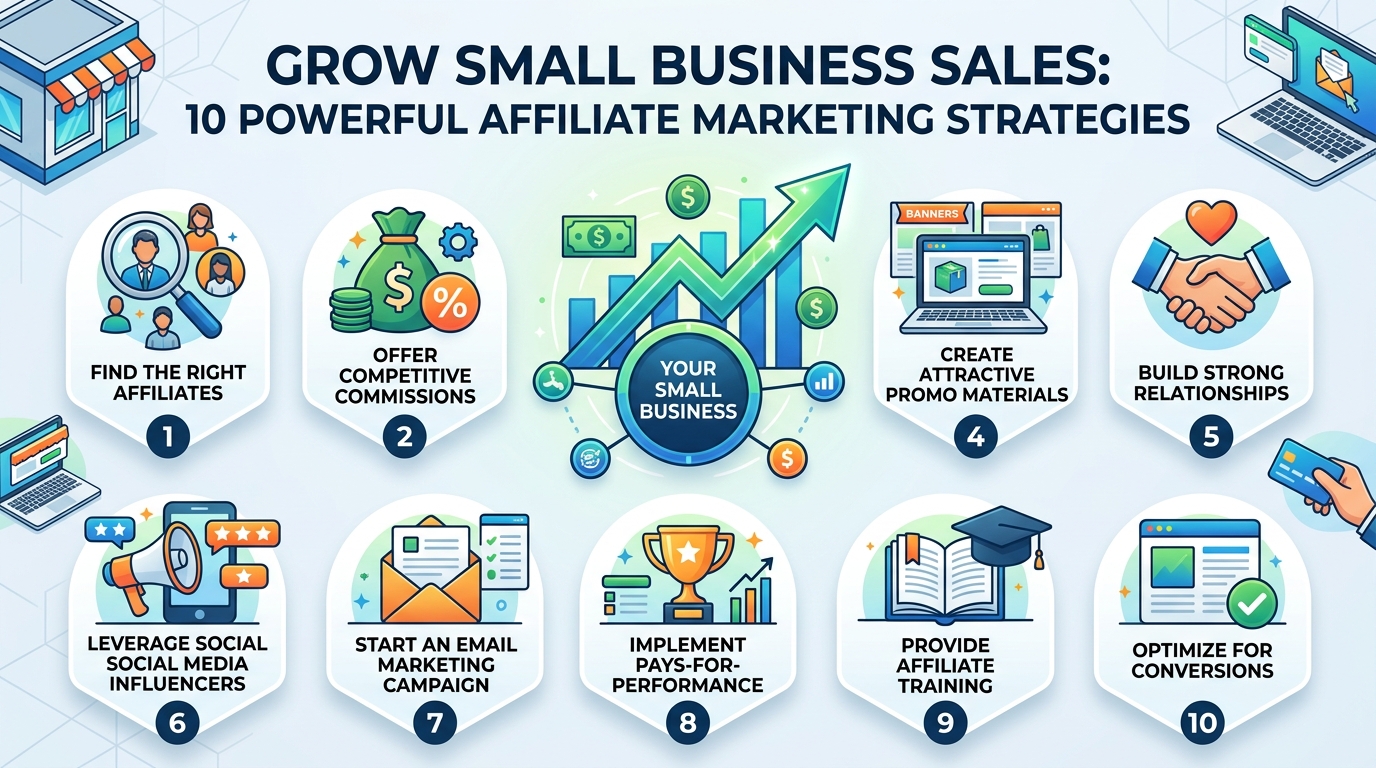
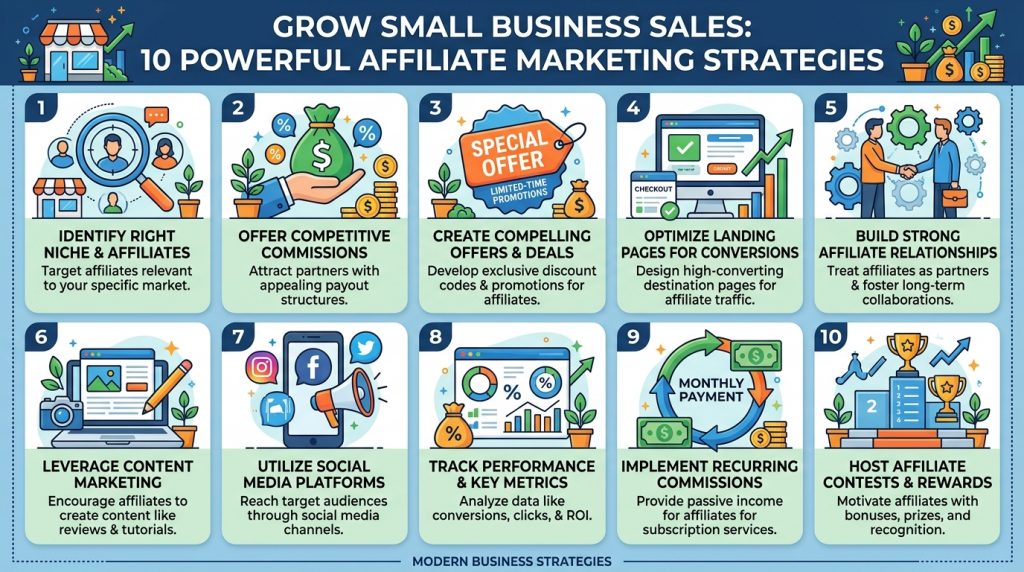
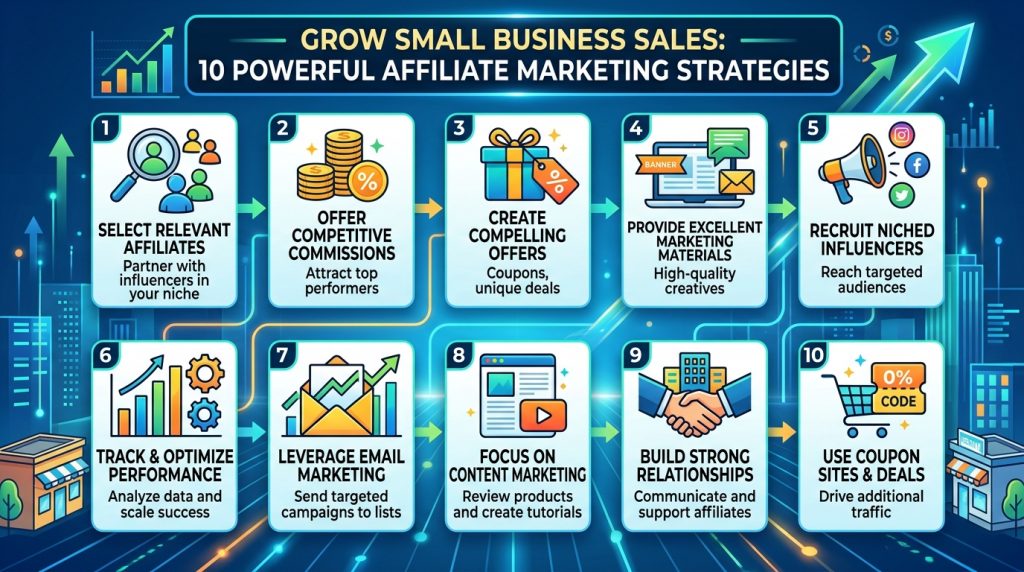
Grow Small Business Sales: 10 Powerful Affiliate Marketing Strategies
Table of Contents
Affiliate marketing for small business represents a powerful, performance-driven strategy to significantly expand reach and accelerate sales in the competitive online landscape. In an era where digital presence dictates market share, small businesses often grapple with limited budgets and resources, making traditional advertising a challenging endeavor. Affiliate marketing offers a compelling alternative, allowing businesses to leverage external partners—affiliates—to promote their products or services in exchange for a commission on successful conversions, such as sales or leads. This model minimizes upfront marketing costs and ensures that businesses only pay for tangible results, making it an exceptionally efficient way to acquire new customers and boost revenue.
What is Affiliate Marketing and Why it’s a Game-Changer for Small Businesses?
Affiliate marketing is a type of digital marketing where individuals or businesses, known as affiliates, earn commissions by promoting products or services from another company. Affiliates use unique tracking links to drive traffic and generate sales for a retailer or brand. When a sale or a predetermined action occurs through their link, they receive a payout based on the agreed commission model.
For small businesses, this performance-based approach is a game-changer because it transforms content into direct conversions. Unlike traditional advertising, which often requires substantial upfront investment with no guaranteed return, affiliate marketing operates on a risk-mitigated model. Businesses only pay commissions on actual results, whether those are sales, leads, or specific actions, making it a highly cost-effective method for customer acquisition. This means small businesses can expand their marketing efforts without straining their budget, paying only when a measurable outcome is achieved.
The industry is rapidly evolving, with global affiliate marketing spend projected to reach $19.4 billion in 2026. This growth is driven by advancements in technology, shifts in consumer behavior, and sophisticated digital marketing strategies. For small businesses, tapping into this evolving ecosystem means accessing a vast network of content creators, bloggers, and influencers who can authentically promote products to their engaged audiences. This expanded reach allows small businesses to connect with potential customers they might not otherwise reach through their own marketing channels, thereby enhancing brand awareness and improving search engine visibility.
The Undeniable Advantages: Why Small Businesses Should Embrace Affiliate Marketing
The benefits of affiliate marketing for small businesses are multifaceted, offering a compelling proposition for sustainable growth and increased online sales.
- Cost-Effective Customer Acquisition: One of the most significant advantages is the performance-based payment structure. Businesses pay affiliates only for actual results, such as a completed sale, a generated lead, or a successful signup. This cost-per-acquisition (CPA) model reduces financial risk and makes marketing budgets more efficient compared to traditional advertising methods that charge for impressions or clicks regardless of conversion.
- Expanded Market Reach and Brand Awareness: Affiliates, particularly niche content creators and micro-influencers, possess highly engaged audiences that trust their recommendations. By partnering with these individuals, small businesses can introduce their products and services to new, relevant customer segments, significantly expanding their market reach and enhancing brand awareness without substantial direct advertising costs.
- Scalability and Flexibility: Affiliate marketing programs are highly scalable. As a business grows, it can recruit more affiliates and expand its program to reach even larger audiences. The flexibility of the model allows businesses to adjust commission rates and incentives based on performance and market conditions, ensuring the program remains profitable and attractive to affiliates.
- Targeted Traffic and High Conversion Rates: Affiliates typically promote products that resonate with their specific audience. This ensures that the traffic driven to the business’s website is highly targeted and pre-qualified, leading to higher conversion rates. Consumers are more likely to purchase when products are recommended by trusted sources they follow.
- Social Proof and Credibility: Affiliate marketing leverages the power of social proof. When trusted influencers or content creators endorse a product, it builds credibility and trust among their followers. This organic endorsement is often far more impactful than direct advertising, as 92% of consumers rely on referrals from people they know.
- Measurable ROI: Affiliate marketing platforms offer robust tracking and reporting tools, allowing businesses to monitor key performance indicators (KPIs) in real-time. This data-driven approach enables businesses to accurately measure the return on investment (ROI) of their affiliate campaigns, identify top-performing affiliates, and optimize strategies for continuous improvement.
Navigating the Landscape: Choosing the Right Affiliate Programs and Partners
Selecting the appropriate affiliate programs and partners is crucial for the success of a small business’s affiliate marketing efforts. This involves understanding different program types and carefully vetting potential collaborators.
Types of Affiliate Programs and Networks
Small businesses can typically choose between running an in-house affiliate program or joining an affiliate network. In-house programs offer greater control but require more direct management. Affiliate networks, on the other hand, act as intermediaries, connecting businesses with a large pool of affiliates and providing tools for tracking, reporting, and payment management.
When selecting an affiliate network, small businesses should consider several factors:
- Niche Relevance: Ensure the network has affiliates that align with your industry and target audience.
- Reputation and Reliability: Opt for networks with a proven track record, positive reviews, and a history of ethical practices.
- Commission Structures and Fees: Understand the network’s commission models (e.g., percentage of sale, cost-per-action) and any associated fees to ensure they align with your budget and revenue goals.
- Tracking and Reporting Tools: Verify that the network provides accurate real-time tracking, comprehensive reporting features, and integration capabilities with other analytics platforms.
- Support and Resources: Assess the level of customer support and the resources (e.g., training, marketing materials) available to both merchants and affiliates.
Identifying and Vetting Potential Affiliates
The quality of your affiliates directly impacts the success of your program. Small businesses should focus on recruiting affiliates whose audience, content style, and values align with their brand.
- Audience-Product Fit: Prioritize affiliates whose audience is genuinely interested in your products or services. Research their demographics, interests, and engagement metrics to confirm relevance.
- Content Quality and Authenticity: Look for affiliates who create high-quality, authentic content that resonates with their followers. Their promotional style should fit your brand’s voice and messaging.
- Engagement Metrics: High follower counts don’t always translate to high engagement. Focus on affiliates with strong engagement rates (e.g., comments, shares, likes) as this indicates an active and responsive audience. Micro-influencers with engaged audiences can often deliver better ROI than macro-influencers.
- Industry Relevance: While some out-of-niche collaborations can be successful, starting with affiliates who operate within your industry or a closely related niche generally yields better results.
- Transparency and Ethics: Ensure potential affiliates adhere to ethical marketing practices and are transparent about their affiliate relationships. Avoid those with a shady reputation or a history of fraudulent activities.
Crafting Your Blueprint: Developing a Winning Affiliate Marketing Strategy
A successful affiliate marketing program requires careful planning and a well-defined strategy. Small businesses need to establish clear goals, attractive commission structures, and robust support systems for their affiliates.
Setting Clear Goals and Objectives
Before launching an affiliate program, clearly define what you aim to achieve. Common goals include increasing sales, generating leads, boosting brand awareness, or driving website traffic. Setting specific, measurable, achievable, relevant, and time-bound (SMART) goals will help guide your strategy and measure success.
Designing Competitive Commission Structures
The commission structure is a critical factor in attracting high-performing affiliates. While 10% is often a good starting point for e-commerce, commission rates can vary significantly by industry and product type. SaaS products, for example, often offer higher recurring commissions. Consider offering tiered commission models, exclusive bonuses, or performance-based incentives to motivate affiliates to drive quality traffic and higher conversions. As a small business, it’s generally advisable to pay commissions only after a sale has been made, rather than per click or per lead, to ensure a direct link between payment and revenue.
Providing High-Quality Marketing Materials
Empowering your affiliates with excellent marketing materials is essential. Provide a comprehensive media kit that includes:
- Branded Banners and Visuals: High-resolution product images, lifestyle photos, and banners optimized for various platforms and sizes.
- Compelling Ad Copy and Sample Captions: Ready-to-use text snippets, headlines, and call-to-actions that communicate your brand’s value proposition effectively.
- Product Information and Unique Selling Propositions (USPs): Detailed descriptions of your products/services, highlighting their benefits and what makes them stand out.
- Promotional Codes and Exclusive Offers: Unique discount codes or special offers for affiliates to share, making their promotions more appealing to their audience.
- Guidelines on Brand Voice and Usage: Clear instructions on how to represent your brand, including logo usage, messaging tone, and any do’s and don’ts to ensure consistency.
The easier you make it for affiliates to promote your products, the more consistently and effectively they will do so.
Recruitment and Relationship Management: Building a Network of Successful Affiliates
Building a thriving affiliate program goes beyond simply setting it up; it requires active recruitment and ongoing relationship management to keep affiliates engaged and motivated.
Strategies for Finding and Recruiting Affiliates
Several effective methods can be employed to find quality affiliates:
- Niche Blogs and Websites: Search for blogs, review sites, and content creators within your industry or related niches who already review or discuss products similar to yours. These individuals often have established audiences interested in your offerings.
- Social Media Influencers: Platforms like Instagram, TikTok, and YouTube are excellent for discovering micro and nano-influencers who have highly engaged followers. Use relevant hashtags and location tags to identify creators whose content aligns with your brand.
- Affiliate Networks and Marketplaces: Listing your program on established affiliate networks (e.g., ShareASale, CJ Affiliate, Impact) can expose your brand to thousands of experienced affiliates actively seeking programs to join. These platforms also streamline much of the administrative burden.
- Direct Outreach: Once you’ve identified potential affiliates, reach out with personalized messages that highlight the value of your program, your commission structure, and how it benefits their audience.
- Affiliate Referral Programs: Encourage existing affiliates to recruit new ones by offering bonuses or increased commissions for successful referrals, creating a viral growth mechanism for your program.
- Competitor Analysis: Research which affiliate programs or influencers your competitors are using. This can provide valuable insights into successful partnerships in your niche.
Onboarding and Supporting Your Affiliates
A strong onboarding process is crucial to prevent affiliates from becoming inactive. Once recruited, affiliates need clear guidance and consistent support:
- Comprehensive Onboarding: Provide a clear roadmap for new affiliates, detailing how to get started, access marketing materials, and understand tracking and payment processes. This can be through a dedicated onboarding guide, video tutorials, or personal outreach.
- Ongoing Communication: Maintain regular communication through email newsletters, updates, and private community groups (e.g., Slack channels). Share new product launches, upcoming promotions, and industry insights to keep them informed and engaged.
- Accessible Marketing Assets: Ensure affiliates can easily access high-quality marketing assets 24/7, ideally through a dedicated dashboard or shared drive. This includes banners, product images, videos, and compelling copy.
- Performance-Based Incentives: Beyond standard commissions, offer incentives like bonus payouts for reaching specific milestones, contests, or exclusive access to new products. Recognizing top performers publicly can also be a powerful motivator.
- Dedicated Support: Provide a clear point of contact for affiliates to address questions, resolve issues, and offer feedback. Prompt responses build trust and strengthen the partnership.
| Affiliate Recruitment Strategy | Description | Best For Small Businesses | Considerations |
|---|---|---|---|
| Niche Blogs/Content Sites | Identifying established content creators whose audience aligns with your product. | Targeted reach, authentic recommendations. | Requires manual research and personalized outreach. |
| Social Media Influencers (Micro/Nano) | Partnering with creators on platforms like Instagram, TikTok, YouTube with engaged, smaller audiences. | High engagement, cost-effective, authentic connection. | Need to vet for genuine influence, content quality. |
| Affiliate Networks/Marketplaces | Listing your program on platforms like ShareASale, Impact, CJ Affiliate to access a large pool of existing affiliates. | Exposure to skilled affiliates, streamlined management. | Network fees, potential competition with larger brands. |
| Direct Outreach/Email Campaigns | Personally contacting potential affiliates identified through research. | Highly personalized, builds stronger relationships. | Time-consuming, requires compelling pitch. |
| Affiliate Referral Programs | Incentivizing current affiliates to bring in new, qualified partners. | Leverages existing relationships, organic growth. | Requires a solid existing affiliate base and clear incentives. |
| Competitor Analysis | Identifying affiliates promoting competitors to understand successful partnership models. | Insights into proven partners and commission structures. | May involve competing for high-demand affiliates. |
Measuring Success: Tracking, Analytics, and Optimization for Growth
Effective tracking and continuous optimization are paramount for maximizing the ROI of your affiliate marketing program. Without robust analytics, small businesses risk making uninformed decisions and missing opportunities for growth.
Key Performance Indicators (KPIs) to Monitor
Monitoring the right metrics helps assess the effectiveness of your affiliate partnerships and ensures alignment with your broader marketing objectives. Key KPIs include:
- Conversion Rate: The percentage of referred traffic that completes a desired action (e.g., purchase, signup). This measures the quality of affiliate traffic.
- Click-Through Rate (CTR): The ratio of clicks to impressions on affiliate links. A higher CTR indicates more effective affiliate content and link placement.
- Earnings Per Click (EPC): The revenue generated per click, a vital metric for indicating affiliate profitability. A good EPC should be higher than your Cost Per Click (CPC).
- Average Order Value (AOV): The mean value of purchases driven by affiliates. This helps in optimizing commissions and pricing strategies.
- Cost Per Acquisition (CPA): The average cost to acquire a customer through affiliate efforts. This evaluates acquisition efficiency.
- Return on Investment (ROI): Measures the overall profitability of your affiliate program by comparing revenue generated against total spend. Affiliate marketing has a high digital marketing ROI.
- Active Affiliate Rate: The percentage of affiliates actively promoting your products within a given period, indicating the health of your network.
- Customer Lifetime Value (CLV): The predicted net profit attributed to the entire future relationship with a customer acquired through an affiliate. This helps identify partners bringing in long-term value.
Tools for Tracking and Analytics
Accurate tracking of affiliate marketing KPIs relies on the right technology. Affiliate marketing software allows you to automate link tracking, capture conversions, and generate reliable reports. These tools often integrate with CRM systems and analytics platforms, providing real-time data and eliminating human error. Examples of platforms that offer robust KPI monitoring features include Impact, PartnerStack, Refersion, and Post Affiliate Pro.
Optimizing Campaigns for Continuous Growth
Data from tracking tools should be used to continuously refine and optimize your affiliate strategy:
- Identify Top Performers: Recognize and reward affiliates who consistently drive high-quality traffic and conversions. Consider offering them higher commission tiers or exclusive promotions.
- Optimize Underperforming Channels: If certain affiliates or channels show low conversion rates despite high traffic, analyze the content, landing pages, or offers to identify areas for improvement.
- A/B Testing: Experiment with different ad creatives, landing pages, and call-to-actions to determine what resonates best with your audience and drives higher conversions.
- Fraud Prevention: Implement measures to prevent affiliate fraud, such as click fraud, cookie stuffing, and bot traffic, which can significantly impact your budget and data accuracy. Many modern platforms include built-in fraud detection.
- Attribution Models: Move beyond last-click attribution to understand the full customer journey and fairly compensate affiliates who influence purchases at different stages. Enhanced attribution models are a key trend shaping affiliate marketing.
Staying current with industry trends, such as the increasing role of AI in campaign optimization and personalized marketing, is also crucial for maintaining a competitive edge. For more insights into the evolving landscape of digital commerce and the strategies businesses employ, refer to Reuters’ coverage of e-commerce trends, which often highlights the broader context in which affiliate marketing operates.
Overcoming Hurdles: Common Challenges and Solutions in Affiliate Marketing
While affiliate marketing offers immense potential, small businesses may encounter several challenges. Anticipating and addressing these issues proactively can ensure a smoother and more successful program.
Finding Quality Affiliates
Challenge: One of the most common hurdles is identifying and recruiting high-quality affiliates who genuinely align with your brand and can drive relevant traffic. Many affiliates may join a program but become inactive due to a lack of guidance or resources.
Solution: Focus on targeted recruitment rather than open sign-ups. Utilize affiliate recruitment tools that leverage AI to find partners and automate outreach. Actively search for niche content creators and micro-influencers whose audiences match your target demographic. Implement a thorough vetting process to ensure alignment and genuine promotional capabilities. Provide a strong onboarding process to activate new affiliates and offer ongoing support.
Maintaining Brand Control and Consistency
Challenge: When partnering with external affiliates, businesses inherently surrender some direct control over how their brand is presented. This can lead to inconsistent messaging, brand dilution, or even misrepresentation if affiliates operate independently.
Solution: Establish clear communication channels and provide comprehensive brand guidelines, including approved messaging, visuals, and tone of voice. Offer high-quality marketing assets and creative materials to ensure affiliates have the right tools to represent your brand accurately. Regularly monitor affiliate content to ensure compliance and address any inconsistencies promptly.
Tracking and Attribution Issues
Challenge: Accurate tracking is the backbone of any affiliate program, but issues like cookie stuffing, bot traffic, and challenges with multi-touch attribution can lead to disputes and inaccurate data.
Solution: Invest in reliable affiliate tracking software that offers real-time reporting, fraud detection, and supports enhanced attribution models. Integrate your affiliate platform with CRM and analytics tools for a comprehensive view of customer journeys. Validate tracking scripts and ensure compliance with privacy rules. Transparent tracking builds trust with affiliates.
Managing Competition and Cannibalization
Challenge: In a crowded market, affiliates may target the same audience or keywords, potentially cannibalizing each other’s sales and increasing customer acquisition costs.
Solution: Differentiate your affiliate program by offering superior support, unique incentives, and transparent communication. Focus on niche affiliates with highly engaged audiences rather than competing for large, generic influencers. Encourage affiliates to create diverse content across multiple channels. Consider implementing rules regarding keyword bidding or coupon code usage to minimize internal competition.
Affiliate Fraud
Challenge: Fraudulent activities, such as cookie stuffing, bot traffic, or fake lead generation, can lead to wasted marketing budgets and damage a business’s reputation.
Solution: Implement robust fraud prevention measures, which may include using specialized software, regularly reviewing affiliate activity for suspicious patterns, and setting clear terms and conditions that penalize fraudulent behavior. Many advanced affiliate networks offer built-in fraud detection capabilities.
Conclusion
Affiliate marketing offers small businesses a powerful and cost-effective pathway to accelerate sales and expand their online presence. By embracing its performance-based model, businesses can mitigate financial risks, leverage the credibility of trusted partners, and reach new audiences with unparalleled efficiency. The key to unlocking this potential lies in a strategic approach: carefully selecting relevant affiliates, crafting competitive commission structures, providing ample marketing support, and continuously optimizing campaigns through data-driven insights.
While challenges such as affiliate recruitment, brand control, and tracking issues exist, they can be effectively addressed through proactive planning, the use of appropriate technology, and consistent communication. As the affiliate marketing landscape continues to evolve with trends like AI integration and social commerce, small businesses that adapt and foster genuine partnerships will find themselves well-positioned for sustainable growth and a significant competitive advantage in the digital marketplace. Embracing affiliate marketing as a core component of your digital strategy is not just about increasing sales; it’s about building a resilient and expansive online ecosystem that drives long-term success.