2Affiliate Marketing Content Ideas: Unlocking Success on Blogs and Social Media
Table of Contents
Affiliate Marketing Content Ideas are the bedrock of a successful digital strategy, transforming casual browsing into tangible revenue for countless content creators and marketers. In an increasingly competitive online landscape, merely dropping affiliate links into posts is no longer sufficient; a strategic, value-driven approach to content creation is paramount to building trust, driving conversions, and establishing a sustainable income stream. The affiliate marketing industry continues its remarkable growth, with consumer spending in the U.S. alone projected to reach $36.9 billion by 2030, underscoring the immense opportunities available for those who can genuinely connect with their audience and guide them toward informed purchasing decisions.
This comprehensive article will delve into a diverse range of affiliate marketing content ideas tailored for both blogs and social media platforms. We’ll explore various formats and strategies designed to attract targeted audiences, foster engagement, and ultimately boost affiliate conversions. From in-depth product reviews to engaging short-form videos, the key lies in creating content that is informative, authentic, and truly helpful to the end-user. The aim is not just to sell, but to build a loyal community that values your recommendations.
The Foundation: Understanding Your Audience and Niche
Before diving into specific content ideas, the most critical step for any aspiring or established affiliate marketer is a deep understanding of their target audience and chosen niche. Success in affiliate marketing begins with selecting a focused niche that offers growth potential rather than broad, saturated markets. This involves aligning your expertise with topics you genuinely understand and can discuss authentically, as your credibility hinges on genuine knowledge and experience.
Thorough audience research is essential for informing content topics, formats, and messaging that will truly resonate. Engaging in online communities, forums, and social media groups relevant to your niche can provide invaluable insights into common questions, pain points, and purchasing concerns of your potential audience. Furthermore, utilizing keyword research tools to identify high-intent search queries and content gaps can help uncover specific needs your content can address. For example, instead of broadly targeting “fitness equipment,” a more focused niche like “home gym equipment for small apartments” or “strength training tools for beginners over 50” can attract a highly engaged audience with less competition. By understanding what your audience wants – whether they prioritize the least expensive option or the most durable – you can tailor your content to provide the most relevant solutions. Trust is paramount in affiliate marketing; you are not just a salesperson, but a problem-solver.
Blog Content Strategies for Affiliate Marketing Success
Blogs remain a powerful platform for affiliate marketing, allowing for in-depth exploration of topics and detailed product showcasing. They are an excellent way to rank on Google and attract organic traffic, especially with evergreen content. Here are some of the most effective blog content ideas:
In-Depth Product Reviews and Comparisons
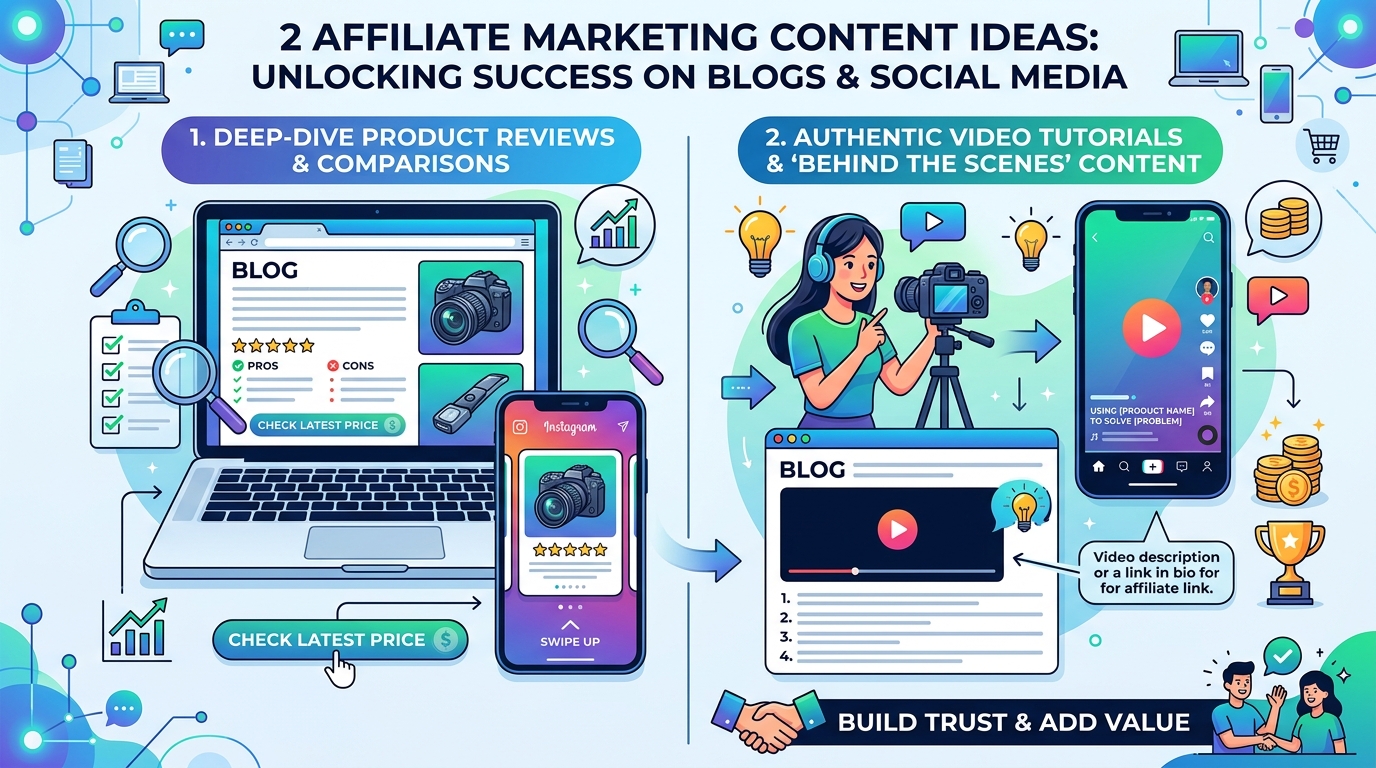
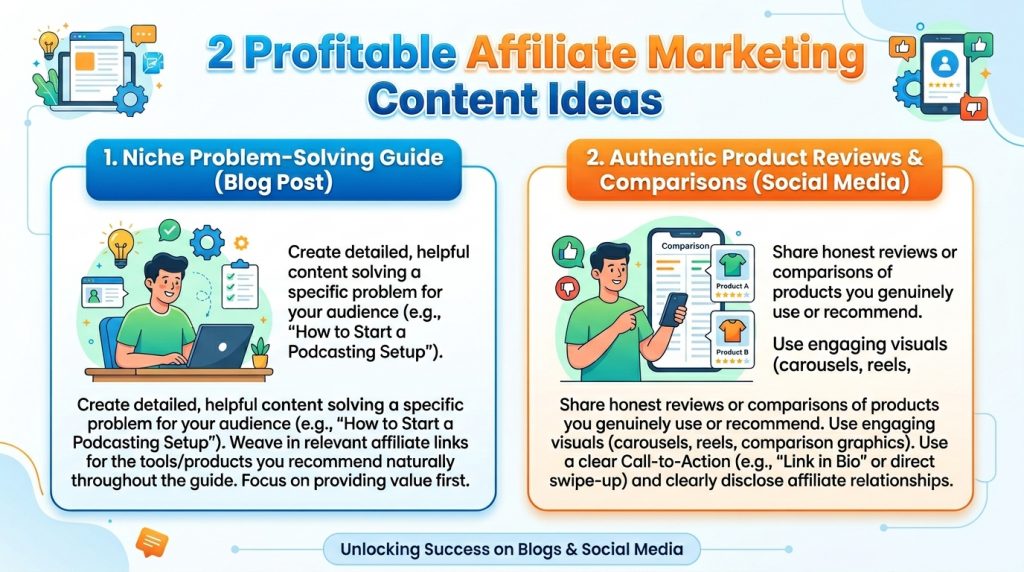
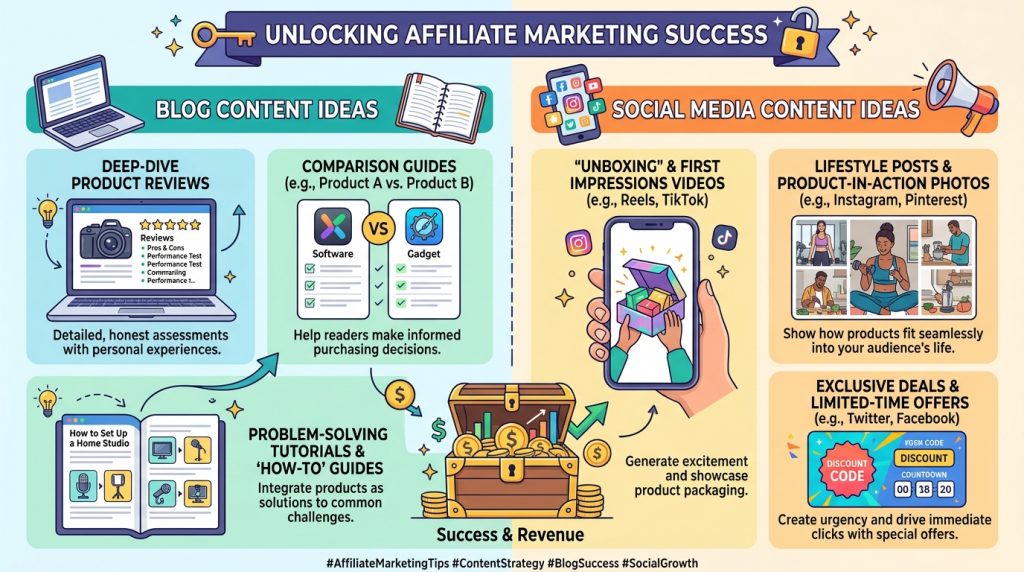
Product reviews are a classic and highly effective affiliate content format because consumers overwhelmingly trust online reviews and recommendations. However, generic, overly positive reviews fall flat. Authenticity is key: share honest assessments, including both the strengths and limitations of products. Use a mix of text, images, and even video to provide a 360-degree view, allowing readers to imagine themselves using the product. A well-structured review should begin with an engaging introduction, detail key features, discuss real-world performance based on hands-on experience, analyze pricing relative to competitors, and conclude with honest recommendations about who should and shouldn’t buy.
Comparison posts, often formatted as “X vs. Y,” are affiliate goldmines because readers turn to them when they are ready to make a purchase but need help deciding between options. These posts should clearly define who each option is for, compare features using visual tables or pros/cons lists, and end with a confident, contextual recommendation. For niches where consumers weigh multiple options, such as electronics, home appliances, or software, detailed comparisons that highlight unique advantages and disadvantages of each product help build trust and naturally integrate multiple affiliate links.
“How-To” Guides and Tutorials
How-to articles and guides are evergreen content that consistently attracts an audience looking to solve specific problems or learn new skills. These instructional pieces are perfect for naturally integrating affiliate products or services that assist in the process. For example, a tutorial on “How to Start a Blog” could recommend a specific hosting service or theme, while a guide on “Achieving a Minimalist Home” could feature eco-friendly storage solutions. The key is to make the tutorial easy to follow with clear, concise language and to sprinkle in expert tips. Video tutorials are particularly effective as they allow you to show products in action and demonstrate results, which can be invaluable for software or physical products. By solving your audience’s problems, you build trust and authority in your niche.
Resource Lists and Curated Collections
Creating comprehensive resource pages or curated collections of products, tools, and services is an excellent way to provide ongoing value to your audience. These pages can become a go-to reference for your niche, listing anything you think might be helpful or interesting for your readers, from beloved products and apps to influential blogs and books. A well-organized resource hub keeps visitors circulating within your site and provides numerous opportunities for affiliate links. For instance, a productivity blog could feature a “My Workflow Setup: Hardware + Software” page, listing all the tools they use daily with affiliate links. These lists often serve as a “table of contents” for your niche, establishing you as an authority and a valuable source of information.
Problem/Solution Focused Content and Case Studies
Content that directly addresses audience pain points and offers solutions through affiliate products can be highly effective. By first discussing their problems and then presenting the product as the best answer, you guide the reader through a natural marketing funnel. Case studies and personal success stories further build trust and demonstrate the real-world effectiveness of the products you promote. Showcasing your opinion or analysis of a real-life scenario where a product made a significant difference can be a quick way to build credibility. Interviewing industry experts, satisfied customers, or successful audience members who have used the products you promote can provide social proof and inspiration. This type of content goes beyond features, focusing on the transformative benefits and impact on users’ lives.
Gift Guides and Seasonal Content
Gift guides are often unsung heroes for affiliate marketers, acting as conversion machines because people searching for gift ideas are usually already in a buying mindset. Create guides for various occasions (birthdays, holidays), relationships (gifts for mom, for friends), or interests (for the tech enthusiast, the bookworm). The more niche and specific these guides are, the better they perform. Seasonal campaigns, such as promoting early holiday shipping deals or spring refresh offers, can also boost profits by creating a sense of urgency and relevance. These timely promotions can be cross-promoted across various platforms for maximum reach.
Dominating Social Media with Engaging Affiliate Content
Social media has become one of the most powerful marketing channels for affiliate sales, with platforms like TikTok, YouTube, and Instagram driving significant traffic and conversions. The shift towards short-form, interactive, and visually driven content necessitates adapting strategies to these trends.
Short-Form Video Content (Reels, TikTok, YouTube Shorts)
Short-form video is a rapidly growing trend in affiliate marketing. Consumers are increasingly in “discovery mode” while scrolling platforms like TikTok and Instagram, making these ideal for short, highly-focused product demonstrations, unboxing videos, quick reviews, and comparison clips. Transformation videos, particularly in beauty or home improvement niches, naturally showcase product benefits in an entertaining way. The key is to create authentic, engaging content that doesn’t feel overly promotional and encourages sharing. When repurposing longer content for these platforms, pull out the strongest affiliate hook or key benefit and present it in the platform’s most engaging native format. Video content builds stronger emotional connections with audiences than text alone, making it highly effective for affiliate marketing where trust is crucial.
Visual Carousels and Infographics
Visually appealing content performs exceptionally well on social media. Instagram carousels can be used to showcase multiple aspects of a product, compare different options, or provide step-by-step guides in a digestible format. Infographics, on the other hand, are excellent for presenting data, features, or benefits in a visually compelling way that is easily shareable. These formats capture attention quickly and can convey complex information efficiently, making them ideal for educating your audience about affiliate products without being overtly salesy.
Interactive Stories and Polls
Social media stories and polls offer a fantastic way to engage your audience directly and organically incorporate affiliate promotions. You can ask questions about their pain points, conduct polls to understand their preferences, or share “swipe-up” links in stories for product recommendations. This interactive approach makes the audience feel involved and heard, fostering a stronger connection and increasing the likelihood of them clicking through your affiliate links. Using link stickers over attention-grabbing images in Stories is a common and effective tactic.
Live Streams and Q&A Sessions
Live streams on platforms like Instagram, Facebook, and YouTube provide a real-time opportunity to interact with your audience, demonstrate products, and answer questions. This raw, unedited format builds authenticity and trust. You can host live unboxings, product reviews, or Q&A sessions where you naturally recommend affiliate products as solutions to audience queries. Live shopping streams are also emerging as a powerful tool for increasing conversion rates. Remember to include your affiliate links in the comments or descriptions for easy access during and after the live session.
Behind-the-Scenes and Lifestyle Content
Sharing behind-the-scenes glimpses of your work, your daily routine, or how you integrate affiliate products into your lifestyle can humanize your brand and build a stronger connection with your audience. This type of content is less about a direct sales pitch and more about showing the practical, relatable side of using a product. For example, a fashion influencer might post a photo wearing a stylish outfit, tagging the brand, and including an affiliate link or code in the caption. By showcasing products in a natural, lifestyle context, you make them more appealing and demonstrate their real-world value, enhancing trust and increasing conversion potential.
| Content Type | Platform Suitability | Key Benefits for Affiliate Marketing | Examples |
|---|---|---|---|
| Product Reviews (In-depth) | Blogs, YouTube | Builds deep trust, informs buying decisions, high conversion potential. | “The Ultimate Review of [Product X]”, “Is [Product Y] Worth the Hype?” |
| “How-To” Guides / Tutorials | Blogs, YouTube, Instagram Reels | Solves problems, evergreen content, demonstrates product use in context. | “How to Master [Skill] with [Tool]”, “Step-by-Step Guide to [Process]” |
| Comparison Posts | Blogs, YouTube | Helps buyers choose between options, positions you as an expert. | “[Product A] vs. [Product B]: Which is Better?”, “Top 5 Alternatives to [Software]” |
| Resource Lists / Curated Collections | Blogs, Pinterest, Instagram Carousels | Provides ongoing value, establishes authority, centralizes recommendations. | “My Essential Tools for [Niche]”, “Top 10 Books for [Topic]” |
| Gift Guides | Blogs, Pinterest, Instagram Stories | Targets buyers in decision-making mode, seasonal spikes in traffic. | “Holiday Gift Guide for [Recipient Type]”, “Unique Gifts for [Interest]” |
| Short-Form Videos | TikTok, Instagram Reels, YouTube Shorts | High engagement, broad reach, quick product demos, viral potential. | Unboxings, “Before & After” transformations, quick tips with product integration. |
| Live Streams / Q&A | Instagram Live, Facebook Live, YouTube Live | Real-time interaction, builds authenticity, immediate product demonstrations. | Live product demos, “Ask Me Anything” sessions about a niche. |
Crafting Compelling Calls to Action and Disclosure
The effectiveness of your affiliate content hinges significantly on compelling calls to action (CTAs) and transparent disclosure. A strong CTA is the final push, guiding your audience to take the desired action, typically a purchase. CTAs should be clear, concise, and use action-oriented language, creating a sense of urgency where appropriate. Instead of generic phrases like “Learn More,” consider “Get Started Today!” or “Shop Now for Exclusive Deals!”. The design of your CTA button also matters, using contrasting colors to make it stand out and ensuring it’s easily visible across all devices.
Equally crucial is transparency through clear disclosure of your affiliate partnerships. This is not only an ethical best practice but often a legal requirement. Briefly stating that you may earn a commission from links in your content builds trust and credibility with your audience. Long-term credibility is cultivated through consistent, honest recommendations, leading readers to trust your judgment and increasing conversion rates. Engaging with your audience by responding to comments and questions about recommended products further demonstrates genuine care beyond just earning commissions.
SEO and Promotion: Ensuring Your Content Gets Seen
Even the most exceptional affiliate content won’t convert if it isn’t discovered by the target audience. Effective Search Engine Optimization (SEO) is fundamental for attracting high-intent organic traffic. This involves diligent keyword research to identify specific, long-tail keywords that your audience uses when searching for solutions or products. While popular, generic keywords face fierce competition, focusing on longer, more specific phrases can significantly increase your chances of ranking higher in search results with less competition.
Beyond keyword optimization, structuring your content with clear headings, incorporating relevant keywords naturally, and ensuring readability are vital for discoverability. As AI-generated summaries become more prevalent in search results, writing direct, scannable answers within your content can help ensure your information is sourced and linked by these AI overviews. Regularly updating your content to reflect current prices, product availability, and new information also keeps it fresh and relevant to search engines.
Cross-platform promotion is another powerful strategy to expand your reach and diversify traffic sources. Repurposing blog content for social media, adapting messaging to each channel’s format, and using platform-specific features like shopping tags or swipe-up links can increase visibility and direct traffic to your affiliate links. Email marketing campaigns are also highly effective for direct communication with engaged subscribers, allowing for timely promotions, exclusive recommendations, and nurturing relationships that drive conversions. By investing in a cohesive multi-platform presence, you reach users where they are most comfortable, thereby boosting conversions and building a loyal audience across channels. To further illustrate the impact of digital advertising, it’s worth noting that U.S. affiliate spending was $10.72 billion in 2024 and is projected to increase to $12 billion in 2025, highlighting the robust growth and investment in this marketing channel according to Statista.
Measuring Success and Adapting Your Strategy
A data-driven approach is essential for long-term affiliate marketing success. Tracking performance metrics such as watch time, click-through rates, shares, comments, and conversion rates allows you to understand which content resonates most with your audience. This data empowers you to double down on successful formats and topics while identifying areas for improvement. Affiliate tracking tools are crucial for pinpointing which products are driving conversions and which are not. Regularly analyzing this data—monthly, for instance—allows you to optimize your approach, revamp old posts to feature top-performing items, or create fresh, targeted content based on audience needs.
Moreover, actively listening to your audience through comments, direct messages, and tracking recurring questions or product requests can provide a wealth of content ideas and help you stay attuned to their evolving needs and buying behaviors. By building a system for tracking these requests, you can create content that directly addresses their interests, further strengthening trust and engagement. Continual adaptation based on performance data and audience feedback is key to navigating the dynamic affiliate marketing landscape and sustaining growth.
Conclusion: The Ever-Evolving Landscape of Affiliate Content
The world of affiliate marketing content is dynamic, constantly shaped by technological advancements, shifting consumer behaviors, and evolving digital marketing strategies. As we look towards 2026 and beyond, several key trends emphasize the importance of adaptability and a human-centric approach. AI-driven automation is playing an increasingly significant role in content creation, campaign optimization, and predictive analytics, streamlining workflows and enabling marketers to make more data-driven decisions. However, the limits of pure automation are becoming apparent, with human editorial judgment and brand authenticity being crucial for success, especially as search algorithms evolve to reward AI-generated content that incorporates genuine expertise and user-focused value.
The rise of micro-influencers and nano-influencers is also a dominant trend, as brands increasingly prioritize authentic connections and higher engagement rates over sheer follower count. These smaller creators often have highly loyal audiences who trust their recommendations more, making micro-partnerships cost-effective and high-converting. Authenticity and transparency will remain paramount, with a greater emphasis on genuine content creators and ethical disclosure practices.
Ultimately, successful affiliate marketing in the coming years will hinge on a multifaceted approach: diversifying content formats to reach audiences across various platforms, leveraging AI as a production accelerator while maintaining human oversight for authenticity, focusing on building strong, trusting relationships with your audience, and continuously optimizing strategies based on performance data. By prioritizing value, honesty, and strategic execution, affiliate marketers can not only navigate the evolving digital landscape but also thrive, building sustainable income streams while genuinely serving their audience’s needs.