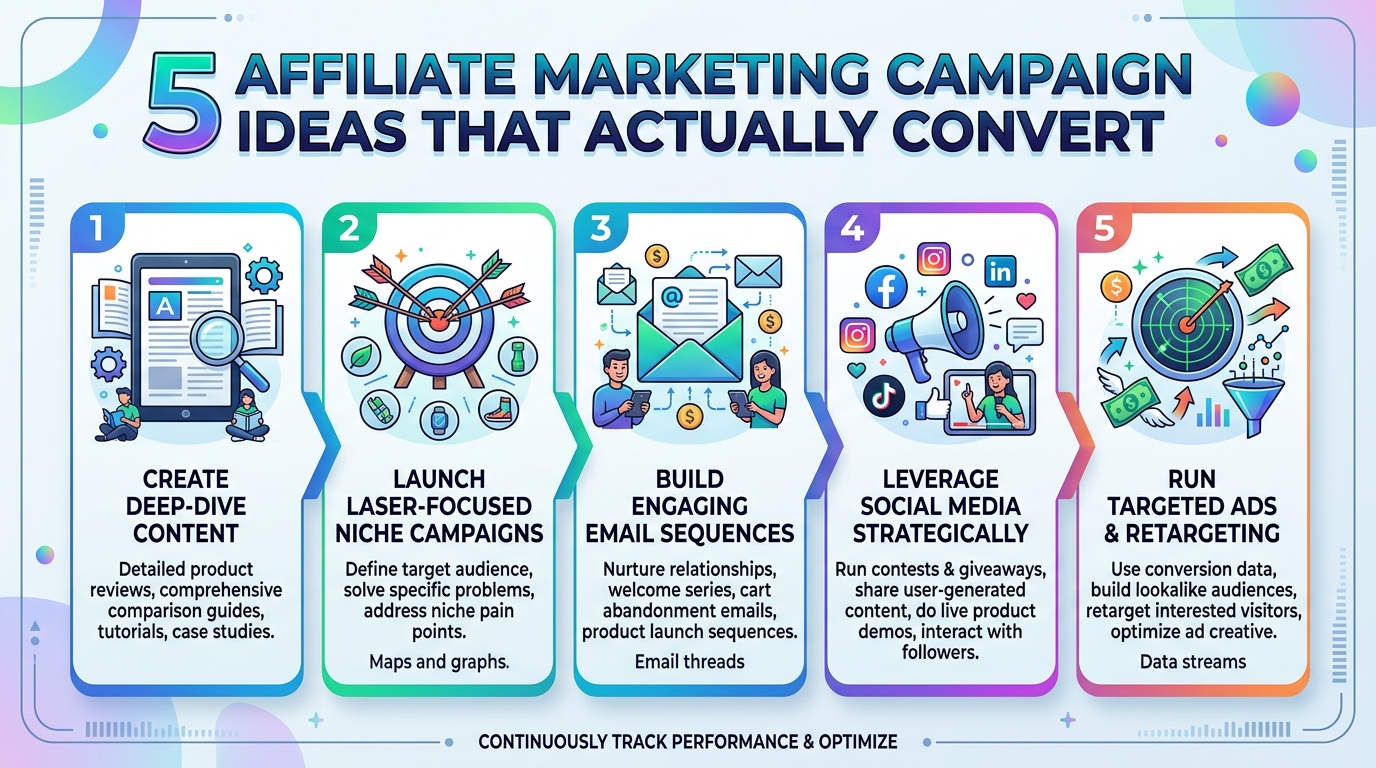
5Affiliate Marketing Campaign Ideas That Actually Convert
Table of Contents
Affiliate Marketing Campaign Ideas that actually convert are the holy grail for anyone looking to generate significant online revenue. In an increasingly competitive digital landscape, merely dropping links or sharing discount codes is no longer sufficient. Success hinges on a strategic, value-driven approach that resonates with your target audience and guides them seamlessly toward a purchase decision. The affiliate marketing industry continues its upward trajectory, with U.S. consumer spending projected to reach $36.9 billion by 2030, highlighting immense opportunities for those who can master conversion-focused strategies.
This comprehensive guide will delve into proven strategies and actionable ideas to elevate your affiliate marketing efforts from sporadic income to consistent, scalable revenue. We’ll explore everything from deep audience understanding and niche-specific tactics to compelling content creation, effective social media engagement, and the critical role of performance tracking. By focusing on building authenticity and delivering genuine value, you can build stronger affiliate relationships and maximize your earning potential.
Understanding Your Audience: The Foundation of Conversion
The cornerstone of any high-converting affiliate marketing campaign is a profound understanding of your target audience. Without knowing who you’re speaking to, what their needs are, and what problems they’re trying to solve, your efforts will likely fall flat. Effective affiliate content directly addresses specific audience needs, questions, and pain points.
- Develop Detailed Buyer Personas: Go beyond basic demographics. Understand their motivations, challenges, online behavior, income levels, and purchasing habits. What drives their decisions? What concerns do they have?
- Conduct Thorough Market Research: Utilize surveys, analyze website analytics, and study competitor strategies to gain insights. Look at forums, social media groups, and review sites to see what questions people are asking and what feedback they’re giving on products in your niche.
- Identify Pain Points and Desires: Successful affiliate campaigns don’t just promote products; they offer solutions. Pinpoint the specific problems your audience faces and position affiliate products as the ideal remedy. Similarly, understand their aspirations and show how a product can help them achieve those.
- Tailor Offers to Specific Segments: Your audience isn’t monolithic. Segment them based on their interests, past behaviors, or stage in the buying journey. For instance, a “beginner’s guide” might recommend entry-level products, while a “pro tips” article targets advanced users with premium offers.
By investing time in truly understanding your audience, you can create content and promotions that resonate deeply, fostering trust and significantly increasing conversion rates.
Niche-Specific Strategies for Maximum Impact
Choosing a focused niche with growth potential is a critical first step in affiliate marketing success. Rather than targeting broad, saturated markets, identify specific audience segments with unmet needs. The strategies you employ should be highly tailored to the particular niche you operate in. For example, promoting “home gym equipment for small apartments” will require a different approach than “strength training tools for beginners over 50”.
- Tech & Gadgets: Focus on in-depth reviews, unboxing videos, comparison charts, and tutorials. Audiences in this niche often value technical specifications and performance benchmarks. High-quality images and video demonstrations of the product in action are crucial.
- Health & Wellness: Emphasize personal testimonials, scientific backing (if applicable), and how products contribute to a healthier lifestyle. Authenticity and transparency are paramount here. Consider sharing your own journey or experience with the products.
- Fashion & Beauty: Visual content reigns supreme. Think outfit ideas, makeup tutorials, “haul” videos, and product swatches. Instagram and TikTok are particularly powerful platforms for this niche. Lifestyle influencers often drive impulse purchases through curated content.
- Finance & Investments: Credibility and detailed analysis are key. Offer guides on saving, investing, budgeting tools, and comparisons of financial products. Content must be well-researched and trustworthy. Financial services affiliate programs average a 4.2% conversion rate for lead generation offers.
- Home & DIY: “How-to” guides, project tutorials, and before-and-after transformations work well. Showcase the practical application of tools and materials.
Align with your expertise when selecting a niche to ensure credibility and authentic content creation. Diversifying retailers and embracing multi-seller reviews can also lead to outsized gains.
Content is King: Engaging Formats That Drive Sales
Quality content builds trust and guides readers toward informed purchasing decisions. In affiliate marketing, content is your primary vehicle for delivering value and subtly integrating your recommendations. Variety in content formats can also keep your audience engaged and reach them on different platforms.
- In-Depth Blog Posts & Reviews: These are foundational. Create “ultimate guides,” “how-to” articles, listicles, and detailed product reviews. Focus on the benefits rather than just features, explaining how a product solves a problem or improves a situation. Include both strengths and limitations for authenticity. For roundups, a clear table comparing products side-by-side can be very effective.
- Video Marketing: Video content is a powerful trend for 2026. Unboxing videos, product demonstrations, tutorials, and comparison videos on platforms like YouTube and TikTok are highly engaging. Short video reviews capture mobile-first audiences effectively. Visual platforms are ideal for showcasing products and driving purchases.
- Podcasts: Podcasts hold highly engaged audiences, making listener recommendations effective, especially when combined with exclusive affiliate offers. Interviews, product mentions, and discussions can subtly weave in affiliate products.
- Webinars and Online Courses: For more complex products or services, webinars and mini-courses can educate your audience thoroughly, showcasing the value of an affiliate product as a solution.
- User-Generated Content: Encourage your audience to share their experiences with products you promote. Testimonials and reviews from real users build immense social proof and trust.
Always prioritize helpfulness and authenticity, ensuring affiliate links enhance content rather than drive it. Optimize your content for search engines by using relevant keywords, clear headings, and answering specific questions to improve discoverability. Regular content updates are also essential to keep information fresh and relevant.
Leveraging Social Media for Affiliate Success
Social media is becoming one of the most powerful marketing channels for affiliate sales, with platforms like TikTok, YouTube, and Instagram driving significant traffic and conversions. Adapting your strategies to focus on these trends is crucial for a competitive advantage.
- Platform-Specific Strategies:
- Instagram: Ideal for visually appealing products. Use high-quality photos and short videos (Reels) in your feed, Stories, and Shopping features. Integrate affiliate links into your bio, Stories (swipe-up links), or shoppable posts.
- TikTok: Dominated by short-form, engaging video content. Create entertaining product reviews, quick tutorials, or “day in the life” content featuring affiliate products. Direct viewers to a more detailed review on your blog where affiliate links are naturally integrated.
- YouTube: Excellent for longer-form video content like detailed reviews, comparisons, and tutorials. Optimize titles and descriptions for SEO and include affiliate links prominently.
- Facebook & Pinterest: Facebook Groups can be powerful for community building and direct engagement, while Pinterest is a visual search engine ideal for product discovery, especially in niches like home decor, fashion, and recipes.
- Influencer Collaborations: Partnering with niche content creators and micro-influencers is a significant trend for 2026. These influencers often have highly engaged audiences and can promote products in a more authentic and trusted way. Brands are increasingly recognizing that a smaller group of highly trusted partners often generates most of the affiliate-driven revenue.
- Paid Social Media Ads: Leverage paid ads on platforms like Facebook and Instagram to reach highly targeted audiences. Use compelling visuals and strong calls to action, directly linking to product pages or review content with your affiliate links.
- Community Building: Foster an engaged community around your niche. Respond to comments, answer questions, and build a relationship with your audience. Trust is paramount in affiliate marketing, and a strong community reinforces that trust.
Creating a cohesive multi-platform presence increases visibility, reaching users where they are most comfortable, which ultimately boosts conversions.
| Affiliate Campaign Idea | Best Content Format(s) | Key Conversion Driver |
|---|---|---|
| Detailed Product Review | Blog post, YouTube video | In-depth analysis, pros/cons, personal experience, strong CTA |
| Comparison Guide / Listicles | Blog post, table, infographic, comparison video | Side-by-side analysis, clear recommendations, feature comparison |
| How-To Guide / Tutorial | Blog post, YouTube video, Instagram Reels/Stories | Problem-solving, practical application, demonstrating product use |
| Seasonal Gift Guide | Blog post, email campaign, Pinterest board, social media posts | Timeliness, curated selections, addressing specific gift needs |
| Exclusive Discount/Deal Promotion | Email, social media, dedicated landing page | Urgency, value proposition, limited-time offers |
| Resource Page / Toolkit | Website page, blog post | Curated tools/products for a specific goal, ongoing value |
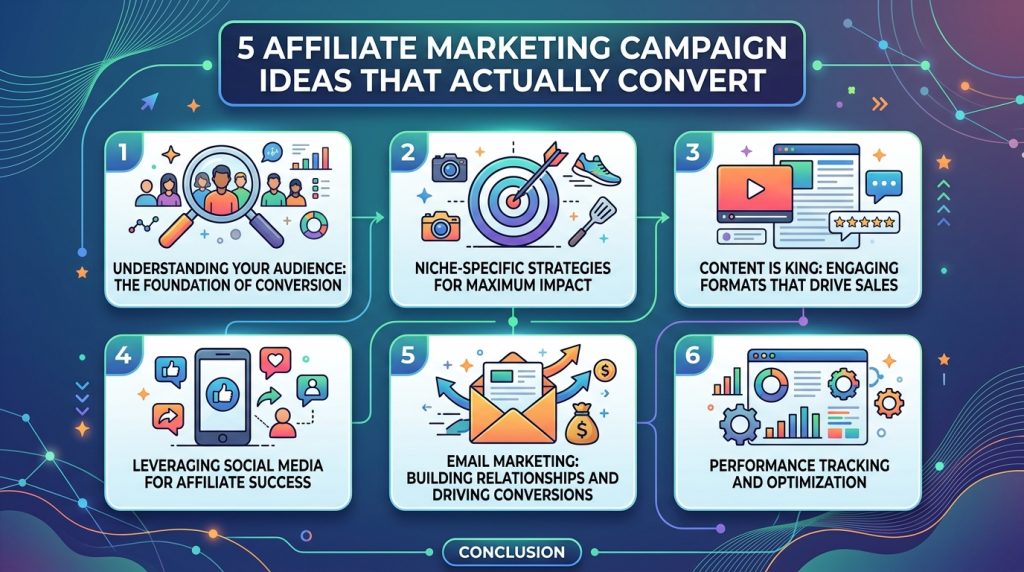
Email Marketing: Building Relationships and Driving Conversions
Email marketing remains one of the most cost-effective affiliate marketing channels available. It enables direct communication with engaged subscribers, creating opportunities for timely promotions, new content distribution, and relationship building that drives repeat conversions.
- Building an Email List: Offer valuable lead magnets like free e-books, checklists, templates, or exclusive content in exchange for email addresses. Use clear calls to action on your website and social media to encourage sign-ups.
- Segmentation and Personalization: Don’t send the same email to everyone. Segment your list based on interests, past purchases, or engagement levels. Personalize emails with the subscriber’s name and tailor content to their specific needs.
- Automated Email Sequences:
- Welcome Series: Introduce yourself, your brand, and provide immediate value to new subscribers. Gently introduce relevant affiliate products.
- Nurture Sequences: Share educational content, tips, and resources related to your niche, building trust and positioning affiliate products as helpful solutions.
- Promotional Sequences: Announce new product reviews, limited-time offers, or seasonal gift guides.
- Crafting Compelling Subject Lines and Calls to Action (CTAs): Your subject line is crucial for open rates. Make it intriguing, benefit-driven, or create a sense of urgency. Within the email, use clear, concise, and persuasive CTAs that tell subscribers exactly what you want them to do next.
- Regularity and Value: Maintain a consistent sending schedule without overwhelming your subscribers. Every email should deliver genuine value, even if it’s not directly promotional. Building trust is paramount.
Email marketing allows for personalized and direct communication, utilizing targeted promotions and driving high conversion rates due to this personalized approach.
Performance Tracking and Optimization
Affiliate marketing thrives on transparency. Running a successful affiliate program requires more than just recruiting partners and offering commissions; you need clear benchmarks to measure your program’s performance against industry standards and identify areas for optimization.
- Key Metrics to Track:
- Click-Through Rate (CTR): The percentage of users who click on an affiliate link after seeing it. A good CTR typically ranges between 0.5% and 1%, with anything above 1% being excellent. This indicates how effectively your content attracts potential customers.
- Conversion Rate: The percentage of visitors who complete a desired action (e.g., making a purchase, signing up) after clicking an affiliate link. The average affiliate conversion rate across all industries is 1-5%. E-commerce programs average 2.8%, while SaaS free trial sign-ups run 3-7%, and financial services lead generation averages 4.2%. Top performers can achieve 5% or higher rates. Content-based affiliates often convert at 2.4x the rate of coupon-based affiliates.
- Earnings Per Click (EPC): The average revenue earned for each click on an affiliate link. This helps gauge the profitability of different campaigns and products. The average EPC across all affiliate programs is $0.45-$1.50.
- Return on Investment (ROI): Measures the profitability of your affiliate marketing efforts against the costs.
- Average Order Value (AOV): Indicates whether affiliates attract premium buyers or discount seekers, measuring the average money spent per customer through an affiliate link. Healthy programs often see a 10–25% higher AOV from affiliate-referred customers compared to direct or paid traffic.
- A/B Testing: Continuously test different elements of your campaigns. This includes landing page designs, calls to action, ad copy, email subject lines, and even the placement of your affiliate links. Small changes can lead to significant improvements in conversion rates.
- Tools for Tracking and Analytics: Specialized affiliate tracking software is essential for monitoring campaigns, managing commissions, and optimizing partnerships. Tools like Trackdesk, Impact.com, Everflow, and FirstPromoter provide real-time data on clicks, conversions, earnings, and commissions. These tools often integrate with Google Analytics and offer fraud detection. For more detailed insights into various affiliate tracking platforms, you can refer to resources like Wikipedia’s article on Affiliate marketing tracking software, which outlines the functionalities and importance of these systems.
- Iterative Optimization: Affiliate marketing is not a “set it and forget it” strategy. Regularly analyze your data, identify what’s working and what isn’t, and adjust your strategies accordingly. This iterative process of tracking, analyzing, and optimizing is key to long-term success.
Focusing on these metrics allows you to make data-driven decisions, refine your selections over time, and double down on top-performing items.
Conclusion
Affiliate marketing, when approached with a strategic mindset and a focus on generating genuine value, offers an unparalleled opportunity for sustainable online revenue. The landscape is continuously evolving, with trends like AI-driven automation, the rise of micro-influencers, and the increasing importance of social commerce shaping its future. However, the core principles remain constant: understanding your audience, creating high-quality content, and diligently tracking your performance.
By implementing the conversion-focused campaign ideas discussed – from crafting in-depth reviews and leveraging diverse content formats to mastering social media platforms and personalizing email outreach – you can build trust, engage effectively, and guide your audience toward informed purchasing decisions. Remember that honesty and transparency are your biggest assets, helping you stand out in an increasingly saturated marketplace. With consistent effort, a data-driven approach, and a commitment to delivering authentic value, your affiliate marketing campaigns can achieve remarkable conversion rates and unlock significant earning potential.