Affiliate Marketing Sign Up Process Explained Step by Step
Table of Contents
Affiliate marketing sign up process can appear daunting at first glance, but with a clear, step-by-step guide, it becomes a straightforward path to potentially earning passive income online. This comprehensive article will demystify the entire procedure, from understanding the basics of affiliate marketing to successfully joining programs and beginning your promotional efforts. For motivated individuals looking to leverage their online presence, affiliate marketing offers a flexible and financially rewarding career, allowing them to promote products and services they believe in and earn a commission for each successful referral.
Understanding Affiliate Marketing: The Foundation
Affiliate marketing is a performance-based marketing strategy where individuals (affiliates or publishers) promote a business’s products or services and earn a commission for generating sales, leads, or other predefined actions. It’s essentially a revenue-sharing model where affiliates act as brand promoters, sharing offerings with their audience in exchange for a commission when their referrals result in sales. This method is a win-win for all parties: businesses gain increased exposure and sales, while affiliates earn income without needing to create their own products or handle customer service.
The core components of affiliate marketing involve a merchant (the company with the product), an affiliate (the promoter), a customer, and often an affiliate network that facilitates the connection between merchants and affiliates. The affiliate’s role is to bridge the gap between customers and merchants, using their online platforms to drive traffic and sales. This can involve various marketing channels, from blogs and YouTube channels to social media platforms like Instagram, LinkedIn, and TikTok.
Choosing Your Niche and Platform: Laying the Groundwork
Before diving into the sign-up process, a critical first step is to choose a niche and a marketing channel. A niche is a specific segment of a larger market, and selecting one that aligns with your interests and expertise can significantly increase your chances of success. For example, instead of broadly targeting “food,” you might focus on “vegan baking” or “gluten-free meal prep.” A well-defined niche makes it easier to build an audience, create relevant content, and establish yourself as an authority.
Once you have a niche, you need a platform to promote products. Common platforms include:
- Blogs/Websites: A blog or website serves as your online hub, allowing you to publish reviews, guides, and informative articles. A professional and clean website design is crucial for credibility and approval into many programs.
- Social Media: Platforms like Instagram, YouTube, TikTok, and Facebook can be powerful for engaging audiences and sharing affiliate links, especially if you have an established following.
- Email Lists: Building an email list allows for direct communication with your audience, offering a highly effective channel for promoting products and sharing exclusive content.
- Podcasts: Audio content can also be a strong medium for product recommendations and discussions.
It’s important to evaluate market demand for your chosen niche and analyze the competition to identify opportunities and strategies. Your platform should align with your niche and provide a clear way to deliver valuable content to your target audience.
Identifying Affiliate Programs and Networks: Where to Look
With your niche and platform established, the next step is to find affiliate programs or networks to join. You generally have two main options: individual company programs or affiliate networks.
Individual Affiliate Programs: Many companies, especially larger brands, run their own affiliate programs directly. Amazon Associates is a prime example, offering a straightforward way to promote millions of products.
Affiliate Networks: These platforms act as intermediaries, connecting affiliates with thousands of merchants across various industries. Networks streamline the process of finding programs, tracking sales, and receiving payments. Some popular affiliate networks include:
- Amazon Associates
- ClickBank
- ShareASale
- Awin
- CJ Affiliate (formerly Commission Junction)
- Impact
- Rakuten Advertising
When selecting programs, research their expectations, payment structures, and ensure they align with your audience and values. Consider the commission rates, product relevance, and the reputation of the merchant.
The Core Sign-Up Steps: Navigating the Application
The affiliate marketing sign-up process, whether for an individual program or a network, typically follows a structured path. While specifics may vary, the general steps are quite similar.
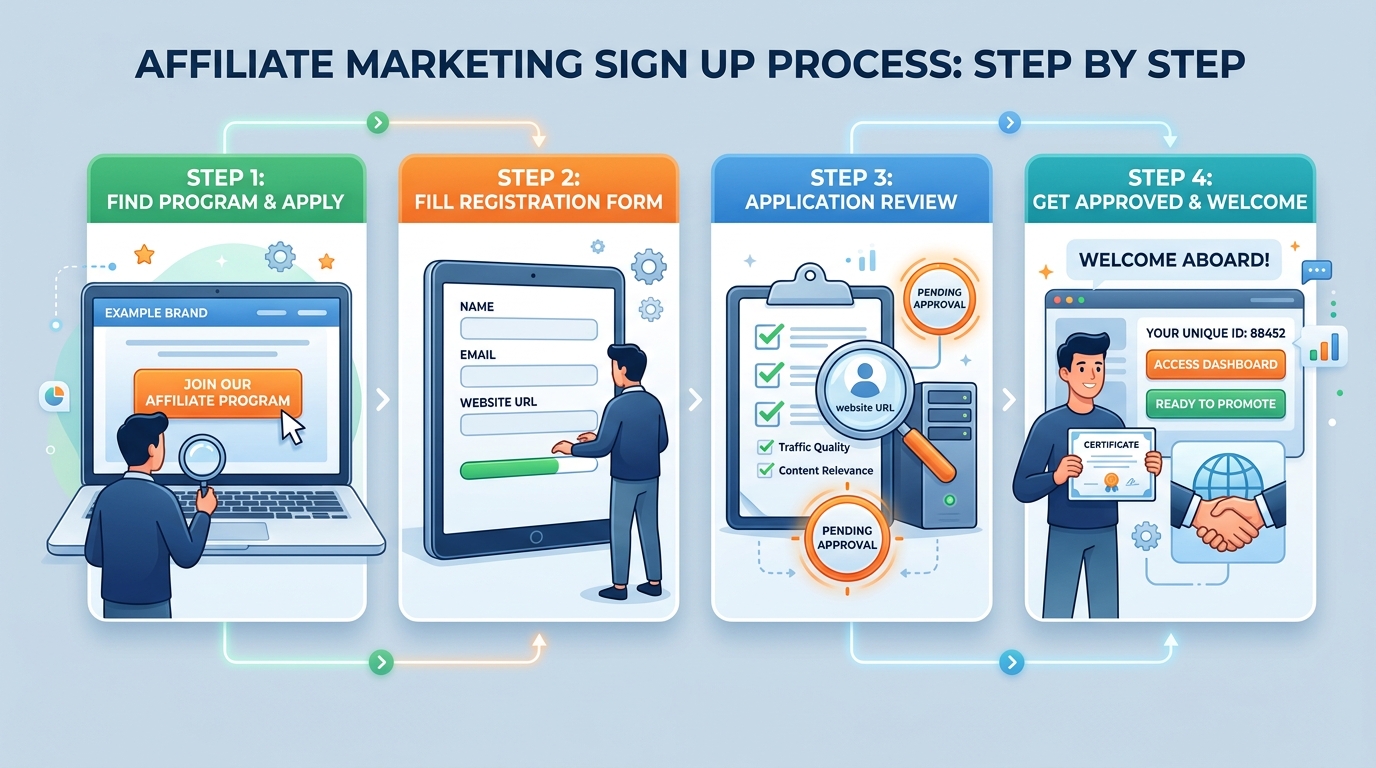
1. Locate the Affiliate Program/Network: Most companies with affiliate programs will have a dedicated “Affiliates,” “Partners,” or “Referral Program” link, usually in the footer of their website. For networks, simply visit their website (e.g., cj.com, shareasale.com) and look for the “Sign Up” or “Join Now” button, often labeled for “Publishers” or “Affiliates.”
2. Initiate the Application: Clicking the sign-up link will typically lead you to a registration page. You’ll usually have the option to sign up using an email address or sometimes through social media accounts like Google or Facebook.
3. Provide Basic Account Information: This step involves creating your login credentials. You’ll need to provide your email address and create a strong password. Ensure you use a professional email address associated with your website or brand, as generic email addresses can be a red flag for affiliate managers.
4. Personal and Business Details: Expect to fill out sections requesting your personal name, company name (if applicable), mailing address, and contact number. Accuracy is vital here for future payments and communication.

Providing Necessary Information for Approval: Making Your Case
A crucial part of the sign-up process, especially for networks and reputable programs, is providing detailed information about your promotional methods and online presence. Merchants want to ensure you’re a suitable partner.
1. Website/Platform Details: You’ll be asked to provide the URLs of your primary promotional platforms (website, blog, YouTube channel, social media profiles). Ensure these platforms are professional, active, and relevant to the products you plan to promote.
2. Traffic Sources and Demographics: Merchants are interested in your audience reach and engagement metrics. Be prepared to describe your primary traffic sources (e.g., organic search, social media, email marketing) and the demographics of your audience. Highlight how your audience aligns with their target market.
3. Promotional Strategies: This is your opportunity to outline how you intend to promote their products. Be specific. Instead of saying “I’ll promote on my blog,” explain that you’ll create in-depth reviews, comparison articles, tutorials, or social media campaigns. Showcase your content quality and any previous success you’ve had in driving conversions.
4. Niche Relevance: Emphasize how your niche expertise and content fit perfectly with the merchant’s products. A travel blog applying to a skincare company is unlikely to be approved; consistency in your niche is key.
| Application Field | Importance | Tips for Success |
|---|---|---|
| Email Address | High | Use a professional, domain-specific email (e.g., name@yourwebsite.com). |
| Website URL(s) | Very High | Provide a clean, professional, mobile-responsive site with valuable content. Ensure it has ‘About Us’ and ‘Contact’ pages. |
| Traffic Sources | High | Clearly state where your audience comes from (SEO, social, email, etc.). |
| Promotional Methods | Very High | Detail specific content types (reviews, tutorials, comparisons) and platforms. Show you have a plan. |
| Audience Demographics | Medium | Explain who your audience is and how they relate to the product. |
| Payment Information | High | Accurately provide details for commission payouts (e.g., PayPal, bank transfer). |
Understanding Terms and Conditions: The Legalities
Before submitting your application, you will always encounter a section for “Terms and Conditions,” “Program Agreement,” or “Affiliate Policy.” It is paramount to read these documents thoroughly. These terms outline:
- Commission Structure: Details on how much you’ll earn (percentage or flat fee) and how commissions are calculated.
- Payout Schedule: When and how you’ll receive your earnings (e.g., monthly, minimum payout thresholds).
- Allowed/Disallowed Promotional Methods: Guidelines on how you can promote the products. Some programs restrict certain methods, like bidding on branded keywords in paid ads or using specific types of ad copy.
- Cookie Duration: The length of time your referral link remains active after a user clicks it. If a customer makes a purchase within this period, you get credit.
- Compliance Requirements: Importantly, affiliates are typically required by regulatory bodies (like the U.S. Federal Trade Commission) to disclose their affiliate relationship when promoting products. This often means clearly stating that you earn a commission.
- Intellectual Property Usage: Rules regarding the use of the merchant’s brand name, logos, and marketing materials.
Ignoring these terms can lead to your application being rejected or, worse, your account being terminated later. Transparency and adherence to guidelines build trust with merchants.
Getting Approved and Next Steps: From Acceptance to Action
After submitting your application, there’s typically a review period. This can range from a few days to several weeks, depending on the merchant’s capacity and the complexity of your application. During this time, affiliate managers will evaluate your platform, audience, content quality, and promotional strategies to ensure they align with their brand values and business objectives.
If you get approved, you’ll receive a welcome email with details on how to access your affiliate dashboard. This dashboard is your central hub for:
- Accessing your unique affiliate links.
- Tracking clicks, conversions, and commissions.
- Accessing promotional materials (banners, text links, product feeds).
- Viewing payout history and pending earnings.
Upon approval, it’s time to integrate your affiliate links naturally into your content. Remember, authenticity and providing genuine value to your audience are key to long-term success. Don’t just “slap” links everywhere; instead, offer helpful insights, honest reviews, and solutions to your audience’s problems.
Maximizing Your Affiliate Marketing Journey: Strategies for Success
Getting approved is just the beginning. To truly succeed in affiliate marketing, continuous effort and strategic planning are essential. Consider these strategies:
- Create High-Quality, Relevant Content: Your content is your primary tool for attracting and converting your audience. Focus on providing value through informative blog posts, engaging videos, or insightful social media updates. High-quality content builds trust and authority within your niche.
- SEO Optimization: Optimize your content for search engines to drive organic traffic to your platform. This includes using relevant keywords, creating compelling titles, and building a strong internal linking structure.
- Diversify Your Promotional Methods: Don’t rely on a single channel. Combine blogging with social media, email marketing, and potentially even paid ads (if permitted by the program terms) to reach a wider audience.
- Build an Email List: An email list allows you to connect with your audience directly, offer exclusive content, and promote products in a more personalized way. Many successful affiliate marketers attribute a significant portion of their revenue to email marketing.
- Track and Analyze Performance: Regularly monitor your clicks, conversions, and earnings through your affiliate dashboard. This data helps you understand what’s working and what isn’t, allowing you to optimize your strategies for better results.
- Stay Updated: The digital marketing landscape is constantly evolving. Stay informed about industry trends, new platforms, and changes in affiliate program policies. Continuous learning and skill building are crucial for long-term success. For a deeper understanding of affiliate marketing principles, resources like Wikipedia’s article on Affiliate Marketing can provide valuable historical context and fundamental definitions.
- Foster Trust and Transparency: Be honest with your audience about your affiliate relationships. Transparency builds credibility and long-term loyalty, which is far more valuable than short-term gains.
Conclusion
The affiliate marketing sign up process is a foundational step in an exciting and potentially lucrative online venture. By carefully selecting your niche and platform, thoroughly researching affiliate programs, and meticulously completing the application with a focus on demonstrating value and professionalism, you can significantly increase your chances of approval. Remember, getting accepted into a program is merely the beginning. True success in affiliate marketing comes from consistent effort in creating high-quality content, nurturing your audience, and continuously optimizing your promotional strategies. With patience and dedication, affiliate marketing can indeed become a rewarding stream of passive income, empowering you to achieve your financial goals from the comfort of your own home.