4Affiliate Marketing for Beginners: Step-by-Step Success Guide
Table of Contents
Affiliate marketing offers an enticing pathway for beginners to generate online income, transforming the way individuals and businesses connect with customers. It’s a performance-based marketing strategy where individuals, known as affiliates or publishers, earn a commission by promoting another business’s products or services. This guide will break down the entire process, providing a clear, step-by-step roadmap to help you navigate the world of affiliate marketing and build a sustainable online business.
What Exactly is Affiliate Marketing?
Affiliate marketing is essentially a revenue-sharing model where an affiliate advertises a merchant’s goods or services to their audience, earning a commission when their marketing efforts lead to a sale, lead, or another predefined action. This can involve sharing unique affiliate links on websites, blogs, social media, or through email newsletters. When a customer clicks on this special link and makes a purchase, signs up for a service, or completes a desired action, the affiliate receives a percentage of the profit.
The core components of affiliate marketing typically involve four main parties: the merchant (the business with the product or service), the affiliate (the individual or company promoting the product), the affiliate network (which often acts as an intermediary, managing relationships, tracking, and payments), and the customer (the end-user who makes a purchase).
This model is a win-win: merchants gain wider reach and increased sales without upfront marketing costs, as they only pay for results. Affiliates, on the other hand, can earn income by promoting products they believe in, without the complexities of product creation, inventory management, or customer service.
Why Choose Affiliate Marketing? The Benefits for Beginners
For those new to online entrepreneurship, affiliate marketing presents a multitude of compelling advantages:
- Low Cost and Low Risk: Starting an affiliate marketing business requires little to no upfront investment. You don’t need to create your own product, hold inventory, or manage shipping. This significantly reduces the financial risk typically associated with starting a new venture.
- Passive Income Potential: Once a strong content strategy is in place with affiliate links, it can continue to generate income long after the initial effort. A well-written blog post or a helpful video review can earn commissions over time, creating a passive income stream.
- Flexibility and Convenience: Affiliate marketers often enjoy the freedom to work from anywhere, on their own schedule. This flexibility allows individuals to build a business that fits their lifestyle, whether as a side hustle or a full-time endeavor.
- No Customer Service: Affiliates focus solely on marketing. Issues related to product delivery, customer complaints, or refunds are handled by the merchant, freeing up the affiliate’s time and resources.
- Easy to Scale: Once you’ve established a successful affiliate partnership and content strategy, it’s easier to scale your audience and influence. You can expand into promoting complementary products or diversify your niche.
- High Return on Investment (ROI): Because businesses only pay affiliates for actual results (sales or leads), affiliate marketing can be a highly cost-effective marketing strategy for merchants, which in turn benefits affiliates through consistent commissions.

Understanding Key Affiliate Marketing Terms and Concepts
To navigate the affiliate marketing landscape effectively, it’s crucial to understand some common terminology:
- Affiliate Link: A unique URL provided by the merchant or affiliate network that tracks clicks and sales attributed to a specific affiliate.
- Merchant/Advertiser: The company or individual who creates the product or service being promoted.
- Affiliate/Publisher: The individual or entity that promotes the merchant’s products and earns a commission.
- Affiliate Network: A platform that connects affiliates with merchants, managing tracking, reporting, and payments. Examples include Amazon Associates, ShareASale, ClickBank, and CJ Affiliate.
- Commission: The percentage or flat fee an affiliate earns for each successful referral.
- Cookie Duration: The length of time an affiliate cookie (a small data file) remains active on a user’s browser after they click an affiliate link. If the user makes a purchase within this period, the affiliate gets credit.
- Conversion: A specific action completed by a user, such as a sale, lead generation (e.g., email signup), or app download, for which the affiliate earns a commission.
- Earnings Per Click (EPC): A metric indicating the average earnings an affiliate receives for every click on their affiliate links.
- Niche: A specific segment of a larger market that an affiliate focuses on, usually catering to a particular interest or demographic.
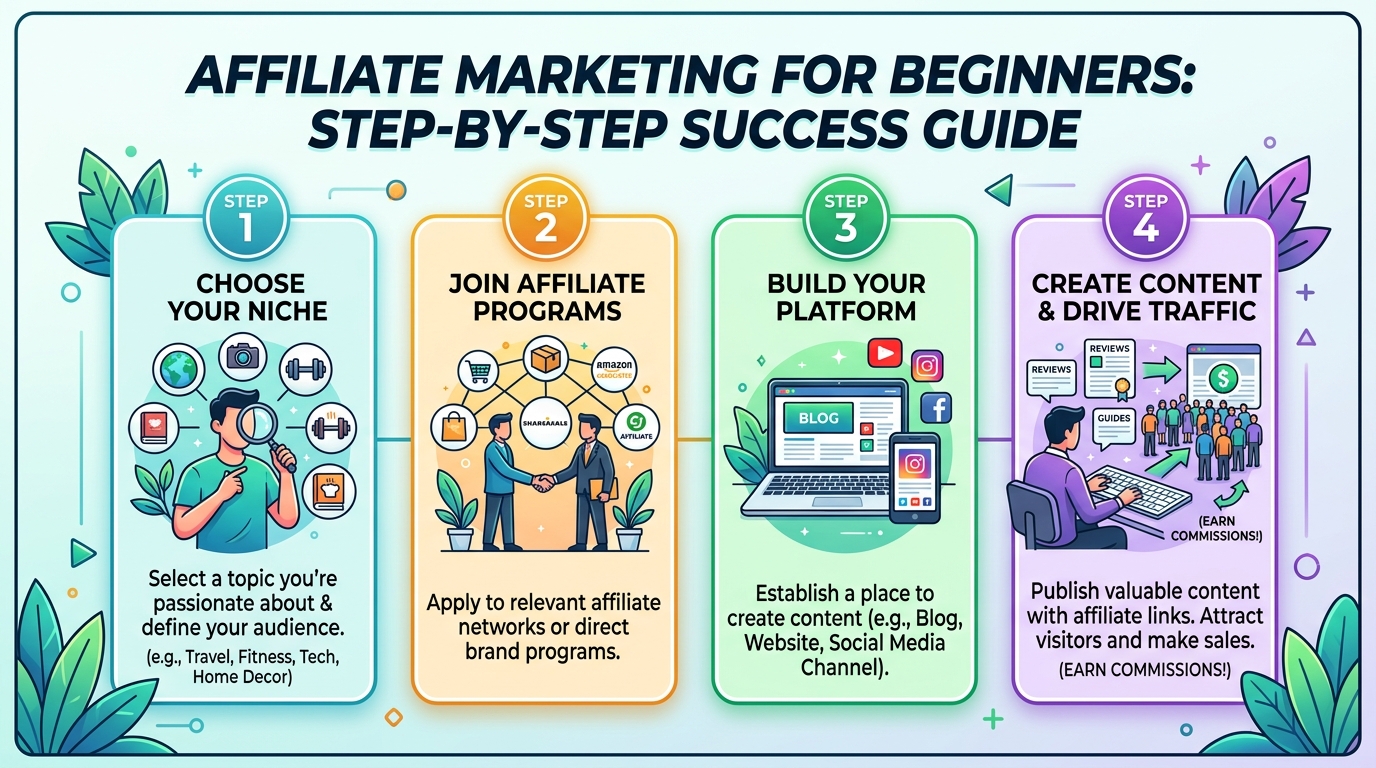
Step 1: Choosing Your Niche and Audience
The foundation of a successful affiliate marketing business is selecting the right niche. This critical decision influences your content, audience engagement, and ultimately, your earning potential. It’s tempting to chase highly profitable but saturated markets like “weight loss” or “make money online,” but for beginners, a narrower, more focused approach is often more effective.
Consider the following when choosing your niche:
- Passion and Expertise: Start with topics you genuinely know and care about. Your enthusiasm will make content creation more enjoyable and authentic, helping you build trust with your audience.
- Audience Demand: Research if there’s an active audience interested in your chosen topic. Use tools like Google Keyword Planner or Google Trends to identify popular search terms and assess the long-term viability of the niche.
- Profitability: Investigate whether there are enough products or services with affiliate programs within your niche that offer competitive commissions. Look for products with a good balance of demand and attractive profit margins.
- Competition Analysis: While some competition indicates a lucrative market, excessive competition can make it challenging for a newcomer to stand out. Look for underserved areas or unique angles within broader niches where you can provide distinct value.
- Niche Depth: Choose a niche that offers enough depth for continuous content creation. You want to avoid running out of ideas quickly. Topics like health and wellness, personal finance, or hobbies often have enduring appeal and ample content opportunities.
For instance, instead of “fitness,” you might narrow it down to “fitness for new mums returning to exercise” or “high-protein meals under 20 minutes.”
Step 2: Finding and Joining Affiliate Programs
Once you’ve identified your niche, the next step is to find suitable affiliate programs. These programs provide you with the unique links and resources needed to promote products.
Types of Affiliate Programs:
- Affiliate Networks: These platforms act as intermediaries, connecting affiliates with thousands of merchants. They offer a wide range of products across various niches and simplify the management of multiple partnerships. Popular networks include:
- Amazon Associates: Ideal for beginners due to its vast product range and brand recognition.
- ShareASale: Known for its user-friendly interface and access to numerous merchants.
- ClickBank: Specializes in digital products like e-books, courses, and software, often offering high commission rates.
- CJ Affiliate (formerly Commission Junction): Hosts many big brands and offers a user-friendly interface with reliable tracking.
- Rakuten Advertising: Provides access to a wide selection of well-known brands.
- Direct Merchant Programs: Many companies run their own in-house affiliate programs. You can often find these by visiting a brand’s website and looking for “Affiliates,” “Partners,” or “Referral Program” in the footer. These programs can sometimes offer higher commission rates as there’s no network fee involved.
Key Considerations for Selecting Programs:
- Commission Structure: Understand how and how much you’ll be paid (e.g., percentage of sale, flat fee per lead).
- Cookie Duration: A longer cookie duration gives you more time for the customer to make a purchase after clicking your link.
- Product Relevance and Quality: Ensure the products align with your niche and that you genuinely believe in their quality. Promoting subpar products can harm your credibility.
- Payout Thresholds and Methods: Check the minimum amount of earnings required before you can withdraw your commissions and the available payment methods.
- Affiliate Support: Some programs offer better resources and support for their affiliates, which can be invaluable for beginners.
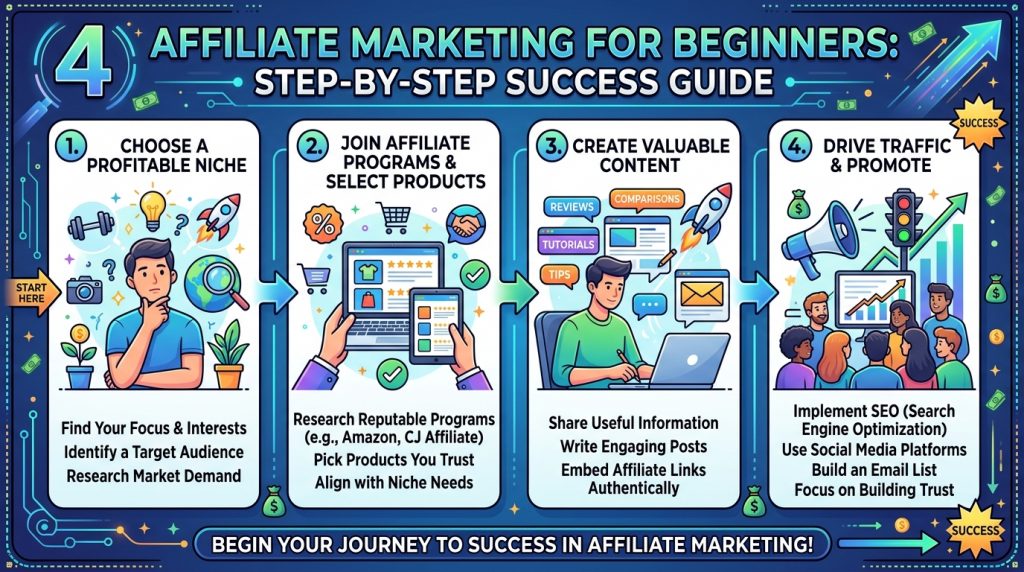
Step 3: Creating High-Quality Content to Promote Products
Content is the backbone of affiliate marketing. It’s how you attract an audience, build trust, and subtly integrate your affiliate offers. Your goal is to provide genuine value while naturally incorporating product recommendations.
Effective content strategies include:
- Product Reviews: Detailed, honest reviews that highlight both the strengths and limitations of a product. Include personal experiences if possible to build authenticity.
- Comparison Posts: Articles comparing several products within a category, helping your audience make informed decisions.
- Tutorials and “How-To” Guides: Content that teaches users how to achieve a specific goal using a product. This demonstrates value and positions the product as a solution.
- Resource Lists/Roundups: Curated lists of recommended tools, software, or products relevant to your niche.
- Informational Articles: Content that answers common questions or solves problems related to your niche, where affiliate products can be naturally integrated as solutions.
When creating content:
- Prioritize Helpfulness: Focus on solving problems and answering questions for your audience. Affiliate links should enhance the content, not overwhelm it.
- Maintain Authenticity: Share honest assessments. Readers value transparency.
- Optimize for Search Engines (SEO): Use relevant keywords, clear headings, and a logical structure to improve content discoverability.
- Vary Content Formats: While blog posts are common, consider videos, podcasts, or social media content to reach a wider audience.
- Include Clear Calls-to-Action (CTAs): Guide your audience on what to do next, e.g., “Click here to learn more” or “Shop now.”
| Content Type | Best For | Affiliate Integration Example | Key Benefit |
|---|---|---|---|
| Product Reviews | In-depth analysis of single products | “My Honest Review of [Product X] – Is It Worth It?” with direct purchase links. | Builds trust through detailed, personal assessment. |
| Comparison Posts | Helping users choose between similar products | “Product X vs. Product Y: Which is Best for [Specific Need]?” with links to both. | Guides buying decisions, caters to commercial intent. |
| How-To Guides/Tutorials | Demonstrating product usage for specific tasks | “How to [Achieve Goal] Using [Product Z]” with links to the product at relevant steps. | Positions product as a solution, provides practical value. |
| Resource Lists | Curating tools/products for a specific niche | “Top 10 Tools for [Niche Activity]” with affiliate links for each recommendation. | Establishes authority, provides quick recommendations. |
| Problem/Solution Articles | Addressing common pain points and offering solutions | “Struggling with [Problem]? [Product A] Can Help!” with an affiliate link to Product A. | Resonates with audience needs, offers direct solutions. |
Step 4: Driving Traffic to Your Affiliate Offers
Even the most compelling content won’t generate sales if no one sees it. Driving targeted traffic to your content is paramount. Here are some of the most effective strategies:
- Search Engine Optimization (SEO):
- Keyword Research: Identify what your target audience searches for and create content around those keywords.
- On-Page SEO: Optimize your content with relevant keywords in titles, headings, and body text, ensuring natural integration.
- Technical SEO: Ensure your website is fast, mobile-friendly, and easy for search engines to crawl.
- Backlink Building: Acquire high-quality backlinks from reputable sites to improve your search engine rankings. Organic traffic is highly valuable because it’s free and often converts well.
- Social Media Marketing:
- Platform-Specific Content: Tailor your content for each platform (e.g., short videos for TikTok/Instagram Reels, detailed posts for Facebook groups, professional content for LinkedIn).
- Engagement: Actively interact with your audience, respond to comments, and use polls or Q&A sessions to build a community.
- Clear CTAs: Include clear calls-to-action and disclose affiliate relationships. Social media is a major source of affiliate traffic.
- Email Marketing:
- Build an Email List: Offer valuable lead magnets (e.g., free e-books, checklists) to encourage sign-ups.
- Nurture Your Subscribers: Send regular newsletters with helpful content, product recommendations, and exclusive deals. Email allows for direct communication and relationship building, which can drive repeat conversions.
- Paid Advertising (PPC, Social Media Ads):
- Google/Bing Ads: Target users actively searching for products or solutions related to your niche.
- Social Media Ads (Facebook, Instagram, Pinterest): Utilize detailed targeting options to reach specific demographics and interests. Paid traffic can generate quick results, but requires careful budget management and optimization to ensure profitability.
The key is to match the right traffic source to your niche, audience, and the affiliate offers you’re promoting. Consistency in content creation and promotion across chosen channels is vital for long-term success. You can learn more about general marketing strategies on Wikipedia’s marketing page, which provides a broad overview of various marketing disciplines that can inform your traffic generation efforts.
Step 5: Tracking, Analyzing, and Optimizing Your Performance
Success in affiliate marketing isn’t just about setting up campaigns; it’s about continuously monitoring and improving them. Tracking your performance allows you to identify what works and what doesn’t, enabling data-driven optimization.
Key Metrics to Track:
- Clicks and Impressions: Understand how much traffic your links are receiving and spot trends.
- Conversion Rate (CR): The percentage of visitors who complete the desired action (e.g., make a purchase) after clicking your link. A high conversion rate indicates effective content and targeting.
- Earnings Per Click (EPC): Measures the average income generated for every click on your affiliate links. This helps assess the profitability of different campaigns or products.
- Return on Investment (ROI): Crucial for paid campaigns, this metric determines if your earnings outweigh your advertising costs.
- Customer Lifetime Value (LTV): While more advanced, understanding the long-term value of customers brought through your links can help you identify your most valuable traffic sources and affiliates.
Tools for Tracking and Analytics:
- Affiliate Program Dashboards: Most affiliate networks and direct programs provide dashboards with real-time or near real-time tracking data for your clicks, conversions, and commissions.
- Google Analytics: A free web analytics service that provides in-depth insights into your website traffic, user behavior, and content performance.
- Dedicated Affiliate Tracking Tools: For more advanced needs, tools like Voluum, RedTrack, or Post Affiliate Pro offer comprehensive tracking, analytics, and optimization features.
Optimization Strategies:
- A/B Testing: Experiment with different headlines, calls-to-action, product placements, or content formats to see what resonates best with your audience and drives higher conversions.
- Content Refinement: Continuously update and improve your existing content based on performance data. Revamp old posts that aren’t converting well or expand on top-performing topics.
- Audience Targeting: Use analytics to refine your understanding of your target audience and tailor your messaging and promotions to better meet their needs and pain points.
- Diversify Traffic Sources: Don’t rely on a single source of traffic. Explore new channels and optimize your strategy for each.
- Negotiate Commissions: As your performance improves, you may be able to negotiate higher commission rates with merchants, especially if you consistently drive high-quality traffic and sales.
- Fraud Prevention: Implement measures to detect and prevent click fraud and other suspicious activities to ensure accurate tracking and legitimate earnings.
Conclusion: Your Path to Affiliate Marketing Success
Affiliate marketing offers a dynamic and rewarding path for beginners to enter the world of online business. By systematically following these steps – choosing a focused niche, identifying reputable affiliate programs, creating high-value content, driving targeted traffic, and diligently tracking and optimizing your performance – you can build a sustainable and profitable venture. Remember, success in affiliate marketing is a marathon, not a sprint. It requires patience, persistence, continuous learning, and a genuine commitment to providing value to your audience. Embrace the journey, adapt to new trends, and consistently refine your strategies, and you’ll be well on your way to achieving your affiliate marketing goals.